Rubber Conveyor Belt
The Most Commonly Used Types of Rubber Conveyor Belts

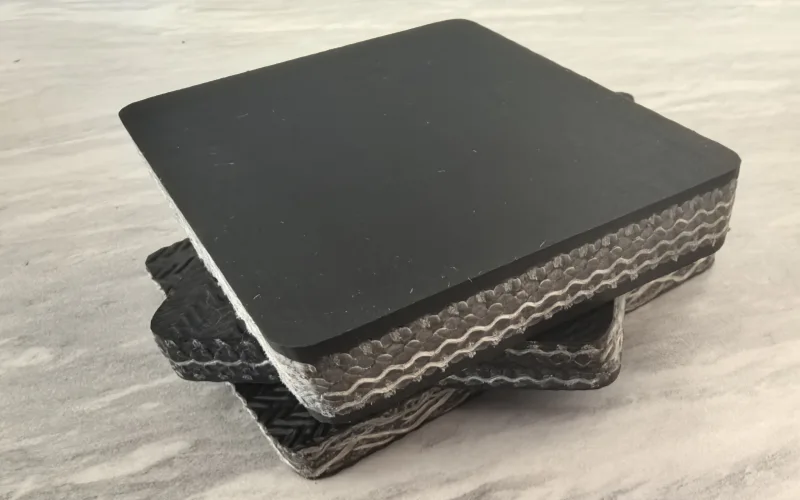
EP Rubber Conveyor Belt
- Excellent dimensional stability thanks to low elongation polyester warp yarns
- Custom widths ranging from 300mm to 3500mm are available, depending on the required thickness and roll length.
- Various cover grades allow EP belts to perform reliably in harsh environments — from -60℃ freezing conditions to 300℃ heat, and in contact with oily, flammable, or abrasive materials.
- Its low stretch properties deliver exceptional stability and operational consistency.
- Strong interlayer bonding and superior adhesion between cover and fabric layers enhance belt integrity.

EP Conveyor Belt Construction
- Top Rubber Cover: Protects the belt surface from wear, impact, and chemicals; customizable for heat, oil, or abrasion resistance.
- EP Fabric: Core layer made of polyester and nylon, offering high strength and low stretch for stable.
- Skim Rubber: Bonding layer between plies that enhances adhesion and impact resistance.
- Bottom Rubber Cover: Shields the underside from pulley wear and external abrasion.
- Rubber Moulded Edge: Seals the edges to prevent moisture and dust ingress, extending belt lifespan.

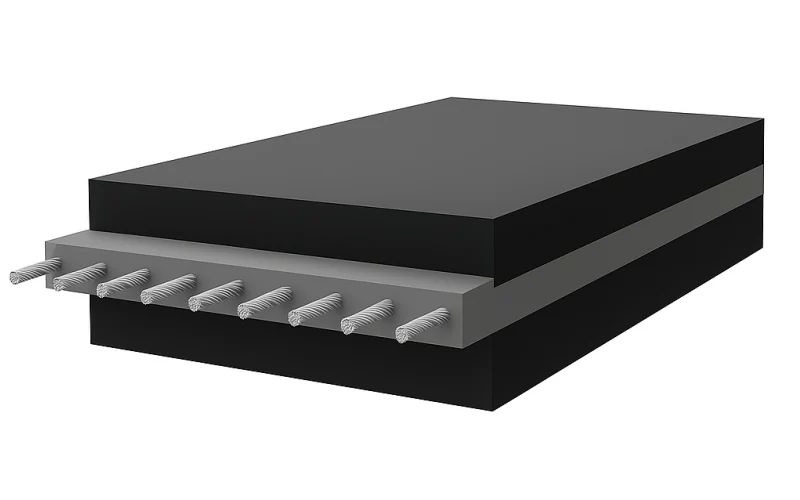
ST Rubber Conveyor Belt
- ST Rubber Conveyor Belt offers strength from ST630 to ST5400 for all-duty applications.
- Cord diameter ranges 3–11.3 mm, making ST Rubber Conveyor Belt highly customizable.
- ST Rubber Conveyor Belt features pitch options from 10 to 17±1.5 mm for stability.
- Cover thickness 5×5–9×9 mm enhances ST Rubber Conveyor Belt wear resistance.
- ST Rubber Conveyor Belt supports pulley diameters from 500 mm to 1800 mm.
- ST Rubber Conveyor Belt delivers strength and durability even under extreme load.

ST Conveyor Belt Construction
- Top Cover:
Wear-resistant rubber layer for surface protection. - Bounding Rubber:
Ensures strong bonding between steel cords and covers. - Steel Cord:
High-strength galvanized wires for load bearing and low elongation. - Bottom Cover:
Protects the belt underside from friction and wear.

NN Rubber Conveyor Belt
- Constructed with nylon-nylon fabric for high elasticity and flexibility.
- Runs smoothly on small pulleys without cracking or deformation.
- Excellent troughability for secure and stable material flow.
- Lightweight structure improves energy efficiency of the conveyor system.
- Strong impact absorption makes it ideal for drop loading conditions.

NN Conveyor Belt Construction
- Top Cover Rubber:
Protects the belt surface from abrasion, impact, weather, and harsh material contact. - NN Fabric:
Reinforced nylon in both warp and weft ensures flexibility, strength, and good load-bearing capacity. - Adhesive Glue:
Strong bonding layer that tightly connects rubber and fabric, preventing internal separation or delamination. - Bottom Cover Rubber:
Provides underside protection from rollers, pulleys, and wear caused by constant running contact.
Rubber Conveyor Belts with Different Core Layers

Solid Woven Conveyor Belt
Engineered for extreme durability, our solid woven conveyor belts deliver unmatched impact resistance and superior flame retardancy — the ultimate choice for the toughest mining and bulk material handling operations.
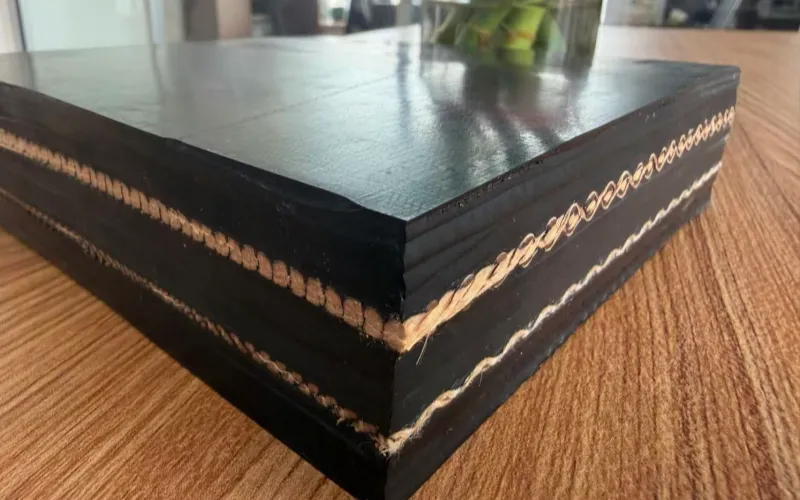
Aramid Conveyor Belt
Powered by ultra-high-strength aramid fibers, our conveyor belts achieve extraordinary tensile strength at minimal weight, delivering unrivaled efficiency and superior longevity for demanding high-speed, long-distance conveying applications.
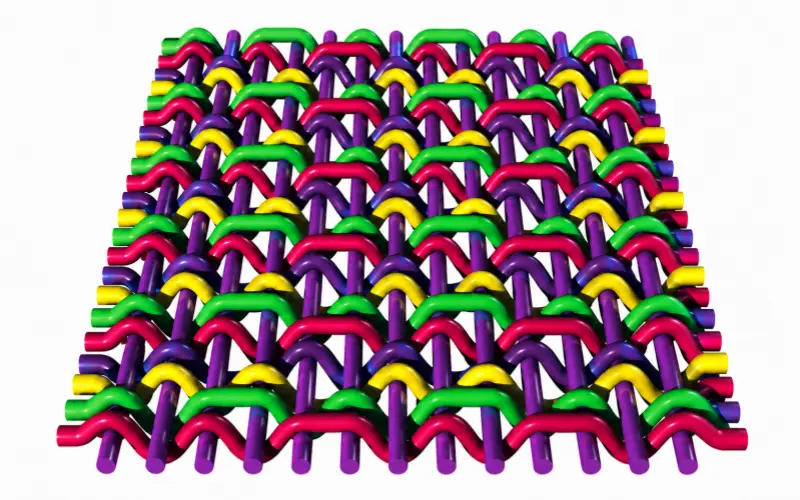
Rubber Conveyor Belts with Fabric Layers Featuring a Special Weave

CFW Conveyor Belt
Featuring a unique cross-woven fabric structure, our CFW conveyor belts deliver outstanding puncture resistance and dimensional stability — engineered for superior performance in the most demanding heavy-duty applications.
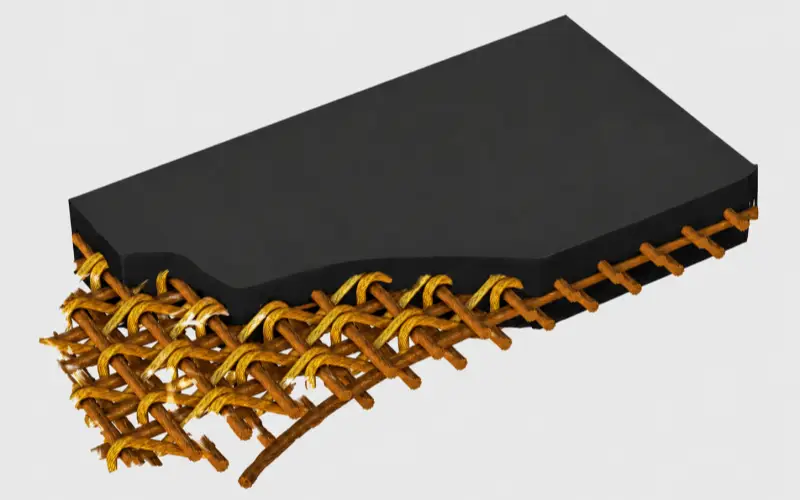
Straight Warp Conveyor Belt
Built with high-strength straight warp construction, our SW conveyor belts offer exceptional longitudinal tear resistance and minimal elongation — the trusted choice for high-tension, long-distance heavy load conveying.
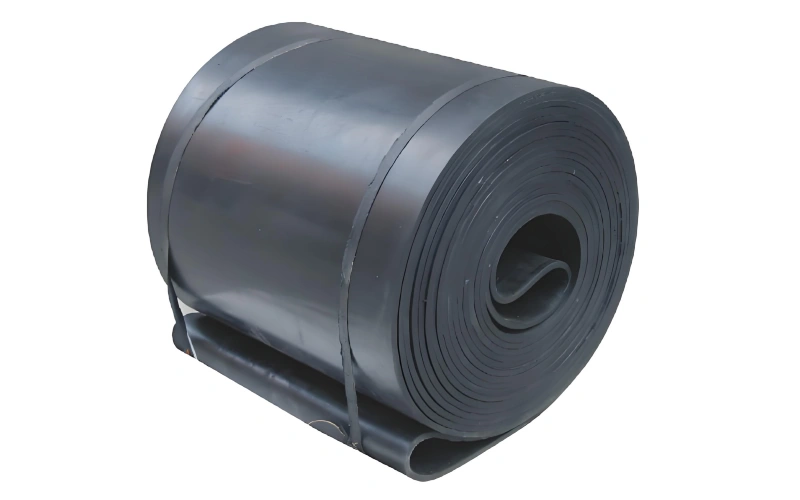
Rubber Conveyor Belts with Specialized Structures

Endless Conveyor Belt
Endless conveyor belts are supplied as closed loops without mechanical fasteners, providing smoother running, lower joint impact, and stable performance in continuous conveying systems with repeated bending and demanding conditions.
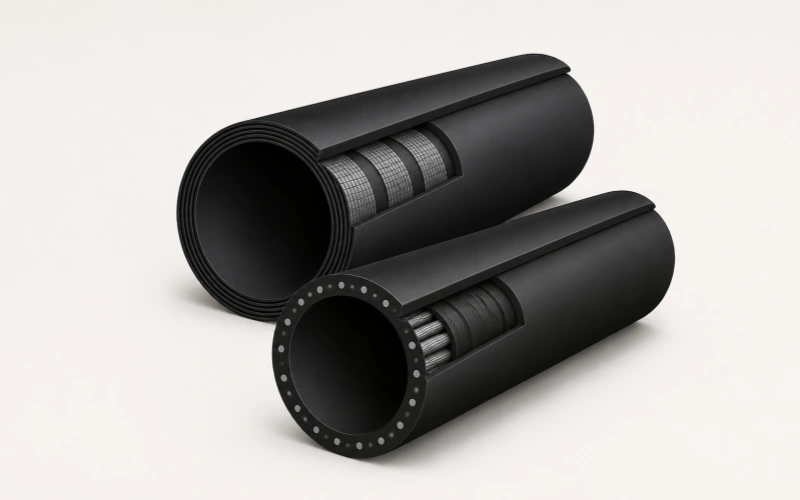
Pipe Conveyor Belt
Pipe conveyor belts form a closed tubular shape during operation, enclosing bulk materials to reduce spillage, dust, and environmental exposure while supporting curved routes and long-distance enclosed conveying system layouts.
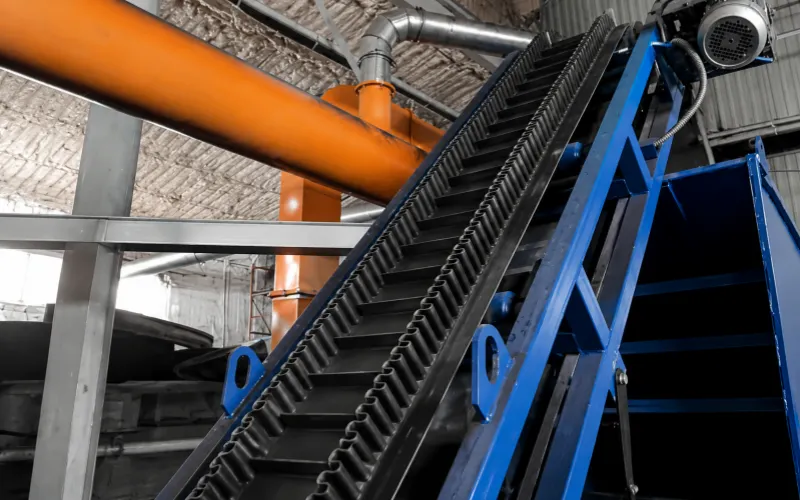
Sidewall Conveyor Belt
Corrugated sidewall conveyor belts combine flexible sidewalls and cleats to contain materials during steep-angle conveying, reducing spillage and allowing greater vertical lift within limited installation space and compact system layouts.
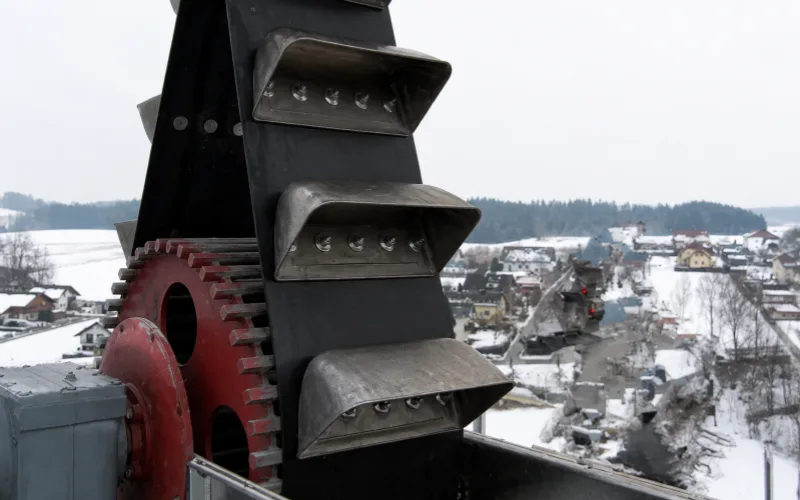
Bucket Elevator Belt
Bucket elevator belts provide the tension-bearing base for vertically lifting bulk materials, supporting bucket attachment, repeated pulley bending, stable tracking, and continuous operation in demanding industrial environments and high loads.
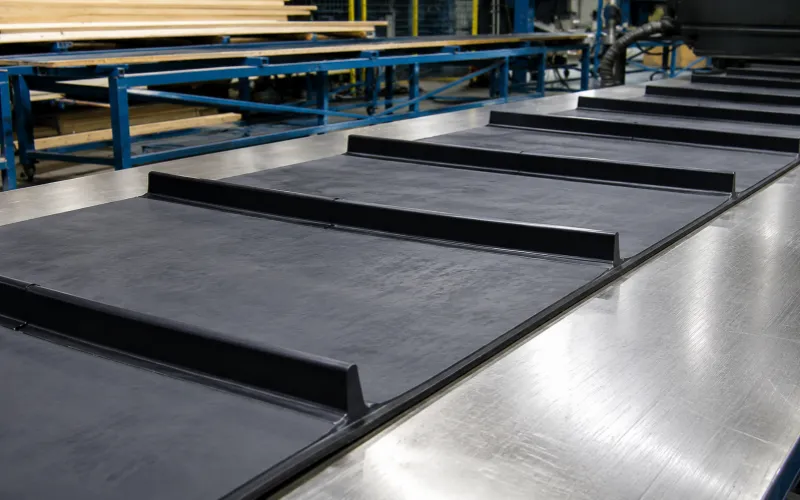
Cleated Conveyor Belt
Cleated conveyor belts use raised transverse profiles to hold materials in position, control spacing, and reduce rollback during inclined conveying where surface friction alone cannot provide sufficient support for loads.
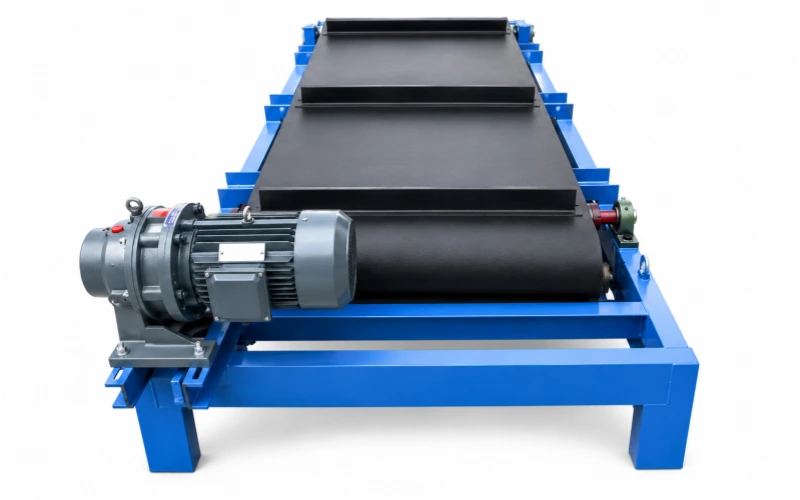
Magnetic Separator Belt
Magnetic separator belts remove separated ferrous materials from cross-belt magnetic systems, using molded cleats and durable rubber construction to withstand repeated discharge cycles, impact, and abrasive contamination during continuous operation.
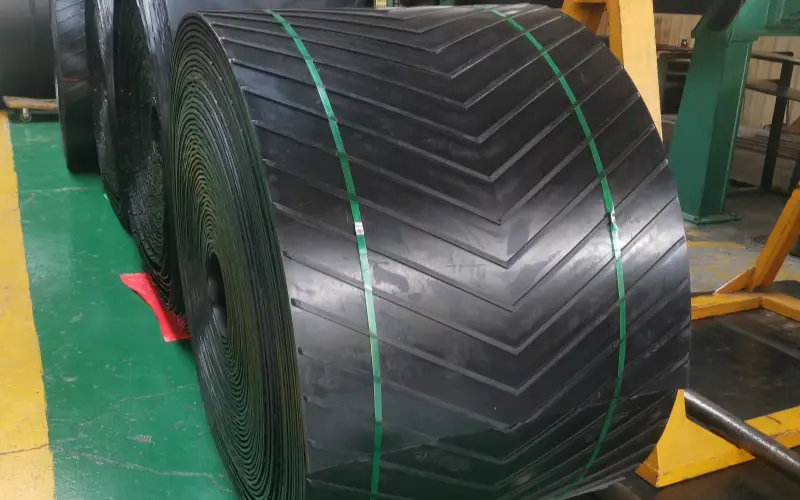
Chevron Conveyor Belt
Chevron conveyor belts use continuous raised patterns to increase material retention on inclines, making them suitable for bulk, granular, and loose materials that may slide on smooth belts during conveying.
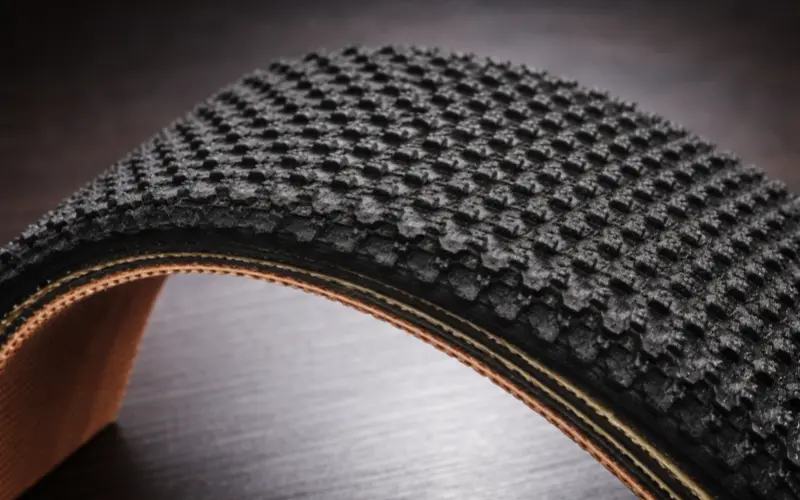
Rough Top Conveyor Belt
Rough top conveyor belts feature a molded high-friction rubber surface that improves grip, cushioning, and load stability when transporting heavy bags, timber, panels, and bundled industrial materials on inclined conveyors.
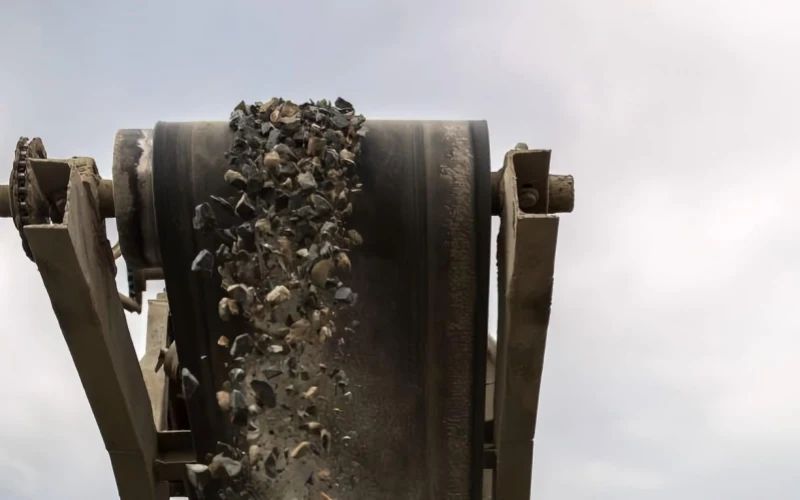
Rubber Conveyor Belts for Different Operating Conditions

Abrasion Resistant Conveyor Belt
Designed for abrasive materials such as ore, stone and gravel. The wear-resistant rubber cover helps reduce surface loss and supports longer service life under continuous friction and impact.
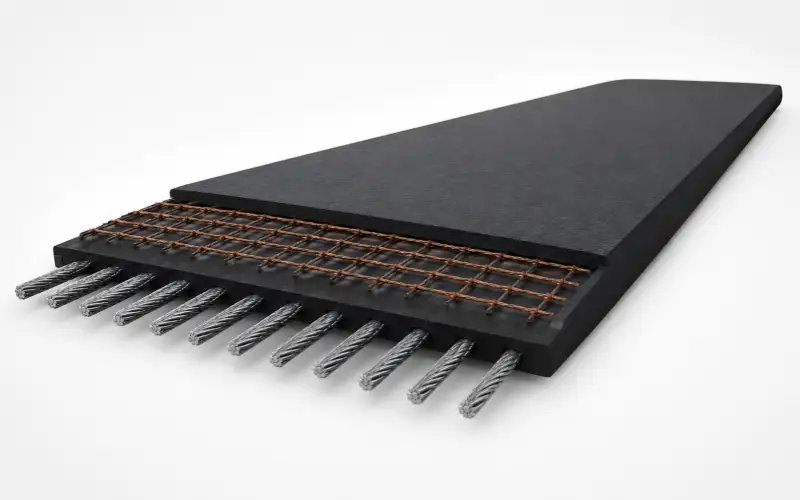
Rip Stop Conveyor Belt
Designed for sharp and irregular materials that may cut or penetrate the belt. Reinforced construction helps limit longitudinal tearing and reduce damage during demanding bulk material handling.
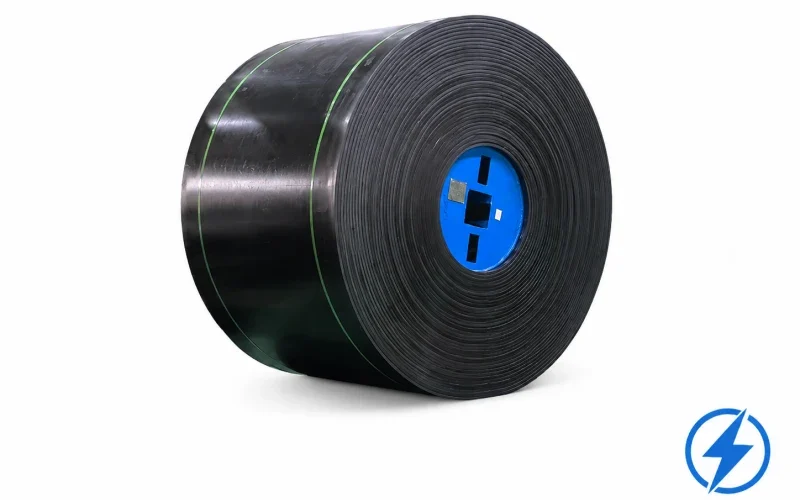
Anti Static Conveyor Belt
Developed for conveying environments where static electricity must be controlled. The conductive rubber compound helps dissipate electrical charges while maintaining reliable mechanical performance during continuous operation.
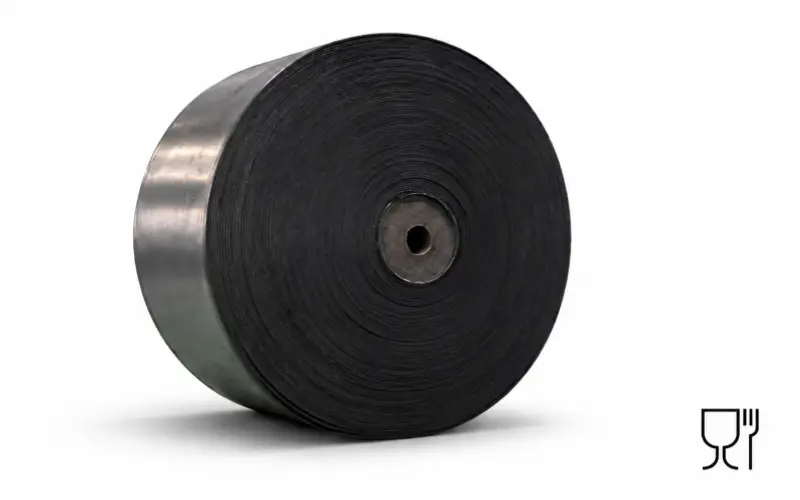
Food Grade Conveyor Belt
Designed for food processing and material handling applications requiring suitable belt surface materials. Different rubber compounds, cover finishes and belt structures can be selected for specific production conditions.
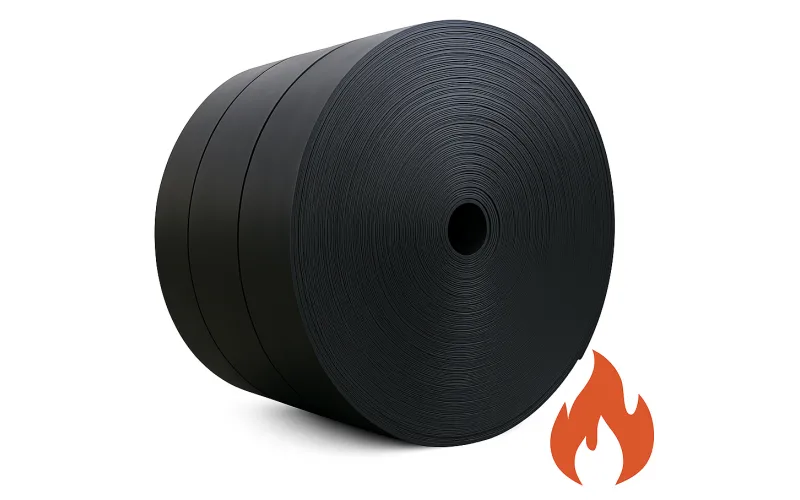
Fire Resistant Conveyor Belt
Designed for coal handling, underground conveying and other fire-sensitive environments. Flame-retardant rubber compounds help restrict flame propagation and improve operating safety in demanding industrial applications.
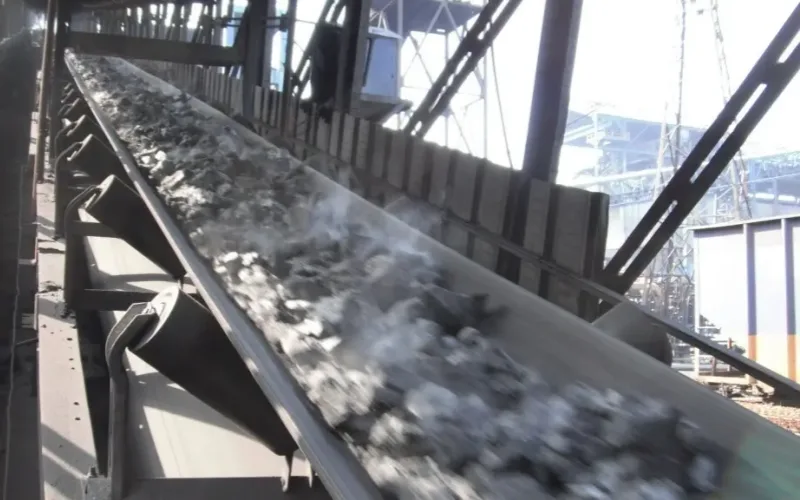
Heat Resistant Conveyor Belt
Suitable for conveying clinker, coke and other hot materials. Heat-resistant rubber compounds help reduce hardening, cracking and cover deterioration during continuous exposure to elevated operating temperatures.
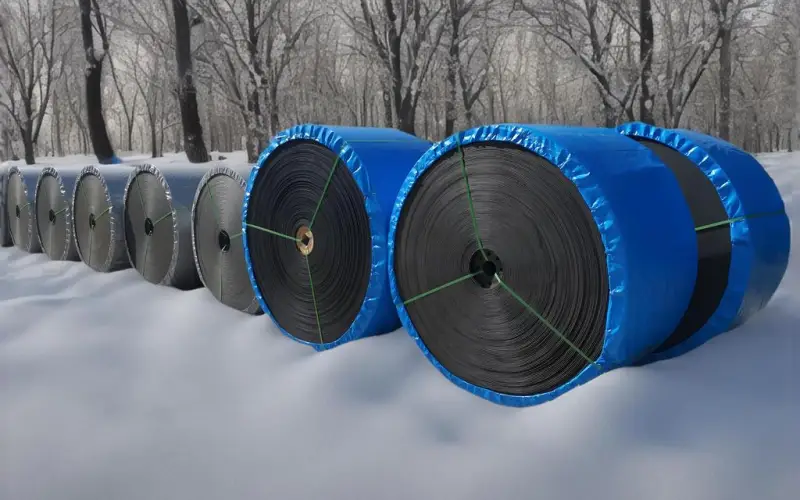
Cold Resistant Conveyor Belt
Developed for conveyors operating in low-temperature environments. The cold-resistant rubber cover helps maintain flexibility and mechanical performance while reducing cracking caused by prolonged exposure to cold conditions.
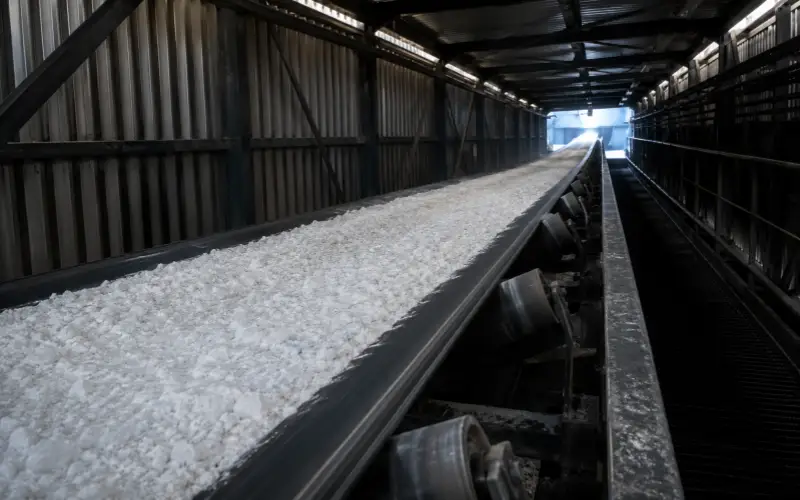
Chemical Resistant Conveyor Belt
Designed for materials containing acids, alkalis and other corrosive substances. Special rubber compounds help reduce swelling, softening and surface deterioration caused by repeated chemical exposure.

Oil Resistant Conveyor Belt
Suitable for conveying oily materials that may attack ordinary rubber covers. Oil-resistant compounds help reduce swelling and maintain belt performance during contact with mineral or vegetable oils.
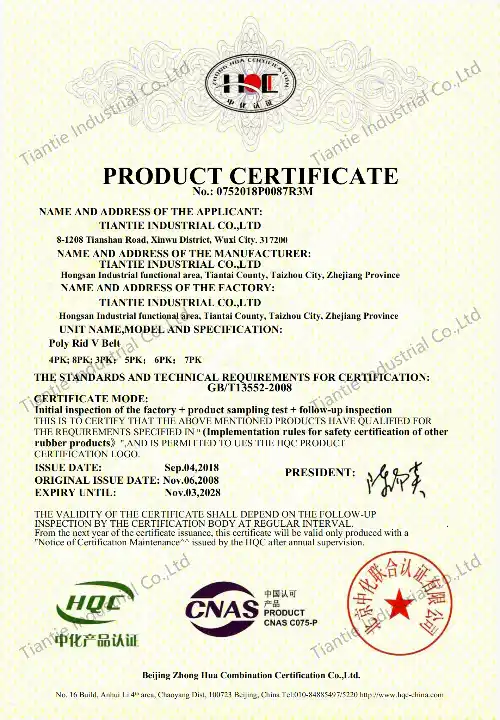
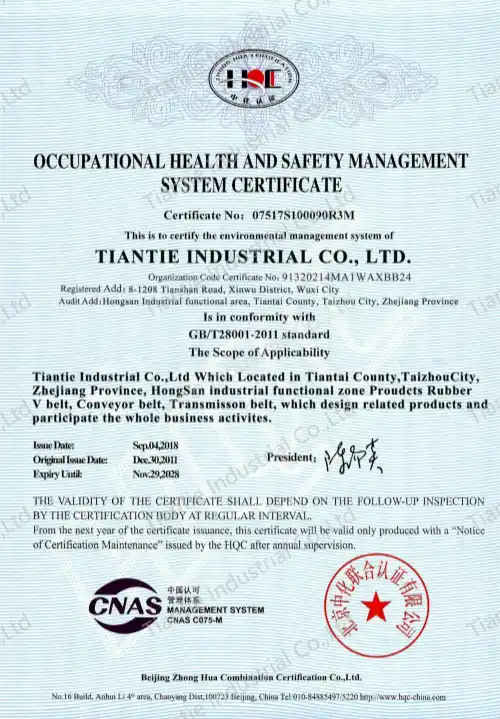
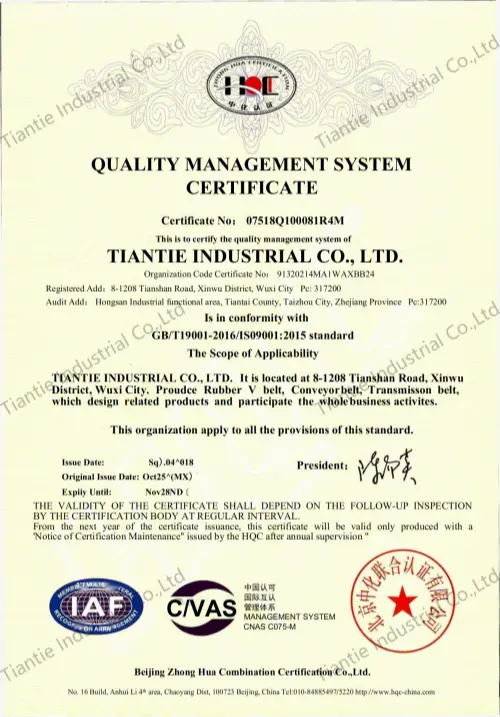
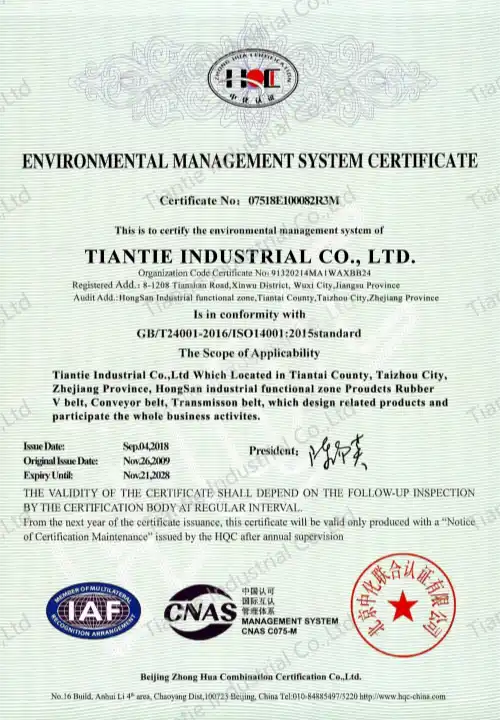
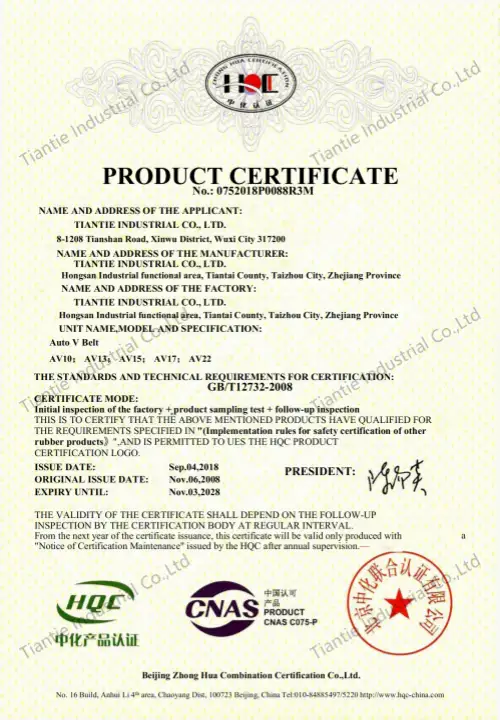
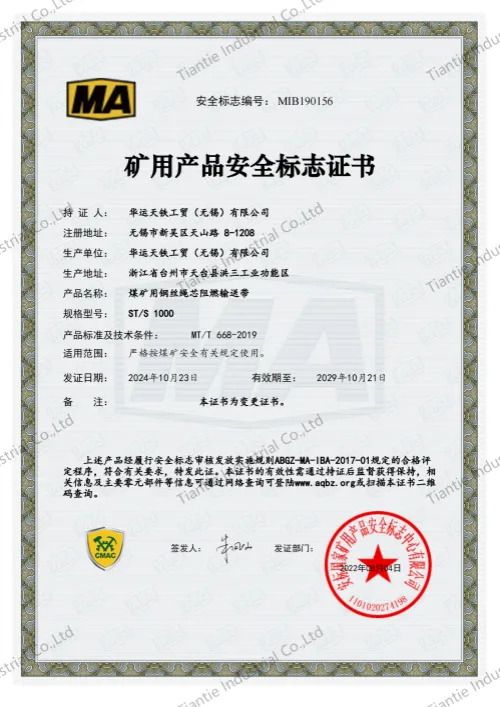
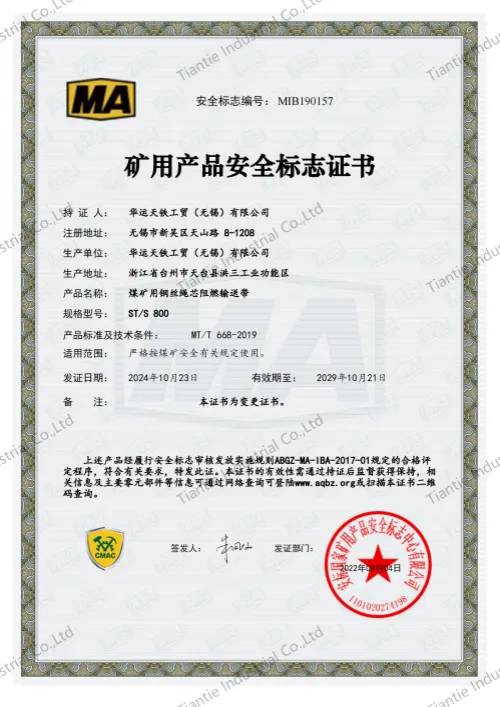
Quality Control
Bringing customers good service and good products is our pursuit.


Rubber Conveyor Belt Shipping And Packing
Packaging Forms:
Round roll
Glasses roll
Oval roll
Outer Wrapping:
PP tarpaulin (polypropylene waterproof cloth)
Customizable colors for tarpaulin wrapping
Support & Protection Options:
Wooden pallet
Metal pallet
Iron frame
Packaging Recommendation:
Tiantie Industrial will provide corresponding packaging suggestions based on the type of conveyor belt you order
REQUEST A QUOTE FOR MORE DETAILS
Rubber Conveyor Belt Engineering & Reliability
Our rubber conveyor belts are designed for strength, precision, and long-term reliability. Engineered with advanced materials, they ensure smooth operation under demanding industrial conditions.
How Does the Conveyor Belt Prevent Elongation?
Our belts feature steel cord or polyester-nylon reinforcements that prevent elongation. This ensures consistent tension and stable performance, reducing the need for frequent adjustments in long-haul applications.
How does the belt resist fire and static buildup?
Our flame-resistant rubber compounds meet ISO 340 standards, while the anti-static features help dissipate charge buildup, preventing safety hazards in environments like coal mines and grain storage areas.
How does the belt handle heavy loads?
Our belts use high-tensile steel cord made from multiple high-strength wires, providing superior load-bearing capacity and durability, allowing the belt to handle heavy loads without compromising performance.
What enhances belt flexibility in complex layouts?
The use of high-flexibility carcass materials allows our belts to handle tight turns and curves without cracking or causing stress. This design ensures better durability in challenging conveyor paths.
What prevents material spillage and edge wear?
Our belts are equipped with reinforced sidewalls and high-abrasion resistant rubber. This prevents material spillage and edge wear, ensuring a clean material transport process in mining, cement, and other bulk material applications.
How is belt traction on pulleys improved?
We use optimized rubber compounds with precision-engineered textures to increase traction, preventing slippage and improving efficiency in applications where consistent material flow is required.
Request A Free Quote
We'd like to work with you
Send us a message if you have any questions or request a quote. Our experts will give you a reply within 12 hours .