China Oil Resistant Conveyor Belt Manufacturer
TIANTIE INDUSTRIAL supplies oil resistant conveyor belts for oily grains oilseed products animal fats machine oil and other oil exposed materials. Cover compound abrasion level belt construction and combined performance are confirmed according to the actual oil type temperature and operating conditions.
- Oil Type Based Compound Selection Improves Compatibility
- Oil Resistant Rubber Limits Swelling and Distortion
- L and D Grades Simplify Abrasion Matching
- Combined Performance Options Fit Coexisting Conditions
Oil Resistant Rubber Controls Oil Induced Changes
Oil can penetrate rubber and change its volume hardness and mechanical properties. We select the oil resistant compound according to the identified oil type temperature and exposure conditions to limit these changes.
Reduced Oil Absorption and Swelling
Oil resistant rubber compounds are formulated to reduce oil absorption under confirmed exposure conditions. Limiting absorption reduces cover swelling and distortion, helping the belt surface remain closer to its approved dimensions during oil contact.
Better Retention of Rubber Properties
Oil exposure can change rubber hardness tensile strength and elongation. Matching the compound to the specific oil and temperature helps limit these changes, providing a clearer basis for confirming cover performance under the specified conditions.
Oil Exposure Beyond the Carry Cover
Oil entering through belt edges or splice areas may also reach skim and adhesion rubber. We review the expected oil entry path before confirming the belt construction so the selected rubber layers correspond to the actual exposure condition.
Oil Resistant Conveyor Belt Grades
The table compares the available grades by operating condition breaking strength elongation and abrasion loss. Grade selection considers both oil exposure and the abrasion severity of the conveyed material.
| Grade | Recommended Conditions | Breaking Strength | Elongation at Break | Abrasion Loss |
|---|---|---|---|---|
| L | General oil resistant conditions | ≥14.0 MPa | ≥350% | ≤200 mm³ |
| D | Higher abrasion and oil resistant conditions | ≥16.0 MPa | ≥350% | ≤160 mm³ |
Cover Rubber Thermal Aging Performance
After aging at 70°C for 168 hours the changes in tensile strength at break and elongation at break do not exceed 25% compared with their values before aging.
The result describes property changes under the stated thermal aging condition. It does not define the operating temperature of the belt or its performance after oil immersion.
L and D are TIANTIE INDUSTRIAL product designations and do not represent internationally unified oil resistance classifications.
Confirm the Right Oil Resistant Grade
Share your oil type conveyed material exposure temperature and abrasion conditions to compare L and D grades and confirm the required belt specification.
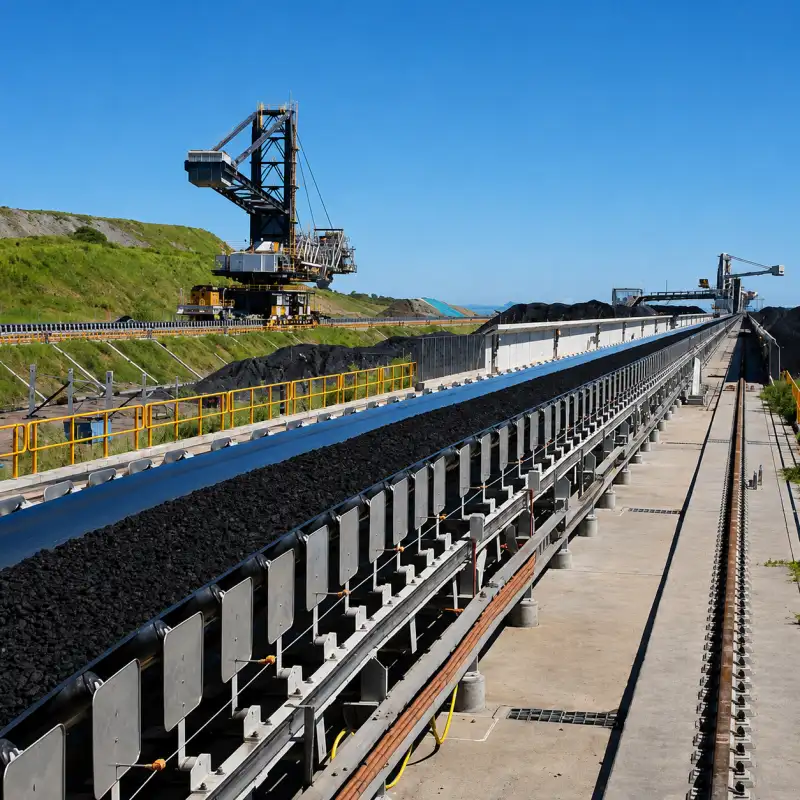
Information for Oil Resistant Belt Selection
Oil resistance and complete belt specifications are confirmed from the oil exposure and actual conveyor conditions.
Oil Type and Material
Provide the oil and material names and identify whether the oil is mineral vegetable animal or synthetic.
Exposure Conditions
Confirm the exposure temperature contact duration and whether the contact is continuous intermittent or occasional.
Wear and Loading
Provide the material size abrasion level loading impact and conveying capacity to support grade and cover thickness selection.
Belt and Conveyor Data
Provide the existing belt specification or the available conveyor parameters for a new project.
Confirm Your Belt Specification
Send your oil material exposure and conveyor data for product selection and quotation.
Oil Resistant Belts for Combined Conditions
When oil exposure occurs together with heat flame cold or acid and alkali conditions the corresponding properties can be combined in one conveyor belt.
Oil and Heat Resistant
Suitable for oily materials at elevated temperatures. The oil type and actual exposure temperature are confirmed together when selecting the cover compound.
Flame and Oil Resistant
Designed for oil-exposed conveying systems with flame-resistance requirements. The required flame grade and applicable standard are confirmed according to the project.

Cold and Oil Resistant
Suitable for oil-exposed conveying systems operating at low temperatures. The minimum ambient and material temperatures are considered during compound selection.
Acid Alkali and Oil Resistant
Suitable for conditions involving both oil and acidic or alkaline substances. Chemical type pH exposure temperature and contact conditions require confirmation.
Typical Materials Conveyed by Oil Resistant Belts
Typical industrial materials include heavy-oil-treated coking coal oily petroleum coke and resinous pine wood materials.
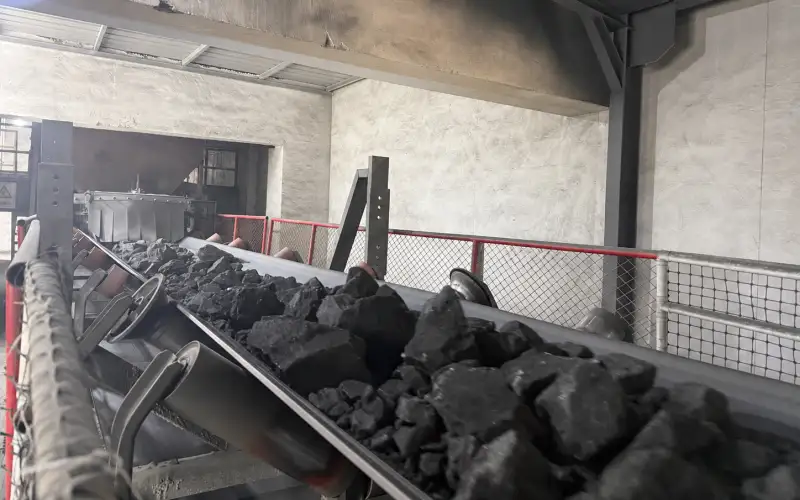
Heavy Oil Treated Coking Coal
Crushed coking coal treated with heavy fuel oil and conveyed to coal storage or coke oven charging systems.
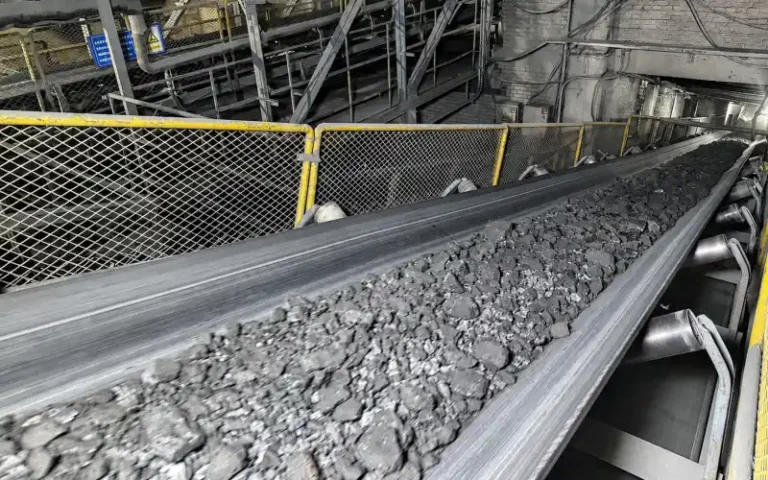
Oily Petroleum Coke
Green petroleum coke and oily coke discharged from refinery coking units and conveyed to crushing storage or loading areas.
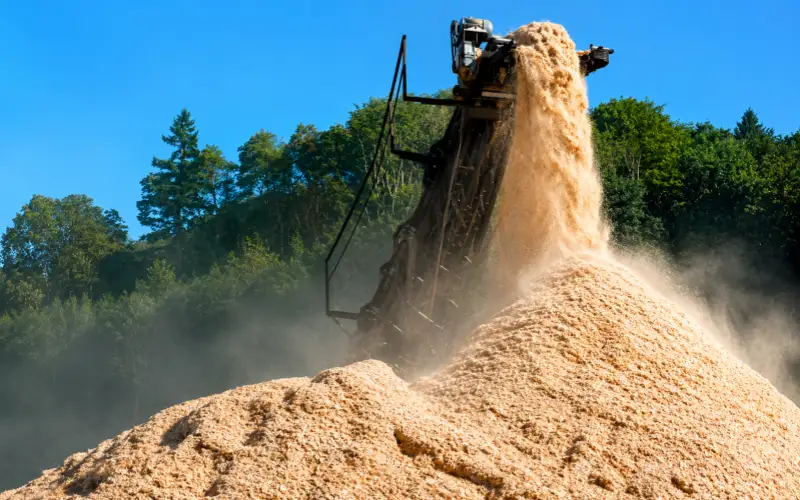
Resinous Pine Wood Materials
Pine wood chips bark and sawdust containing natural resin pine oil and terpenes during sawmill and panel production.
Oil Resistant Conveyor Belt Supplier for Bulk Orders
Our manufacturing system covers oil-resistant compound preparation cover calendering finished-belt inspection and bulk production.
Controlled Compound Preparation
Automated batching controls formulation proportions while enclosed internal mixers maintain mixing temperature within ±0.5°C.
Calendered Cover Thickness
Multi-roll calendering produces uniform rubber sheets with thickness control reaching the 0.1 mm level.
Product Inspection
Eight technical engineers and twenty laboratory specialists inspect compound properties adhesion abrasion and tensile strength.
Bulk Production Capacity
Our 120000 m² production base operates 60 production lines with monthly conveyor belt capacity exceeding 800000 meters.
Request a Bulk Supply Plan
Send the required specification quantity and delivery schedule for production planning and quotation.
FAQs
What should be checked if an oil resistant conveyor belt still swells or softens during operation?
Can a worn oil resistant nylon conveyor belt sample alone confirm a replacement specification?
Can general-purpose splice or repair rubber be used on an oil resistant belt?
Does the pulley-side cover need oil-resistant rubber when oil mainly contacts the carrying side?
Can an oil resistant conveyor belt use mechanical fasteners?
Can an existing belt specification continue to be used after operating conditions change?
Get an Oil Resistant Conveyor Belt Quote
Send us your existing belt specification, conveyed material, oil type, exposure temperature and operating conditions. We will review the information and prepare a corresponding product recommendation and quotation.
