Custom Cleated Conveyor Belt Manufacturer
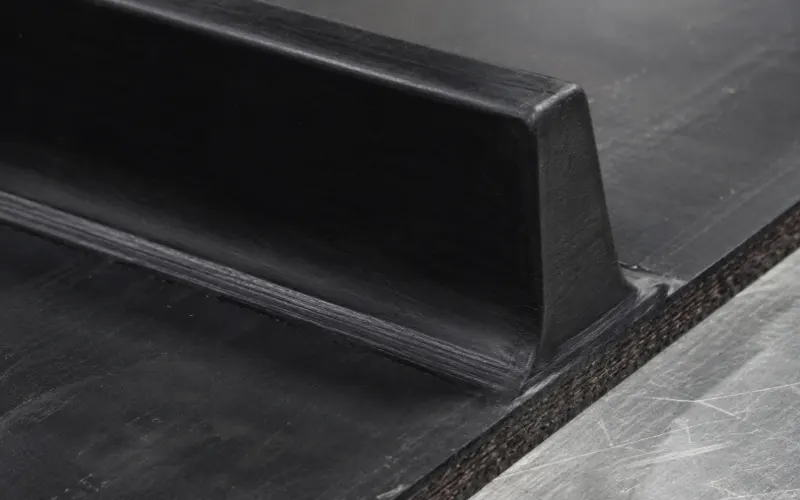
We manufacture each cleated conveyor belt around your material, incline angle, conveyor dimensions, and operating conditions. As a cleated conveyor belt manufacturer, we customize the base belt, cleat profile, height, spacing, and layout to help control material rollback and maintain stable conveying on inclined sections.
- Custom Cleat Height and Spacing
- Cleat Layouts Matched to Your Conveyor
- Rubber Compounds for Different Working Conditions
- Production from Drawings or Existing Dimensions
Cleated Conveyor Belt Configurations
We manufacture four standard conveyor belt cleat types for different material sizes, incline angles, carrying capacities, and pulley conditions. Each cleated conveyor belt can be produced with the required cleat height, spacing, belt width, and base-belt structure.

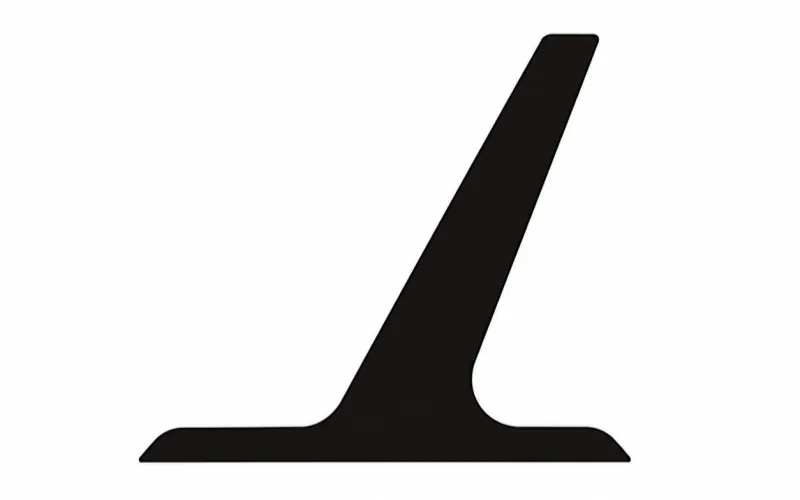
C Cleats
C cleats use an inclined upper section to hold material during upward conveying while supporting smoother discharge. Available heights include 55, 75, 90, and 110 mm, making this profile suitable for low- to medium-height material retention.
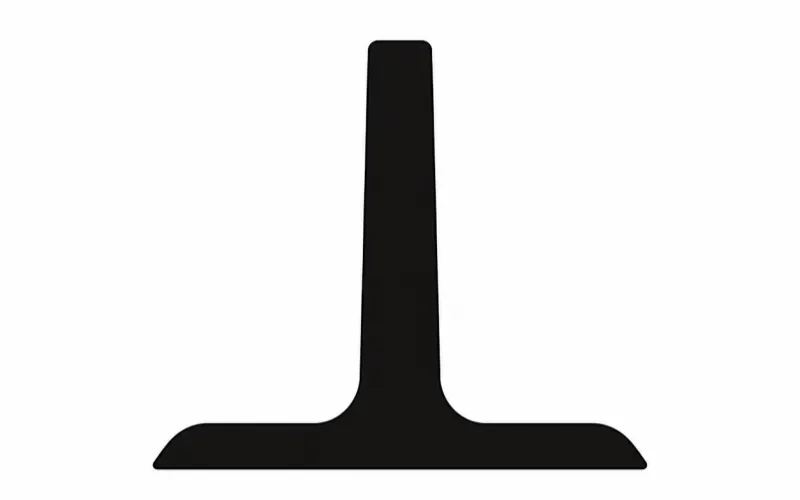
T Cleats
T cleats use a vertical profile to divide the belt surface into regular carrying sections. Heights from 55 to 230 mm are available. These conveyor belt cleats are commonly selected when the material requires clear separation and stable support on inclined sections.
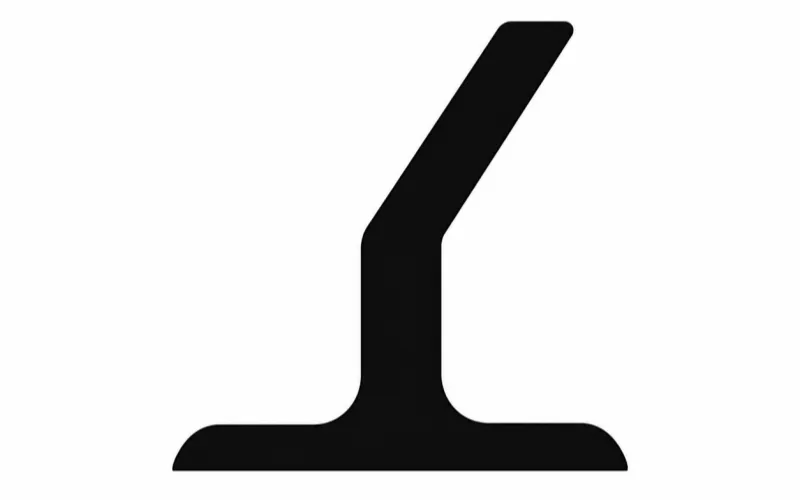
TC Cleats
TC cleats combine a vertical base with an inclined upper section. This profile provides greater material retention than a standard T cleat while maintaining a controlled discharge path. Available heights range from 55 to 280 mm for different conveying capacities.
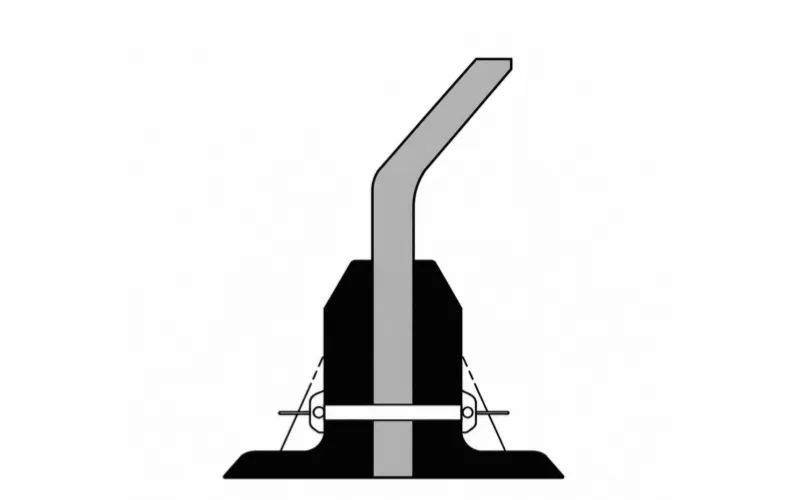
TC-XS Cleats
TC-XS cleats are designed for high cleat requirements, with available heights of 230, 280, 360, and 470 mm. They are generally used in high-capacity or steep-angle systems where taller rubber cleats for conveyor belt applications are required.
We produce custom cleated conveyor belts by adjusting cleat height, pitch, edge distance, and installation direction according to your conveyor drawing. Minimum pulley diameter must be checked together with the selected cleat type and height before production.
Key Cleat Dimensions for Your Cleated Conveyor Belt
The performance of a cleated conveyor belt depends mainly on the cleat profile, height, spacing, and its compatibility with the conveyor pulley. We confirm these four points from your material data, conveyor drawing, or existing belt dimensions.
| Cleat Parameter | What We Confirm | Direct Design Effect |
|---|---|---|
| Cleat Type | C, T, TC, or TC-XS profile | Determines how the cleat supports the material and releases it at the discharge point. |
| Cleat Height | Required height based on material size, incline angle, and conveying capacity | Controls the carrying volume and resistance to material rollback. An excessively high cleat also requires a larger pulley. |
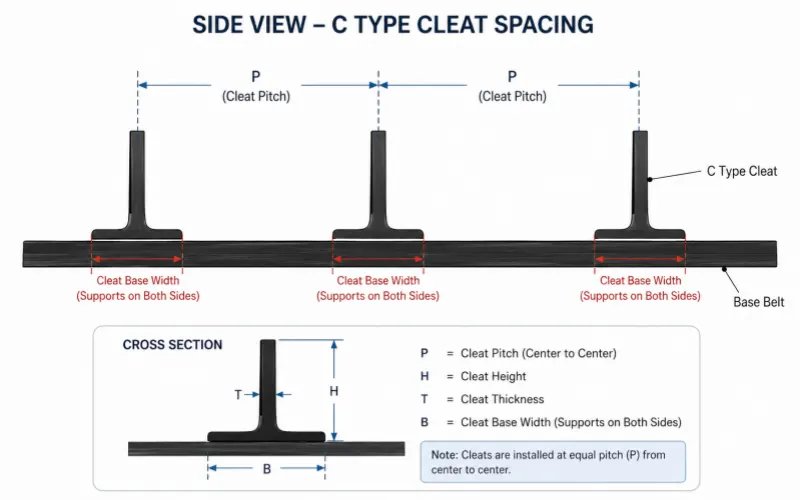
| Cleat Pitch | Center-to-center distance between adjacent cleats | Determines the capacity of each carrying compartment and the loading and discharge interval. |
| Minimum Pulley Diameter | Smallest pulley matched to the selected cleat type and height | Prevents excessive bending at the cleat root, reducing the risk of cracking or separation. |
Before producing your custom cleated conveyor belts, we mark the cleat type, height, pitch, and running direction on the production drawing for confirmation.
Base Belt and Rubber Options Supporting the Cleat Design
The cleat profile, height, and pitch remain the primary design factors for a cleated conveyor belt. We then select the base belt and rubber compound to support the cleats under repeated bending, material impact, belt tension, and environmental exposure.

EP Fabric Base Belt
EP fabric is suitable for most industrial cleated rubber conveyor belt applications. It provides stable longitudinal dimensions while maintaining the transverse support and flexibility required beneath the cleats.
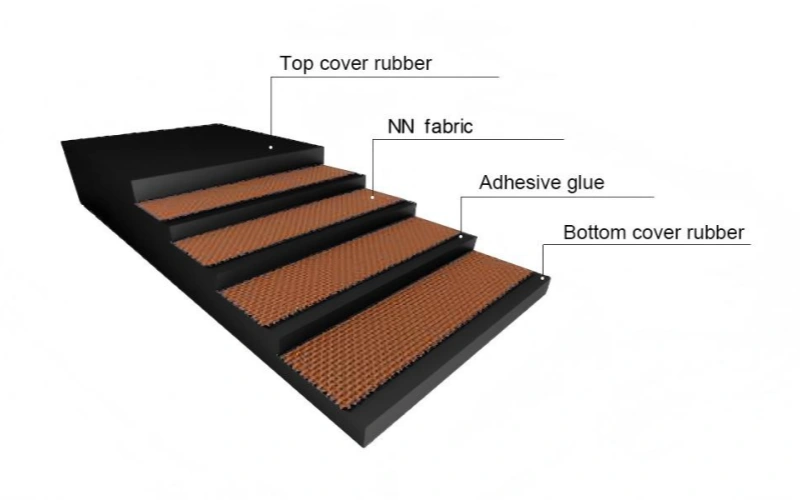
NN Fabric Base Belt
NN fabric can be considered when the belt requires greater flexibility or impact absorption. Its higher elongation means the belt length, take-up system, and pulley conditions must be reviewed before selection.
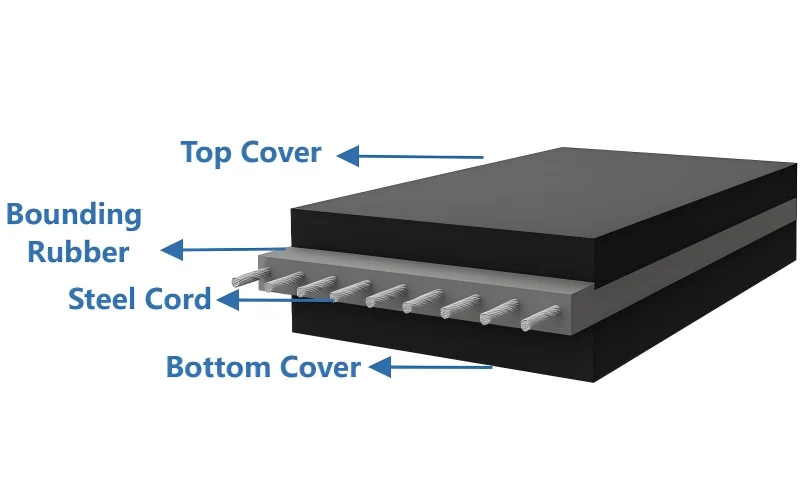
Steel Cord Base Belt
Steel cord construction is reserved for high-tension or high-lift projects. Because its rigidity affects pulley bending and cleat attachment, it is used for custom cleated conveyor belts only after an engineering review.
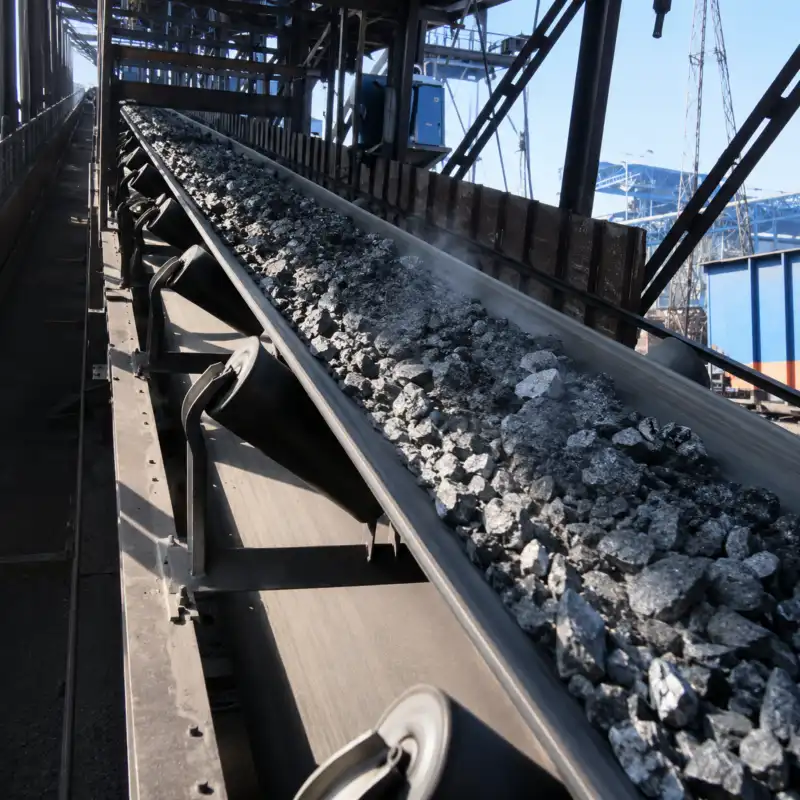
Combined Rubber Compounds for Complex Conditions
The base belt, cleat surface, and cleat root may be exposed to several operating risks at the same time. We can combine rubber properties instead of limiting the cleated conveyor belt to a single resistance grade.

Flame- and Cold-Resistant Rubber
For low-temperature sites that also require flame resistance, this compound helps maintain rubber flexibility while meeting project-specific safety requirements.
Oil- and Heat-Resistant Rubber
For warm materials containing oil, grease, or oily residues, this compound reduces swelling and softening while limiting heat-related hardening and cracking.
Acid/Alkali- and Oil-Resistant Rubber
For fertilizer, chemical, or industrial materials exposed to both oil and corrosive substances, this compound provides broader protection than a single-property cover rubber.
Submit your project’s cover adhesive requirements, and we can provide you with a suitable cleat conveyor belt and cover adhesive strength.
How We Secure Cleats to the Conveyor Belt
The reliability of a cleated conveyor belt depends on how firmly each cleat is integrated with the belt surface. We control the cleat root, vulcanization process, installation position, and bending conditions to reduce separation, root cracking, and uneven material loading.

Reinforced Cleat Root
A widened and reinforced cleat root distributes the conveyed load across a larger belt area. This reduces stress concentration at the connection point when the cleat carries material and repeatedly bends during operation.
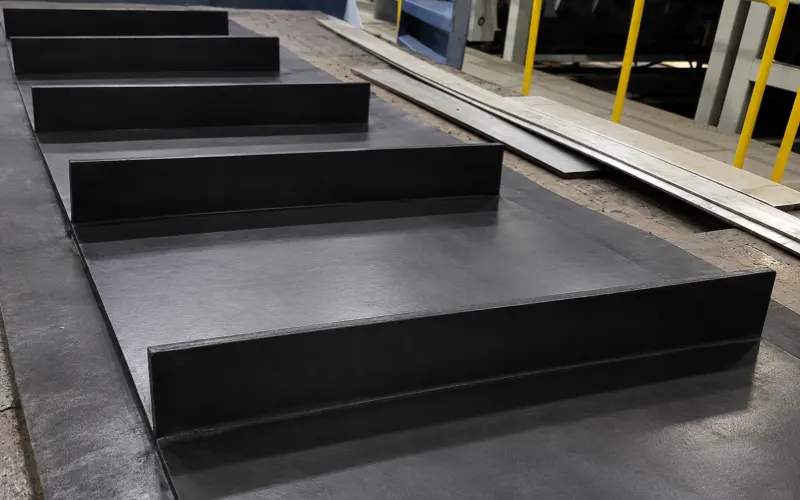
Accurate Cleat Positioning
Cleat height, pitch, angle, and running direction are checked against the approved production drawing. Consistent positioning maintains uniform carrying compartments and prevents irregular loading along the belt.
Controlled Vulcanized Bonding
The rubber cleats for conveyor belt applications are molded and vulcanized to the belt under controlled temperature, pressure, and curing time. This creates an integrated connection rather than relying on a simple surface attachment.
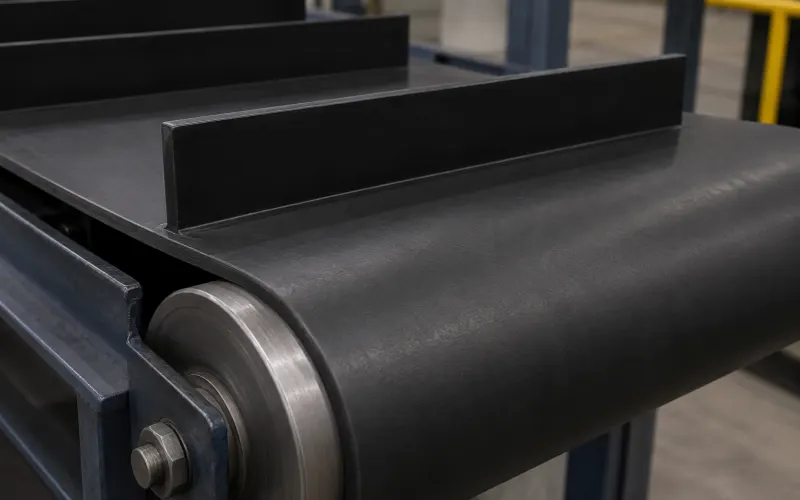
Pulley-Compatible Cleat Design
We review the cleat height, root thickness, base-belt flexibility, and minimum pulley diameter before producing your custom cleated conveyor belts. This ensures the cleat and belt can bend together around the pulley without concentrating excessive strain at the cleat root, reducing the risk of cracking or separation.
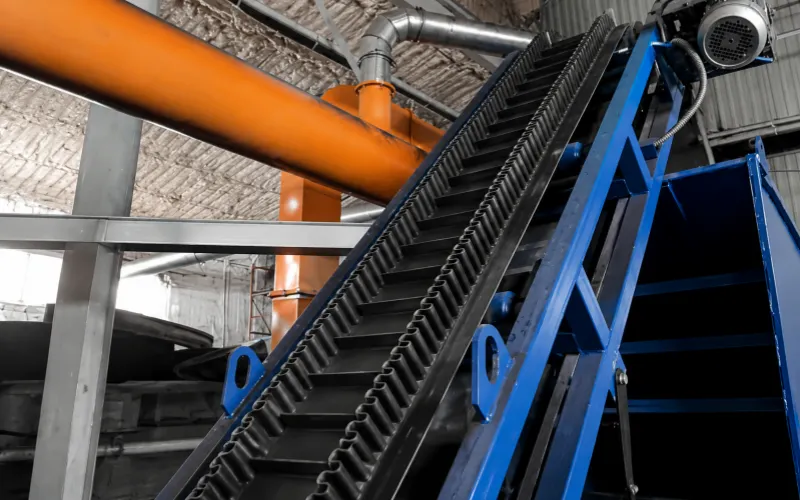
Cleated, Chevron, or Sidewall Structure?
Choose a cleated conveyor belt when transverse cleats are needed to divide the belt into defined carrying sections and directly support material on an incline. A chevron cleated conveyor belt is more suitable when continuous raised patterns provide enough grip without creating separate compartments.
For steeper conveying, especially when material may spill from both belt edges, a sidewall cleated belt conveyor combines transverse cleats with corrugated sidewalls to form enclosed carrying sections.
Cleated Conveyor Belt Quality Verification
Before shipment, we focus on the cleat dimensions and connection areas that directly affect the capacity and service reliability of the cleated conveyor belt. Inspections are carried out against the approved production drawing.
Cleat Height and Root Thickness
We measure cleat height and root thickness at selected positions. Cleat height must provide the required carrying depth, while the root must be thick enough to support the load without becoming excessively rigid during repeated pulley bending.
Cleat Pitch
We check the center-to-center distance between adjacent cleats against the approved drawing. Consistent pitch maintains the specified compartment volume and prevents irregular feeding or discharge intervals.
Cleat Root and Bonding Surface
We inspect the cleat roots for visible gaps, lifting, cracks, incomplete vulcanization, and other bonding defects. This helps identify weak connection areas that could develop into root cracking or cleat separation under repeated loading and bending.
Need Us to Review Your Cleat Requirements?
Send your cleat type, height, pitch, and conveyor conditions for a quick technical review.
Cleated Conveyor Belt Quality Verification
Before shipment, we focus on the cleat dimensions and connection areas that directly affect the capacity and service reliability of the cleated conveyor belt. Inspections are carried out against the approved production drawing.
Submit Your Requirements
Send your conveyor drawing, existing belt dimensions, cleat type, cleat height, cleat pitch, pulley diameter, conveyed material, required quantity, and destination. Photos or an old belt sample can also support specification confirmation.
Confirm the Quotation and Order
We review the cleat layout, base-belt structure, rubber compound, quantity, and delivery requirements before issuing the quotation. Production begins after the specifications, price, payment terms, and order details are confirmed.
Production and Delivery
We manufacture the custom cleated conveyor belts according to the approved specifications, inspect the critical cleat dimensions and bonding areas, and complete the agreed packaging and shipment arrangements.
FAQs
Where should the belt joint be positioned in relation to the cleats?
Can tall rubber cleats be internally reinforced?
Can different cleat pitches be used on the same conveyor belt?
Can a cleated conveyor belt operate in both directions?
How do you improve discharge when handling wet or sticky materials?
Can the cleats use a different rubber compound from the belt cover?
Build Your Cleated Conveyor Belt from Confirmed Data
Send your belt drawing, cleat dimensions, material details, and operating conditions. We will review the structure before confirming the quotation and production plan.