Sidewall Conveyor Belt Manufacturer for Steep Conveying
We manufacture Sidewall Conveyor Belt with controlled base-belt production and coordinated sidewall and cleat configurations. You can source corrugated sidewall conveyor belt and incline conveyor belt solutions for different material-handling requirements.
- 0.1 mm-Level Calendering Accuracy
- ±0.5°C Mixing Temperature Control
- Integrated Base Belt, Sidewall & Cleat Production
- 800,000+ m Monthly Production Capacity
Sidewall Conveyor Belt Overview
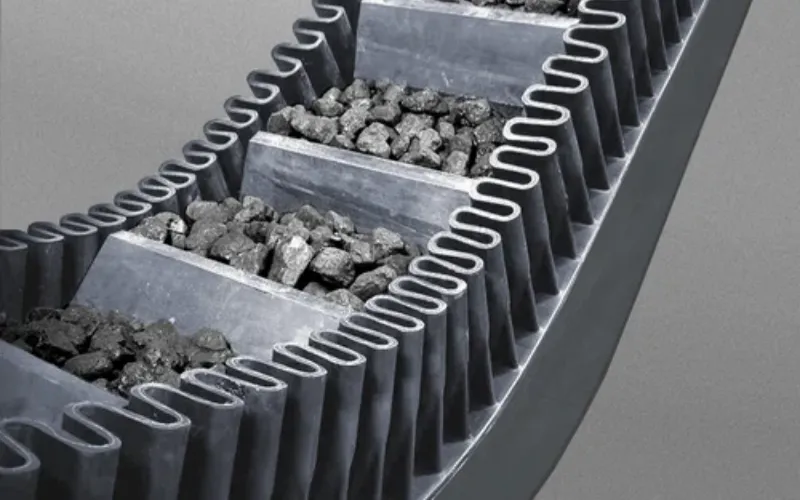
With our Sidewall Conveyor Belt, you can move bulk materials along steep or vertical routes using one continuous conveying system. We combine a reinforced base belt with corrugated sidewalls and cross cleats, helping you control material rollback and side spillage during lifting.
You can use a corrugated sidewall conveyor belt where limited floor space, high discharge points, or fewer transfer sections are required. Compared with a conventional incline conveyor belt layout, this structure helps you shorten the conveying route while maintaining stable material support.

Sidewall Conveyor Belt Structure
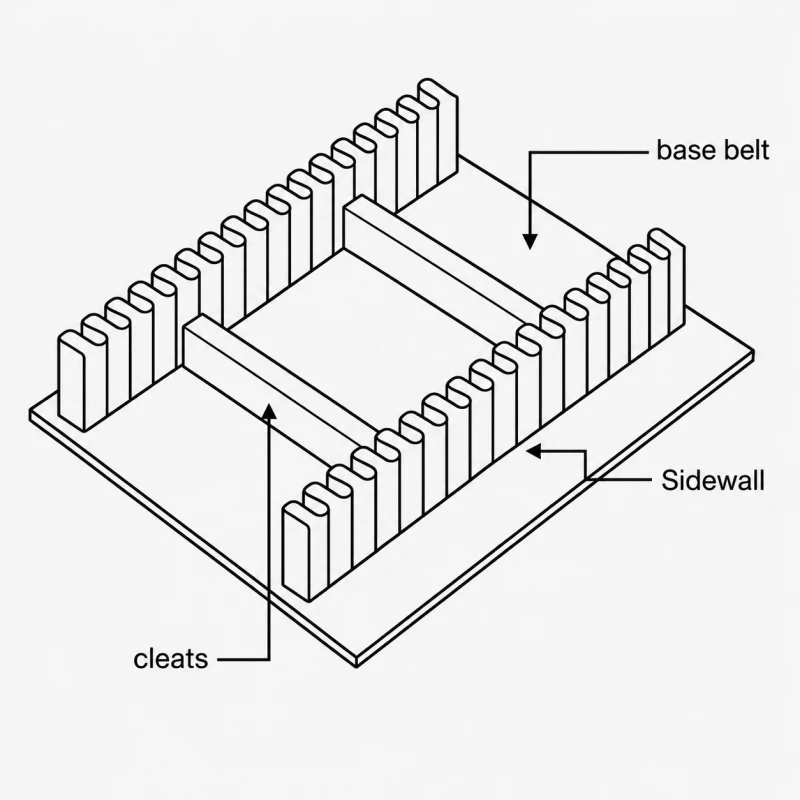
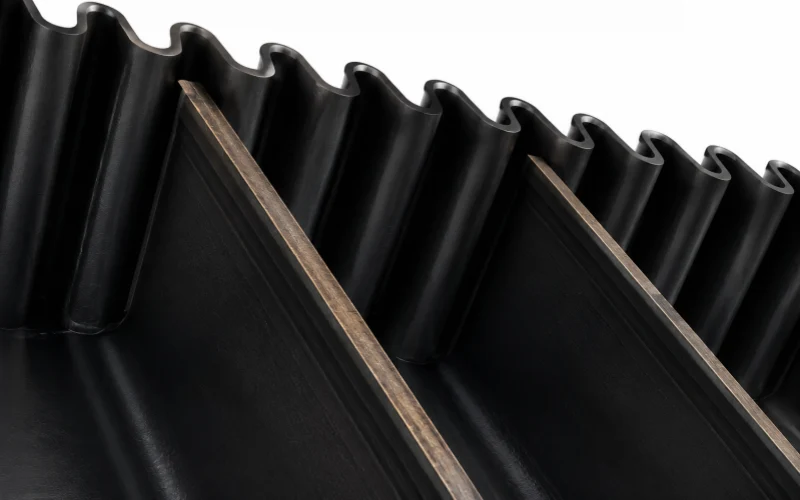
A corrugated sidewall conveyor belt consists of three main components: the base belt, corrugated sidewalls, and cross cleats. Together, these components form a continuous conveying surface that supports bulk materials during steep-angle or vertical transport.

Base Belt
The base belt provides the tensile strength and carrying foundation of the complete Sidewall Conveyor Belt. We configure its width, thickness, fabric plies, tensile strength, and cover grade according to your required specification and conveyed material.
Corrugated Sidewalls
Corrugated sidewalls are positioned along both edges of the base belt. Their flexible wave-shaped profile helps contain the material laterally while allowing the corrugated sidewall conveyor belt to bend repeatedly around conveyor pulleys.
Cleats
Cleats are arranged between the two sidewalls to support the material during inclined movement. Their height, width, profile, and spacing influence the carrying volume and material stability of the incline conveyor belt.
Need a Sidewall Conveyor Belt Configuration for Your Application?
Tell us your material, belt width, sidewall height, and cleat requirements. We will help you match the base belt, corrugated sidewalls, and cross cleats for your incline conveyor belt application.
Sidewall and Cleat Specifications
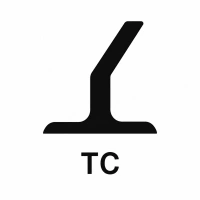
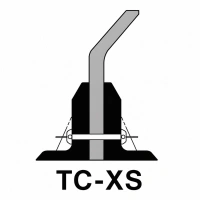
We offer S, MDSF, and HHDF corrugated sidewall profiles, together with C, T, TC, and TC-XS cleat types. You can compare their dimensions, unit weight, and minimum pulley diameter below when defining a Sidewall Conveyor Belt or incline conveyor belt configuration.
Corrugated Sidewall Types
| Type | H (mm) | Sw (mm) | Tw (mm) | P (mm) | Estimated Weight (kg/m) | Min. Pulley Diameter (mm) |
|---|---|---|---|---|---|---|
| S | 40 | 30 | 20 | 25 | 0.48 | 125 |
| 60 | 50 | 45 | 40 | 1.38 | 160 | |
| 80 | 50 | 45 | 40 | 1.66 | 200 | |
| 100 | 50 | 45 | 40 | 2.00 | 250 | |
| 120 | 50 | 45 | 40 | 2.24 | 315 | |
| MDSF | 120 | 75 | 65 | 63.5 | 3.88 | 315 |
| 160 | 75 | 65 | 63.5 | 4.22 | 400 | |
| 200 | 75 | 65 | 63.5 | 4.93 | 500 | |
| 240 | 75 | 65 | 63.5 | 5.92 | 630 | |
| 280 | 75 | 65 | 63.5 | 7.40 | 800 | |
| 300 | 75 | 65 | 63.5 | 7.66 | 800 | |
| HHDF | 300 | 100 | 90 | 83 | 12.61 | 800 |
| 400 | 100 | 90 | 83 | 15.67 | 1000 | |
| 500 | 100 | 95 | 89 | 18.78 | 1250 |
Reinforcement Note:For corrugated sidewalls above 120 mm, diagonal fabric reinforcement is recommended. Crisscross fabric reinforcement is also available for sidewalls below 120 mm.
Cross Cleat Types
| Cleat Type | Height (mm) | Catalog Dimension (mm) | Weight (kg/m) | Min. Pulley Diameter (mm) |
|---|---|---|---|---|
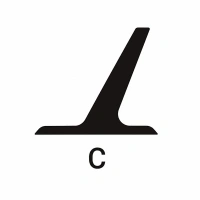
![]() | 55 | 100 | 1.40 | 125 |
| 75 | 100 | 1.47 | 150 | |
| 90 | 110 | 3.01 | 250 | |
| 110 | 110 | 3.57 | 315 | |
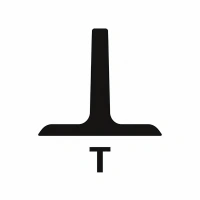
![]() | 55 | 100 | 1.58 | 125 |
| 75 | 100 | 1.82 | 150 | |
| 90 | 110 | 2.53 | 250 | |
| 110 | 110 | 3.11 | 315 | |
| 140 | 160 | 5.70 | 400 | |
| 180 | 160 | 6.81 | 500 | |
| 230 | 160 | 8.71 | 630 | |
![]() | 55 | 75 | 1.17 | 125 |
| 75 | 100 | 1.93 | 150 | |
| 90 | 110 | 3.57 | 250 | |
| 110 | 110 | 2.38 | 315 | |
| 140 | 150 | 5.70 | 400 | |
| 180 | 150 | 6.81 | 500 | |
| 230 | 160 | 7.85 | 630 | |
| 280 | 180 | 14.34 | 800 | |
![]() | 230 | 160 | 10.60 | 630 |
| 280 | 160 | 11.95 | 800 | |
| 360 | 230 | 24.66 | 1000 | |
| 470 | 230 | 31.00 | 1250 |
Construction Details That Improve Sidewall Conveyor Belt Durability
We strengthen the key connection and wear areas of each Sidewall Conveyor Belt according to the confirmed structure. These construction details help the corrugated sidewall conveyor belt withstand repeated bending, material impact, and continuous incline conveying.

Vulcanized Bonding to the Base Belt
We vulcanize the corrugated sidewalls and cross cleats directly onto the base belt. This creates a continuous bonded structure and helps reduce loosening, separation, or displacement caused by repeated flexing and material loading.
Mechanically Reinforced Cleat Connections
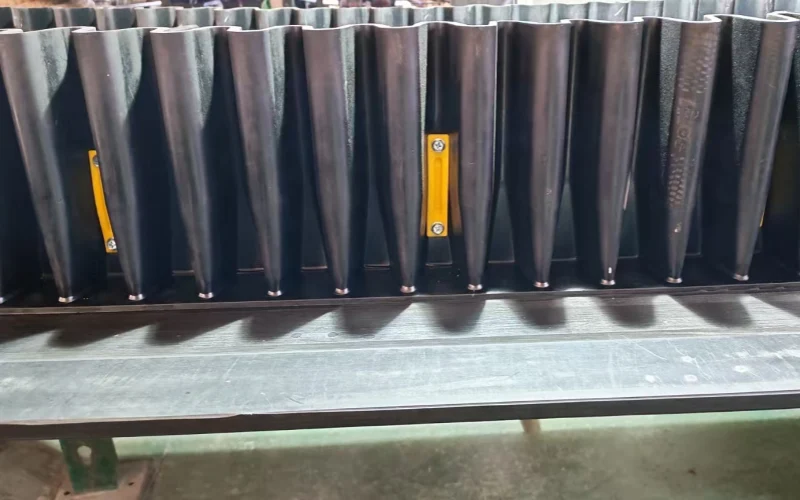
We connect the cross cleats to the sidewalls using bolts, nuts, or riveted fasteners according to the selected structure. This mechanical connection reinforces the cleat edges and helps maintain alignment between the cleats and corrugated sidewalls during operation.
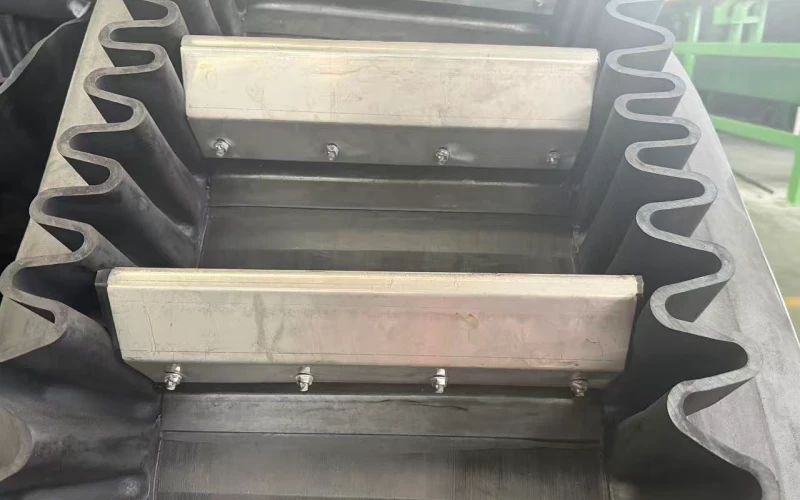
Optional Steel-Faced Cleat Protection
For highly abrasive materials, we can add an external steel plate to the cleat surface. The steel-facing layer takes direct contact from the conveyed material, helping reduce wear on the cleat rubber and extend the usable life of the incline conveyor belt components.
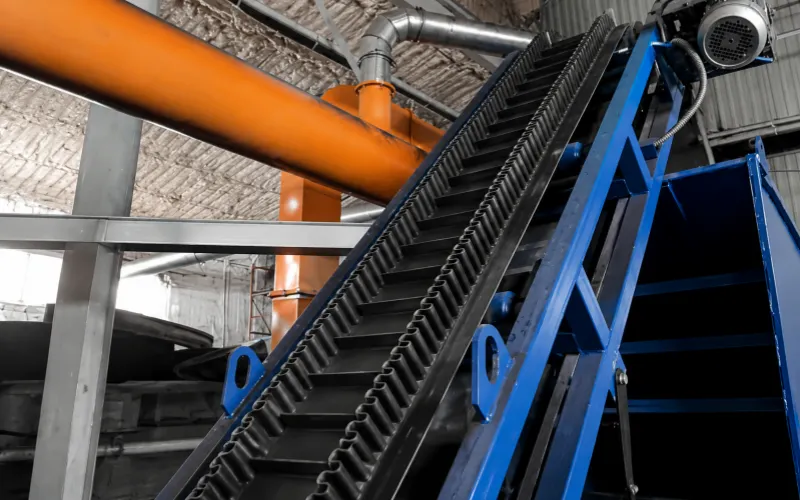
Feeding Elevated Silos from a Ground-Level Hopper
A Sidewall Conveyor Belt can lift powder, granular, or small-lump materials directly from a ground-level receiving hopper to an elevated silo. You can achieve the required feeding height without installing a long conventional incline conveyor belt, making better use of limited plant space.
The corrugated sidewalls contain the material along both edges, while the cross cleats support it during steep or vertical lifting. This arrangement is suitable for cement, fertilizer, grain, minerals, and other bulk materials that must be transferred continuously into high-level storage equipment.
Quality Inspection for Sidewall Conveyor Belt
Before shipment, we inspect the finished Sidewall Conveyor Belt against your confirmed dimensions and production specification. We focus on cleat height, sidewall height, cleat pitch, and visible product condition to reduce dimensional differences during installation.

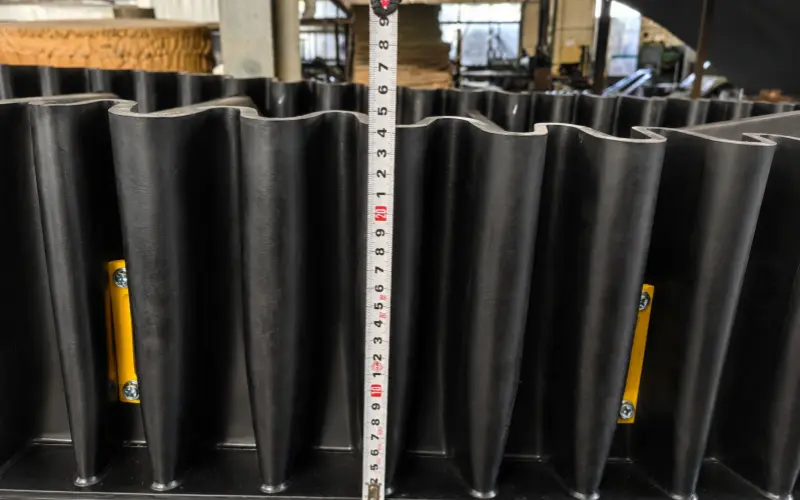
Cleat Height Inspection
We measure the finished cleat height at selected positions along the belt and compare the results with your confirmed specification. Consistent cleat height helps maintain the required material pocket depth throughout the incline conveyor belt.
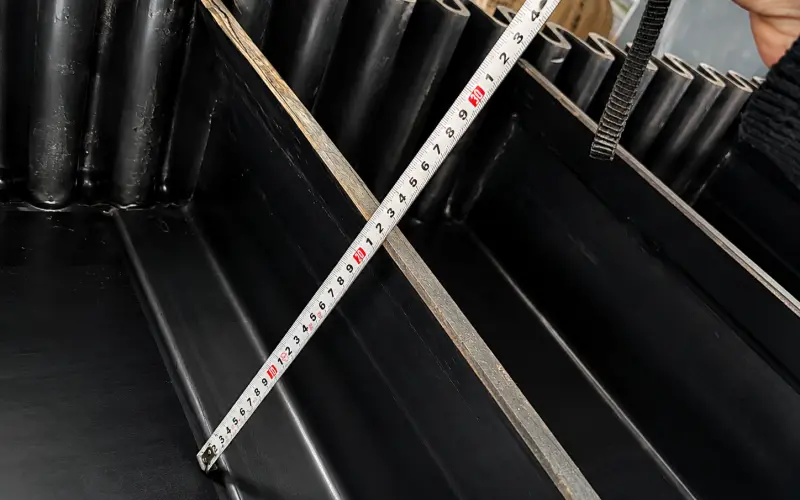
Sidewall Height Inspection
We check the finished height of both corrugated sidewalls after assembly. The measured dimensions are compared with the approved sidewall profile to confirm that the effective carrying section meets your required configuration.
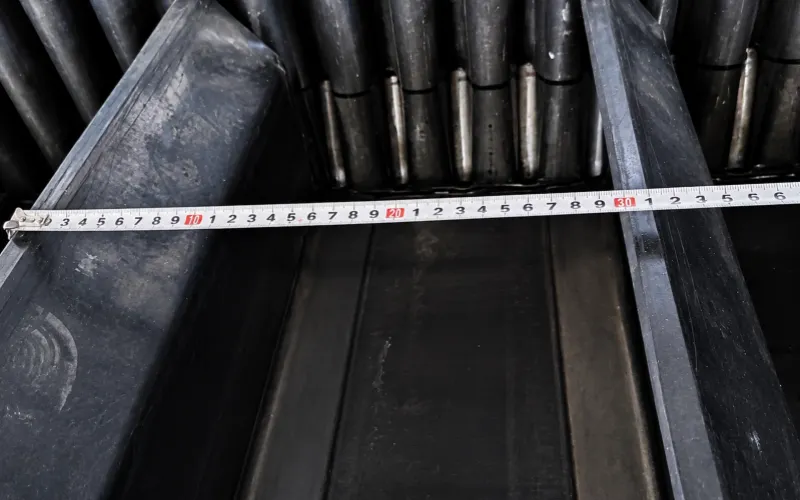
Cleat Pitch Inspection
We verify the pitch between adjacent cleats along the full Sidewall Conveyor Belt. Consistent cleat pitch helps maintain uniform material pockets and prevents unexpected differences in carrying volume between belt sections.
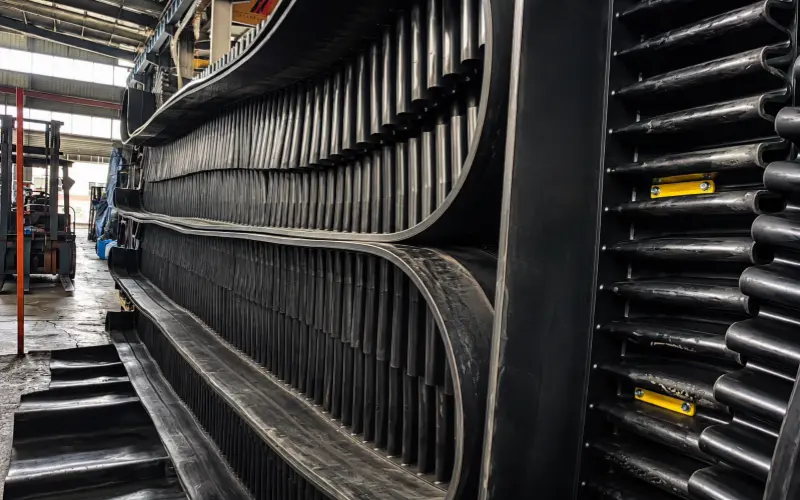
Finished Product Inspection
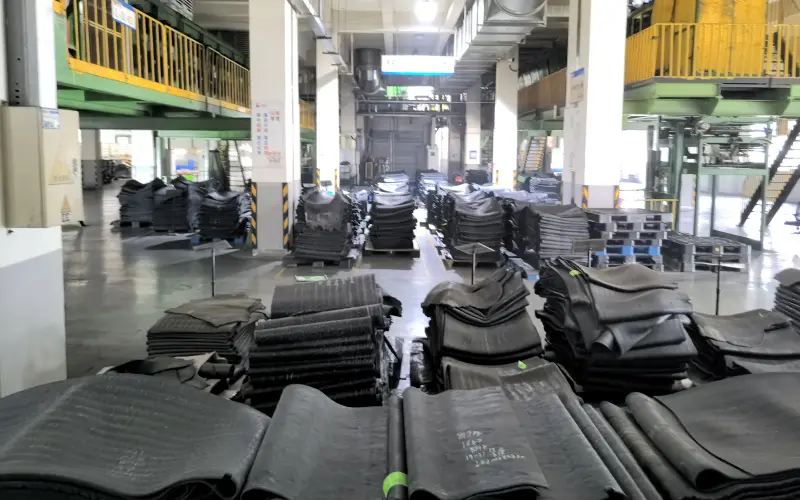
We inspect the base-belt surface, sidewall profiles, cleat surfaces, edges, vulcanized areas, fasteners, product markings, and roll identification before packing. Visible defects or assembly inconsistencies are checked before the belt is released for shipment.
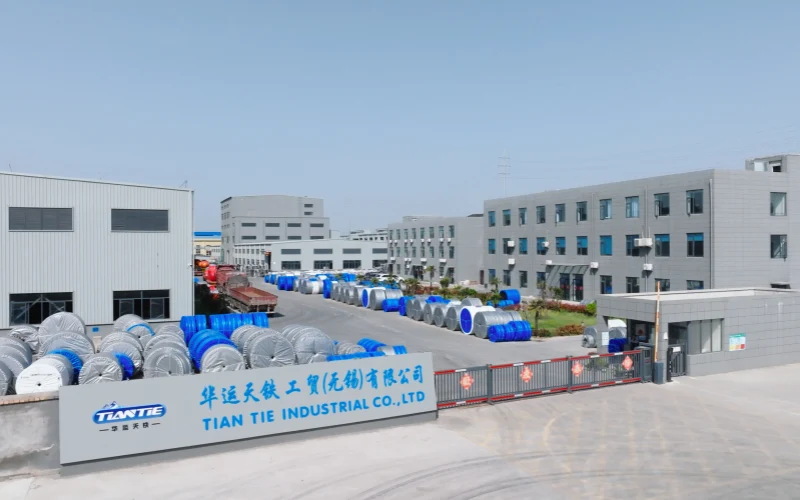
Manufacturing Capacity for Sidewall Conveyor Belt
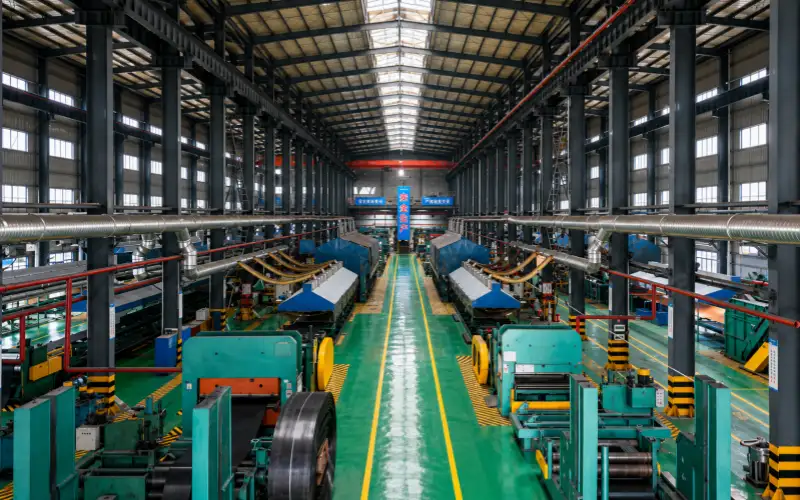
We manufacture Sidewall Conveyor Belt within our large-scale conveyor belt production system. Our factory resources support continuous production across rubber preparation, base-belt processing, component assembly, finishing, and order inspection.

120,000 m² Production Base
Our 120,000 m² manufacturing base provides the production space required for different processing stages, equipment operation, material management, finished-belt handling, and multi-roll order preparation.

60 Production Lines
We operate 60 production lines across our conveyor belt manufacturing system. These resources allow us to arrange different specifications and production processes in parallel while maintaining an organized production schedule.

300+ Production Personnel
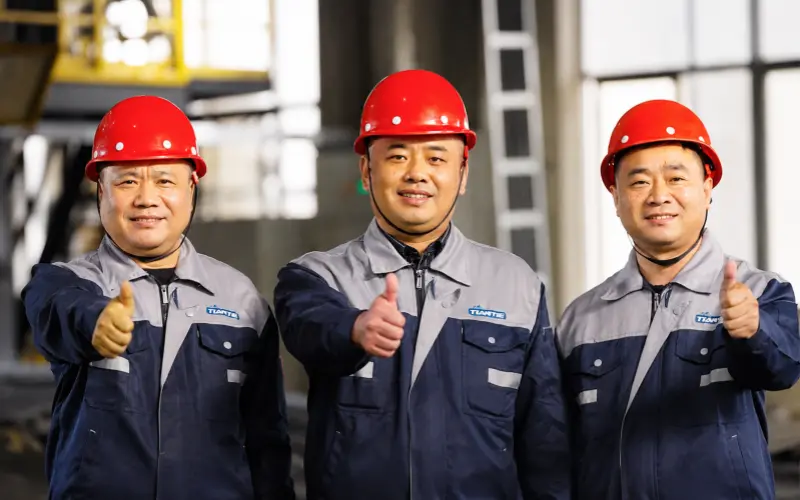
More than 300 production employees work across material preparation, belt manufacturing, component processing, assembly, inspection, rolling, and packing. You benefit from a manufacturing team that can coordinate each stage of your order.

30,000+ Tons Annual Mixing Capacity
Our rubber-mixing workshop processes more than 30,000 tons of compound annually. This provides a stable material foundation for producing base belts, corrugated sidewalls, and cross cleats with different rubber requirements.
Planning a Large or Multi-Roll Sidewall Conveyor Belt Order?
Send us your required quantity and delivery schedule. We will help you confirm whether our production capacity can support your order plan.
Information Required for a Sidewall Conveyor Belt Quotation
To quote your Sidewall Conveyor Belt accurately, we need the base belt specification, sidewall height, cleat dimensions, cleat style, and total required length. You can also upload an existing drawing or specification sheet.
Base Belt Specifications
| Required Information | Example |
|---|---|
| Tensile Strength | EP 630/4 |
| Base Belt Width | 1200 mm |
| Base Belt Thickness | 12 mm |
| Number of Fabric Plies | 4 plies |
| Cover Grade | Abrasion-resistant |
| Total Length | 100 m |
Sidewall Specification
| Required Information | Example |
|---|---|
| Sidewall Height | 200 mm |
Cleat Specifications
| Required Information | Example |
|---|---|
| Cleat Height | 180 mm |
| Cleat Width | 900 mm |
| Cleat Pitch | 250 mm |
| Cleat Style | C, T, TC, or TC-XS |
File Upload Note
You can upload an existing Sidewall Conveyor Belt drawing, purchase specification, dimensional sketch, or product photo when some information is unavailable.
FAQs
Can a Sidewall Conveyor Belt Convey Material Vertically?
Can a Sidewall Conveyor Belt Handle Wet or Sticky Materials?
Can a Sidewall Conveyor Belt Convey Hot Materials?
Can It Convey Large or Sharp-Edged Materials?
Can a Sidewall Conveyor Belt Run in Reverse?
What Affects Material Discharge from a Sidewall Conveyor Belt?
Request a Quote for Sidewall Conveyor Belt
Send us your Sidewall Conveyor Belt specifications or upload an existing drawing. We will prepare a quotation based on your required configuration and quantity.