Bucket Elevator Belt Manufacturer for Vertical Bulk Material Handling
At Tiantie Industrial, we manufacture Bucket Elevator Belt in multiple strengths, widths, thicknesses, and cover grades. You can order it unpunched, pre-punched to your approved drawing, or with buckets installed.
- High Longitudinal Strength & Low Elongation
- Consistent Bucket Hole Pitch
- Multi-Performance Rubber Cover Compounds
- Integrated Belt, Bucket & Fastener Assembly
Choose Your Bucket Elevator Belt Construction
We supply Bucket Elevator Belt with fabric or steel cord reinforcement. You should select the construction according to the existing belt grade, equipment specification, lifting load, and required elongation control. Cover compound requirements will be confirmed separately according to the conveyed material and operating conditions.

Fabric Bucket Elevator Belt
A Fabric Bucket Elevator Belt uses multiple textile plies as the load-bearing carcass. You can specify the required EP strength, number of plies, belt width, thickness, and total length according to your existing elevator belt or equipment document.
- EP-rated fabric carcass
- Multiple ply constructions
- Custom width and thickness
- Unpunched or drawing-based punching
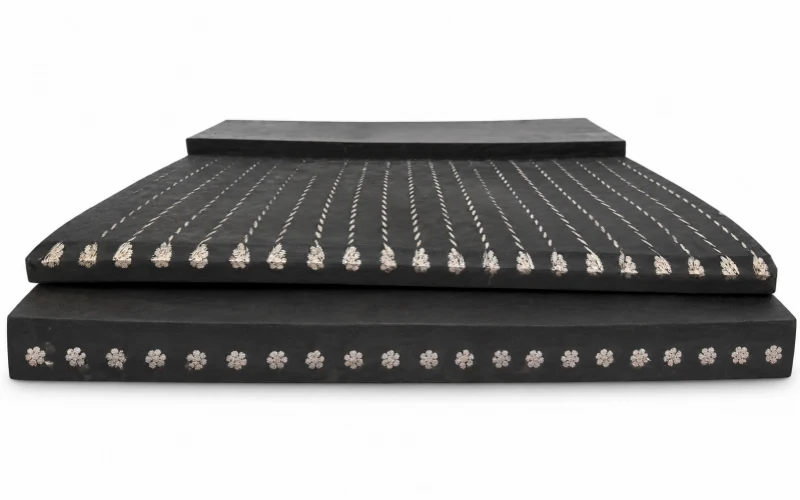
Steel Cord Bucket Elevator Belt
A Steel Cord Bucket Elevator Belt uses longitudinal steel cords to provide higher tensile strength and lower elongation. You should select this construction when your existing belt marking, equipment drawing, or purchase specification requires an ST-rated elevator belt.
- ST-rated steel cord carcass
- Higher longitudinal strength
- Lower operating elongation
- Produced to confirmed specifications
Already have an existing belt grade? Send us the complete EP or ST specification for comparison.
Bucket Elevator Belt Overview
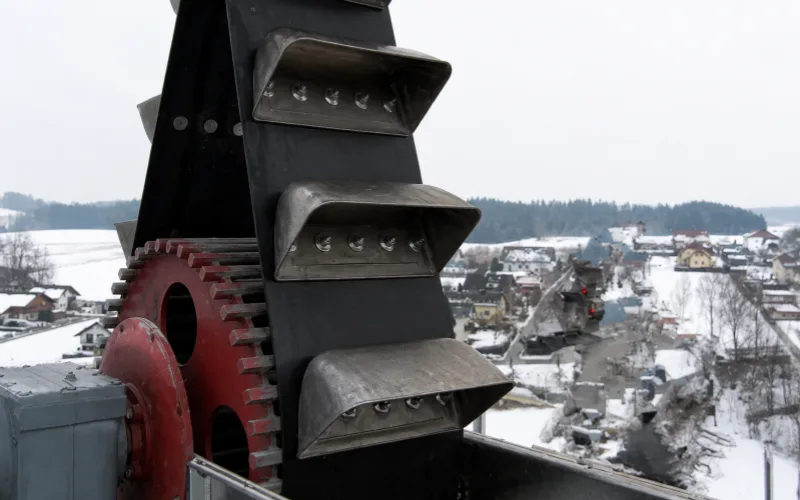
A Bucket Elevator Belt is a rubber conveyor belt used as the load-bearing component inside a bucket elevator. Buckets are fixed to the belt through mounting holes and fasteners, allowing you to lift bulk materials continuously from the lower loading section to an elevated discharge point.
Unlike a standard conveyor belt, a Bucket Elevator Belt must match the bucket layout, bolt pattern, pulley system, lifting load, and operating environment. You should confirm the base-belt specification and installation drawing together, because the belt and bucket arrangement function as one complete lifting assembly.
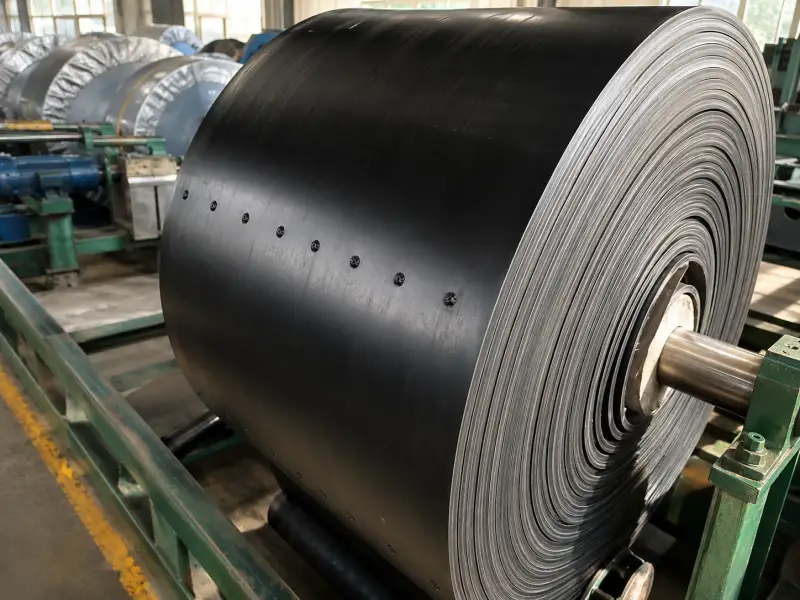
Bucket Elevator Belt Structure
We build a Bucket Elevator Belt around three connected elements: the rubber base belt, bucket mounting holes, and the bucket fastening assembly. Each element must follow your confirmed specification so the finished belt can be installed correctly in the existing elevator system.
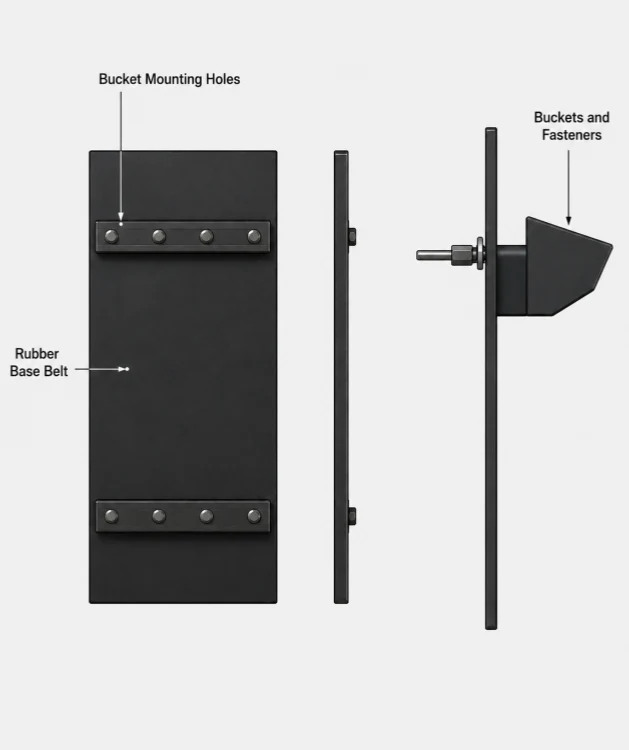
Rubber Base Belt
The rubber base belt carries the longitudinal tension generated by the belt, buckets, and conveyed material. You can specify the required tensile strength, belt width, thickness, fabric plies or steel cord grade, cover compound, and total length.
Bucket Mounting Holes
We process mounting holes only according to your approved drawing. The drawing should define the hole diameter, row arrangement, bucket pitch, edge distance, starting position, and belt running direction. You can also order the Bucket Elevator Belt without holes.
Buckets and Fasteners
Buckets are mounted through the processed holes using the specified bolts, nuts, washers, clamps, or backing plates. You can purchase the belt only, request drawing-based punching, or include bucket installation when the assembly drawing and required components are confirmed.
We'll develop a proposal for you right away based on your drawings.
Bucket Elevator Belt Hole Processing Based on Your Drawin
We use your approved hole drawing as the production reference for each pre-punched Bucket Elevator Belt. We do not independently determine or change the hole diameter, bucket pitch, row arrangement, or mounting position without your written confirmation.
Drawing Submission
You provide a complete hole drawing showing belt width, hole diameter, row spacing, bucket pitch, edge distance, start position, and running direction.
Drawing Confirmation
Before production, we confirm the drawing number and revision with you. Only the final approved version is used for processing.
Hole Processing
We punch each Bucket Elevator Belt according to the approved dimensions and repeat the confirmed hole pattern throughout the required length.
Finished Hole Inspection
We check the hole diameter, position, pitch, edge distance, and running direction against the drawing, while also inspecting the hole edges for visible defects.
Have a Confirmed Hole Drawing?
Upload it so we can review the required processing scope.
Vertical Lifting in Bucket Elevator Systems
You can use a Bucket Elevator Belt to carry mounted buckets through a vertical elevator casing, moving bulk material from the lower feeding section to an elevated discharge point. This system provides continuous vertical lifting while occupying less horizontal installation space.
We can supply the belt for grain, feed, cement, fertilizer, minerals, powders, and other bulk materials. The required base-belt construction and rubber compound should follow your existing elevator specification, lifting load, material temperature, oil content, and operating conditions.
Final Checks for Bucket-Installed Belt Assemblies
For orders with buckets installed, we check the completed assembly against your approved drawing before packing.
Bucket Model and Quantity
We confirm the bucket model, quantity, and arrangement.
Fastener Configuration
We verify the specified bolts, nuts, washers, clamps, or backing plates.
Bucket Orientation
We check that each bucket follows the confirmed installation and running direction.
Finished Assembly Condition
We inspect visible bucket damage, loose fasteners, belt edges, product markings, and roll identification.
Replacing an Existing Bucket Elevator Belt?
Send us the marking, purchase record, or technical specification from your existing belt. We use the confirmed strength grade, width, thickness, cover compound, and required length as the basis for the replacement order.
For pre-punched or bucket-installed replacements, please provide the approved hole drawing and assembly drawing. Photos can help us understand the existing product, but production dimensions must follow your confirmed documents.
Information Required for a Bucket Elevator Belt Quotation
Please provide the following information:
- Tensile Strength — EP grade or ST grade
- Belt Width
- Belt Thickness
- Number of Fabric Plies — for fabric belts only
- Cover Compound
- Total Required Length
- Delivery Condition — unpunched, pre-punched only, or pre-punched with buckets installed
- Approved Hole Drawing — required for punching; it should show the complete hole layout, dimensions, starting position, and belt running direction
- Drawing Number and Revision
- Bucket Assembly Drawing — required when bucket installation is included
- Bucket Model and Quantity
- Fastener Specification
- Component Supply Responsibility — confirm whether you or Tiantie Industrial will provide the buckets and fasteners
Do you find it really frustrating to have to fill out so many fields?
Don’t worry—just click the button below and send us your project files. You won’t need to resubmit all that data; we’ll extract the information needed for your quote directly from the files.
FAQs
How Does Bucket Weight Affect Belt Selection?
Can One Cover Compound Handle Both Heat and Oil?
What Affects the Minimum Pulley Diameter?
Should the Splice Area Remain Free of Bucket Holes?
What Happens If the Bucket Pitch Does Not Match the Existing Elevator?
How Should the Belt Be Stored Before Installation?
Request a Quote for Bucket Elevator Belt
Send us your base-belt specification and approved drawings. We can quote an unpunched belt, a pre-punched belt, or a complete belt assembly with buckets installed.
