China EP Conveyor Belt Manufacturer
We supply EP conveyor belt solutions for cement plants, power plants, mining, ports, steel plants, and bulk material handling projects, with customized specifications based on your conveyor system requirements.
- 20+ years of rubber conveyor belt manufacturing experience for industrial bulk material handling projects.
- 1–5 years warranty available according to belt type, working conditions and project requirements.
- Factory-controlled rubber compound formulas for abrasion, heat, oil and flame resistant EP conveyor belt applications.
- Conveyor belt solutions developed around your operating conditions, not limited by standard catalog specifications.
EP Conveyor Belt Solutions for Different Industrial Applications
Different conveying systems require different belt structures, specifications, and cover compounds. EP conveyor belt is widely used for bulk material handling, with reliable performance across multiple industrial applications.
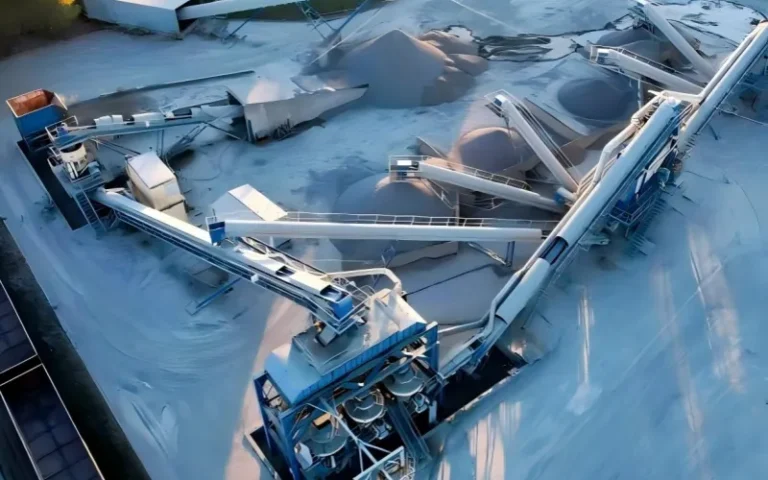
Cement Plants
Designed for limestone, raw meal, coal and other bulk material conveying systems where continuous operation is critical.
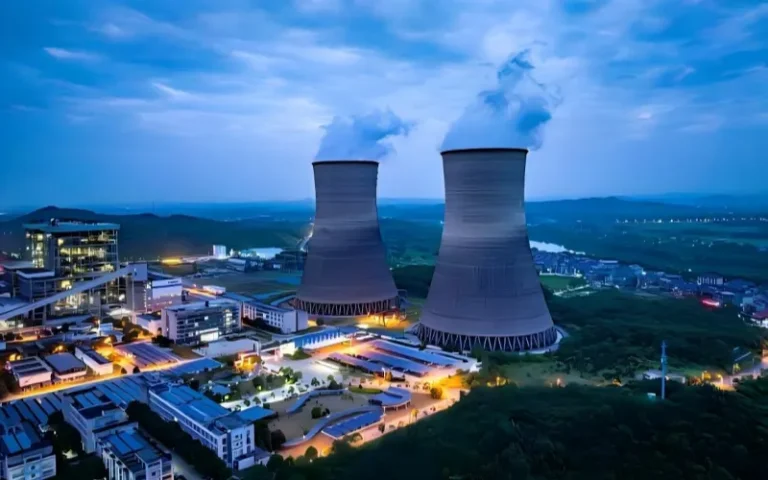
Power Plants
Suitable for coal handling and material transfer systems requiring stable conveying performance under demanding schedules.
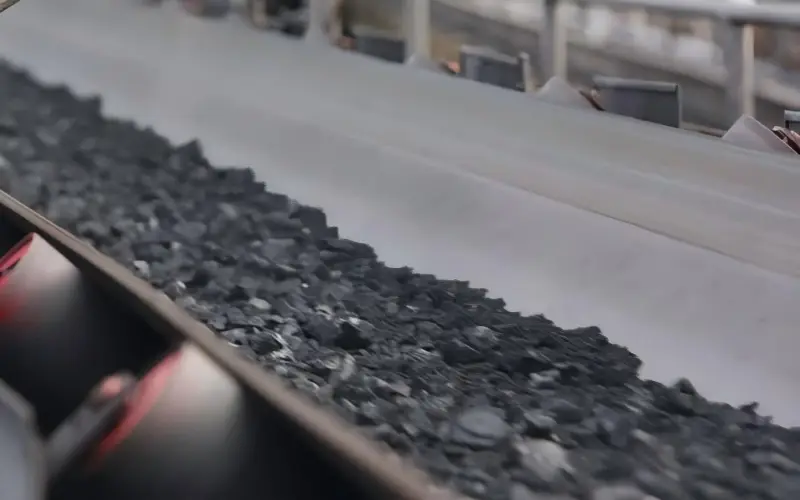
Mining Operations
Applied in ore, coal and aggregate handling systems where conveyor belts face heavy loads, impact and abrasive materials.
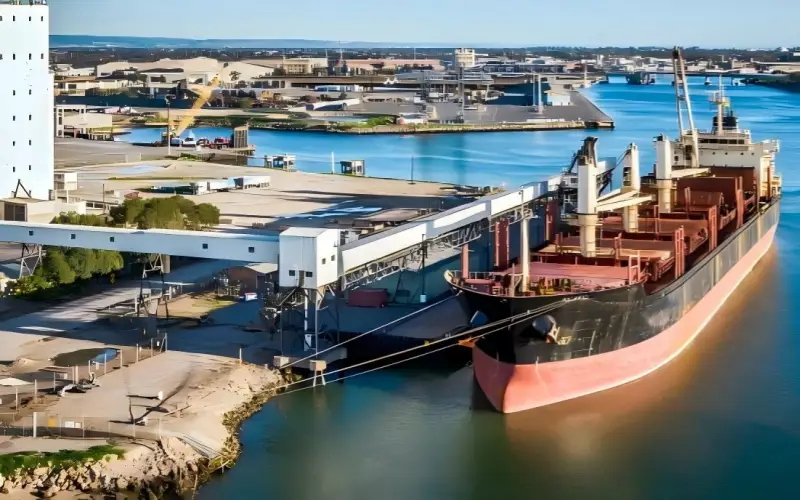
Ports & Bulk Terminals
Used in large-volume material handling systems for coal, mineral products and other bulk commodities.
Whether for plant maintenance, conveyor upgrades, or new project installations, EP conveyor belt specifications can be customized according to conveyor length, capacity, material characteristics and operating conditions.
EP Conveyor Belt Options Based on Plant Requirements
Choose an EP conveyor belt based on your conveyed material, working temperature, safety requirements, replacement plan and conveyor system conditions. Share your application data with us, and we can help recommend a suitable belt option for your plant or project.
| Plant Requirement | Suitable EP Conveyor Belt Option | Typical Application Direction |
|---|---|---|
| Standard bulk material conveying | General EP Conveyor Belt | For routine material transfer lines in cement plants, power plants, ports, quarries and general industrial facilities. |
| Abrasive stone, ore, gravel or aggregate | Abrasion Resistant EP Conveyor Belt | For conveying systems exposed to sharp, rough or highly abrasive materials where rubber cover performance matters. |
| Elevated material temperature | Heat Resistant EP Conveyor Belt | For hot material conveying sections in cement, steel, foundry and industrial processing environments. |
| Coal handling or safety-required line | Flame Resistant EP Conveyor Belt | For coal transfer, enclosed conveying lines and operating environments requiring flame-resistant belt performance. |
| Oily material exposure | Oil Resistant EP Conveyor Belt | For recycling, fertilizer, processing and special material handling systems where oil exposure may affect belt use. |
| Replacement or project-specific belt | Custom EP Conveyor Belt | For maintenance replacement, conveyor upgrades, OEM requirements and new project installations based on technical data. |
Not Sure Which EP Conveyor Belt Fits Your Application ?
Send your conveyed material, belt width, conveyor length, capacity, operating temperature and current belt specification. Our team can help recommend a suitable belt option for your industrial conveying system.
EP Conveyor Belt Specifications
Use this EP conveyor belt specification table as a reference for commonly used belt grades, ply numbers,tensile strength levels, cover thickness ranges and belt widths in industrial conveying systems.
| Carcass Structure | Carcass Type | Carcass Thickness (mm/p) | Tensile Strength (N/mm) | Cover Thickness (mm) | Width (mm) | ||||||
| Warp | Weft | 2 Ply | 3 Ply | 4 Ply | 5 Ply | 6 Ply | Top Cover | Bottom Cover | |||
| Polyester | Nylon | EP100 | 1.00 | 200 | 300 | 400 | 500 | 600 | 1.5–30 | 1.5–20 | 300–3500 |
| EP125 | 1.00 | 250 | 375 | 500 | 625 | 750 | |||||
| EP150 | 1.10 | 300 | 450 | 600 | 750 | 900 | |||||
| EP200 | 1.20 | 400 | 600 | 800 | 1000 | 1200 | |||||
| EP250 | 1.40 | 500 | 750 | 1000 | 1250 | 1500 | |||||
| EP300 | 1.60 | 600 | 900 | 1200 | 1500 | 1800 | 2–30 | 2–20 | |||
| EP350 | 1.70 | 700 | 1050 | 1400 | 1750 | 2100 | |||||
| EP400 | 1.90 | 800 | 1200 | 1600 | 2000 | 2400 | |||||
| EP500 | 2.10 | 1000 | 1500 | 2000 | 2500 | 3000 | |||||
| EP630 | 2.60 | 1260 | 1890 | 2520 | 3150 | 3780 | |||||
The specifications above cover the EP conveyor belt grades, ply combinations and cover thickness ranges most frequently used in our past industrial projects. They are provided as a practical reference for plant replacement, maintenance procurement and project specification confirmation.
Information Helpful for Technical Evaluation
To help our engineers review your EP conveyor belt requirement more accurately, you can include the following data in your inquiry.
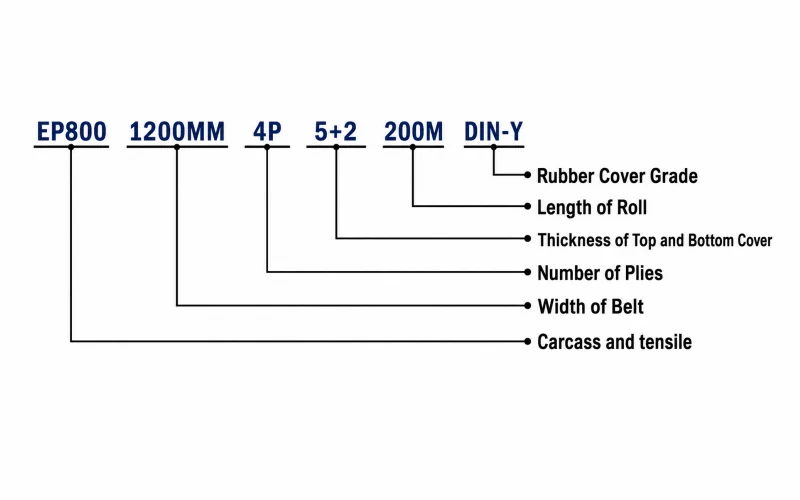
- Carcass and Tensile Strength
- Width of EP Conveyor Belt
- Number of Plies
- Thickness of Top and Bottom Cover
- Length of Roll
- Rubber Cover Grade
Need a Specification Outside This Table?
If your required EP conveyor belt specification involves special tensile strength, belt width, ply construction, cover thickness, rubber grade or project-specific technical requirements, send us your drawings, current belt data, operating conditions or project documents. Our engineers can evaluate your requirements and provide a suitable technical recommendation.
EP Conveyor Belt Structure & Materials
Understanding the structure and material composition of an EP conveyor belt helps match the belt to your conveyed material, operating environment and service requirements. Different rubber compounds, fabric constructions can be selected for your conveyor system.
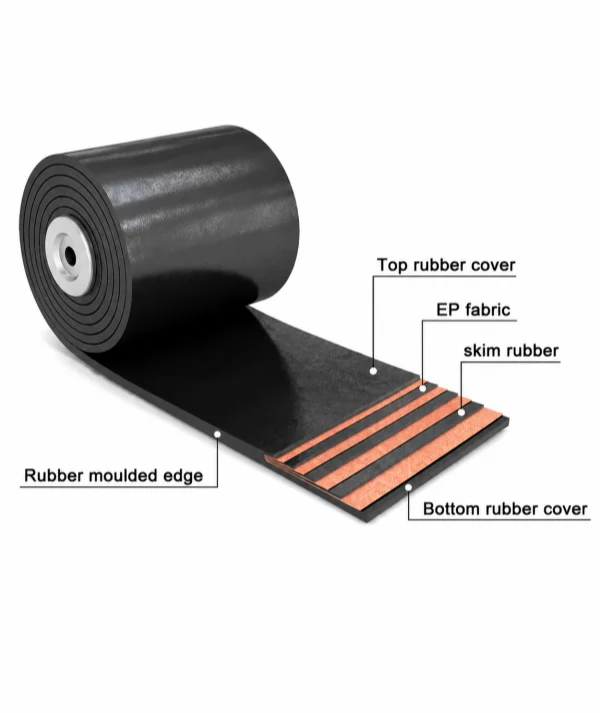
Top Rubber Cover
Selected according to abrasion, heat, oil, flame, impact or outdoor operating conditions.
EP Fabric
Polyester warp and nylon weft reinforcement for fabric conveyor belt and textile conveyor belt construction.
Skim Rubber
Bonding rubber between fabric plies, supporting carcass integrity in a multi-ply conveyor belt structure.
Bottom Rubber Cover
Designed for pulley contact, belt running conditions and conveyor system configuration.
Molded or Cut Edge
Edge construction can be supplied as molded edge or cut edge according to your project specification.
Rubber Compound Selection for EP Conveyor Belt Covers
Instead of using one standard rubber compound for all conditions, we select or develop rubber formulations based on your material, temperature, oil exposure, abrasion level, flame requirement and operating environment.
| Rubber Compound | Typical Use | Application Direction |
|---|---|---|
| NR / SBR Blend | General bulk material conveying and standard abrasion conditions | Commonly used for general-purpose EP conveyor belt covers in routine industrial conveying lines. |
| SBR | Aggregate, stone, ore and general mining materials | Selected for abrasion-resistant cover applications where conveyed materials create regular surface wear. |
| BR Blend | Wear resistance and flexibility requirements | Used when the rubber cover needs improved wear behavior while maintaining flexibility during belt operation. |
| EPDM | Cement, clinker, hot materials and outdoor aging resistance | Suitable for heat-resistant cover formulations and environments where temperature or weather aging is a key factor. |
| CR | Flame-resistant or weather-resistant conveyor belt applications | Used in rubber formulations requiring flame resistance, weather resistance or specific operating protection. |
| NBR | Oily materials, fertilizer, recycling and chemical-related handling | Selected for oil-resistant EP conveyor belt covers where oil exposure may affect service performance. |
| IIR / Butyl Rubber | Special heat, chemical or low-permeability requirements | Applied in specific formulations where the project requires special resistance properties or controlled permeability. |
Need a Rubber Grade Recommendation?
Share your conveyed material, operating temperature,Instantaneous maximum temperature, oil exposure, abrasion level and flame requirement. We can help recommend a suitable rubber cover formulation and EP conveyor belt structure for your application.
Manufacturing & Quality-Controlled Production
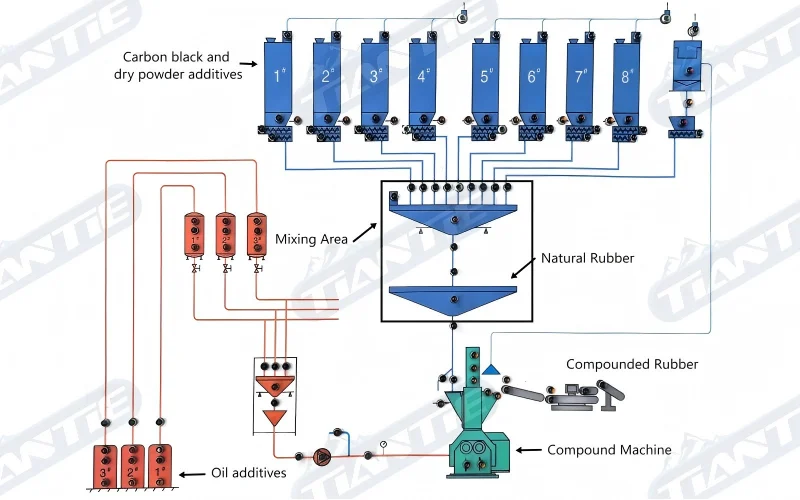
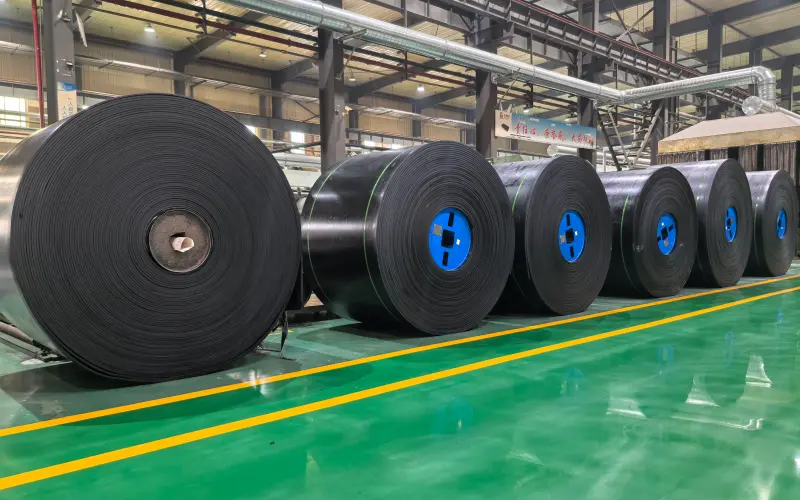
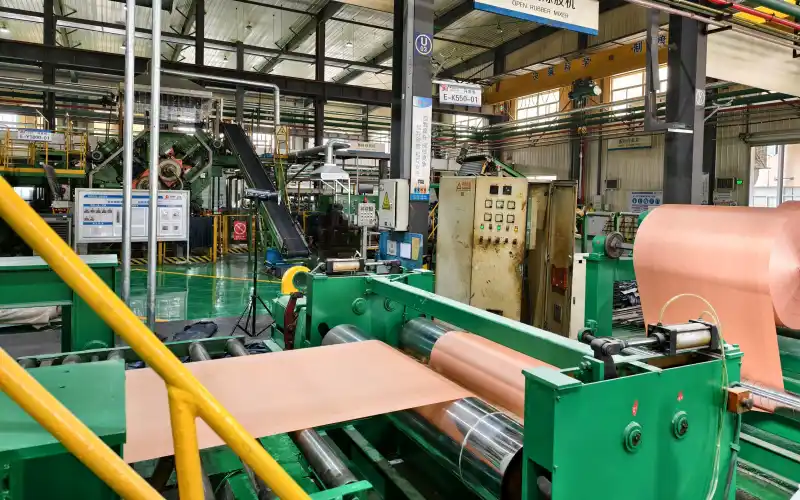
Tiantie Industrial EP conveyor belt production is executed through centralized process control systems that manage rubber formulation, calendering parameters, multi-ply assembly and vulcanization conditions to ensure consistent industrial-grade performance.
Heavy-Duty Main Frame Structure
NR / SBR / EPDM / NBR / CR / IIR rubber formulations are managed through a centralized digital batching system with controlled regulation of compound ratios, oil phase inputs and material formulation parameters.
Digital batching synchronization + formulation ratio control + oil compound integration → ensures stable rubber molecular consistency, uniform physical properties and repeatable EP conveyor belt cover performance across all production batches.
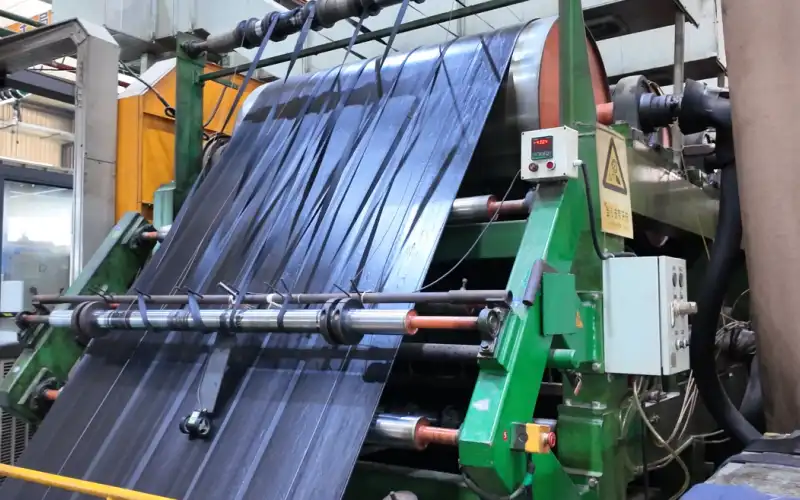
Four-Roll Calendering
EP conveyor belt fabric layers are processed through a 4-roll calendering system with centralized control of pressure, temperature and coating thickness parameters.
Central control console + pressure regulation system + thermal parameter adjustment → ensures uniform rubber penetration into fabric structure, stable ply thickness and consistent tensile strength distribution across belt width.
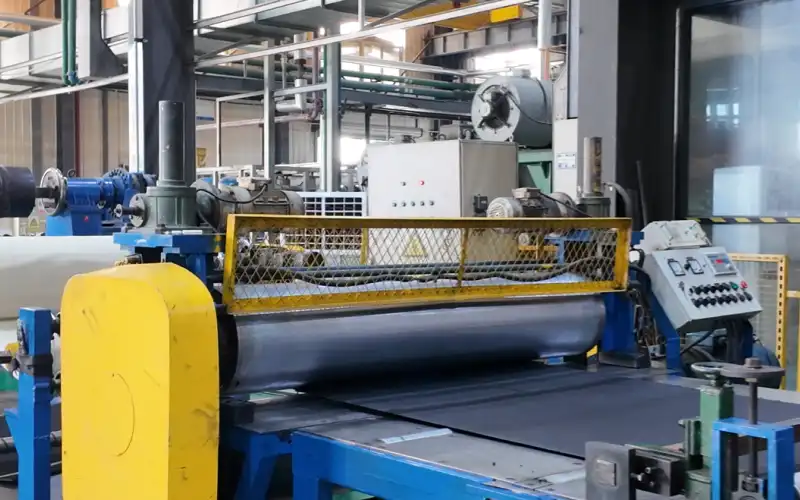
Multi-Layer One-Step Forming
Multi-ply conveyor belt structures are formed using a one-step lamination system capable of processing up to 6 fabric layers simultaneously on a single production line.
Multi-layer synchronization system + automated alignment control + structural pressure balancing → increases forming efficiency up to 5x compared with conventional processes while ensuring accurate ply positioning and stable carcass structure integrity.
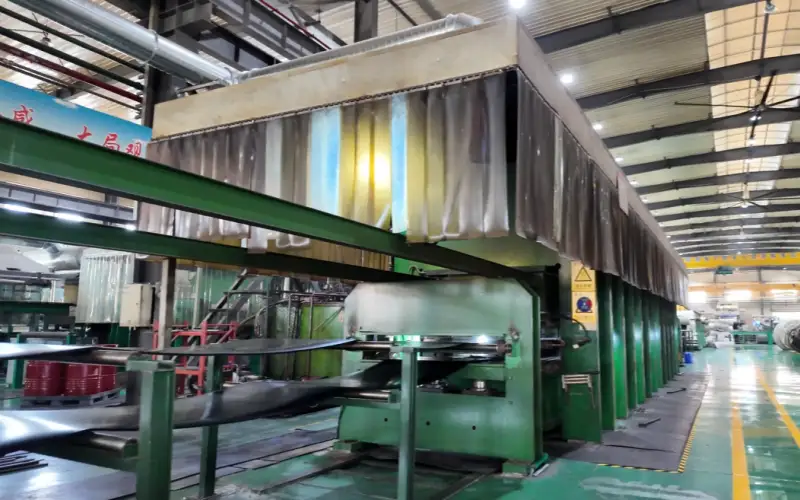
12-Meter Double-Deck Vulcanization
EP conveyor belts are vulcanized using a 12-meter double-deck vulcanization system with centralized control of time, temperature and pressure parameters
Closed-loop vulcanization control + thermal pressure balancing system + time-curve regulation → ensures optimized rubber cross-linking, stable elasticity behavior and long-term mechanical durability of the finished conveyor belt.
After production, each EP conveyor belt undergoes laboratory verification including tensile strength analysis, rubber composition validation and structural integrity inspection to confirm compliance with engineering specifications.
EP Conveyor Belt vs Steel Cord Conveyor Belt
When selecting a conveyor belt system for your plant or project, the decision depends on system layout, conveyor length, tension requirement, installation condition and material handling characteristics etc.
| Engineering Factor | EP Conveyor Belt | Steel Cord Conveyor Belt |
|---|---|---|
| Tensile Strength Range | Suitable for medium to high tensile requirements depending on ply structure design. | Suitable for very high tensile and high-load conveyor systems. |
| Conveyor Length | Suitable for medium-distance conveying systems. | Suitable for long-distance overland conveyor systems. |
| System Flexibility | Higher flexibility for multi-drive and complex routing systems. | Lower flexibility due to steel cord structural characteristics. |
| Splicing & Installation | Easier splicing and simpler on-site installation process. | Requires more specialized splicing and installation process. |
| Impact Handling | Better adaptation to impact loading and irregular material feeding conditions. | More suitable for stable and continuous material flow systems. |
| System Cost Structure | Flexible system configuration depending on specification and application. | Typically used in high-investment long-distance conveying systems. |
Share your conveyed material, operating temperature,Instantaneous maximum temperature, oil exposure, abrasion level and flame requirement. We can help recommend a suitable rubber cover formulation and EP conveyor belt structure for your application.
Project Execution Process
When selecting a conveyor belt system for your plant or project, the decision depends on system layout, conveyor length, tension requirement, installation condition and material handling characteristics etc.
Requirement Review
You send your application information, conveyed material, operating conditions, project quantity, drawing, or current belt information.
Specification Confirmation
We confirm key EP conveyor belt parameters with you, including belt width, roll length, total thickness, ply number, tensile strength, and rubber cover grade.
Quotation & Place Order
After the specification is confirmed, we prepare quotation details and can provide a technical datasheet for your internal comparison, engineering review, or purchasing approval.
Manufacturing & Inspection
Your conveyor belt is produced according to confirmed specifications, with process control and final inspection before shipment.
Packaging & Delivery Coordination
Finished conveyor belts are packed according to export, storage, or site handling requirements, then arranged for shipment coordination.


Ready to Start Your Conveyor Belt Project?
Send your technical requirements, belt specifications, drawings, or project documents. We can review your EP conveyor belt requirement and prepare the next step for quotation and production.
FAQs
How do I determine whether EP conveyor belt is suitable for my conveyor system?
What factors affect the selection of rubber cover grade for EP conveyor belt?
Why is tensile strength not the only factor in conveyor belt selection?
How important is belt structure when selecting between different conveyor systems?
Can conveyor belt performance vary under the same specification?
Why is technical datasheet review important before production?
Need Technical Support for Your EP Conveyor Belt Selection?
If you are not sure whether EP conveyor belt is suitable for your system, or need technical clarification for your project, you can contact us for engineering support and evaluation.
