China Steel Cord Conveyor Belt Manufacturer
Steel cord conveyor belts are engineered for long-distance, high-tension, and high-capacity conveying systems where fabric conveyor belts reach their structural limits.
- 20+ years of manufacturing experience in rubber conveyor belt industry
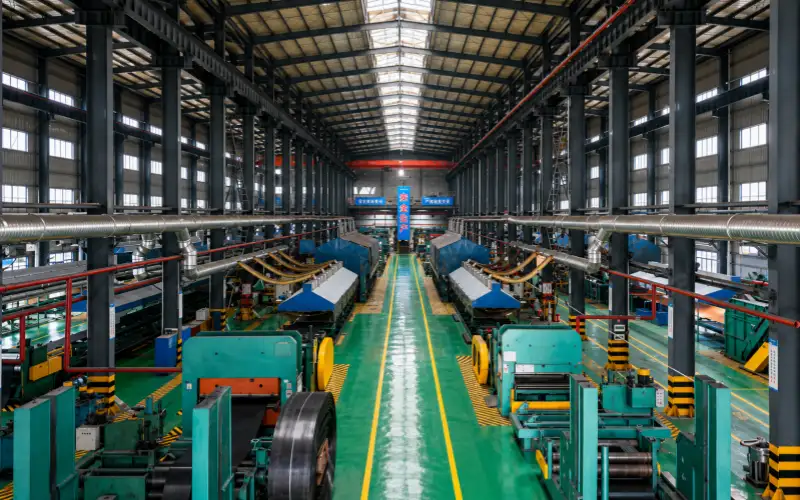
- 60+ production lines ensuring stable capacity and reliable delivery for large-scale projects
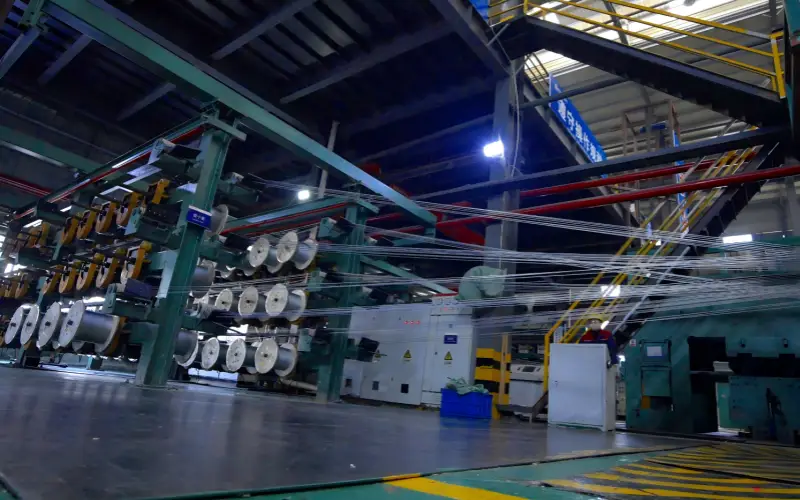
- Digital production system ensuring consistent quality across all manufacturing processes
- Certified under multiple international and regional standards including ISO, DIN, JIS, AS, GOST, MA and GB/T systems
Steel Cord Conveyor Belt Product
Steel cord conveyor belts are designed for high-tension, long-distance, and heavy-duty bulk material conveying systems. Each type of conveyor belt is rigorously controlled according to working conditions, safety requirements, and material handling needs.
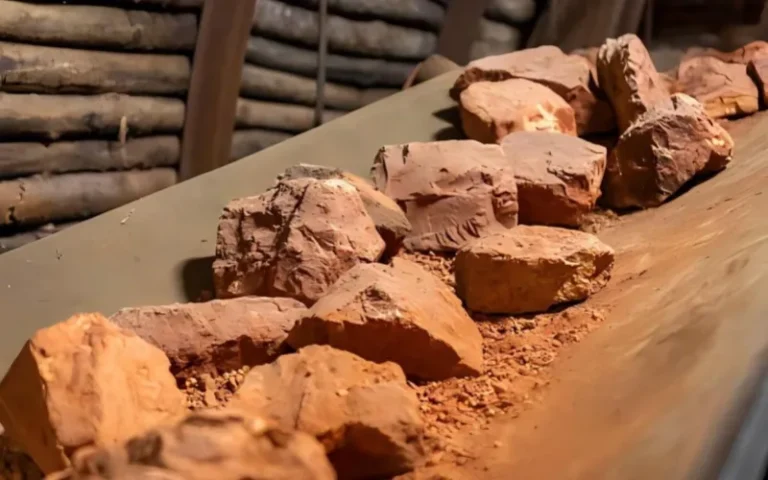
Standard Steel Cord Conveyor Belt
General industrial long distance conveying applications with stable tensile performance and long service life.
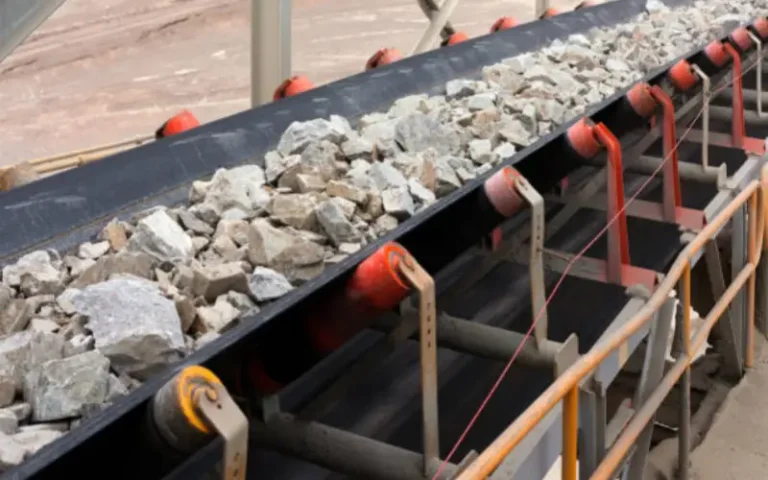
Abrasion Resistant Steel Cord Conveyor Belt
Designed for high wear materials such as ore, rock, coal and clinker transport systems.
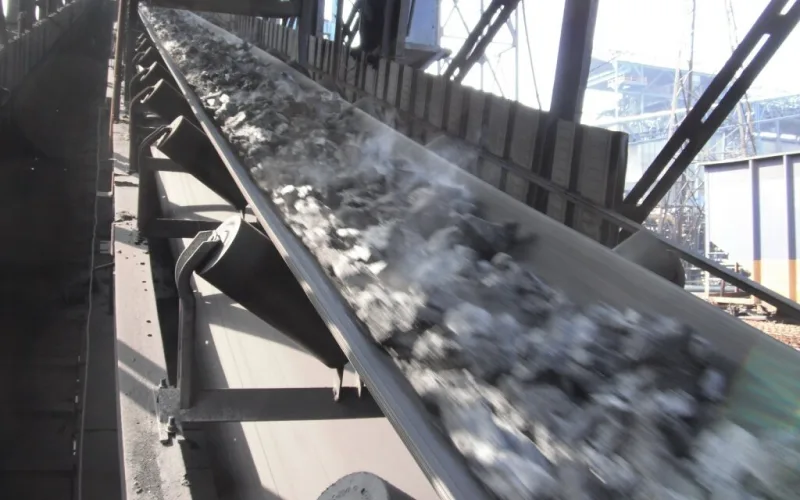
Heat Resistant Steel Cord Conveyor Belt
Suitable for high temperature environments in cement, steel and power generation industries.
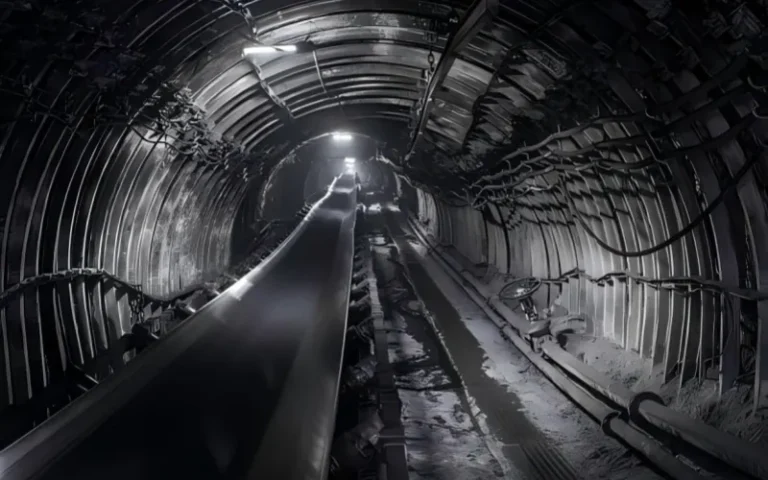
Flame Resistant & Anti-Static Steel Cord Conveyor Belt
Used in coal mining and underground systems with strict fire safety requirements.
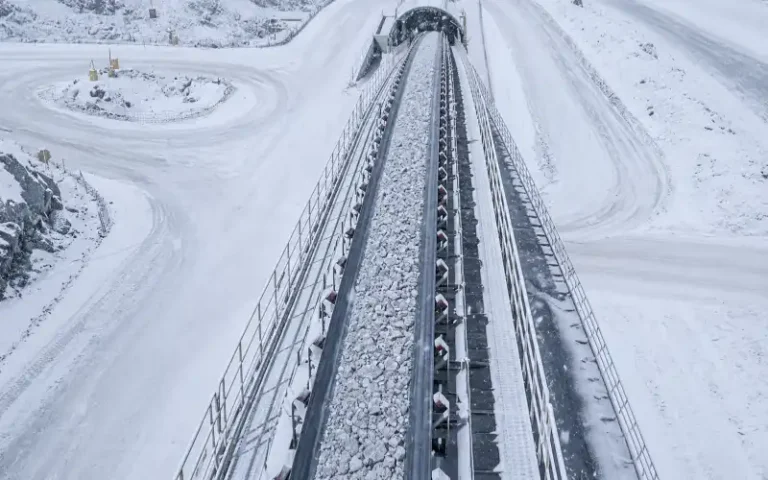
Cold Resistant Steel Cord Conveyor Belt
Suitable for conveying bulk materials in low-temperature environments below freezing point

Anti-Tear Steel Cord Conveyor Belt
Reinforced structure for high-impact and high-tension conveyor systems to reduce tearing failure.
Where Steel Cord Conveyor Belts Perform Best
Steel cord conveyor belts are engineered for high-tension, long-distance and heavy-load conveying systems. Applications are prioritized based on system load, material type and operational continuity requirements.
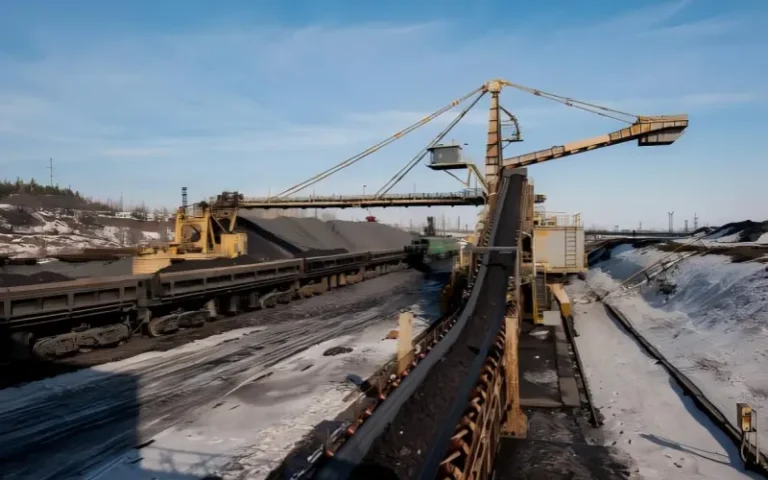
Mining Industry
Iron ore, coal and mineral conveying in long-distance and high-load systems
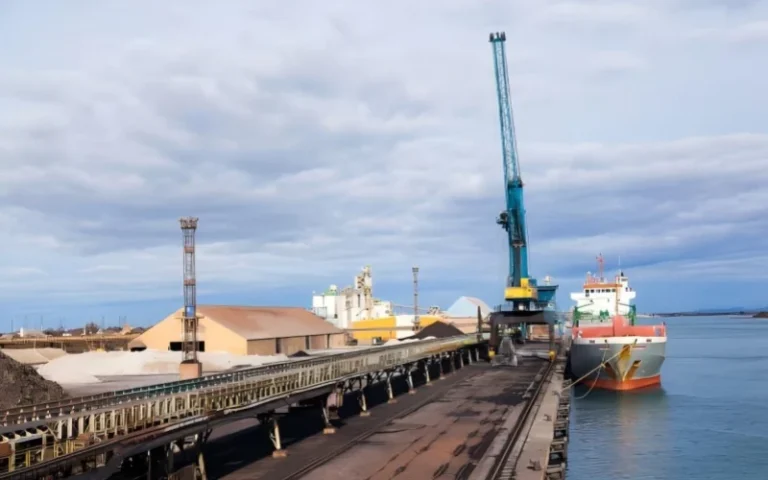
Port & Terminal
Ship loading and unloading systems for large-volume bulk materials such as coal and ore
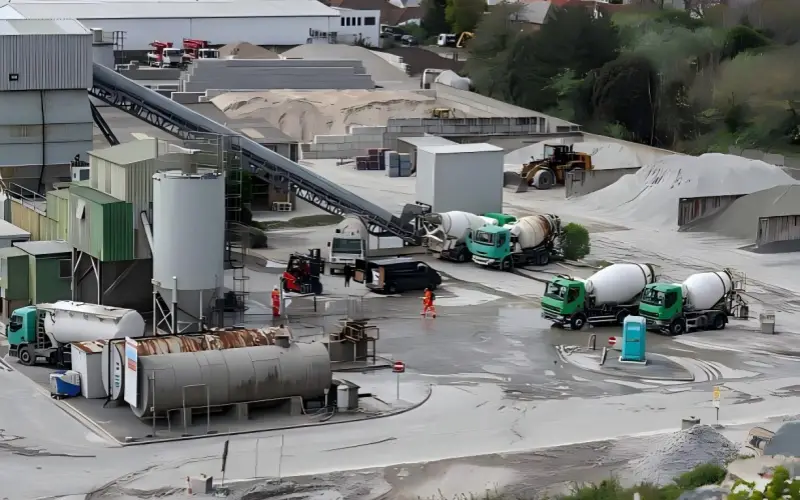
Cement Industry
Clinker, limestone and raw material transportation in continuous high-temperature production lines
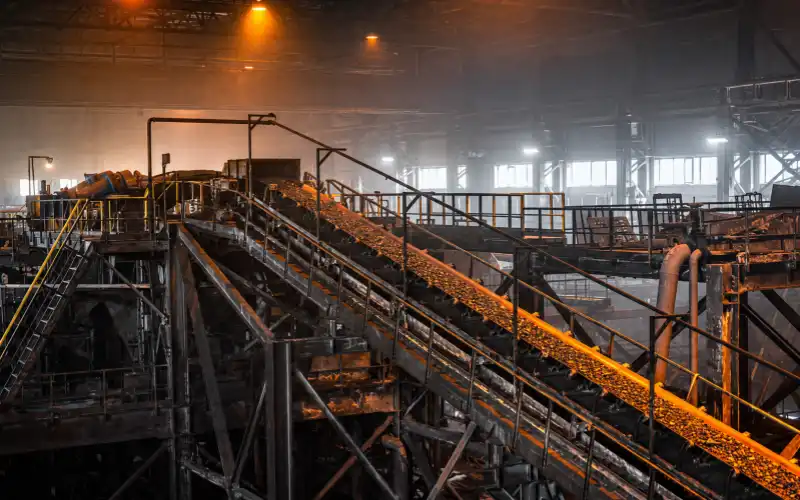
Steel & Metallurgy Industry
High-temperature and heavy-load material handling in steel production and raw material supply systems
Steel Cord Conveyor Belt Working Conditions Selection Guide
Based on our engineering experience in steel cord conveyor belt applications, selection is generally influenced by operating tension, material properties, temperature conditions and conveying distance.
Consider your operating environment
If your environment is between -10°C and -50°C, you should consider cold resistant rubber compounds. If your material temperature is above ~80°C, heat resistant belt types are generally recommended.
Check your conveying system length
If your conveying distance is below ~1 km, short-distance EP systems are often sufficient. If your system exceeds ~3 km, steel cord conveyor belts are generally more suitable for long-distance stability.
Understand your conveyor load & strength requirement
If your system tension is below 800 kN/m (800 N/mm), a fabric conveyor belt is generally sufficient. If the tension is above 800 kN/m, we usually recommend using a steel cord conveyor belt for better stability.
Evaluate your material’s abrasion & impact level
If you are handling ore, clinker or highly abrasive materials, wear-resistant covers are usually required. If your system has strong impact loads, anti-tear reinforcement structures are recommended.
Not Sure Which Steel Cord Conveyor Belt Fits Your System?
Send us your material type, conveyor length, belt width, capacity (TPH) and operating conditions. Our engineering team will recommend a suitable steel cord conveyor belt based on your actual project requirements.
Steel Cord Conveyor Belt Structure Data
The following technical data is based on our engineering production range for steel cord conveyor belts. Specifications may vary depending on project conditions, conveyor system design and application requirements.
Basic Parameters
| Parameter | Unit | ST500 | ST630 | ST800 | ST1000 | ST1250 | ST1400 | ST1600 | ST1800 | ST2000 | ST2250 | ST2500 | ST2800 | ST3150 | ST3500 | ST4000 | ST4500 | ST5000 | ST5400 | ST6300 | ST7000 | ST7500 |
| Minimum Breaking Strength, K_Nmin | N/mm | 500 | 630 | 800 | 1000 | 1250 | 1400 | 1600 | 1800 | 2000 | 2250 | 2500 | 2800 | 3150 | 3500 | 4000 | 4500 | 5000 | 5400 | 6300 | 7000 | 7500 |
| Maximum Steel Cord Diameter, d_max | mm | 3 | 3 | 3.5 | 4 | 4.5 | 5 | 5 | 5.6 | 6 | 5.6 | 7.2 | 7.2 | 8.1 | 8.6 | 8.9 | 9.7 | 10.9 | 11.3 | 12.8 | 13.5 | 15 |
| Minimum Steel Cord Breaking Force, F_bsmin | kN | 7.6 | 7 | 8.9 | 12.9 | 16.1 | 20.6 | 20.6 | 25.5 | 25.6 | 26.2 | 40 | 39.6 | 50.5 | 56 | 63.5 | 76.3 | 91 | 98.2 | 130.4 | 142.4 | 166.7 |
| Steel Cord Pitch, t | mm | 14 | 10 | 10 | 12 | 12 | 14 | 12 | 13.5 | 12 | 11 | 15 | 13.5 | 15 | 15 | 15 | 16 | 17 | 17 | 19.5 | 19.5 | 21 |
| Minimum Cover Thickness, S_min | mm | 4 | 4 | 4 | 4 | 4 | 4 | 4 | 4 | 4 | 4 | 5 | 5 | 5.5 | 6 | 6.5 | 7 | 7.5 | 8 | 10 | 10 | 10 |
Belt Width, Tolerance and Number of Steel Cords
| Belt Width, B (mm) | Tolerance (mm) | ST500 | ST630 | ST800 | ST1000 | ST1250 | ST1400 | ST1600 | ST1800 | ST2000 | ST2250 | ST2500 | ST2800 | ST3150 | ST3500 | ST4000 | ST4500 | ST5000 | ST5400 | ST6300 | ST7000 | ST7500 |
| 500 | +10/-5 | 33 | 45 | 45 | 39 | 39 | 34 | 39 | N/A | N/A | N/A | N/A | N/A | N/A | N/A | N/A | N/A | N/A | N/A | N/A | N/A | N/A |
| 650 | +10/-7 | 44 | 60 | 60 | 51 | 51 | 45 | 51 | 46 | 52 | 56 | 41 | 46 | 41 | 41 | 41 | 39 | 36 | N/A | N/A | N/A | N/A |
| 800 | +10/-8 | 54 | 75 | 75 | 63 | 63 | 55 | 63 | 57 | 63 | 69 | 50 | 57 | 50 | 50 | 51 | 48 | 45 | 45 | N/A | N/A | N/A |
| 1000 | ±10 | 68 | 95 | 95 | 79 | 79 | 68 | 79 | 71 | 79 | 86 | 64 | 71 | 64 | 64 | 64 | 59 | 55 | 55 | N/A | N/A | N/A |
| 1200 | ±10 | 83 | 113 | 113 | 94 | 94 | 82 | 94 | 85 | 94 | 104 | 76 | 85 | 76 | 77 | 77 | 71 | 66 | 66 | 58 | 59 | 54 |
| 1400 | ±12 | 96 | 133 | 133 | 111 | 111 | 97 | 111 | 100 | 111 | 122 | 89 | 99 | 89 | 90 | 90 | 84 | 78 | 78 | 68 | 69 | 64 |
| 1600 | ±12 | 111 | 151 | 151 | 126 | 126 | 111 | 126 | 114 | 126 | 140 | 101 | 114 | 101 | 104 | 104 | 96 | 90 | 90 | 78 | 80 | 73 |
| 1800 | ±14 | 125 | 171 | 171 | 143 | 143 | 125 | 143 | 129 | 143 | 159 | 114 | 128 | 114 | 117 | 117 | 109 | 102 | 102 | 89 | 90 | 83 |
| 2000 | ±14 | 139 | 191 | 191 | 159 | 159 | 139 | 159 | 144 | 159 | 177 | 128 | 143 | 128 | 130 | 130 | 121 | 113 | 113 | 99 | 100 | 92 |
| 2200 | ±15 | 153 | 211 | 211 | 176 | 176 | 154 | 176 | 159 | 176 | 195 | 141 | 158 | 141 | 144 | 144 | 134 | 125 | 125 | 109 | 110 | 102 |
| 2400 | ±15 | 167 | 231 | 231 | 193 | 193 | 168 | 193 | 174 | 193 | 213 | 155 | 173 | 155 | 157 | 157 | 146 | 137 | 137 | 119 | 119 | 110 |
| 2600 | ±15 | 181 | 251 | 251 | 209 | 209 | 182 | 209 | 189 | 209 | 231 | 168 | 188 | 168 | 170 | 170 | 159 | 149 | 149 | 129 | 129 | 120 |
| 2800 | ±15 | 196 | 271 | 271 | 226 | 226 | 197 | 226 | 203 | 226 | 249 | 181 | 202 | 181 | 183 | 183 | 171 | 161 | 161 | 139 | 139 | 129 |
| 3000 | ±15 | 210 | 291 | 291 | 243 | 243 | 211 | 243 | 218 | 243 | 268 | 195 | 217 | 195 | 195 | 195 | 183 | 172 | 172 | 149 | 149 | 139 |
| 3200 | ±15 | 224 | 311 | 311 | 260 | 260 | 225 | 260 | 233 | 260 | 286 | 208 | 232 | 208 | 208 | 208 | 196 | 184 | 184 | 160 | 160 | 149 |
Belt Width (B) and Tolerances
| Belt Width, B (mm) | 500 | 650 | 800 | 1000 | 1200 | 1400 | 1600 | 1800 | 2000 | 2200 | 2400 | 2600 | 2800 | 3000 | 3200 |
| Tolerance (mm) | +10/-5 | +10/-7 | +10/-8 | ±10 | ±10 | ±12 | ±12 | ±14 | ±14 | ±15 | ±15 | ±15 | ±15 | ±15 | ±15 |
Minimum F/L Ratio for Belts Used on Three Equal-Length Idler Sets
| Side Idler Troughing Angle / (°) | Minimum F/L Ratio |
| 20 | 0.08 |
| 25 | 0.1 |
| 30 | 0.12 |
| 35 | 0.14 |
| 40 | 0.16 |
| 45 | 0.18 |
| 50 | 0.2 |
| 55 | 0.23 |
| 60 | 0.26 |
Information Required for Technical Evaluation
To help our engineers evaluate your steel cord conveyor belt requirements more accurately, please include the following information in your inquiry.
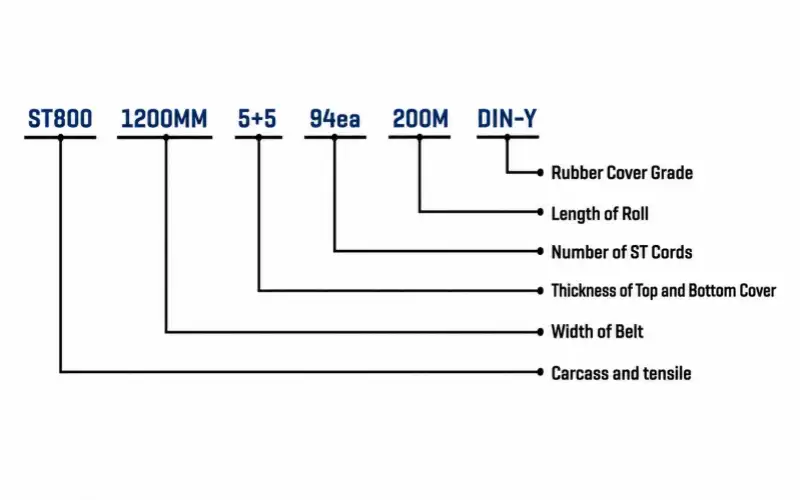
- Carcass and Tensile Stength
- Width of Steel Cord Conveyor Belt
- Thickness of Top and Bottom Cover
- Number of ST Cords
- Length of Roll
- Rubber Cover Grade
Need a Custom Steel Cord Conveyor Belt Solution?
If your project requires specifications beyond standard production ranges—such as special tensile strength requirements, non-standard belt width, reinforced structural design, customized cover rubber performance or system-specific engineering conditions—you can share your technical drawings or project data with us.
Steel Cord Conveyor Belt Structure Breakdown
The steel cord conveyor belt is composed of multiple engineered layers that work together to ensure high tensile strength, impact resistance and stable long-distance conveying performance under heavy-duty operating conditions.
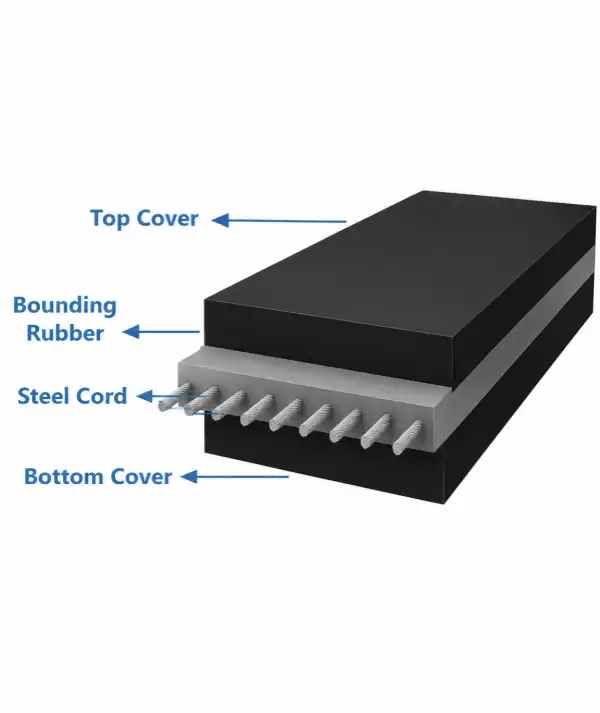
Top Rubber Cover
The top cover is the outer protective rubber layer designed to resist abrasion, impact and cutting forces from conveyed materials during operation.
Bonding Rubber Layer
The bonding rubber layer surrounds and secures the steel cords in place to ensure structural stability, prevent internal slippage and improve fatigue resistance under dynamic load conditions.
Steel Cord Layer
The steel cord layer is the core tensile structure of the belt, composed of high-strength steel cords that provide load-bearing capacity, low elongation and stability for long-distance conveying systems.
Bottom Cover
The bottom cover is the lower protective rubber layer that reduces friction with rollers, resists mechanical wear and ensures stable running performance of the conveyor belt system.
Rubber Compound Selection for Steel Cord Conveyor Belt Covers
We select coating formulations based on your material type, abrasion resistance rating, temperature conditions, safety requirements, and industrial operating environment.
| Rubber Compound | Primary Application Scenario | Engineering Selection Logic |
|---|---|---|
| NR / SBR Blend | General conveying in mining, ports, cement and steel plants | Used as a standard base compound for balanced performance in general bulk material handling systems. |
| SBR (High Abrasion Grade) | Mining (ore, coal), port bulk handling, cement clinker transport | Selected when abrasion resistance is the primary requirement under continuous material wear conditions. |
| EPDM (Heat Resistant) | Cement industry, steel plants, high-temperature conveying systems | Applied when operating temperatures are consistently high, especially in clinker and hot material handling. |
| BR Blend (Impact Resistant) | Mining loading zones, port unloading systems, steel scrap handling | Used where strong impact and drop forces require improved elasticity and wear resistance balance. |
| CR (Flame & Weather Resistant) | Mining safety systems, outdoor conveyors, harsh weather environments | Selected for applications requiring flame resistance and environmental durability under exposed conditions. |
| NBR (Oil Resistant) | Port machinery zones, steel plants, recycling and oil-exposed materials | Applied where oil, grease or hydrocarbon exposure may affect belt surface performance. |
Need more multiple rubber properties at the same time?
More and more customers are seeking rubber with multiple combined properties, such as flame retardancy and oil resistance, or flame retardancy and cold resistance. If you have similar needs, please contact us.
Manufacturing & Quality System Overview
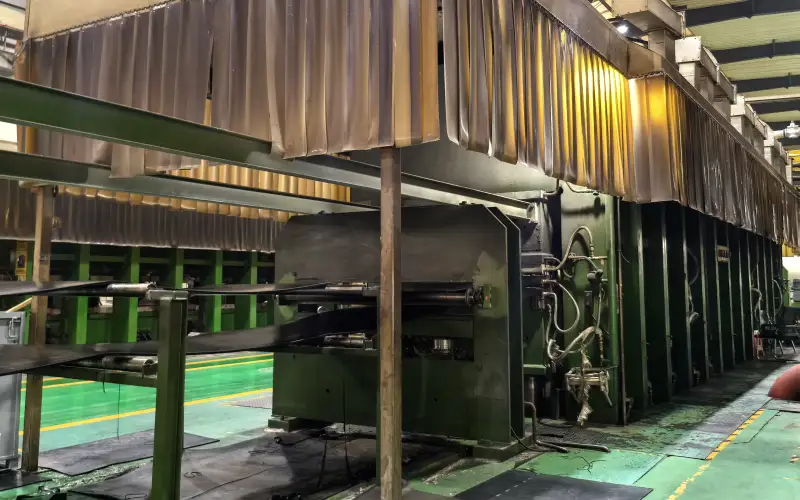
Our steel cord conveyor belt production system is fully controlled to ensure stable manufacturing quality, consistent performance and reliable delivery for industrial applications.
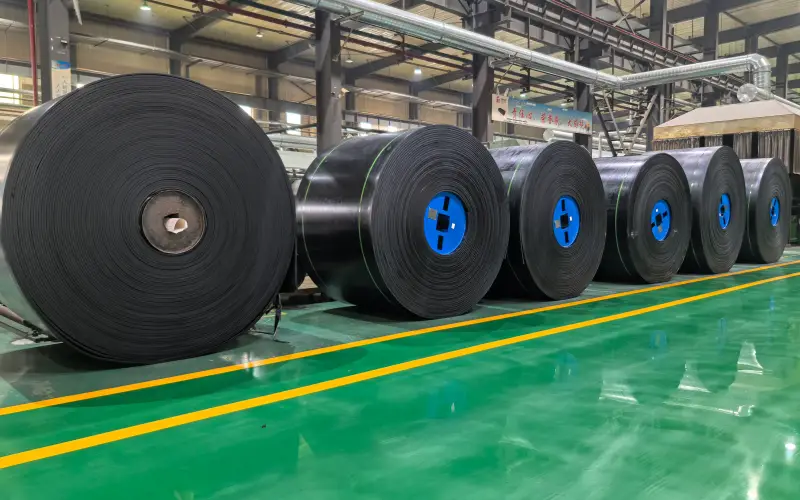
Large-Scale Production Capacity
You are supported by an annual production capacity of approximately 800,000 meters of conveyor belts and over 30,000 tons of rubber compounding materials, ensuring stable supply capability for large-scale industrial projects.
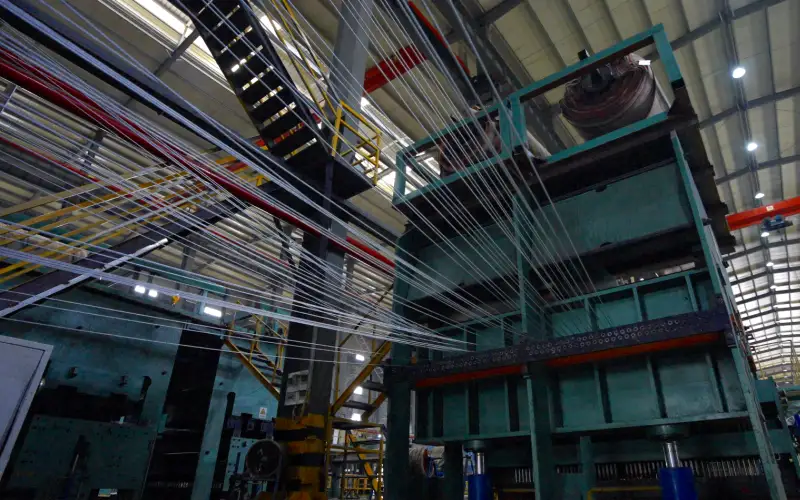
Digital Process Control
You benefit from precise control of key vulcanization parameters including temperature, time and pressure, ensuring every belt is processed under identical curing conditions for consistent physical performance.
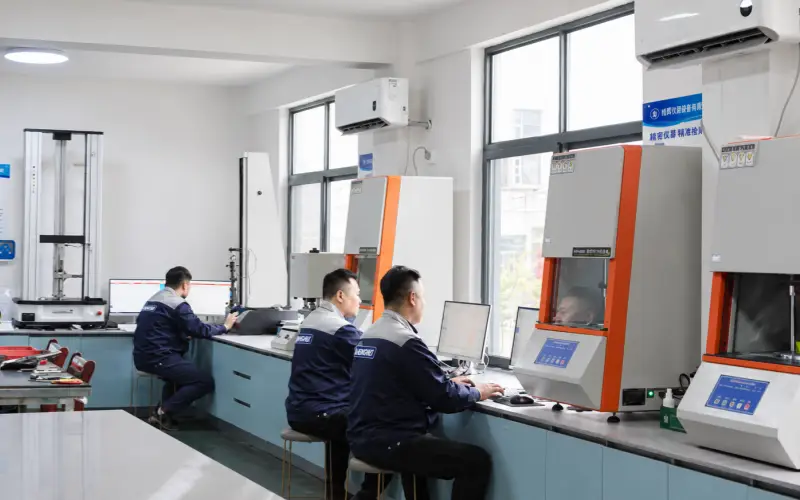
Full-Stage Quality Inspection
Each steel cord conveyor belt undergoes multiple inspection procedures before shipment, including tensile strength testing, adhesion strength testing, abrasion resistance evaluation and structural stability checks under simulated operating conditions to ensure required performance standards.
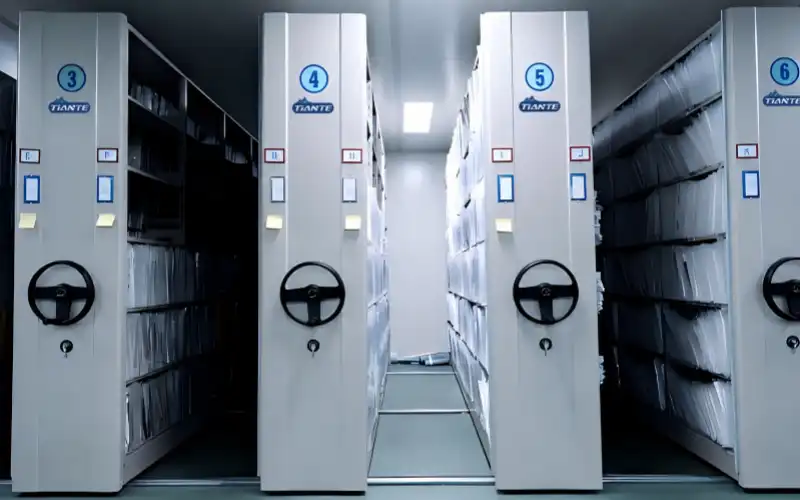
Production Traceability System
Every belt is fully traceable through complete production records, allowing manufacturing data tracking and enabling efficient identification and resolution of potential issues during project execution and after-sales support.
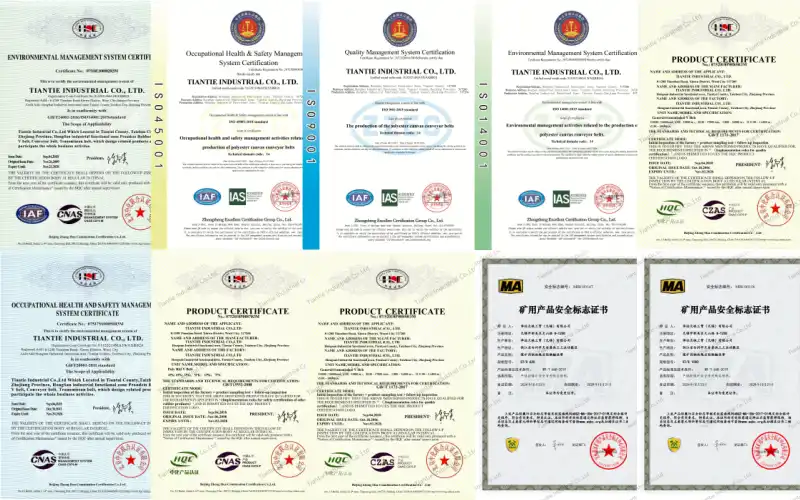
Engineering-Driven Global Conveyor Belt Standard
Our steel cord conveyor belts are engineered in compliance with multiple international standards, ensuring consistent performance and reliable application across global mining, port, cement and steel industry projects.
- ISO(International Organization for Standardization)
- DIN(Deutsches Institut für Normung)
- JIS(Japanese Industrial Standards)
- GB/T(China Standards)
- AS(Standards Australia)
- GOST(Russian national standards system)
Steel Cord Conveyor Belt Engineering Workflow
The following workflow defines how your steel cord conveyor belt project is processed from requirement submission to final delivery, ensuring technical accuracy, production consistency and reliable execution for industrial applications.
Requirement Submission
You submit application information including conveyor system layout, conveyed material characteristics, operating conditions, belt dimensions, tension requirements and existing belt specifications for initial engineering evaluation.
Technical Specification Confirmation
Based on your submitted data, key steel cord conveyor belt parameters are confirmed, including ST strength grade, belt width, cord structure, cover rubber grade and application-specific performance requirements.
Quotation & Technical Proposal
A quotation is generated based on confirmed specifications, together with technical data sheets for engineering review, procurement evaluation and project approval processes.
Manufacturing & Quality Inspection
Steel cord conveyor belts are produced according to confirmed specifications, with controlled vulcanization parameters and multi-stage inspection including tensile strength, adhesion performance, wear resistance and structural stability testing.
Packaging & Delivery Coordination
Finished steel cord conveyor belts are packaged according to export and site handling requirements, followed by logistics arrangement and shipment coordination to ensure delivery readiness for installation

Ready to Start Your Conveyor Belt Project?
Please provide key specifications for your steel cord conveyor belt quotation, including tensile strength (ST grade), belt width, top and bottom cover thickness, steel cord specification, belt length, and rubber cover grade for technical evaluation and pricing confirmation.
FAQs
How does steel cord positioning affect belt performance stability?
Why is adhesion strength between steel cord and rubber critical?
What role does cover rubber thickness play in operational durability?
How does steel cord conveyor belt design respond to dynamic load variations?
Why is consistent vulcanization condition important for structural uniformity?
What determines fatigue resistance in steel cord conveyor belts?
Need Technical Support for Your ST Conveyor Belt Selection?
If you are uncertain whether a steel cord conveyor belt is appropriate for your conveying system, or require further technical clarification for your project conditions, you may reach out for engineering evaluation and technical review.
