China Rip Stop Conveyor Belt Manufacturer
Our rip stop conveyor belt uses transverse steel or fabric reinforcement to resist sharp-material penetration and restrict puncture-driven longitudinal rip propagation. Breaker material, placement, carcass, and cover compound can be configured according to the actual damage risk and conveyor requirements.
- Transverse Reinforcement Restricts Puncture-Driven Longitudinal Rips
- Steel or Fabric Breakers Handle Different Penetration Loads
- Configurable Breaker Layout Covers One- or Two-Sided Damage Risks
- Ripstop Structure Combines with Required Cover Compounds

What Is a Rip Stop Conveyor Belt?
A rip stop conveyor belt is an anti tear conveyor belt with transverse reinforcement added to the belt body. This reinforcement helps resist penetration from sharp materials and restricts a local puncture from developing into a continuous longitudinal rip.
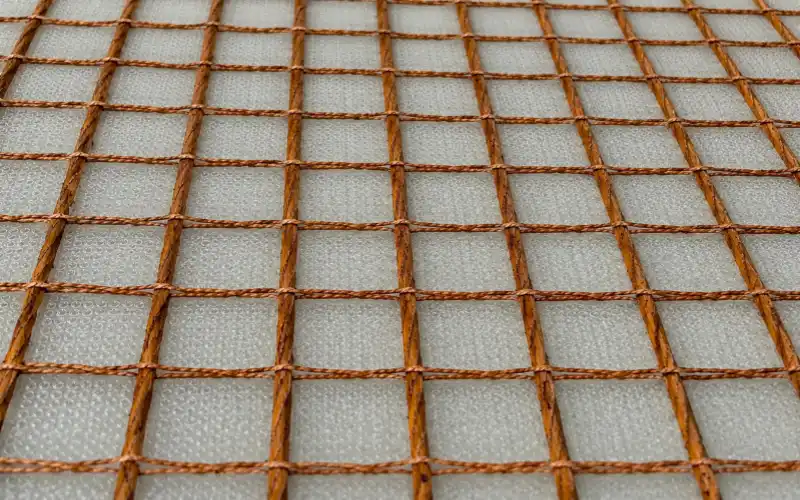
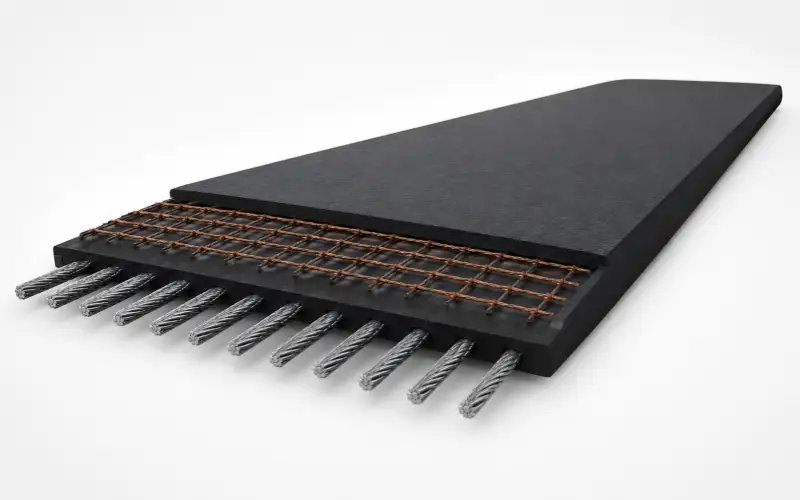
The ripstop reinforcement is commonly made from high-strength polyester fabric, nylon fabric, or brass-coated steel wire. It is normally positioned above the main carcass to protect against load-side penetration, while severe applications can use reinforcement both above and below the carcass for two-sided protection.
Rip Stop Conveyor Belt for Puncture and Longitudinal Rip Risks
Our anti tear conveyor belt uses transverse reinforcement to resist sharp-material penetration and limit puncture-driven longitudinal ripping under severe conveying conditions.

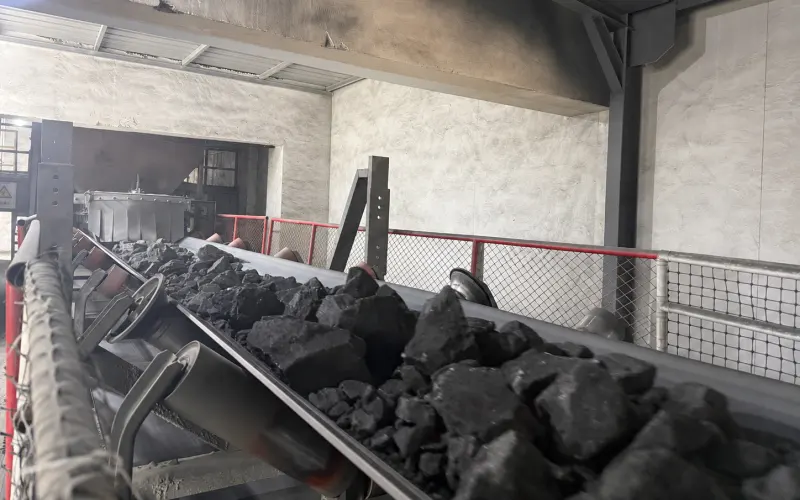
Sharp-Edged Bulk Materials
Transverse reinforcement adds protection where sharp material may penetrate the cover rubber and enter the main carcass, reducing the possibility that one puncture develops into a continuous longitudinal rip.
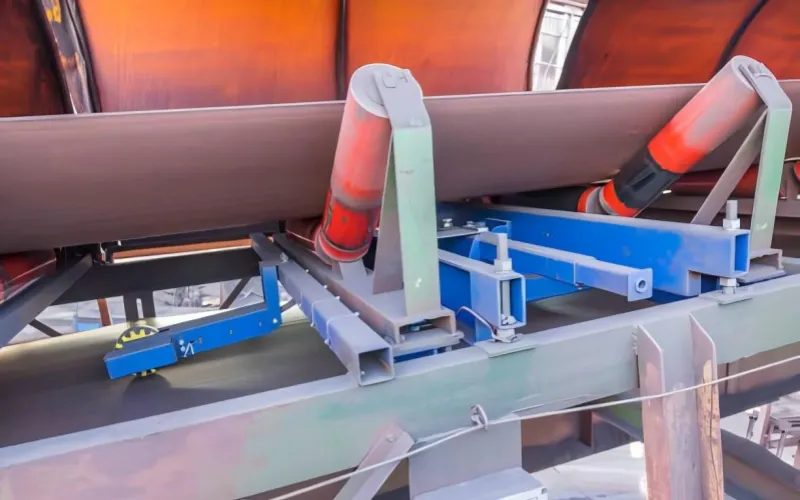
Trapped Foreign Objects
When a penetrated object becomes trapped against a chute, cleaner, roller frame, or other fixed structure, the transverse breaker provides additional resistance against tearing along the belt-running direction.
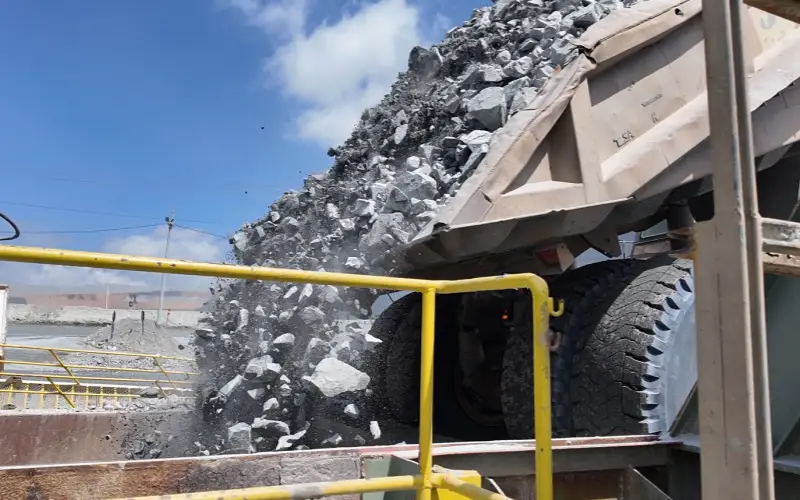
High-Impact Loading Zones
At crusher outlets and high-drop transfer points, the ripstop structure can be combined with the required carcass and cover thickness to address impact-related penetration and subsequent longitudinal tearing risks.
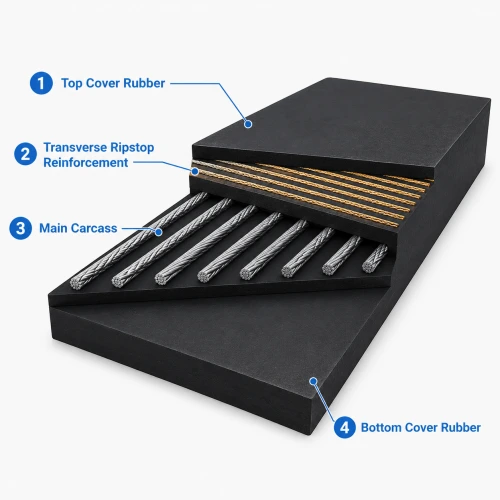
Rip Stop Conveyor Belt Construction
The rip stop conveyor belt combines cover rubber, transverse reinforcement, and the main carcass into one integrated structure.

Top Cover Rubber
Protects the belt against material impact, cutting, abrasion, and the required operating environment.
Transverse Ripstop Reinforcement
Polyester, nylon, or brass-coated steel wire helps resist puncture and restrict longitudinal rip propagation.
Main Carcass
EP fabric or steel cord provides the longitudinal tensile strength required during operation.
Bottom Cover Rubber
Protects the carcass against contact with pulleys, idlers, and return-side components.
Configure the Right Ripstop Structure for Your Conveyor
Send us your existing belt specification, damage photos, or conveyor information. We will review the required reinforcement material, placement, carcass, and cover construction before quotation.
Ripstop Reinforcement Grid Options
The additional reinforcement inside a rip stop conveyor belt is formed by warp and weft materials rather than always using one material throughout. Polyester is commonly used in the warp direction to stabilize the grid, while the transverse weft material is selected for the required puncture, impact, and rip resistance.

Polyester Warp with Polyester Weft
Low elongation in both directions helps maintain a stable reinforcement grid for moderate puncture and longitudinal rip risks.
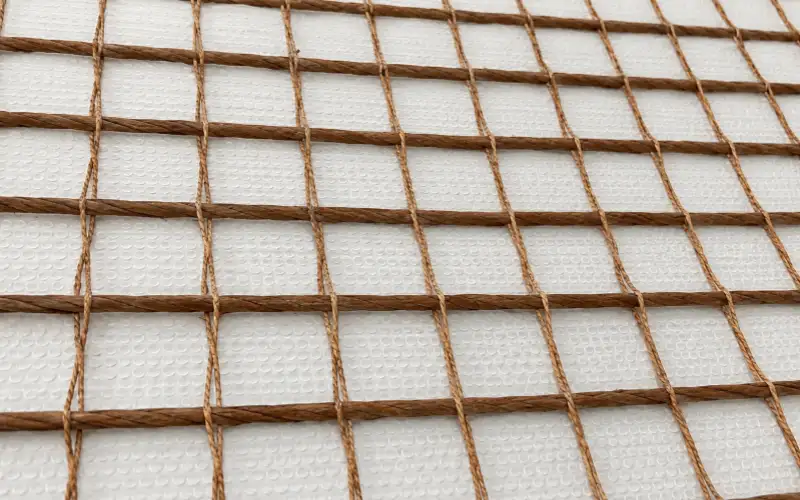
Polyester Warp with Nylon Weft
The polyester warp stabilizes the grid, while the more flexible nylon weft helps absorb transverse impact and resist tear development.
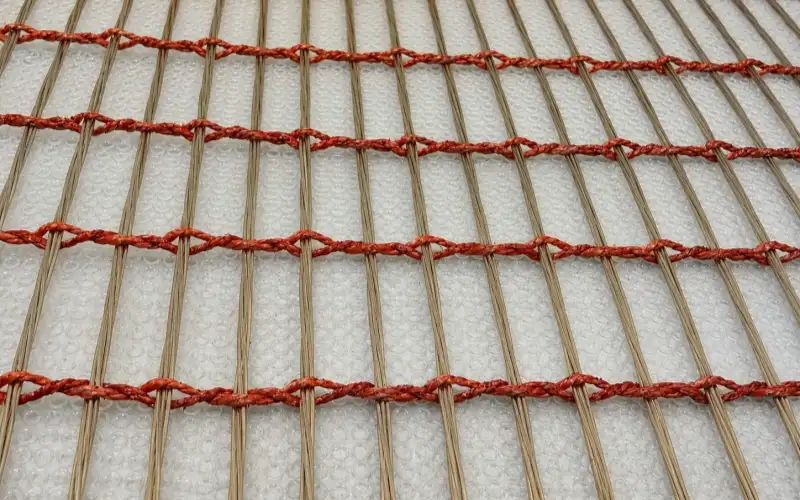
Polyester Warp with Brass-Coated Steel Wire Weft
The transverse brass-coated steel wires provide stronger resistance to sharp-material penetration and puncture-driven longitudinal rip propagation.
Rip Stop Conveyor Belt Reinforcement Grid Options
A rip stop conveyor belt can use either a metal ripstop grid or a synthetic-fiber ripstop grid. The grid type in an anti tear conveyor belt should be selected according to impact severity, conveyed material, pulley layout, and required troughability.
| Item | Metal Ripstop Grid | Synthetic Fiber Ripstop Grid |
|---|---|---|
| Typical Belt Type | Steel cord conveyor belt (ST series) / heavy-duty mining belts | Textile conveyor belt (EP/NN series) / light to medium-duty belts |
| Typical Materials and Conditions | Iron ore, large scrap steel, hard rock, drop height ≥ 1.5 m | Small to medium stone, coal, clinker, drop height < 1.5 m |
| Main Material | High-carbon steel wire with galvanized or brass coating | High-strength nylon (PA66) or polyester-based synthetic grid |
| Grid Structure | Transverse elastic steel-wire mesh / crossed wire grid | Woven grid with stable warp and high-strength weft |
| Typical Size Range | Wire diameter 1.2–2.5 mm, grid spacing 10–25 mm | Fabric mass 200–500 g/m² |
| Transverse Breaking Strength | 100–400 N/mm | 150–300 N/mm |
| Transverse Elongation at Break | 2%–6% | 15%–25% |
| Rubber Adhesion | ≥ 12 N/mm | ≥ 10 N/mm |
| Dynamic Impact Absorption | 1500–3500 J | 800–1800 J |
| Pulley Requirement | Higher, usually needs larger pulleys | No special requirement, suitable for smaller pulleys |
| Troughability | Higher transverse stiffness, needs suitable structure design | Better flexibility and natural troughability |
Rip Stop Conveyor Belt Reinforcement Grid Options
Used where the rip stop conveyor belt must handle severe puncture risk, high drop height, and sharp heavy materials. This structure provides stronger transverse blocking force, but also increases stiffness and places higher demands on pulley diameter and conveyor design.
Synthetic Fiber Ripstop Grid
Used where the anti tear conveyor belt needs a balance between rip protection, flexibility, and troughability. This structure is more suitable for EP/NN textile belts and for conveying conditions with lower impact severity.
Get the Right Ripstop Conveyor Belt
Send us your conveyed material, drop height, and belt type. We will help confirm whether a metal ripstop grid or a synthetic-fiber ripstop grid is more suitable.
Cover Compounds for Rip Stop Conveyor Belts
Cover rubber is selected according to the material and operating environment.

Abrasion-Resistant Cover
Abrasion-resistant rubber reduces surface wear and repeated cutting when conveying ore, stone, aggregates, and other abrasive materials. It helps retain the required cover thickness around the internal ripstop reinforcement during continuous operation.
Heat-Resistant Cover
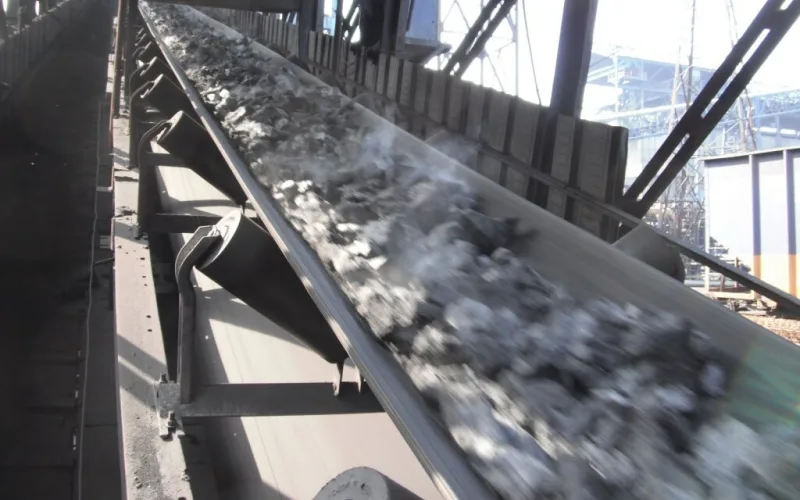
Heat-resistant rubber is used for clinker, sinter, coke, and other hot materials that also present impact or puncture risks. The compound is selected to reduce premature hardening, cracking, and performance loss under elevated temperatures.

Oil-Resistant Cover
Oil-resistant rubber is suitable for oily materials, metal processing waste, and products contaminated by mineral or industrial oils. It reduces swelling and softening that could otherwise weaken the cover and affect the stability of the belt structure.

Fire-Resistant Cover
Fire-resistant rubber can be combined with the rip stop conveyor belt structure for coal handling and other systems with flame-resistance requirements. The required cover grade is confirmed according to the applicable operating conditions and project standard.
Production Control for Rip Stop Conveyor Belts
Quality is controlled while the reinforcement grid and belt layers remain visible during belt building.
Reinforcement Grid Confirmation
Before production, we confirm the grid construction, warp and weft materials, wire or yarn specification, mesh spacing, effective width, and required layer quantity against the approved belt structure. This prevents an incorrect reinforcement grid from entering batch production.
Grid Positioning During Belt Building
The reinforcement grid is positioned using the belt centerline, specified edge distance, and confirmed covering width. Its flatness and alignment are controlled before the next rubber or carcass layer is applied, preventing folds, lateral displacement, and incomplete coverage inside the finished belt.
Layer Interface Control
The reinforcement surface, skim rubber, main carcass, and cover layers are kept clean and fully contacted during assembly. Air pockets, foreign matter, local lifting, and uneven interfaces are removed before vulcanization to maintain stable bonding around the grid.
Vulcanization Parameter Control
Temperature, pressure, and curing time are set according to the carcass type, reinforcement structure, rubber compound, and total belt thickness. Stable vulcanization allows the grid, carcass, and surrounding rubber to form an integrated belt body without relying only on finished-belt appearance.
Confirm the Ripstop Structure Before Production
Send your existing belt specification or damage photos. We will confirm the reinforcement grid, layer arrangement, main carcass, and cover construction before quotation.
Production Control for Rip Stop Conveyor Belts
Quality is controlled while the reinforcement grid and belt layers remain visible during belt building.
Production to Existing Specifications
We can produce according to your existing belt specification, technical drawing, or approved sample. Main carcass, reinforcement grid, cover thickness, belt width, and finished length are confirmed before production.
Reinforcement Structure Adjustment
The reinforcement material, grid construction, strength, and layer arrangement can be adjusted according to the required belt structure instead of being limited to one fixed ripstop design.
Consistent Batch Construction
Confirmed material specifications, grid dimensions, layer positions, rubber compounds, and vulcanization parameters are used as the production standard for the complete order.
Export Packaging and Documentation
Finished rip stop conveyor belts can be supplied with roll packaging, shipping marks, product identification, inspection documents, and other required export information.
FAQs
Does a Rip Stop Conveyor Belt Prevent Every Type of Belt Tear?
Can Existing Belt Dimensions Remain Unchanged After Adding Ripstop Reinforcement?
Does Ripstop Reinforcement Change the Belt Splicing Method?
Can the Same Ripstop Construction Be Used on Two Conveyors Carrying the Same Material?
Can a Damaged Anti Tear Conveyor Belt Be Repaired?
Will a Metal Ripstop Grid Affect Belt Flexibility and Troughability?
Get a Rip Stop Conveyor Belt for Your Conveyor
Send your belt specification or damage details for structure confirmation and quotation.