
Anti Static Conveyor Belt Manufacturer
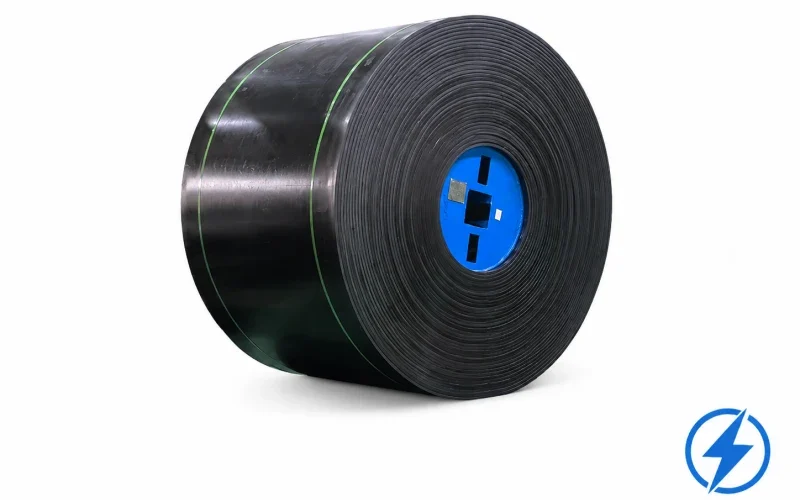
We manufacture anti static conveyor belts with conductive rubber compounds for coal, grain, biomass, fertilizer, and other dust-producing bulk materials. You can specify the required electrical resistance and combine anti-static performance with flame, oil, heat, or abrasion resistance.
- ≤3 × 10⁸ Ω Resistance Limits Static Charge Accumulation
- Conductive Rubber Covers Provide a Continuous Path for Charge Transfer
- Flame-Resistant Anti-Static Rubber Controls Static and Flame Risks
- Abrasion-Resistant Conductive Covers Reduce Wear from Powdered Materials
What Is an Anti Static Conveyor Belt?
An anti static conveyor belt, also known as an ESD conveyor belt, uses conductive rubber compounds to limit static charge accumulation during operation. We integrate the anti-static property into the belt covers, allowing charges generated by materials, pulleys, and rollers to transfer toward a properly grounded conveyor structure.
You can combine anti-static performance with flame, oil, heat, or abrasion resistance according to your conveyed material and operating environment. The belt provides a charge-transfer path, while effective static dissipation still depends on the electrical continuity and grounding of the complete conveyor system.

Anti-Static Performance of Our Rubber Conveyor Belts
The finished anti static conveyor belt can be produced to meet the electrical resistance limit required by ISO 284. Resistance at or below 3 × 10⁸ Ω prevents static charges from remaining continuously accumulated on the running belt.
Conductive Rubber Creates a Charge-Transfer Path
Conductive materials are distributed throughout the rubber covers, allowing charges generated between the belt, material, pulleys, and rollers to move through the belt toward the grounded conveyor structure instead of remaining concentrated on the belt surface.
Finished Belt Resistance ≤ 3 × 10⁸ Ω
The finished anti static conveyor belt can be produced to meet the electrical resistance limit required by ISO 284. Resistance at or below 3 × 10⁸ Ω prevents static charges from remaining continuously accumulated on the running belt.
Anti-Static Function Extends Through the Rubber Cover
The anti-static property comes from the conductive rubber compound rather than a temporary coating applied only to the belt surface. Normal surface contact and gradual cover wear therefore do not immediately remove the conductive path.
Anti-Static Requirements Confirmed for Your Application
The nylon conveyor belt is built with a multi-layer rubber and fabric structure. Each layer plays a specific functional role in load support, wear resistance, and operational stability during continuous conveying.

Resistance Requirement Based on Your Specification
We first review the maximum resistance specified for your project and confirm whether the selected conductive rubber compound can achieve it consistently in finished belt production.
Conductive Rubber on the Required Belt Surfaces
The carrying cover, pulley cover, or both covers can use conductive rubber according to the required belt structure. This provides a path for charges to move from the belt surface toward the rollers, pulleys, and grounded conveyor frame.
Agreed Finished-Belt Acceptance Conditions
Before production, we confirm the resistance limit, test method, test surface, and sampling arrangement with you. The finished anti-static rubber conveyor belt is then tested against the agreed conditions.
Confirm Your Anti-Static Belt Requirements
Send us your required resistance, conductive surface, and test conditions. We will confirm the suitable anti-static conveyor belt configuration before production.
Electrical Resistance Standards for Anti Static Conveyor Belts
Different standards evaluate different belt structures and application environments. We manufacture and test your anti static conveyor belt according to the standard stated in your technical specification. The resistance value, test direction, sample structure, and acceptance method must follow the same agreed standard.
| Standard | Applicable Product or Environment | Electrical Resistance Requirement | Use on This Page |
|---|---|---|---|
| ISO 284 / EN ISO 284 | Heavy-duty rubber conveyor belts, excluding light conveyor belts | Maximum finished-belt resistance ≤3 × 10⁸ Ω | Primary standard for general industrial anti-static rubber conveyor belts |
| EN 12882 | General-purpose above-ground conveyor belts | Anti-static performance according to EN ISO 284, with additional flame, drum-friction or fire-propagation requirements depending on the selected category | Used when anti-static and fire-safety properties are required together |
| EN 14973 | Conveyor belts used in underground installations | Electrical surface resistance ≤300 MΩ, together with underground flammability and friction-safety requirements | Used only when the project specifies underground mining requirements |
| ASTM D991 | Conductive and anti-static rubber materials or rubber products | Measures volume resistivity; the acceptance value must be specified by the customer | Useful for verifying conductive rubber compounds, but not a substitute for finished-belt testing under ISO 284 |
| ISO 21178 | Light conveyor belts, including some PVC, PU and precision ESD belts | Measures surface resistance, volume resistance, and longitudinal/transverse resistance; it does not establish one universal resistance limit for all belts | Not normally applicable to our heavy-duty anti-static rubber conveyor belts |
Electrical Resistance Testing for Finished Anti Static Conveyor Belts
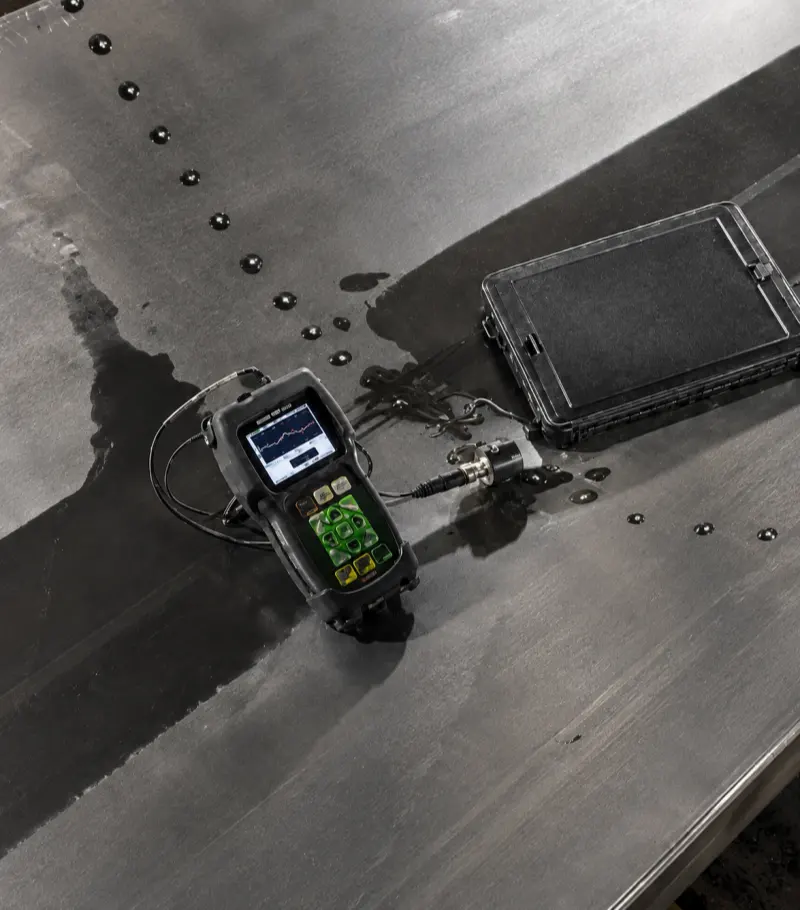
We test samples taken from the finished vulcanized conveyor belt rather than relying only on the resistance of uncured rubber compounds. This verifies whether the complete belt delivered to you meets the resistance requirement confirmed for the order.
Sample From the Finished Belt
Test pieces are cut from the completed belt and linked to the corresponding production batch. When your specification requires both belt surfaces to be verified, samples are prepared for the carrying cover and pulley cover separately.
Condition the Test Pieces
The samples are kept under the temperature, humidity, and conditioning period required by the selected test standard. This reduces resistance variation caused by testing samples immediately after production or under changing workshop conditions.
Prepare the Test Surface
The selected surface is kept clean and free from release agents, dust, oil, moisture, or other contamination that could change the contact between the electrode and rubber surface.
Place the Electrodes and Measure
The electrodes are placed on the specified belt surface using the arrangement required by the selected standard. Resistance is measured at the agreed positions rather than taking only one reading from one part of the belt.
Compare Results With the Required Limit
Each recorded resistance result is evaluated against the maximum value stated in your project specification. When ISO 284 is used as the acceptance basis, the finished belt must meet its specified maximum resistance requirement.
Retest After an Abnormal Reading
If one position produces an abnormal result, we first check the sample surface, electrode contact, test environment, and equipment condition before repeating the measurement. A repeated result exceeding the agreed limit cannot be accepted as compliant.
Typical Applications of Anti Static Conveyor Belts
Our anti static conveyor belts are mainly used for dry bulk materials that can generate static charge and combustible dust during loading, transfer, and continuous conveying. We manufacture the belt according to your required resistance and additional fire-safety conditions.

Coal and Coke Handling
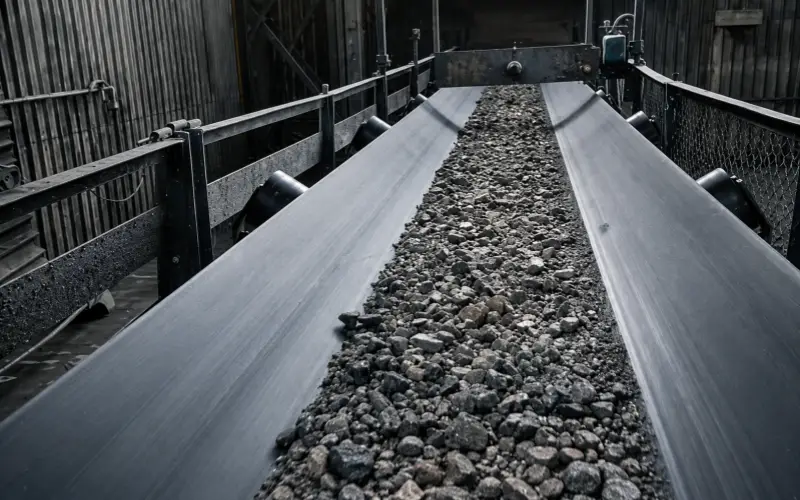
Coal, coke, and coal dust can generate static charge during continuous belt operation. Anti-static performance provides a charge-transfer path, while flame resistance can be added when your project also specifies fire or drum-friction safety requirements.
Grain, Flour, and Feed Conveying
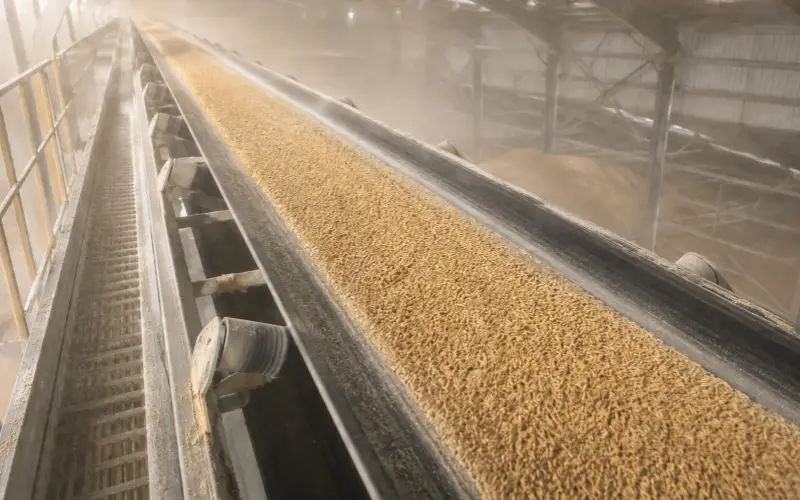
Dry grain, flour, starch, and feed dust can form combustible dust clouds around loading and transfer points. We produce anti-static conveyor belts to the confirmed resistance requirement and can combine oil resistance for materials containing natural oils.
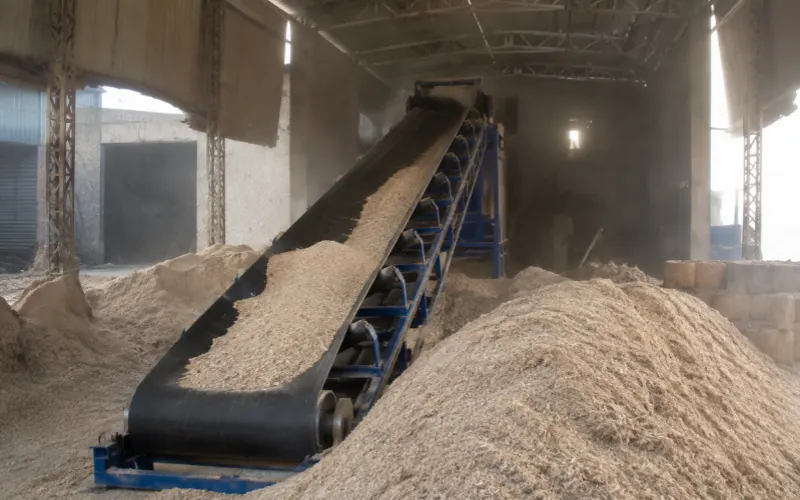
Biomass and Wood Dust Handling
Wood chips, sawdust, bark, and biomass pellets generate dry organic dust during crushing, screening, and conveying. Anti-static and flame-resistant properties can be combined according to the fire-safety requirements of the plant.
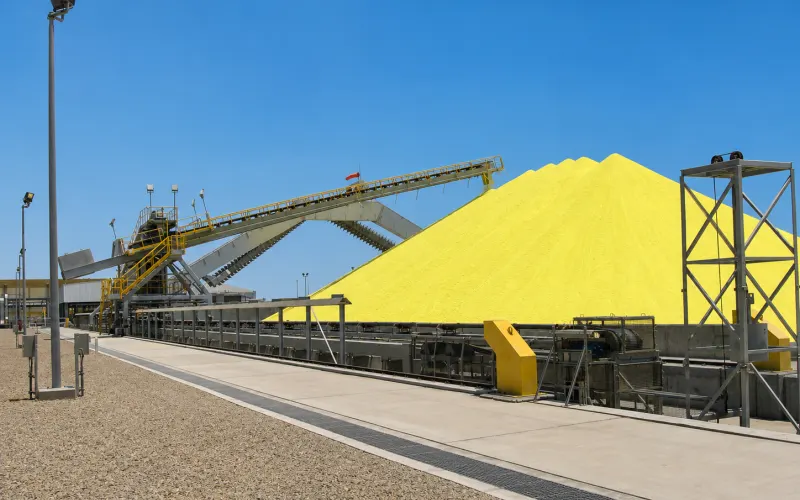
Sulfur and Combustible Chemical Powders
Sulfur granules, sulfur powder, carbon black, and certain dry chemical powders require controlled static dissipation because an uncontrolled discharge may become an ignition source. Belt resistance and additional cover properties are confirmed according to the specific material.
Anti Static Conveyor Belts for Combined Operating Requirements
Anti-static performance usually works together with another primary belt requirement. We select the rubber compound according to your conveyed material, operating temperature, wear level, and fire-safety specification while retaining the confirmed electrical resistance.

Flame Resistant and Anti-Static
We combine conductive and flame-resistant rubber when your project requires both static dissipation and fire safety. Flame, drum-friction, and fire-propagation tests are confirmed separately because acceptable electrical resistance does not prove that the belt is flame resistant.
Oil Resistant and Anti-Static
For oily grain, feed, waste, or chemical materials, we combine conductive performance with an oil-resistant cover compound. The immersion medium, test temperature, exposure time, and permitted volume change are confirmed according to your specification.
Heat Resistant and Anti-Static
Heat-resistant anti-static belts are produced for hot powders, clinker, sintered materials, and other elevated-temperature loads. We confirm both the heat-ageing requirement and the permitted electrical resistance after ageing instead of judging performance only by the initial belt resistance.
Abrasion Resistant and Anti-Static
For coke, minerals, and abrasive powders, we use an abrasion-resistant conductive cover compound. This limits cover loss while retaining the charge-transfer path required for the anti-static function.

Production Control for Stable Anti-Static Performance
We control the formulation and mixing conditions of the conductive rubber so the proportion and distribution of conductive materials remain consistent between batches. This provides a stable material base for the finished anti static conveyor belt to meet the confirmed resistance requirement.
The conductive rubber is then calendered into a continuous cover layer and vulcanized under controlled temperature, pressure, and time. This reduces local resistance variation caused by uneven cover thickness or inconsistent curing across the finished belt.
FAQs
Can Anti-Static Rubber Be Used on Fabric and Steel Cord Belts?
Does the Splice Need Exactly the Same Anti-Static Rubber as the Belt?
Does an Anti-Static Conveyor Belt Require Special Storage?
Is a Lower Electrical Resistance Always Better?
What Can Cause Belt Resistance to Increase During Service?
Can an Existing Anti-Static Belt Be Reproduced From Its Marking?
Request an Anti Static Conveyor Belt Quotation
Send us your conveyed material, required electrical resistance, and existing belt specification. We will review your application and confirm a suitable anti-static rubber conveyor belt before quotation.
