Straight Warp Conveyor Belt for High-Strength Long-Distance Conveying

We manufacture straight warp conveyor belts with a single-ply straight warp carcass that delivers high lengthwise strength with low elongation — built to replace heavy multi-ply belts on long-distance, high-tension conveying lines.

0 %

On-Time Delivery Rate

0 %

Customer Satisfaction Rate

0 K(Ton)

Manufacturing Facility

0 K(m)

Monthly Production Capacity

Straight Warp Conveyor Belt Technical Specifications

Below are our most widely used straight warp conveyor belt grades, from SW400 to SW1000. These cover the majority of long-distance, high-tension applications — and where a project calls for higher strength or a custom specification, we can produce beyond this range.

Fabric TypeDirectionBreaking Strength (N/mm)Elongation at Break (%)Carcass (mm)Width (mm)Adhesive (N/mm)
SW400Warp>460>152.28800–2400≥8.0
Weft>140
SW500Warp>590>152.53
Weft>180
SW630Warp>685>152.7
Weft>200
SW800Warp>880>153.1
Weft>240
SW1000Warp>1060>154.2

Why weft elongation isn't listed

In a straight warp conveyor belt, the warp yarns carry the load while the weft yarns mainly bind the structure together. Because the weft isn’t a tension-bearing member, its elongation at break isn’t a working specification — which is why the table shows it as “–”.

Information Required for Technical Evaluation

At the highest grade in this range, the construction concentrates almost entirely on the load-bearing warp direction. The weft’s binding role remains, but warp strength is what defines the belt at this rating.

Tell Us About Your Conveying Line

Every long-distance project runs differently — its length, load, incline, and material decide the belt it needs. Send us your line’s details and we’ll recommend the straight warp grade and build that fits, standard or custom.

Straight Warp Conveyor Belt Applications

A straight warp conveyor belt earns its place where lengthwise strength and low stretch matter most. On real conveying lines these demands usually come together — a single long-distance system often needs high tension capacity, low elongation, and light weight all at once.

Long-Distance Overland Conveying

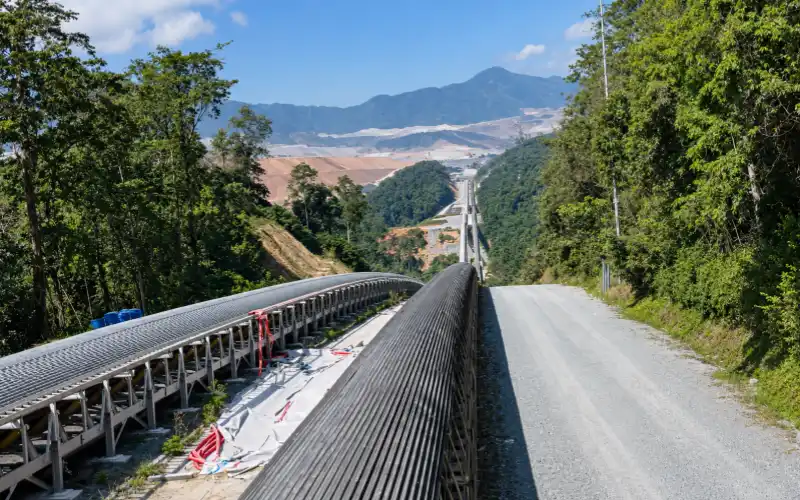
On overland lines running hundreds of meters to several kilometers — mine-to-plant haulage, cement plant limestone transport, port-to-stockpile bulk handling — the belt needs very high lengthwise strength with minimal stretch. The single-ply straight warp carcass delivers that strength in one layer, keeping the belt lighter and lower-stretch than a multi-ply belt of the same rating.
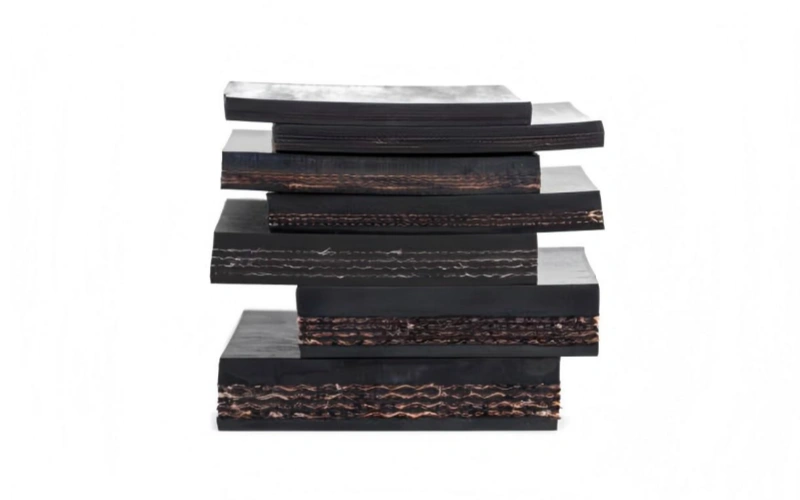
4 ply rubber conveyor belt

A Lighter Alternative to Multi-ply Belts

Operations still running thick 4–5 ply EP or NN belts often carry more weight and bulk than their strength actually requires. Switching to a single-ply straight warp belt of the same rating cuts belt weight and thickness, improves troughing over small pulley diameters, and reduces the bonded interfaces where delamination can start.
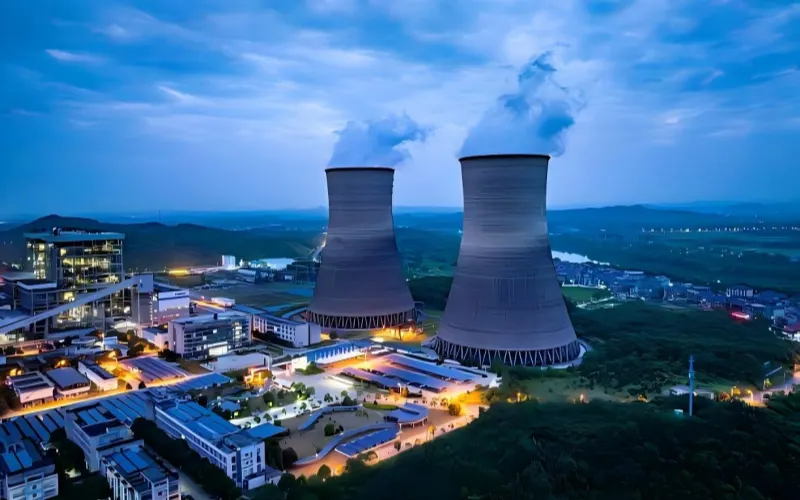
power plant conveyor belt

High-Tension Main Haulage Lines

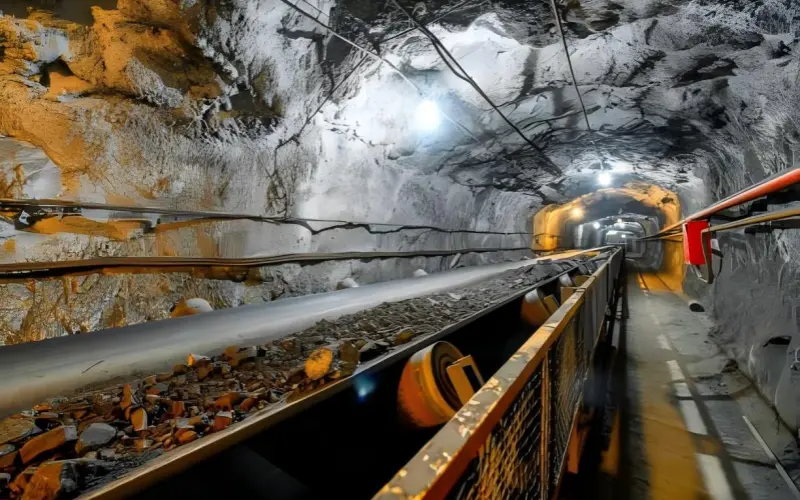
Primary haulage lines carrying continuous heavy tonnage, such as coal and ore transport or power plant fuel handling, are defined by the tension they must sustain. A straight warp conveyor belt concentrates its strength in the warp direction to carry that tension directly, without the added weight and bulk of stacking multiple fabric plies.
underground conveyor belt 13

Lines Where Elongation Must Stay Low

On long fixed conveyors with limited take-up space, tunnel and underground lines, or automated systems that can't afford downtime, a stretching belt means constant re-tensioning and longer take-up travel. Straight warp yarns run without crimp, so the belt elongates very little in service, holding tension stable over long operating distances.
How a Straight Warp Conveyor Belt Is Built

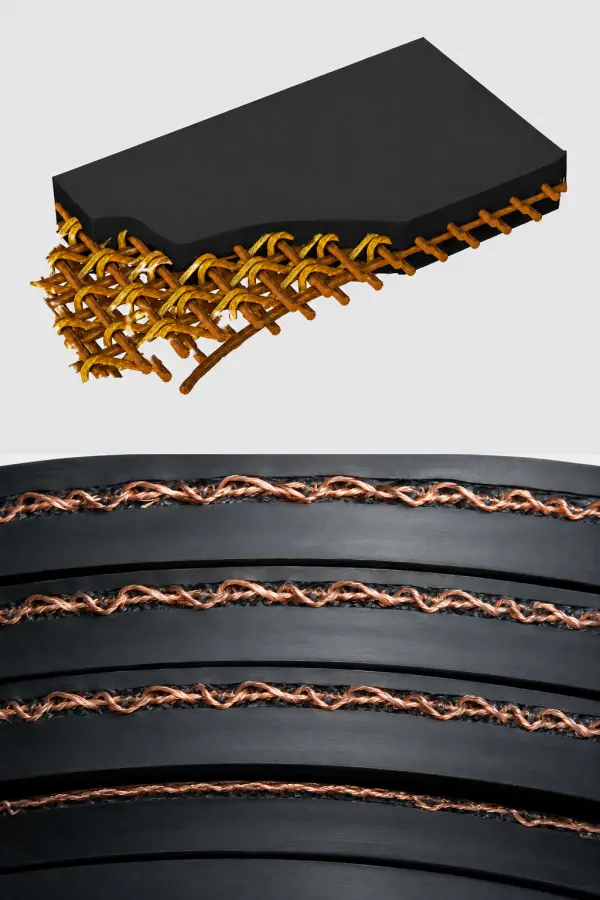
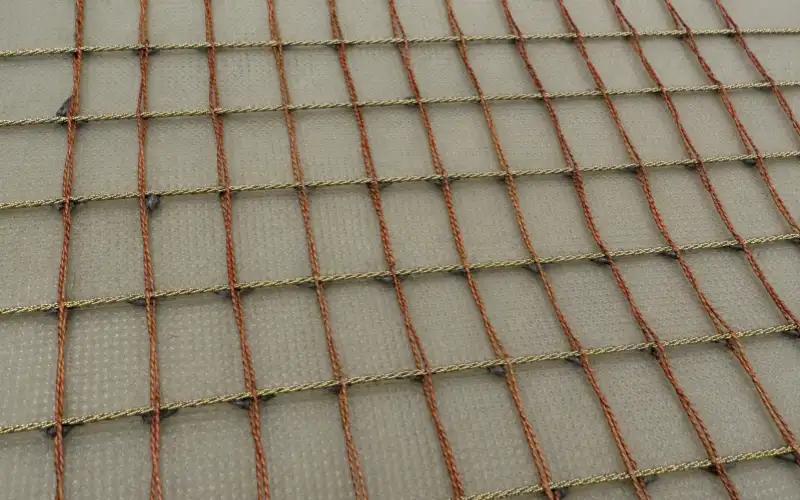
A straight warp conveyor belt lays its load-bearing warp yarns almost perfectly straight, held in place by binder yarns, so nearly all of their strength converts directly into the belt’s lengthwise strength.

Straight warp conveyor belt constructure

Straight, Crimp-Free Warp Yarns

A straight warp conveyor belt lays its load-bearing warp yarns almost perfectly straight, held in place by binder yarns, so nearly all of their strength converts directly into the belt's lengthwise strength.

Low Elongation From Zero Crimp

With a straight warp conveyor belt, there is no crimp to pull out, so the belt elongates very little from the moment load is applied — which is what lets it hold tension so stably over long conveying distances.

Strength Concentrated in One Direction

The warp yarns carry the load while the weft, or binder, mainly holds the structure together; since the main working force runs lengthwise, strength is concentrated in the warp, which is why an SW belt's warp strength is far higher than its weft.

High Strength From a Single Ply

Because straight warp yarns carry load so efficiently, a single ply reaches strengths that would otherwise require multiple fabric layers, while reducing bonded interfaces and minimizing the chance of delamination.

Need more multiple rubber properties at the same time?

More and more customers are seeking rubber with multiple combined properties, such as flame retardancy and oil resistance, or flame retardancy and cold resistance. If you have similar needs, please contact us.

Straight Warp Conveyor Belt Material Options

Straight warp is a weave, not a material — the carcass is configured to match your strength, weight, and tear-protection requirements.

2. polyester conveyor belt carcass ep Calendering Line

Polyester Straight Warp

Polyester warp yarns give a straight warp conveyor belt high lengthwise strength and low elongation at a practical cost — the standard choice for high-strength, long-distance lines that don't require steel cord.
Aramid Conveyor Belt

Aramid Straight Warp

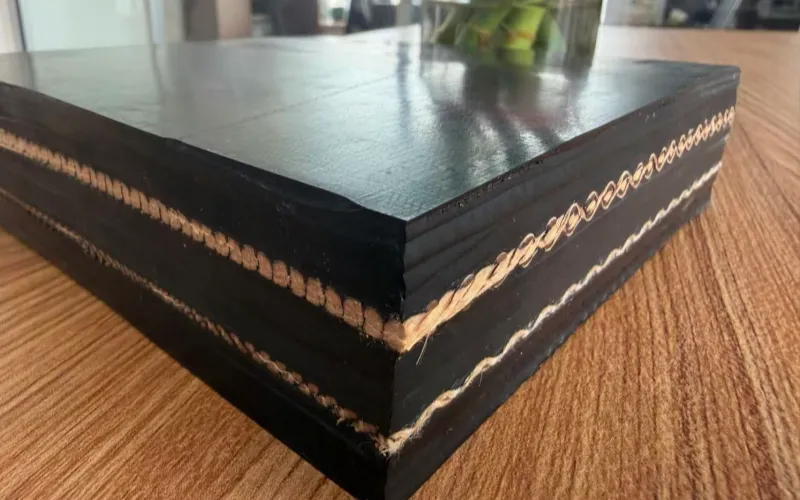
Aramid reach strengths approaching steel cord at a fraction of the weight — a lightweight alternative that cuts belt weight and drive energy on multi-kilometer lines where steel cord's own weight raises running costs.
Tear-Resistant Breaker

An added layer of transverse rip protection for lines exposed to trapped or sharp material — available with polyester weft for moderate tear risk, or brass-coated steel cord for the highest rip resistance.
Straight warp conveyor belt key advantages

A few decisive advantages define what a straight warp belt brings to a long-distance line — led by the weight savings that cut energy cost over years of running.

Lighter belt, lower energy cost

A straight warp belt weighs far less than a comparable steel cord belt — with aramid, well under half — so on multi-kilometer lines it cuts the drive energy needed to move the belt’s own weight.

Very low elongation

Straight, crimp-free warp yarns elongate very little under load — less re-tensioning, shorter take-up travel, and steadier running over long distances.

High strength in a single ply

One straight warp ply reaches strengths that would otherwise need several stacked layers — thinner, lighter, and fewer bonded interfaces where delamination can begin.

Reliable bonding under load

Adhesion of ≥8.0 N/mm between carcass and covers keeps the layers bonded through years of sustained high tension on long-distance lines.

Adequate impact handling

Built primarily for lengthwise strength, the carcass still absorbs impact reasonably well at loading points — enough for typical long-distance bulk loading.

Straight Warp Conveyor Belt Manufacturing and Quality Control

High lengthwise strength only holds up if the yarn, vulcanization, and bonding are all controlled. Here’s how we build quality into every straight warp conveyor belt from the yarn up.

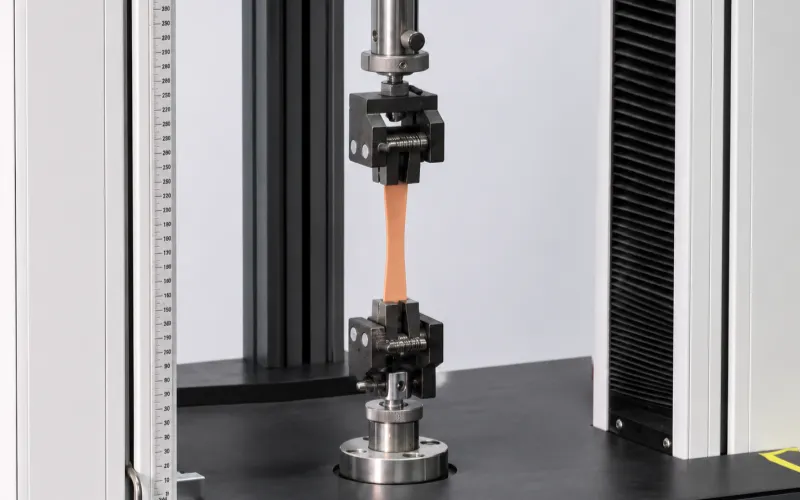
Fabric Ply Tensile Strength Test

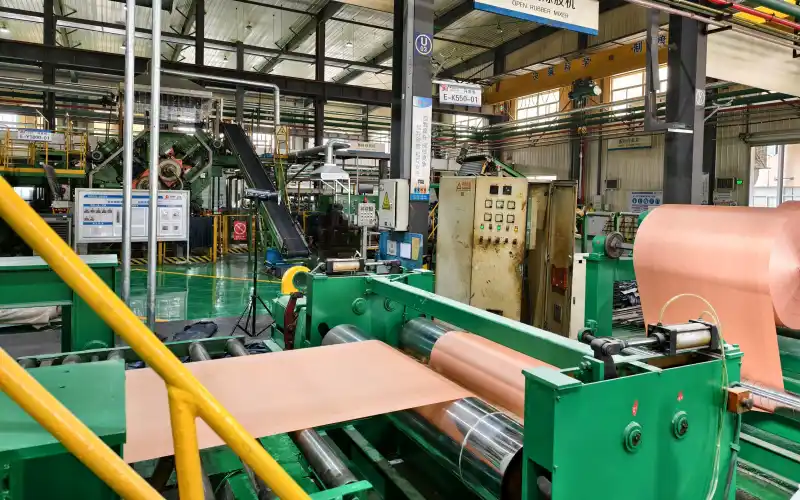
The strength of a straight warp conveyor belt starts with the warp yarn. When yarn arrives at our factory, we run tensile tests before it enters production — confirming it meets the required strength, so weakness never gets built into the carcass.

vulcanization test

Lab-Tested Vulcanization Parameters

Before production runs, our in-house lab tests the three vulcanization variables — time, temperature, and pressure — to establish the exact settings that achieve full curing. This is what delivers the ≥8.0 N/mm adhesion that keeps the layers bonded under sustained high tension.
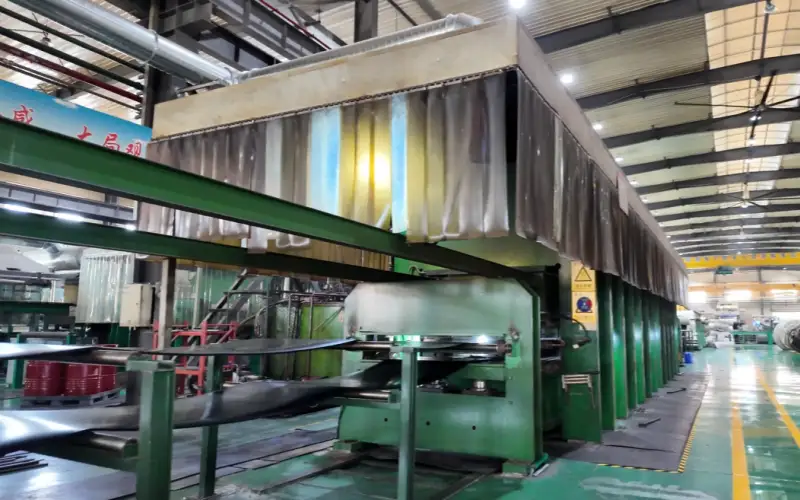
12 m vulcanizing machine

Controlled Vulcanization Across the Belt

Each belt is then vulcanized to those tested parameters under even temperature and pressure across its full width, so the carcass bonds to the covers consistently along the entire length — not just in sample sections.
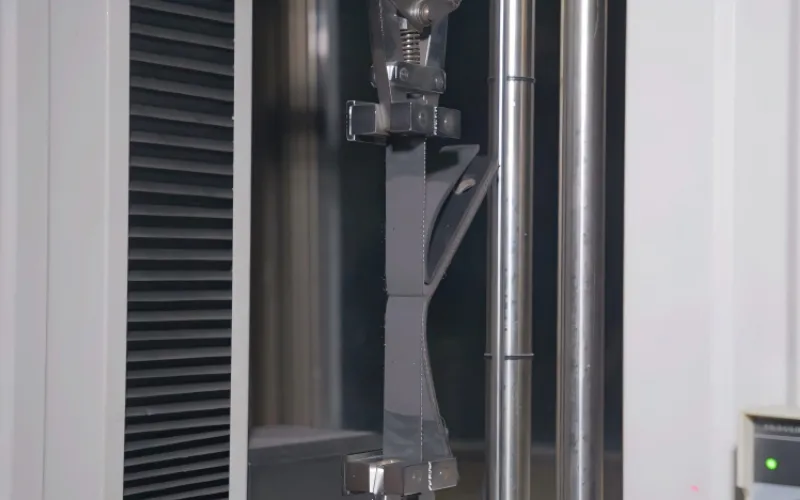
Mechanical and Adhesion Testing

Testing Sampled From the Finished Belt

Final verification is done on samples cut from the finished belt itself — tested for breaking strength, elongation, and adhesion against the ordered grade. What we verify is the actual delivered product, not a separate test piece made alongside it.
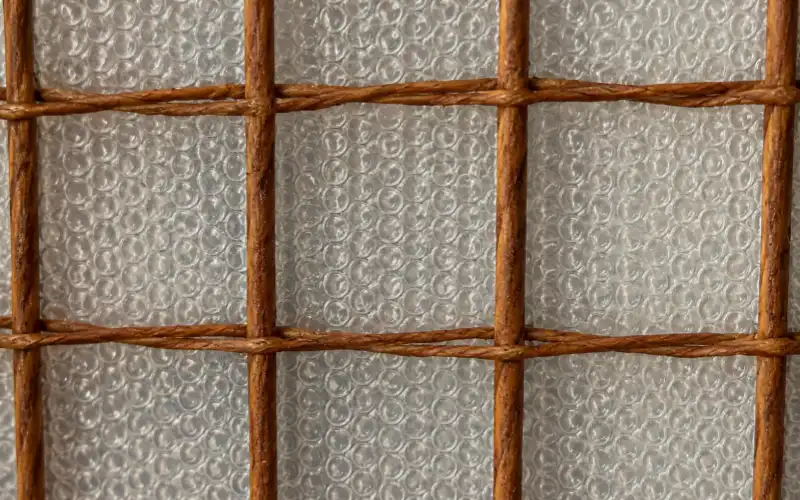
Concerned the Belt You Receive Won't Meet Spec?

We provide a pre-shipment inspection report.Send us your requirement and we’ll get back to you with a quote.

Straight Warp Conveyor Belt vs CFW Conveyor Belt

Straight warp and CFW are both special weaves we produce, built to solve opposite problems — one for lengthwise strength over distance, the other for resisting tearing across the width.

 Straight Warp Conveyor BeltCFW Conveyor Belt
WeaveStraight warp — crimp-free warp yarnsCrows foot weave — heavier, denser weft
Strength DirectionConcentrated lengthwise (warp)Reinforced across the width (weft)
Built to SolveHigh tension and stretch over long distancesTearing and impact from sharp, heavy material
ElongationVery lowLow
Typical LineLong-distance, high-tension conveyingMining, quarrying, crushing
The Problem It Answers“My line is long and needs high strength with low stretch”“My belt keeps tearing at impact points”

Not sure whether straight warp or CFW fits your line?

Straight Warp Conveyor Belt Customization Options

Beyond standard specifications, we tailor each straight warp conveyor belt to your line — from the cover that meets your conditions to the branding and packaging that suit your business.

tear resistant breaker fabric

Tear-Resistant Breaker Options

Where a belt risks tearing along the warp direction, a tear-resistant breaker reinforces the weft — with polyester weft for moderate tear risk, or brass-coated steel cord for the highest rip resistance.
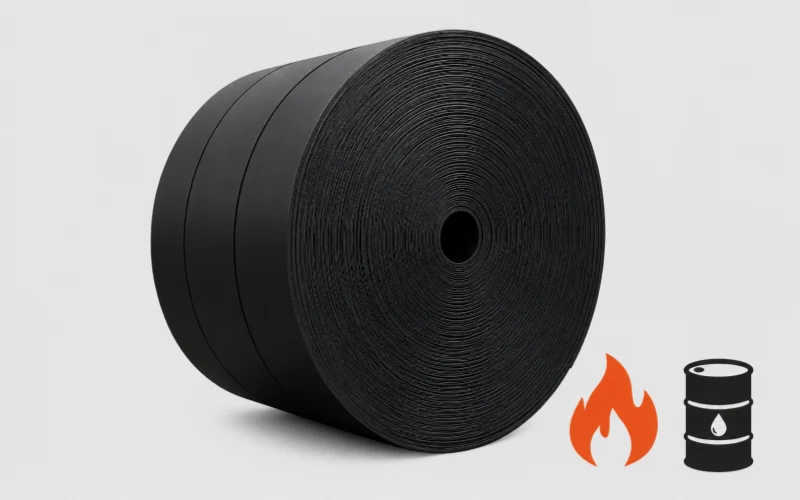
Flame retardant + oil resistant NN Conveyor Belt

Packaging and Reeling Customization

Standard PP packaging comes with hexagonal frames, octagonal frames, steel pallets, and oval-coil or eye-to-the-sky reeling — packed in the format that ships most efficiently.
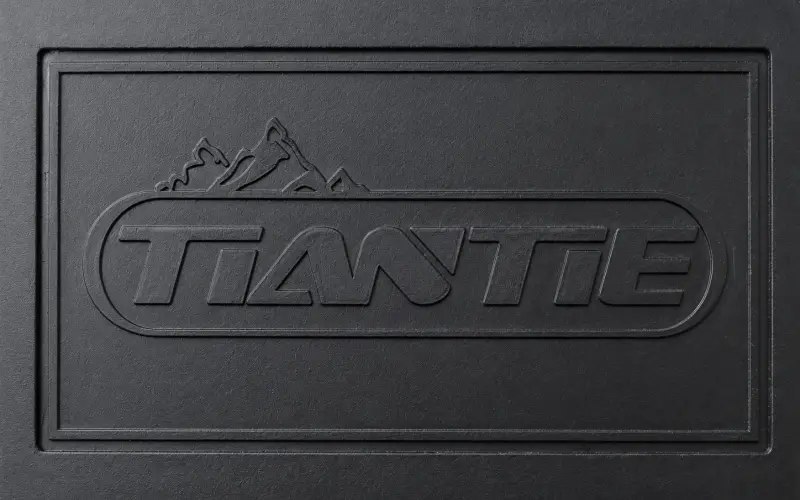
customized logo

Logo Customization

We apply your branding directly to the belt surface, so every belt you supply carries your own identity in the market — a practical fit for distributors and brand owners.

Straight Warp Conveyor Belt FAQs

How is a single-ply straight warp conveyor belt spliced?

Because the strength sits in one straight warp layer, it can't be joined with the stepped splice used for multi-ply belts, which relies on separating and overlapping several plies. Instead, a straight warp belt is joined with a finger splice, where the belt ends are cut into interlocking fingers and hot vulcanized. This carries the belt's lengthwise strength through the joint in a single continuous layer.

How does aramid straight warp compare in price to a polyester version?

Aramid warp yarn costs more than polyester, so an aramid straight warp belt carries a higher price at the same width and rating. The value comes on long-distance lines, where its lower weight reduces drive energy over years of running. On shorter or less energy-sensitive lines, polyester straight warp is usually the more economical choice.

How is a straight warp belt stored before installation?

It should be kept reeled, upright on the roll, in a dry area away from direct sunlight, heat, and oils. Stored this way, the carcass and rubber hold their properties until installation. Storage duration and conditions vary with climate and how long the belt waits before going into service.

Does a belt with a tear-resistant breaker splice differently?

Yes. A tear-resistant breaker isn't used on its own — it's built together with an EP fabric ply. Because of that EP layer, this construction is generally joined using the stepped splice method standard for EP belts, rather than the finger splice used for a single straight warp ply. The right method depends on the exact carcass build.

What pulley diameters suit a straight warp conveyor belt?

Because it's thinner and more flexible than a multi-ply belt of the same strength, a straight warp belt generally bends around smaller pulleys without excessive stress on the carcass. The exact minimum pulley diameter depends on the grade and cover thickness, since higher-rated belts with thicker carcasses need larger pulleys to flex properly.

Is a straight warp belt suitable for reversible conveyors?

Yes. With strength concentrated in the warp direction and a symmetrical single-ply carcass, a straight warp belt runs in either direction without a preferred orientation. This makes it workable on reversing conveyors, provided the cover grade and thickness are specified for the loading conditions in both directions of travel.

Get a Straight Warp Belt Matched to Your Line

Every long-distance line runs differently — its length, tension, load, and material decide the belt it needs. Send us your conditions and we’ll recommend the right straight warp grade and construction, standard or custom.

GET FREE QUOTE

Download Catalog!

In order to ensure the smooth delivery of Catalog, please be sure to fill in the real email address.If it’s not in your inbox, please check your junk mailbox. 

Download Catalog!

Download our catalog to see all products and data sheets, the catalog will be sent to your email address.

Download Catalog!

In order to ensure the smooth delivery of Catalog, please be sure to fill in the real email address.If it’s not in your inbox, please check your junk mailbox. 

Welcome