Food Conveyor Belt Manufacturer in China
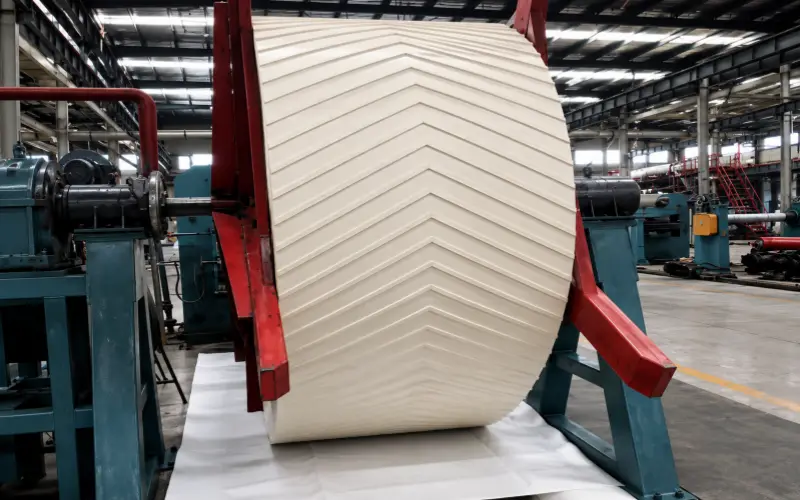
We manufacture food-grade rubber conveyor belts for high-capacity handling of sugar, grain, flour, starch, edible salt, oilseeds, and other bulk food materials. The cover compound and belt construction can be matched to oil content, dust conditions, conveyor length, and required operating performance.
- Food-Contact Rubber Cover Reduces Material Contamination Risk
- Fabric Carcass Supports Long-Distance, High-Capacity Conveying
- Oil-Resistant Compound Limits Softening around Seeds and Nuts
- Anti-Static Options Reduce Charge Accumulation in Dusty Conveying
Food Conveyor Belt for Bulk Food Processing
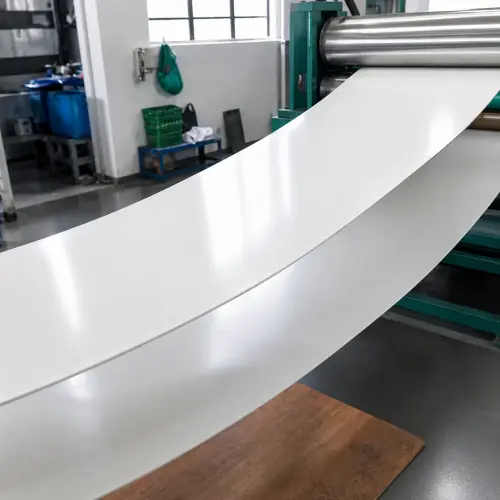
Our food conveyor belt combines a reinforced fabric carcass with a food-grade rubber cover for direct contact with sugar, grain, flour, starch, edible salt, oilseeds, and other bulk food materials. It provides the strength required for continuous handling while keeping the conveyed food in contact with a controlled rubber surface.
The rubber cover is selected according to the actual food material rather than belt color alone. Dry sugar, grain, flour, and salt require control of surface contamination, odor, abrasion, and static accumulation, while soybeans, peanuts, and other oil-containing materials require a food-grade compound that also resists softening, swelling, and stickiness caused by natural oils.

Food Conveyor Belts for Bulk Food Processing
Food-grade rubber conveyor belts are mainly used where dry food materials move in large volumes through storage, processing, transfer, or packaging systems. The belt construction and cover performance are matched to the material’s abrasion, oil content, dust generation, and conveying conditions.

Sugar Processing
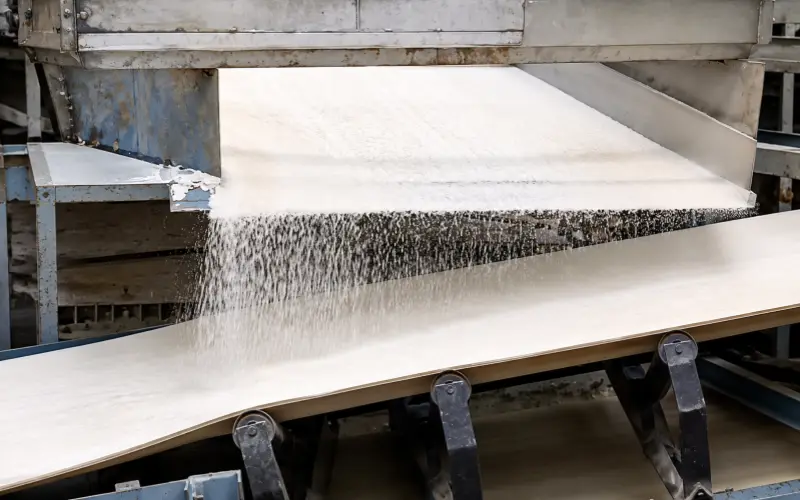
Food conveyor belts carry raw sugar, refined sugar, and crystalline sugar between refining, screening, storage, and packing processes. A non-marking surface reduces visible contamination, while abrasion-resistant and anti-static options support continuous handling of sugar crystals and dust.
Grain and Cereal Handling
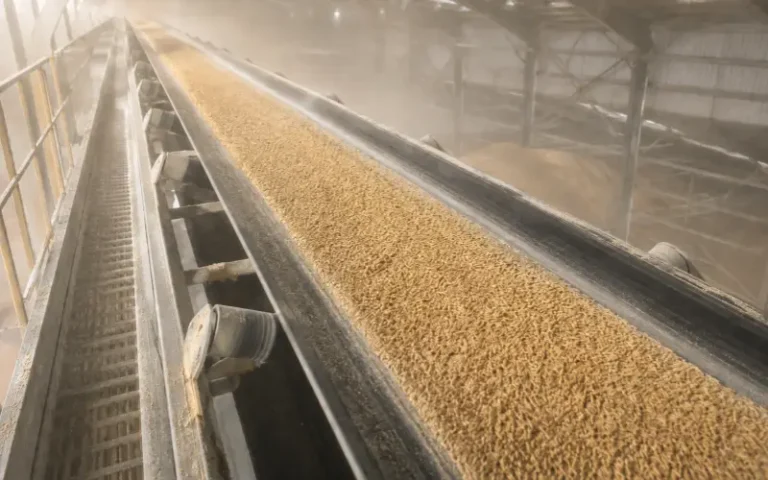
Fabric-reinforced food conveyor belts support the transfer of wheat, corn, rice, barley, malt, and other grains through mills, silos, warehouses, and port terminals. The belt carcass provides the strength and troughability required for high-capacity and long-distance conveying.
Edible Salt Processing
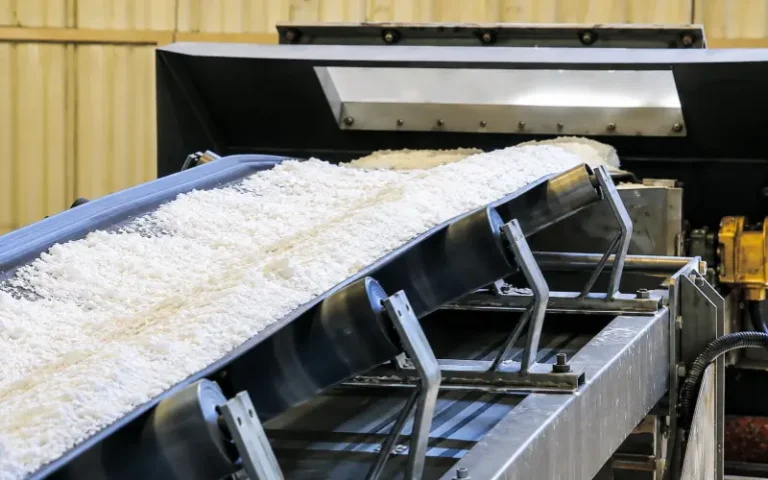
Food-grade rubber belts move refined salt and granular food salt through drying, screening, storage, and packaging systems. The cover must resist continuous particle abrasion while maintaining a clean, non-marking surface that does not leave visible contamination on the salt.
Flour, Starch and Food Powder Handling
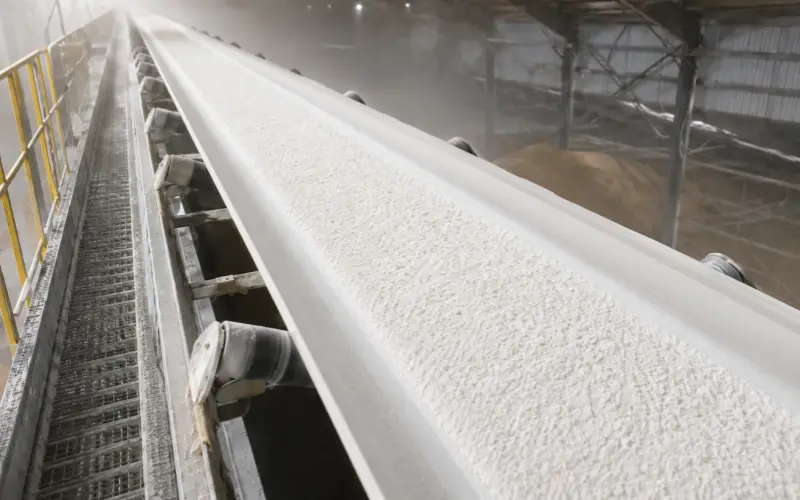
Food conveyor belts transfer flour, starch, sugar powder, grain powder, and dry premixes between storage, screening, blending, and packing equipment. Anti-static performance helps control charge accumulation, while optional flame resistance can be matched to dust-risk areas.
Oilseed, Bean and Nut Processing
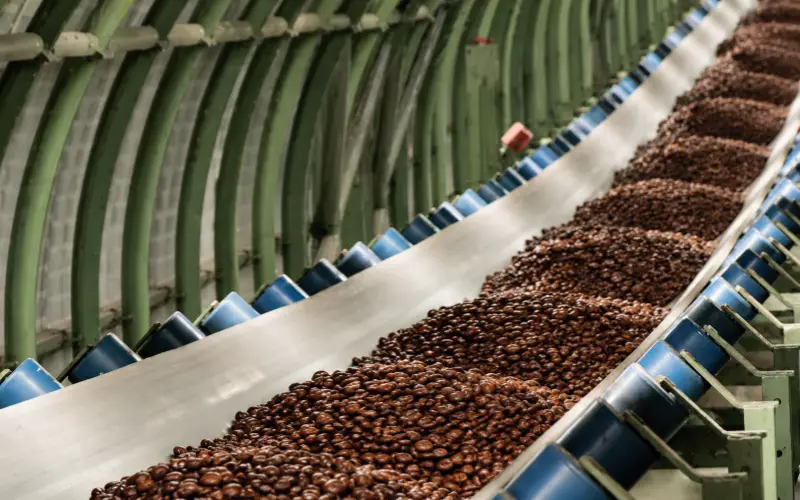
Food conveyor belts handle soybeans, peanuts, sunflower seeds, rapeseed, sesame, and other oil-containing materials during receiving, storage, and processing. An oil-resistant food-grade compound reduces cover softening, swelling, and stickiness caused by prolonged contact with natural oils.
Food Conveyor Belt Options for Different Food Materials
We match the rubber cover compound to the oil content and contact characteristics of the conveyed food.

Standard Food Rubber Conveyor Belt
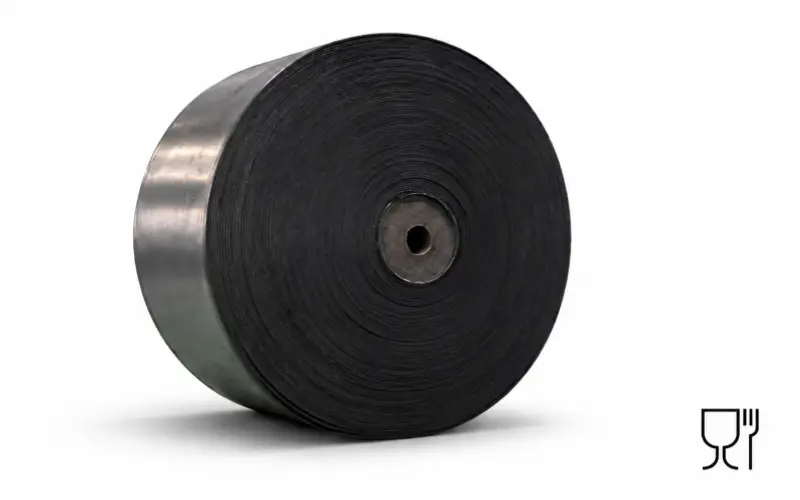
The standard food-grade cover is designed for direct contact with dry bulk food materials. Its formulation controls processing oils, accelerators, antioxidants, fillers, and pigments to reduce odor, color transfer, surface contamination, and unacceptable migration while maintaining the abrasion resistance required for continuous conveying.
Oil-Resistant Food Conveyor Belt
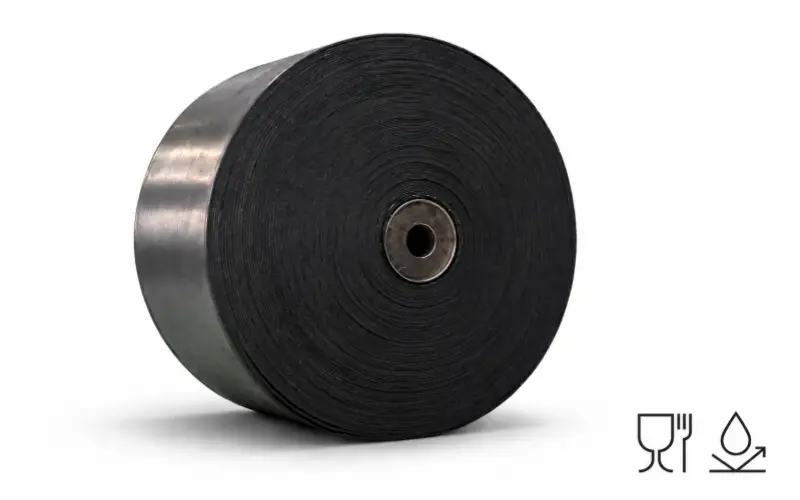
Oil-containing food materials can gradually extract small molecules from ordinary rubber and cause the cover to absorb oil, swell, soften, or become sticky. The food-grade oil-resistant compound limits these changes, helping the belt retain its surface strength and dimensional stability during prolonged contact with natural oils.
Food-Grade Rubber Cover Compound Design
We control the key ingredients in the rubber cover to reduce odor, color transfer, surface contamination, and unacceptable migration during food contact.
Purity-Controlled Processing Oils and Plasticizers
We use processing oils and plasticizers with defined composition, controlled aromatic impurities, and stable compatibility with the selected base rubber. Their dosage is adjusted to provide the required flexibility and processing performance without causing oil migration, surface stickiness, or noticeable odor during contact with food materials.
Compound Matching for Dry and Oil-Containing Foods
We use separate cover compounds for dry and oil-containing materials. Dry-food compounds focus on low odor, non-marking, and abrasion resistance, while oil-resistant food-grade compounds limit oil absorption, swelling, softening, and stickiness during contact with soybeans, peanuts, seeds, and nuts.
Low-Migration Antioxidants
We use low-migration, low-staining, and low-odor antioxidant systems to slow rubber hardening, cracking, and surface powdering. The selected antioxidants help maintain cover flexibility without producing visible bloom, discoloring light-colored food materials, or being easily extracted by natural oils.
Purity-Controlled Fillers and Pigments
We use fillers and pigments with controlled purity, restricted heavy-metal impurities, and stable dispersion in the rubber compound. This helps the cover maintain its strength, abrasion resistance, and consistent color while reducing color transfer, surface powdering, and loose particles entering the conveyed food.
Controlled Vulcanization System
We select evaluated accelerators and control their dosage together with vulcanization temperature and curing time. Sufficient and stable curing helps the rubber form a complete crosslinked structure while reducing unreacted accelerators, amines, and other low-molecular residues that could affect food odor, taste, or migration results.
Finished Rubber Compound Verification
We verify the finished vulcanized rubber according to the actual cover compound and intended food-contact conditions. The review can include formulation consistency, migration or extraction performance, restricted substances, and possible effects on food odor, taste, or color rather than relying only on individual raw-material declarations.
Match the Rubber Compound to Your Food Material
Share the conveyed food, oil content, contact temperature, and target market. We will match the food-grade rubber compound to your application.
Food-Contact Controls during Belt Production
We control compound separation, complete-belt cleanliness, and vulcanization to maintain the confirmed food-contact condition throughout production.

No Industrial Rubber in the Food-Grade Compound
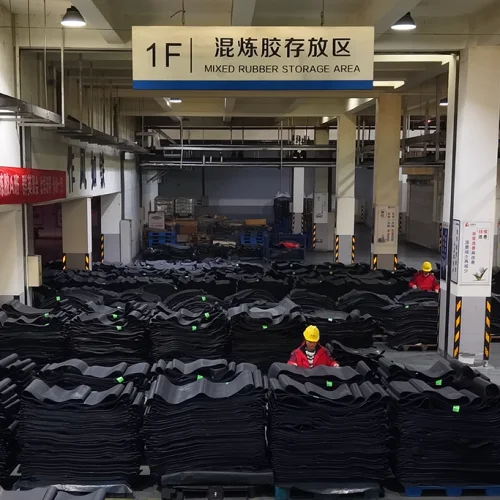
Food-grade compounds are separately identified, stored, and handled throughout production. Ordinary industrial rubber, reclaimed rubber, unidentified scraps, industrial pigments, and unapproved additives are not permitted in the compound. Any accepted surface repair must also use material compatible with the confirmed food-grade cover, preventing uncontrolled ingredients from entering the delivered belt.

Cleanliness Controlled across the Complete Belt
The carrying surface, running side, belt edges, and joint area are protected from industrial oil, black rubber, dust, metal particles, loose fibers, and other foreign matter during production, inspection, handling, and packing. Equipment, worktables, handling tools, inspection areas, and packaging materials that contact the belt are cleaned before use.

Complete Vulcanization Controls Residues and Odor
The food-grade cover is vulcanized within the recorded temperature, pressure, and curing-time range. Sufficient curing allows accelerators and other reactive ingredients to complete the intended reaction, helping reduce excessive low-molecular residues, strong chemical odor, surface tackiness, and possible taste transfer while maintaining the required cover strength and elasticity.
Finished Food Conveyor Belt Inspection
We inspect the complete belt and confirm the corresponding production sample before the order is approved for packing and delivery.

Complete-Belt Cleanliness Inspection
The carrying surface, running side, edges, and joint area are inspected before packing. Industrial oil, black rubber particles, dust, metal fragments, loose fibers, and other visible foreign matter are not accepted on the finished belt, so you receive a clean product without having to remove factory contamination after delivery.
Surface Condition and Odor Check
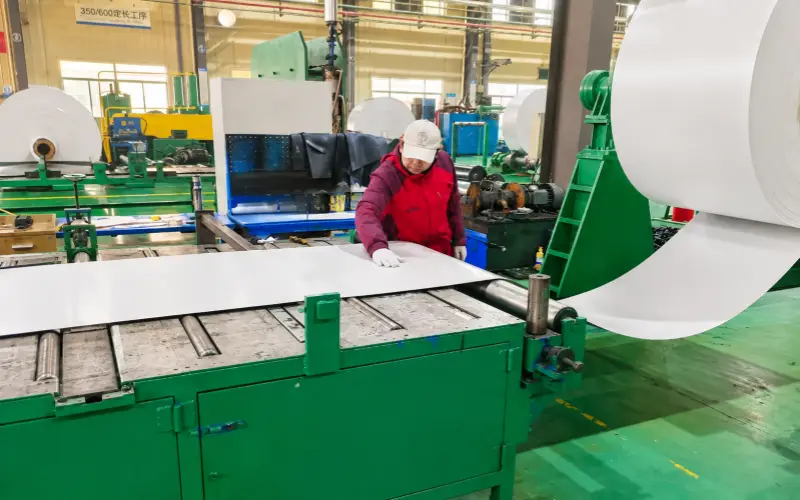
The finished cover is checked for abnormal tackiness, blistering, exposed fabric, pores, color contamination, repair marks, and strong chemical odor. Belts with unacceptable surface conditions are not released for delivery, reducing the risk of food retention, difficult cleaning, product marking, or odor transfer during operation.
Tested Sample Linked to the Delivery Batch
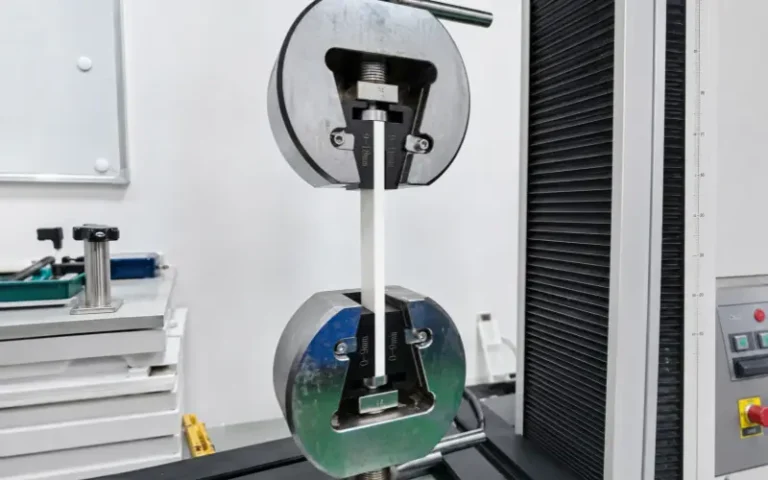
The tested compound sample is identified by its production batch and linked to the corresponding conveyor belt order. This prevents unrelated historical test results from representing the current product and allows repeat orders or quality investigations to verify the material actually used in the delivered batch.
Food Conveyor Belt Packaging for Clean Delivery
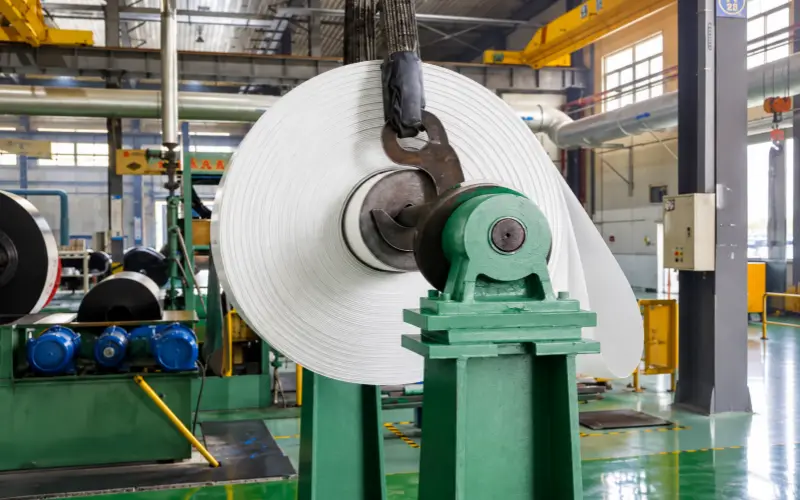
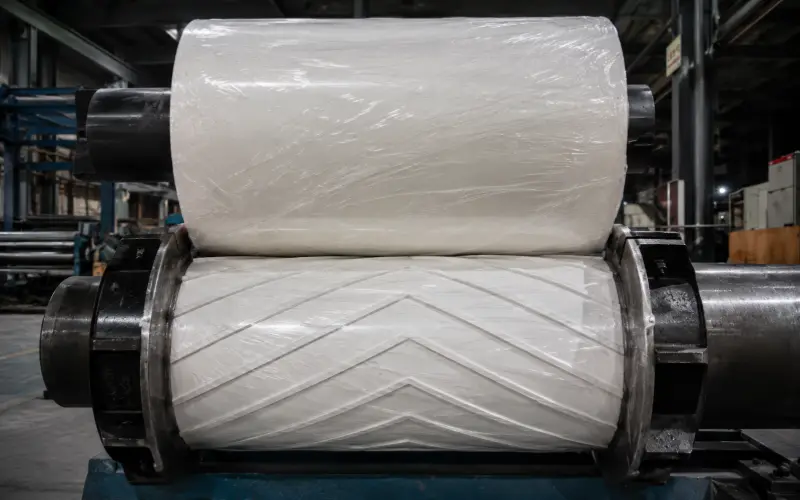
After inspection, the complete food conveyor belt is wrapped to protect the carrying surface, running side, edges, and joint area from dust, moisture, industrial oil, loose fibers, and other contamination during storage, loading, and international transportation.
The belt is rolled and secured with clean protective materials, without allowing rough timber or metal fasteners to contact the rubber directly. Each package is clearly identified, allowing your warehouse to distinguish different belt specifications without opening the protective wrapping.
- Complete-Belt Protective Wrapping
- No Direct Contact with Dirty or Rough Materials
- Clear Order and Batch Identification
Manufacturing Capacity behind Your Food Conveyor Belt Orders
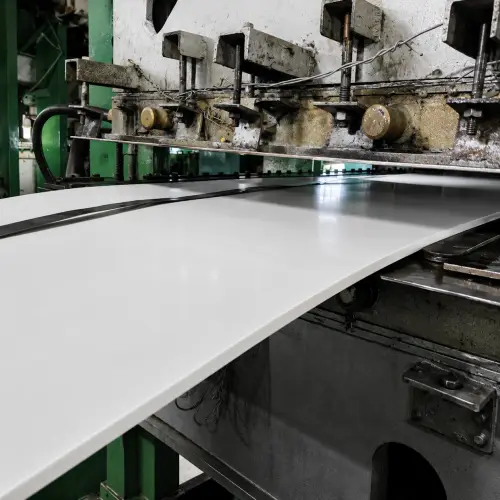
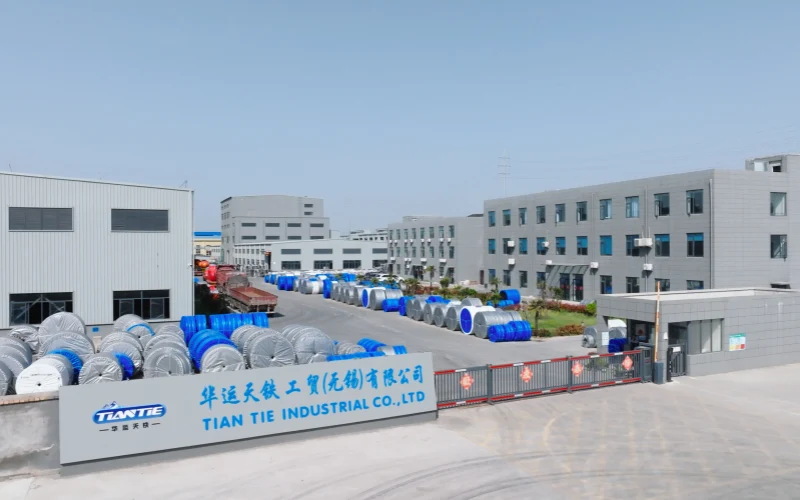
Food conveyor belt orders are completed within our 15,000 m² rubber conveyor belt production facility, covering rubber mixing, calendering, belt building, vulcanization, inspection, and packing. Keeping these processes within one manufacturing system gives you clearer production coordination and more stable delivery planning for wholesale and replacement orders.
Our conveyor belts have been supplied to more than 60 export markets, giving us practical experience in handling different belt dimensions, order quantities, destination conditions, and international shipping arrangements. This allows you to source both planned bulk orders and later replacement belts from the same production base.

FAQs
Is Every White Rubber Conveyor Belt Food-Grade?
Why Must the Complete Food Conveyor Belt Remain Clean?
Which Joint Is More Suitable for Direct Food Contact?
Can the Same Belt Handle Both Dry and Oil-Containing Foods?
Do the Bottom Cover and Belt Edges Need Food-Grade Rubber?
Can a Damaged Food-Contact Surface Be Repaired?
Send Us Your Food Conveyor Belt Requirements
Share the conveyed food, belt size, operating conditions, and required quantity. We will match the suitable food-grade rubber compound and belt specification for your application.