China Solid Woven Conveyor Belt Manufacturer

High-performance solid woven conveyor belt solutions for mining, underground transport, and heavy-duty bulk material systems with stable structure and fire-resistant options.

Product ntroduction

What Is Solid Woven Conveyor Belt

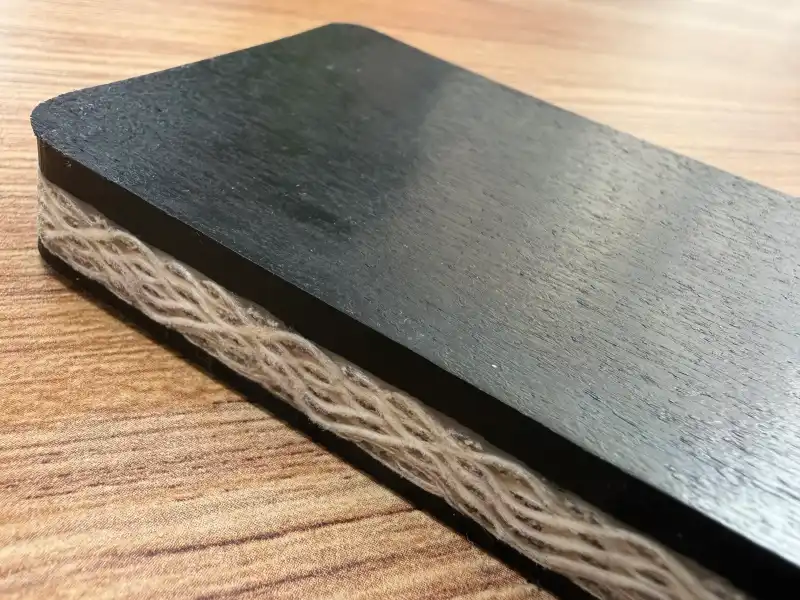
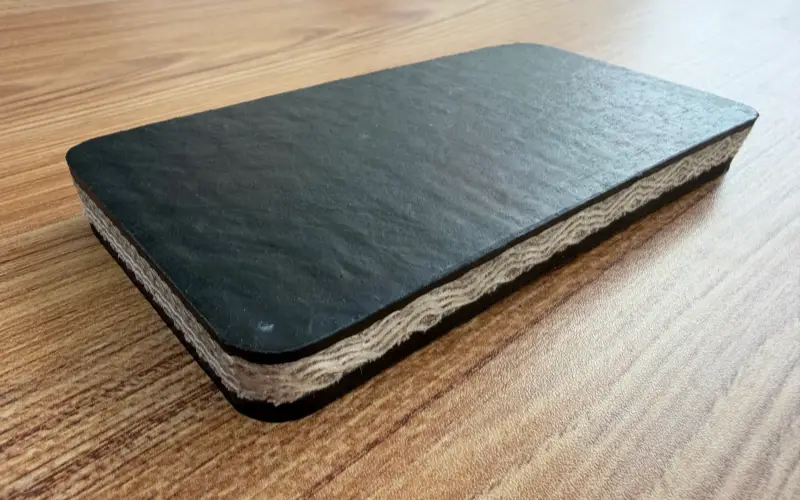
A solid woven conveyor belt is a conveyor belt made with a single integrated woven carcass. The woven carcass is impregnated with PVC paste and plasticized to form a unified belt body with flame-resistant, anti-static, and moisture-resistant properties. Unlike traditional multi-ply conveyor belts, it does not rely on multiple bonded fabric layers, which helps reduce the risk of ply separation during operation.

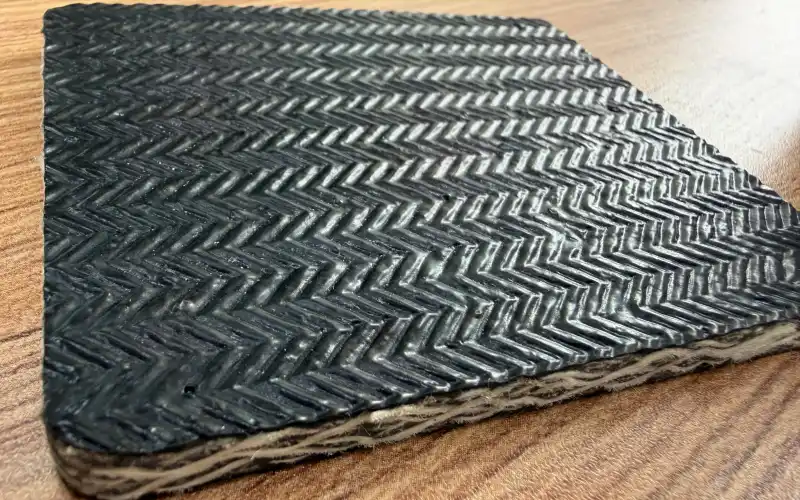
Based on the surface cover material, a solid woven conveyor belt is commonly divided into PVC type and PVG type. A PVC solid woven conveyor belt uses PVC cover layers for standard flame-resistant conveying conditions, while a PVG conveyor belt uses rubber-enhanced cover layers to improve abrasion resistance, impact resistance, and wet-condition durability.

pvg Solid Woven Conveyor Belt
Built For Safer Conveying

Why Choose Solid Woven Conveyor Belt

Selecting a solid woven conveyor belt is mainly driven by operational safety, system stability, and long-term reliability in demanding conveying environments. Compared with conventional multi-ply belts, the integrated woven structure helps reduce mechanical risks during continuous operation.

Reduced Structural Failure Risk

A solid woven conveyor belt uses a single integrated carcass instead of multiple bonded layers. This helps eliminate ply separation risk, which is a common failure mode in multi-ply conveyor belts under high tension, impact loading, or long-distance operation.

Improved Safety In Critical Environments

In underground mining and enclosed conveying systems, fire safety and anti-static performance are essential. A solid woven conveyor belt provides stable flame-resistant behavior, making it suitable for applications where safety requirements are strict.

Stable Performance Under Continuous Load

The woven carcass structure helps maintain uniform tension distribution across the belt width. This improves operating stability and reduces problems caused by uneven stretching, belt deviation, or unstable movement during long-term conveying.

Adaptable To Different Working Conditions

Different cover structures allow the belt to match different industrial conditions. PVC solid woven conveyor belt is commonly used for standard fire-resistant applications, while PVG conveyor belt is preferred where moisture, impact, and abrasion are more severe.

Lower Downtime Risk In Industrial Systems

For mining operators and bulk material handling systems, unplanned downtime can lead to serious production loss. The stable body structure of solid woven conveyor belt helps reduce unexpected belt failure and supports continuous system operation.

Stronger Project Reliability For B2B Procurement

For B2B buyers, a solid woven conveyor belt is often selected for projects where belt failure may affect safety, delivery schedules, and operating costs. Its integrated carcass structure supports reliable long-term use for mining contractors, EPC projects, equipment manufacturers, and bulk handling operators.

Material System Difference

PVC vs PVG Solid Woven Conveyor Belt

Both PVC solid woven conveyor belts and PVG conveyor belts are based on the same solid woven skeleton structure and are composed of a single, integral woven fabric system. The main difference between them lies in the covering compound system and its production formulation.

pvc solid Woven Conveyor Belt

PVC Solid Woven Conveyor Belt

PVC solid woven conveyor belt uses a standard PVC-based cover material applied to both the top and bottom surfaces of the belt. This cover system is laminated onto the solid woven carcass to form a stable, integrated conveyor belt structure. The PVC system provides flame resistance, anti-static properties, and stable mechanical performance under controlled operating conditions.

It is commonly used in dry or standard industrial environments where abrasion and impact levels are moderate and operating conditions are relatively stable. Typical applications include general underground conveying systems, enclosed conveyor lines, and industrial material handling systems that require consistent fire safety performance without extreme mechanical stress.

From a production perspective, PVC solid woven conveyor belt is a more standardized and cost-efficient configuration, suitable for projects where stable operation and compliance with basic safety requirements are the primary focus.

pvg Conveyor belt

PVG Solid Woven Conveyor Belt

PVG conveyor belt is developed on the same solid woven carcass structure, but the key difference lies in the cover compound formulation process. Instead of using a pure PVC cover system, PVG is produced through a modified PVC-based compound that integrates rubber components and plasticizers during the material formulation stage.

This compound system is not simply a rubber overlay. It is a homogenized material structure formed before lamination, where PVC, rubber additives, and plasticizers are blended to create a reinforced cover layer material. This PVG compound is then integrated with the solid woven carcass through a hot molding process, forming a unified belt structure.

As a result, PVG conveyor belt offers significantly improved abrasion resistance, impact resistance, flexibility, and performance stability in wet or harsh operating environments. It is widely used in underground coal mining, high-moisture material transport systems, and heavy-duty bulk material handling applications where belt surface wear conditions are severe.

Get Most Suitbale Recommendation

If you are still not sure which type of solid woven conveyor belt is suitable for your system, please contact our engineering team for technical recommendation and selection support.

Belt Construction

Structure And Material Of Solid Woven Conveyor Belt

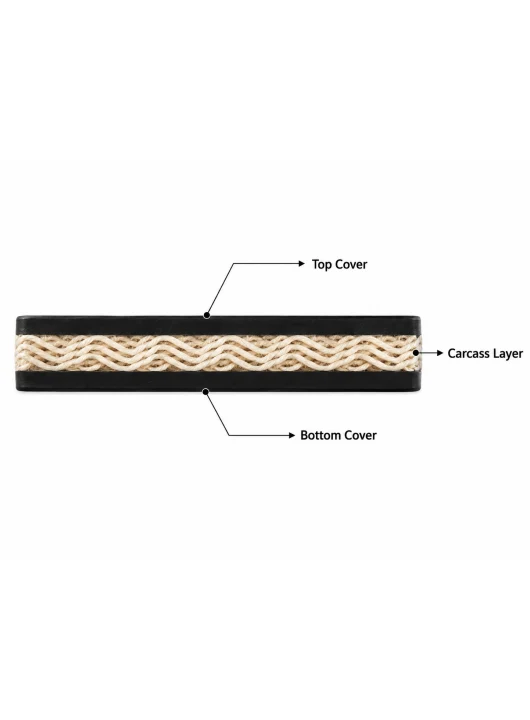
A solid woven conveyor belt is built from two main structural parts: the internal carcass layer and the top and bottom cover layers. This structure keeps the belt simple, integrated, and suitable for demanding industrial conveying systems.

Solid woven conveyor belt construction

Carcass Layer

The carcass layer is the internal body of a solid woven conveyor belt. It is made from polyester or polyester-cotton yarns through an integrated weaving process, forming a single continuous fabric structure instead of multiple bonded layers.

During production, the woven carcass is treated with PVC impregnation to stabilize the fabric structure and form a unified load-bearing body. This carcass layer determines the belt’s tensile strength, elongation control, and structural stability during continuous conveying operation.

Cover Layers

The cover layers are located on the top and bottom surfaces of the solid woven conveyor belt. They are directly bonded to the carcass and form the external working surfaces that contact the conveyed material and conveyor system.

For PVC solid woven conveyor belt, the cover layers use standard PVC compound materials. For PVG conveyor belt, the cover layers use a modified PVC-based compound system with rubber components and plasticizers, giving the belt stronger surface durability for wet, abrasive, or high-impact working conditions.

Need Conveyor Belt With Multiple Performance Requirements?

Many conveying systems require belts with combined properties such as flame resistance, anti-static performance, abrasion resistance, and moisture resistance.  If your project requires specific performance combinations, our engineering team can support selection and technical evaluation.

Technical Parameters

Solid Woven Conveyor Belt Technical Parameters

Compare standard solid woven conveyor belt grades, thickness, weight, and drum diameter recommendations for your conveyor system.

GradeWarp Strength (N/mm)Weft Strength (N/mm)Belt Thickness (mm)Belt Weight (kg/m²)Cover TypeMax InclinationHigh Tension Drum (mm)Low Tension Drum (mm)
680S630–710275–3008.1–8.310.5–11.0PVC / PVG16° / 20°400315–355
800S8003008.511.1PVC / PVG16° / 20°500355
1000S10003509.411.9PVC / PVG16° / 20°630400
1250S125035010.412.2PVC / PVG16° / 20°750450
1400S140035010.513.2PVC / PVG16° / 20°750450
1600S160042511.914.8PVC / PVG16° / 20°800600
1800S180042512.916.1PVC / PVG16° / 20°800600
2000S200042513.917.6PVG Heavy Duty20°1000750
2500S262542514.918.6PVG Heavy Duty20°1250800
3000S315040020.022.6PVG Ultra Heavy20°15001000

Tip:PVC type is suitable for dry conveying conditions with inclination below 16°, while PVG type is used for wet, high-impact applications with inclination up to 20°.

Information Required for Technical Evaluation

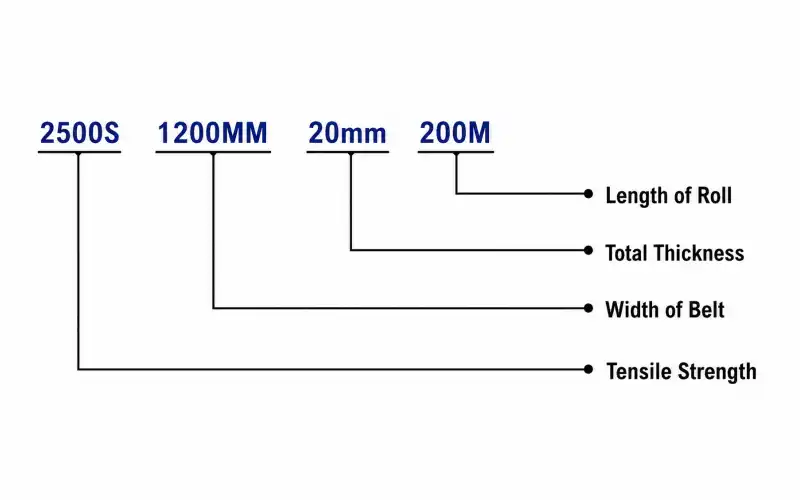
To help our engineering team evaluate your Solid woven conveyor belt requirement more accurately, please include the following specification details in your inquiry.

Inquiry Details

Need a Tailor-Made Solid Woven Conveyor Belt Solution ?

If your conveying system requires non-standard specifications, such as special strength ratings, customized belt width, reinforced solid woven carcass, or PVC/PVG cover performance adjustments, please send your technical requirements or system data for evaluation.

Industries & Applications

Solid Woven Conveyor Belt Applications

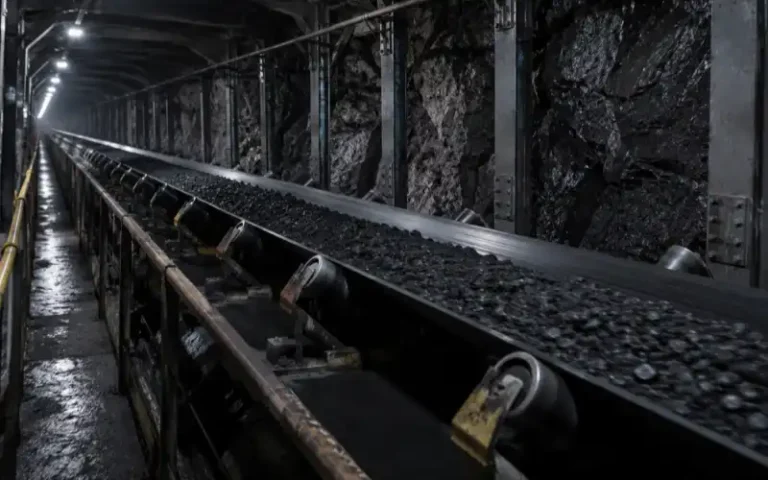
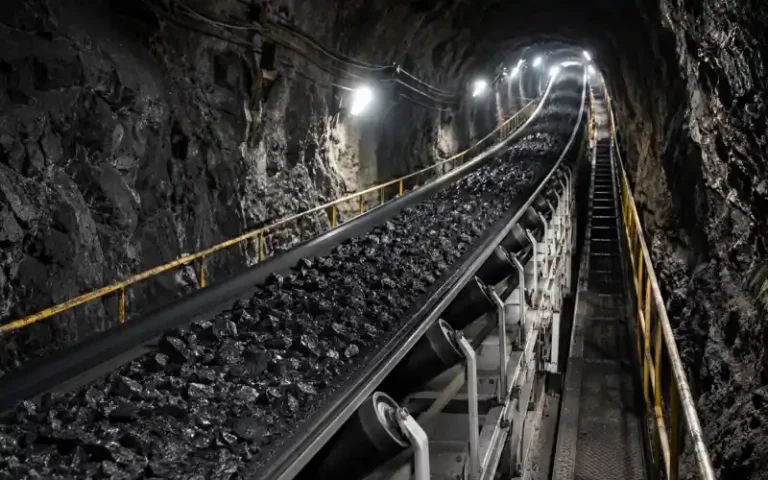
Solid woven conveyor belt is mainly used in coal mine conveying systems where flame resistance, anti-static performance, and stable belt structure are required. Its application is concentrated in underground coal transportation, inclined roadway conveying, coal transfer areas, and above-ground coal mine conveying routes.

Underground Coal Mine Transportation

In underground coal mine transportation, solid woven conveyor belt is used for enclosed conveyor routes where fire safety and anti-static performance are mandatory. PVC type is suitable for dry underground sections with stable operating conditions, while PVG type is preferred in humid roadways, working-face conveyors, and sections with higher material impact or surface wear.
Inclined Roadway Conveying

For inclined coal conveying routes, belt surface performance becomes more important because material sliding and belt load increase with the conveying angle. PVC solid woven conveyor belt is generally used for dry inclined conveying systems below 16°, while PVG conveyor belt is used for wet or higher-friction requirements where the conveying angle can reach up to 20°.
Coal Loading And Transfer Points

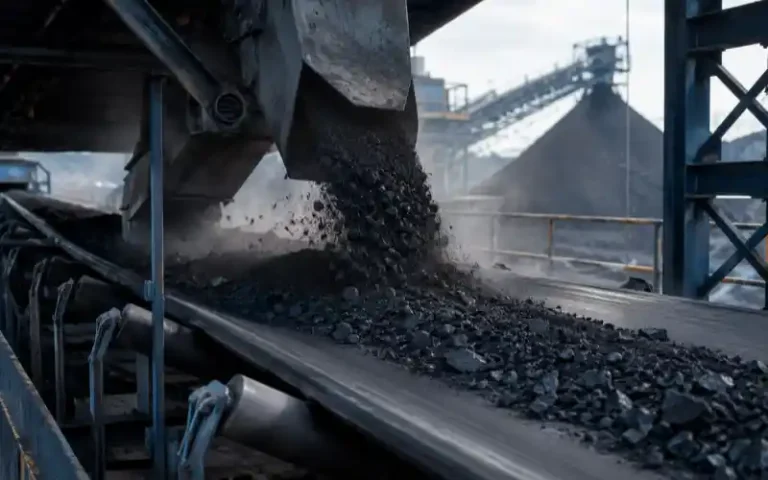
At coal loading zones and transfer points, the belt surface is exposed to repeated impact, material drop, and concentrated abrasion. PVC type can be used when the transfer condition is dry and impact is moderate, while PVG type is more suitable for wet coal, frequent loading impact, and heavier surface wear.
Above-Ground Coal Mine Conveying

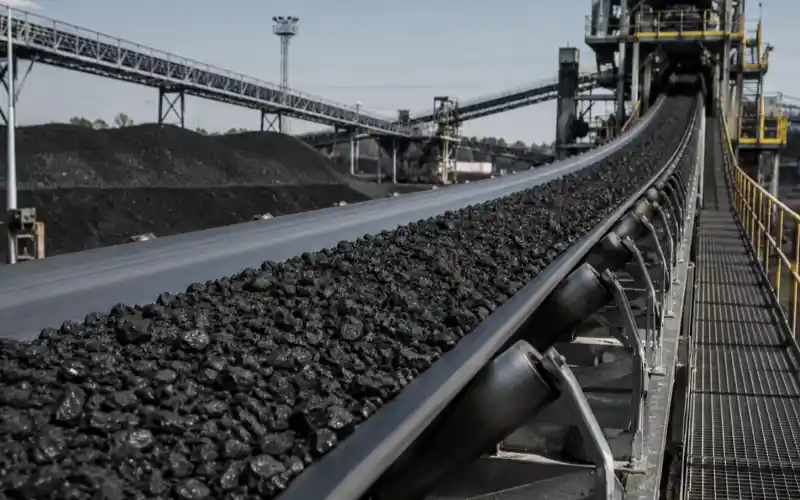
Solid woven conveyor belt can also be used in above-ground coal mine transportation when flame-resistant and anti-static belt performance is still required. PVC type is suitable for dry and controlled routes, while PVG type is selected when the belt needs better resistance to moisture, abrasion, and impact in outdoor or semi-enclosed conveying sections.
Engineering Selection Reality

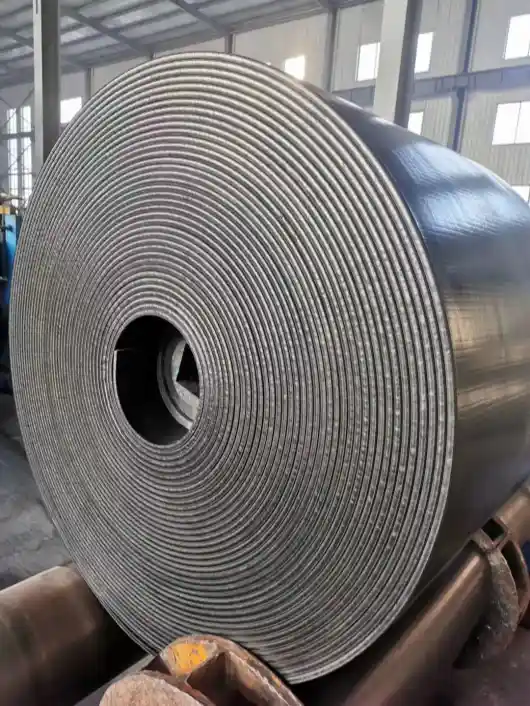
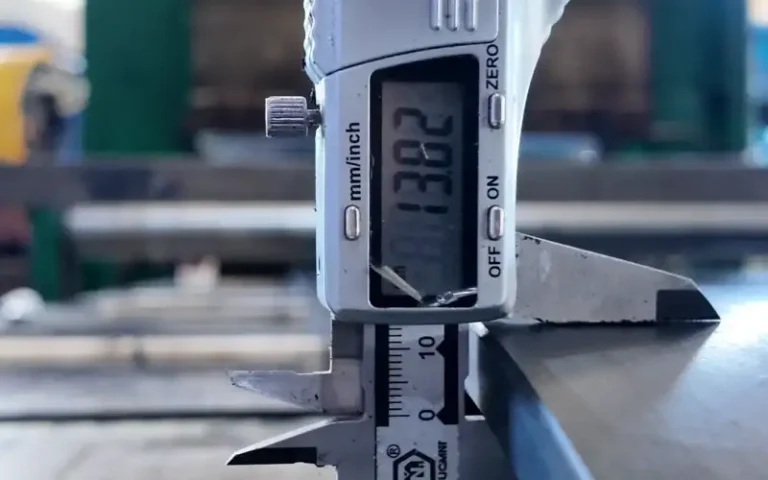
Solid woven conveyor belt is not a general-purpose belt for every material handling system. It is mainly selected for coal mine-related conveying routes where safety requirements are strict. PVC type is used for dry and lower-impact conditions, while PVG type is used when moisture, impact, abrasion, or higher inclined conveying requirements are present.

Factory direct supply

Factory capability for solid woven conveyor belt

Behind every solid woven conveyor belt order is a large-scale manufacturing system built for stable B2B supply. Our factory covers 120,000 square meters, with Phase I and Phase II production bases supporting 60 production lines for conveyor belt manufacturing.

With a monthly production capacity of more than 800,000 meters, we are able to support bulk orders, long-term distributor supply, mining project delivery, and repeated specification production for PVC solid woven conveyor belt and PVG conveyor belt requirements.

Our production system is designed for industrial belt manufacturing. From carcass processing and cover compound preparation to belt forming, finishing, and packaging, each production stage is supported by factory-side equipment, production planning, and quality coordination.

For you, this production scale means more stable delivery capabilities, better specification consistency, and stronger support for repeat orders at different project stages.

Finished Belt Inspection

Quality Control For Solid Woven Conveyor Belt

For each finished solid woven conveyor belt order, QC is carried out after the belt is fully formed and cooled. When laboratory testing is required, samples are cut directly from the finished conveyor belt, so the inspection result reflects the actual belt structure delivered to your project.

1
Finished Belt Dimension & Appearance

Finished Belt Dimension & Appearance

Before packaging, we inspect the belt surface and edges for width accuracy, total thickness, surface layer thickness, belt weight, roll length, surface cracks, bubbles, exposed fabric, surface unevenness, edge damage, and other visible defects.
2
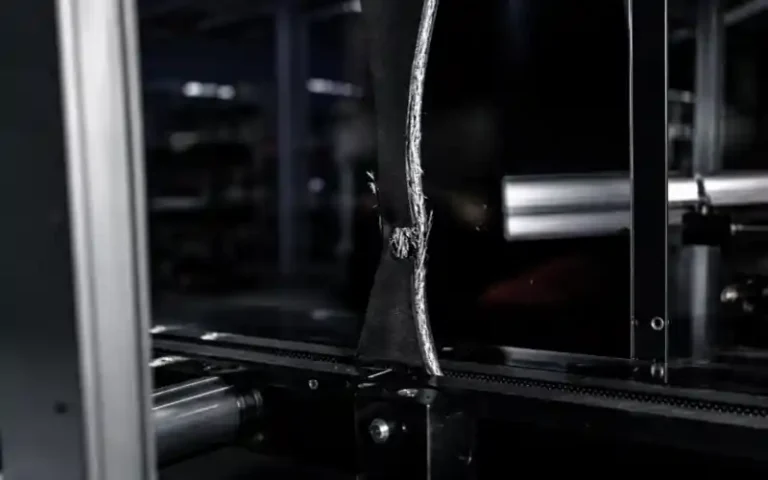
Mechanical Performance

Mechanical Performance

Samples are cut from the finished solid woven conveyor belt and tested with tensile testing equipment according to the required belt grade. This inspection covers tensile strength, elongation, carcass strength consistency, and joint strength verification when the order requires joint performance confirmation.
3
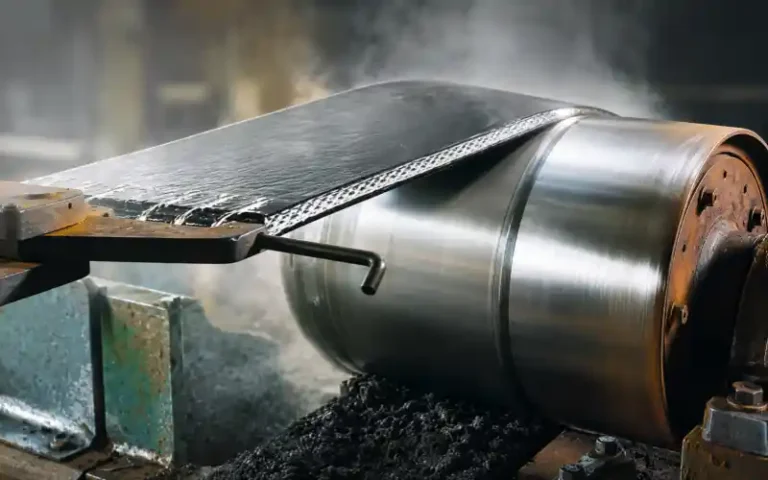
Safety Performance

Safety Performance

For underground mining flame-retardant orders, samples cut from the finished belt can be tested with flame-retardant and anti-static testing equipment according to the required project standard. This may include drum friction test, alcohol burner flame time, propane combustion performance, anti-static performance, and other safety-related order requirements.
4
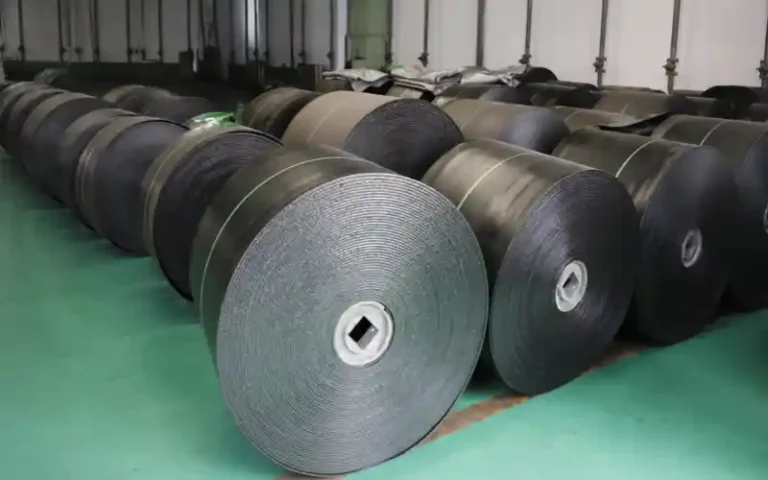
Packing & Traceability

Packing & Traceability

Before shipment, we check roll direction, label information, packing method, batch number, inspection record, and shipping documents against your order details. This helps confirm correct product marking, shipment accuracy, batch tracking, repeat-order consistency, and easier receiving at your warehouse or project site.
 

For standard non-underground orders, QC mainly focuses on dimension, appearance, mechanical performance, roll length, packing, and batch traceability. For underground mining flame-retardant orders, safety performance testing can be added according to your required standard.

Optional Customization

Customization Support For Solid Woven Conveyor Belt Orders

For B2B orders, customization should focus on options that can be adjusted according to your project, brand, or delivery requirements. We support solid woven conveyor belt customization in three practical areas: belt specification, product marking, and packaging method.

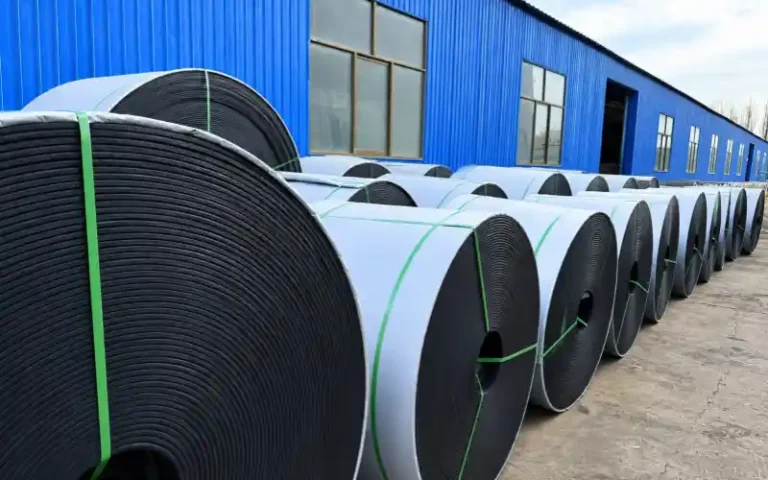
solid woven Conveyor belt stock

Belt Specification Customization

You can customize tensile strength, belt width, thickness, length, cover type, and cover thickness according to your conveyor system requirements. This helps your solid woven conveyor belt match the actual conveyor route, load condition, installation space, and operating environment.
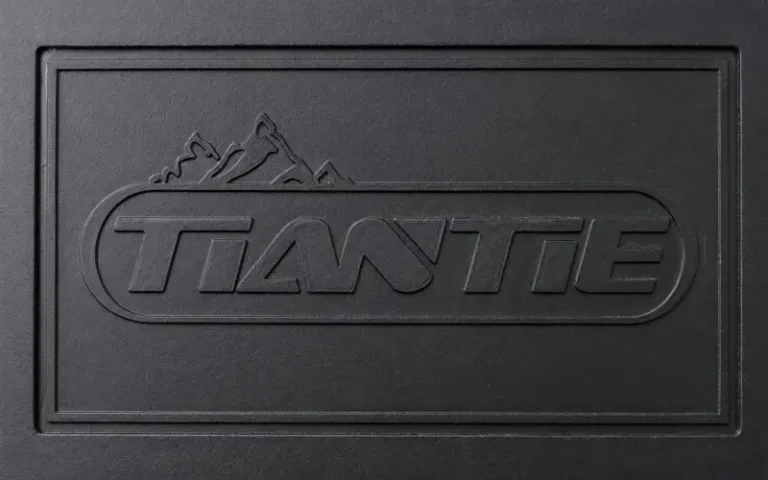
customized logo

Logo & Marking Customization

Customer logo, neutral marking, belt grade, specification marking, batch number, or project identification can be printed or marked according to your order requirement. This supports distributor resale, project identification, warehouse management, and repeat-order recognition.
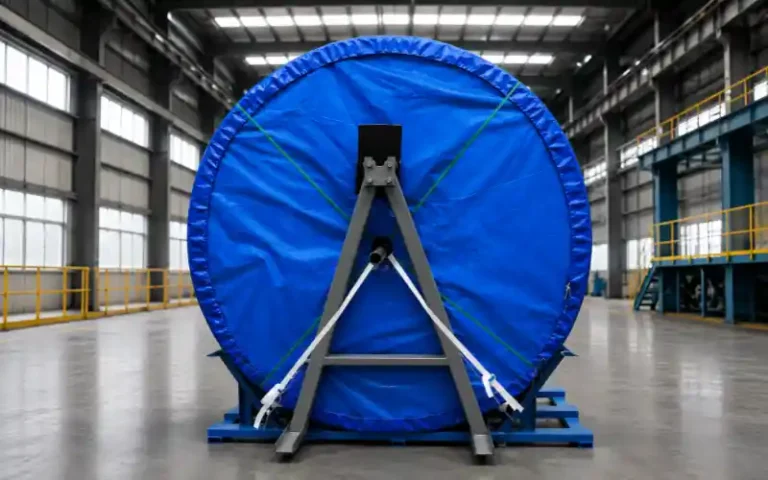
Packaging Customization

Standard PP bag packing, steel frame packing, pallet support, waterproof wrapping, or other export packaging methods can be arranged based on roll size and unloading conditions. Some special packaging requirements may involve additional packaging cost.

These customization options are optional and can be confirmed before production. If your order does not require logo marking or special packaging, we can follow the standard factory configuration.

FAQs

1. How do I confirm whether my existing conveyor can use a solid woven conveyor belt?

You should first check whether your conveyor system matches the belt’s strength grade, pulley size, route layout, and operating environment. If you are replacing an old belt, photos of the belt marking, damaged area, pulley arrangement, and conveyor route are useful for evaluation. This helps confirm whether the new solid woven conveyor belt can fit the existing system without changing major conveyor components.

3. What information from my old belt helps you identify the correct replacement?

The most useful information includes the old belt marking, belt width, total thickness, roll length, working position, material condition, and failure symptoms. Photos of the belt surface, edge condition, joint area, and conveyor frame also help. If the original belt grade is unclear, these details allow our team to estimate the required specification and avoid selecting a belt that is too light or unnecessarily heavy.

5. Why does the same belt type perform differently in different coal conveying systems?

The same belt type can perform differently because conveyor length, loading point design, pulley condition, moisture level, material size, maintenance quality, and joint preparation all affect operation. A solid woven conveyor belt works as part of the whole conveyor system, not as an isolated product. When comparing belt performance, the actual working route and installation condition should always be reviewed together with the belt specification.

2. Can mechanical fasteners be used on solid woven conveyor belts?

Mechanical fasteners can be used in some temporary repair or emergency replacement situations, but they are not always the best choice for long-term underground conveying. The joint method should match belt strength, system tension, and safety requirements. For higher-load systems, a properly prepared joint is important because poor joining can reduce belt strength, increase vibration, and create early failure risks during continuous operation.

4. How should solid woven conveyor belt rolls be stored before installation?

The belt roll should be stored in a dry, clean, and ventilated area before installation. It should be kept away from direct sunlight, standing water, sharp objects, strong chemical exposure, and heavy compression. If the belt will not be installed immediately, keeping the roll properly supported helps avoid deformation. Poor storage can affect belt appearance, surface condition, and installation stability.

6. What problems may appear if the belt grade is selected too low?

If the belt grade is lower than the actual system requirement, the belt may show excessive elongation, unstable tracking, joint stress, edge wear, or shortened service life. In heavier conveying routes, this can also increase maintenance frequency and downtime risk. A lower-priced belt may look acceptable at the beginning, but incorrect grade selection can create higher replacement and operation costs later.

Need Technical Support for Your Solid Woven Conveyor Belt Selection?

GET FREE QUOTE

Download Catalog!

In order to ensure the smooth delivery of Catalog, please be sure to fill in the real email address.If it’s not in your inbox, please check your junk mailbox. 

Download Catalog!

Download our catalog to see all products and data sheets, the catalog will be sent to your email address.

Download Catalog!

In order to ensure the smooth delivery of Catalog, please be sure to fill in the real email address.If it’s not in your inbox, please check your junk mailbox. 

Welcome