1. Localized Burn Damage in High-Temperature Conveying
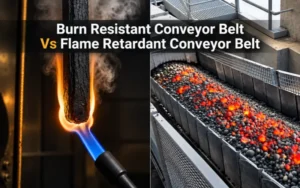
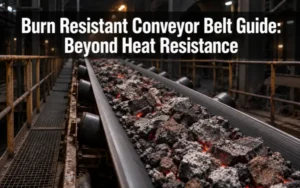
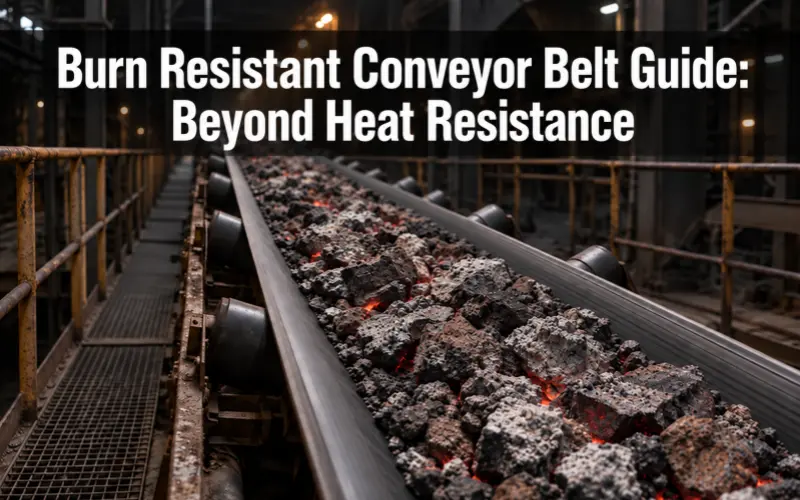
A burn resistant conveyor belt carries high-temperature solids while limiting localized scorching, cover loss, and damage beneath the surface. If a heat resistant conveyor belt still develops burn pits, broad heat-aging resistance may not be enough. This problem is especially relevant to steel-mill red-hot bulk material discharge approaching 500°C.
2. Burn Damage Beyond Heat Aging
2.1 Heat Aging and Localized Scorching
Conventional heat-resistant conveyor belts are generally used for material temperatures around 200–250°C, depending on the belt grade and operating conditions. The burn resistant conveyor belt discussed here is designed for thermal conditions beyond that range. It can carry hotter material, tolerate higher short-term temperature peaks in the material and process environment, and directly contact glowing red solids during conveying. In upper-end applications, operating material temperatures can approach 500°C. Short-term material temperature peaks can exceed 500°C.
The two belt types consequently face different forms of thermal damage:
- Heat aging:Continuous exposure causes the cover rubber to harden and lose elasticity. Extensive cracking also develops across the belt surface.
- Localized scorching:Direct contact with red-hot lumps or concentrated hot particles readily creates burn pits and ablated zones. The top cover becomes locally thinner, and severe contact can burn away part of the rubber.
- Combined damage:At higher operating temperatures, extensive cracking can develop together with concentrated burn pits and local ablation.
The difference therefore extends beyond the appearance of burn pits. A heat resistant rubber conveyor belt protects the belt within a conventional hot-material temperature range. A burn-resistant belt extends the usable temperature range while also limiting rapid damage caused by direct contact with glowing red material. This combined capability protects the cover and delays heat from reaching the internal structure.
2.2 Damage Beneath the Cover
The top cover is the first protective layer between the hot material and the belt carcass. Localized ablation reduces its effective thickness, leaving less rubber to slow heat transfer. As the damage deepens, heat reaches the bonding layers and carcass more easily.
Based on more than 20 years of experience at Tiantie Industrial, interlayer adhesion has been the most frequent weak point in heat-resistant belts. This bonding challenge originates in the type and intrinsic properties of heat-resistant rubber compounds. Process control can reduce the risk, but it cannot eliminate the material limitation itself.
When internal bonding is damaged, the cover may separate from the carcass, or individual carcass plies may begin to separate. Further damage can cause local delamination and expose the reinforcement. Once the carcass loses the protection of the surrounding rubber, its structural integrity and local load-bearing reliability decline.
A visible burn pit cannot show whether the bonding beneath it remains intact. Burn depth therefore matters more than surface appearance alone. Limiting the penetration depth preserves more of the protective cover and reduces the risk of heat reaching the belt’s load-bearing structure.
3. Main Materials and Belt Construction
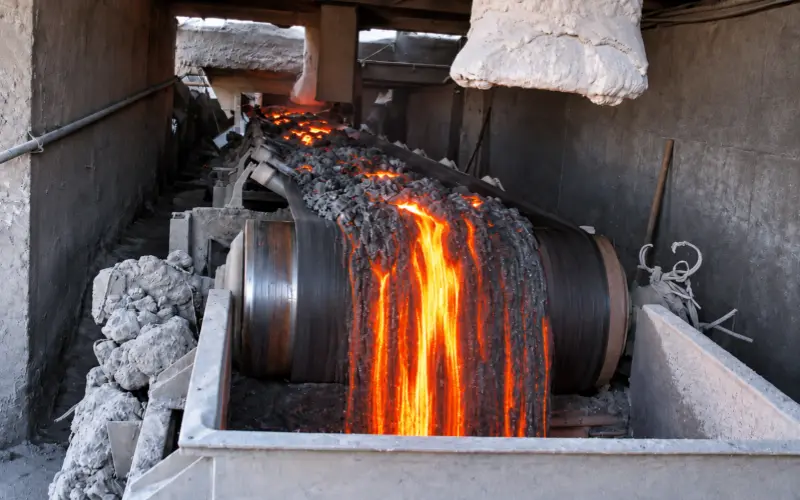
Four elements control the belt’s response to red-hot contact: the cover compound, thermal protection structure, carcass, and interlayer bonding compound.
3.1 Main Cover Rubber Components
A burn resistant rubber conveyor belt uses SBR, EPM, and EPDM to provide scorching protection and heat resistance.
- Styrene-butadiene rubber (SBR):In a properly designed char-forming compound, SBR forms a stable carbonized layer under direct flame scorching or contact with hot sinter . Its charring performance and cost advantage make it one of the core materials for direct burn protection.
- Ethylene-propylene rubber (EPM):EPM provides high-temperature resistance and thermal-aging resistance. Under comparable compound and curing conditions, it offers better heat resistance than EPDM. It is mainly used to improve the temperature capability of the cover.
- Ethylene-propylene-diene rubber (EPDM):EPDM provides heat-aging resistance while retaining the elasticity required for pulley bending and continuous belt movement. It also provides more flexibility in curing and compound processing.
Silica and other reinforcing fillers improve tensile strength, wear resistance, tear resistance, and structural stability. They support the cover when high-temperature contact occurs together with loading impact and material abrasion.
Char-forming agents help the surface develop a protective carbonized layer. Mineral-based insulating components slow heat transfer through the rubber.
The material arrangement is straightforward. SBR and char-forming components handle direct scorching. EPM and EPDM provide temperature resistance throughout the cover. A compound designed for both conditions combines these functions.
3.2 Cover Protection and Thermal Barriers
The working cover controls burn depth and prevents large amounts of rubber from being burned or stripped away during red-hot contact. Retaining more cover thickness protects the layers underneath.
The exposed surface forms a carbonized layer under intense heat. This layer reduces direct heat penetration and protects the unaffected rubber below. It also needs sufficient stability to withstand material abrasion, loading impact, and repeated pulley bending.
A thermal barrier beneath the working cover slows heat transfer toward the carcass and bonding layers. The hot material leaves the belt before excessive heat reaches the internal structure.
For direct contact with red-hot material, the belt uses a burn-resistant working cover together with an internal thermal barrier. The surface layer controls scorching, while the barrier protects the bonding compound and carcass.
3.3 Carcass Materials for Burn-Resistant Belts
Three main carcass structures are used in burn-resistant conveyor belts.
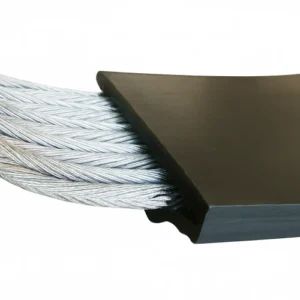
- Metal mesh carcass:Integral metal spiral mesh is the primary option for severe direct contact with red-hot bulk It provides low elongation, puncture resistance, tear resistance, and flexibility around pulleys.
This construction is especially suitable for heavy, sharp-edged red-hot lumps. The metal carcass maintains its basic structure after the surface has been exposed to intense heat.
Some integral metal-mesh designs connect the metal weft elements directly at the splice. With the corresponding carcass design and vulcanizing procedure, the splice can retain up to 100% of the carcass strength.
- Steel cord carcass: Steel cord construction is used for long-distance, high-tension, and high-capacity conveying systems. Its high longitudinal tensile strength and low elongation support heavy hot materials over long conveyor routes.
The cords are completely embedded in a metal-to-rubber bonding compound. A thick working cover and thermal barrier prevent excessive heat from reaching the cords and their surrounding rubber.
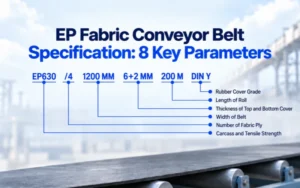
- EP fabric carcass: EP fabric uses polyester yarn in the warp direction and polyamide yarn in the weft direction. It provides good flexibility, troughability, lower belt weight, and conventional splice processing.
EP fabric is used for short- and medium-distance conveying systems with moderate operating tension. In this construction, the burn-resistant top cover and thermal barrier provide the main protection against high-temperature material.
- Metal mesh carcass:Integral metal spiral mesh is the primary option for severe direct contact with red-hot bulk It provides low elongation, puncture resistance, tear resistance, and flexibility around pulleys.
Metal mesh is the main choice for severe direct scorching and heavy red-hot lumps. Steel cord is used when the conveyor also requires greater strength, longer distance, and higher capacity. EP fabric provides a flexible and economical structure for short- and medium-distance conveying.
3.4 Interlayer Bonding Compounds
The bonding compound changes with the carcass structure. Metal mesh and steel cord belts use a metal-to-rubber embedding compound that surrounds the reinforcement and bonds to the metal surface. EP belts use calendered skim rubber between the fabric plies and between the carcass and covers.
Two bonding systems are commonly used.
- Full burn-resistant rubber system:Burn-resistant rubber is used in the working cover and the internal bonding or embedding layers. This structure retains additional heat protection after heat penetrates beyond the top cover.
Many buyers select this system for severe red-hot bulk material handling and additional safety protection. Its disadvantage is long-term interlayer adhesion. Heat-resistant and char-forming compounds generally provide lower adhesion than dedicated bonding rubber. Repeated heating, cooling, tension, and pulley bending increase the risk of delamination.
- Conventional calendered bonding rubber with a thicker top cover:This construction uses high-adhesion calendered rubber around the carcass and increases the thickness of the burn-resistant top cover.
The thicker cover delays heat transfer to the bonding layer. The conventional bonding compound provides stronger and more stable adhesion while reducing the material cost of the complete belt.
- Full burn-resistant rubber system:Burn-resistant rubber is used in the working cover and the internal bonding or embedding layers. This structure retains additional heat protection after heat penetrates beyond the top cover.
A full burn-resistant rubber system is used for severe applications involving prolonged heat exposure, concentrated red-hot solid material, or loaded belt stoppages. Conventional calendered bonding rubber with a thicker top cover is used for continuous conveying where the hot material leaves the belt quickly and long-term adhesion is the priority.
4. Red-Hot Sinter Conveying in Steel Mills
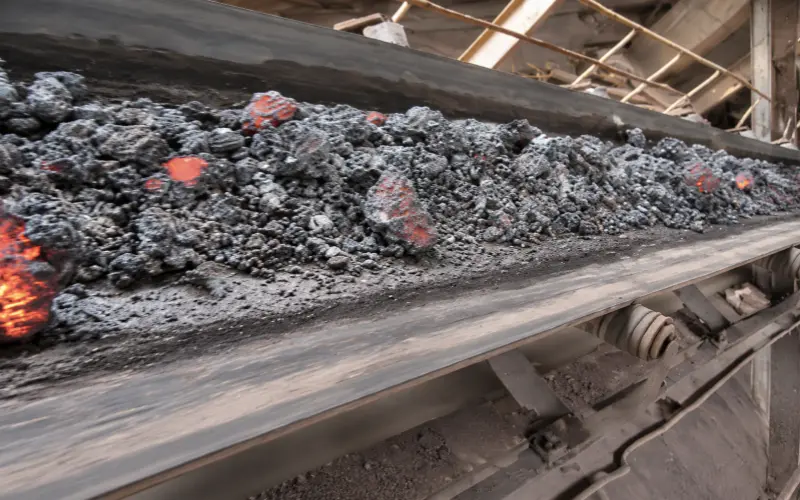
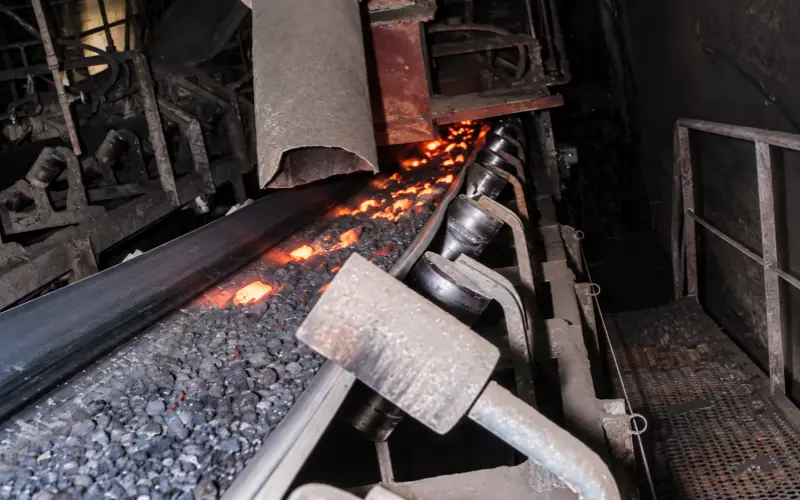
A burn resistant conveyor belt installed after the sinter discharge point receives a continuous stream of red-hot material. In this application, most of the conveyed sinter remains red-hot, creating sustained scorching conditions throughout the carrying section.
4.1 Direct Contact with Sinter at Temperatures up to 500°C
The 500°C rating in this article refers to the sustained temperature of the sinter when it reaches the belt. It does not refer to a momentary temperature peak, the temperature inside the furnace, or the temperature measured on the belt surface after contact.
At this temperature, the belt directly carries a large volume of red-hot sinter. Each section of the moving belt receives the material at the loading point and remains in contact with it until discharge. Heat continues to enter the top cover throughout this period.
The main requirement is resistance to direct scorching. A burn resistant conveyor belt controls the rate and depth of cover damage, retains enough protective rubber above the carcass and slows the transfer of heat into the internal structure. This is the operating requirement for a conveyor belt for red hot materials.
Material temperature should be recorded where the sinter reaches the belt. A temperature measured earlier in the process does not represent the actual contact condition if the material passes through crushing, screening, storage or cooling equipment before loading.
4.2 Heat and Impact at the Loading Point
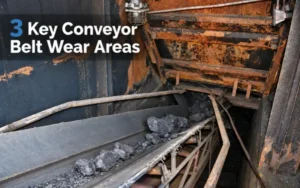
The loading point is fixed within the conveyor system, while the belt moves continuously beneath it. Successive sections of the belt pass through this point and receive the heat and impact produced by the falling sinter.
Large pieces strike the cover with greater force. Sharp edges cut and gouge the rubber, while a greater drop height increases the impact energy. At the same time, the red-hot surface of the sinter presses against the cover and transfers concentrated heat into the damaged area.
Mechanical damage reduces the effective cover thickness. Heat then travels through the remaining rubber more quickly, increasing the depth of scorching and bringing the thermal load closer to the carcass and bonding layers.
The appearance of the damage provides useful information about the loading condition:
- Deep, irregular burn pits are associated with large red-hot pieces.
- A continuous burned strip follows a concentrated material stream.
- Cuts with burned or hardened edges show the combined action of sharp material and high temperature.
Because the impact point remains in the same position across the conveyor width, damage often develops along the same longitudinal section of the belt. It does not remain on one stationary point of the moving belt.
4.3 Residence Time and the Limits of Water Cooling
Material residence time begins when the sinter lands on the belt and ends when it leaves at the discharge point. During this period, the material travels with the belt and continues transferring heat into the cover.
A longer conveying distance or lower belt speed extends this contact time. Blockage, restricted discharge and a loaded belt stop create a more severe condition because the red-hot sinter remains in contact with the same belt section for longer.
Some conveying systems use water sprays to reduce the temperature of the sinter during transportation. Spraying can cool the exposed surface and remove the visible red glow from part of the material. Its actual cooling effect, however, is limited under many steel mill operating conditions.
Based on more than 20 years of Tiantie Industrial’s on-site visits to customers, dust and fine particles frequently block spray-nozzle openings in demanding working environments. This reduces water flow from individual nozzles and creates uneven spray coverage across the material bed.
Water also reaches the exposed upper layer first. Sinter buried below the surface remains red-hot, especially when the material bed is thick or contains large pieces. This lower material stays in direct contact with the conveyor belt even when the visible surface has already cooled.
Water spraying reduces part of the thermal load, but it does not eliminate direct scorching beneath the material bed. It remains an auxiliary cooling measure, while the burn resistant conveyor belt provides the primary protection against sustained contact with red-hot sinter.
5. Other Hot-Material Applications
Bottom ash, solidified slag and clinker also create direct scorching risks, but their operating conditions differ from the continuous, predominantly red-hot sinter flow described in Section 4.
5.1 Bottom Ash and Solid Slag
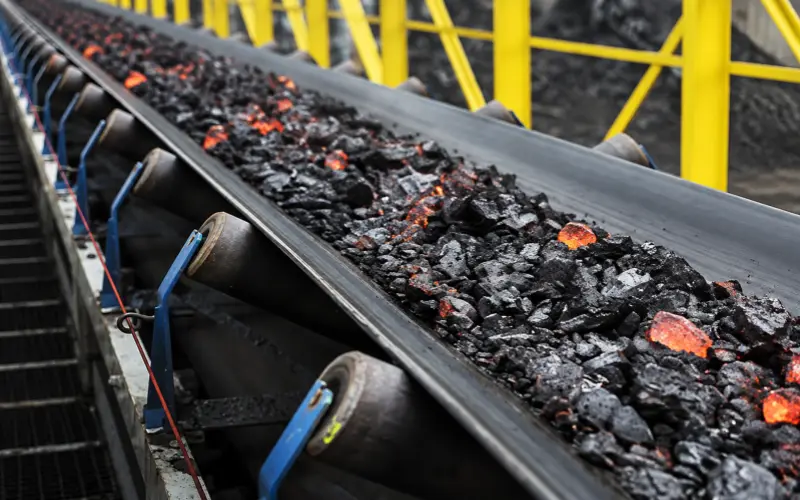
Dry bottom ash and solidified slag have large variations in particle size, shape and temperature. Fine hot particles spread across the belt, while large red-hot lumps concentrate heat and impact on smaller areas. Sharp slag edges also cut and scrape the cover during loading.
The main problem is the combination of irregular scorching and mechanical damage. Hot coarse particles easily create deep burn pits at positions where the cover has already been cut or compressed. A burn resistant conveyor belt limits the depth of these localized injuries and protects the carcass from direct exposure.
For dry ash and slag systems, the belt is especially valuable when glowing particles remain in the discharged material and water cooling is incomplete.
5.2 Clinker with Localized Hot Spots
Clinker normally reaches the belt after cooling, so most of the material no longer remains red-hot. The main risk comes from large clinker nodules or buried material that retains a much higher temperature because of uneven cooling.
This differs from red-hot sinter conveying. The belt does not receive a continuous red-hot load, but repeated hot spots leave scattered burn pits and gradually reduce the effective cover thickness.
A high temperature rubber conveyor belt that only handles general heat exposure does not fully address this damage pattern. Localized scorch protection controls the depth of individual burn pits and prevents repeated hot clinker contact from exposing the carcass.
6. Burn Resistance Evaluation
A burn resistant conveyor belt should be evaluated by the damage remaining after controlled hot contact. The report must state the contact temperature, duration and heat source. If a steel ball is used, its diameter should also be recorded.
6.1 Cover Damage After Hot Contact
After the test, the damaged area is cleaned and cut open to measure:
- Scorch depth
- Damaged area
- Remaining intact cover thickness
- Cracking, rubber detachment or carcass exposure
The acceptance requirements should define the permitted scorch depth and remaining cover thickness. Comparisons are valid only when the samples use the same contact temperature, duration, heat source and original cover thickness.
6.2 Internal Protection After Hot Contact
The deepest part of the damaged area is opened to check whether heat has reached the carcass or caused separation inside the belt. The inspection should confirm that the carcass remains protected and that no separation has developed between the cover, bonding rubber and reinforcement.
For EP belts, adhesion between the cover, carcass and fabric plies can be tested according to ISO 252:2023 . For steel cord belts, cover-to-core adhesion can be tested according to ISO 8094:2013 .
Laboratory results show the level of damage under controlled conditions. Any claim about longer service life should also be supported by operating hours, transported tonnage and repair records from comparable applications.
7. Protect the Belt Beyond Heat Resistance
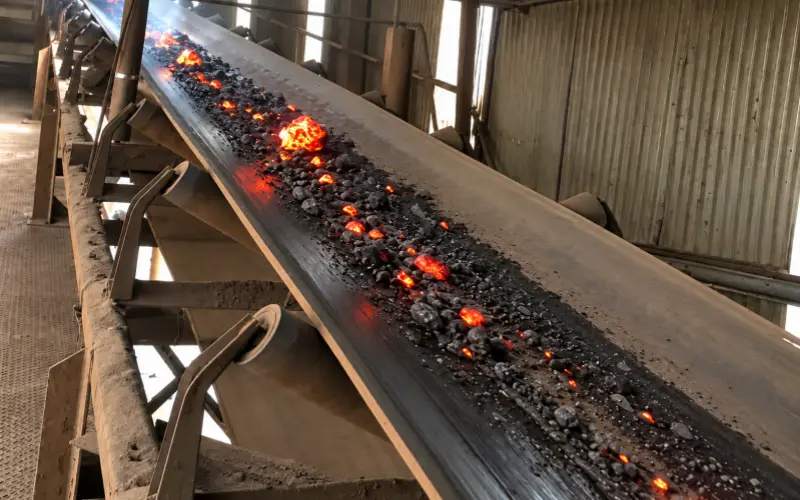
A burn resistant conveyor belt is designed for direct contact with red-hot materials that exceed the working range of conventional heat-resistant belts. Its performance depends on the cover rubber resisting rapid burning and erosion, the thermal barrier slowing heat transfer, and the internal bonding remaining stable during operation.
Material temperature alone does not define the complete operating condition. Contact time, impact at the loading point and unexpected material retention also affect the damage received by the belt. For steel-mill discharge applications handling material at up to 500°C, these conditions must be included in the belt specification.
To discuss a suitable belt construction and quotation, send us your material type, contact temperature, loading conditions, belt specifications and photos of existing belt damage.
8. FAQs
8.1 Is a burn-resistant conveyor belt also flame-resistant?
Not automatically. Burn resistance refers to resistance against direct contact with red-hot materials, while flame resistance refers to the belt’s ability to resist ignition and flame propagation. Flame resistance should be evaluated separately under standards such as ISO 340.
8.2 Should the top and bottom covers use the same rubber compound?
Yes. Both covers are vulcanized under the same time, temperature, and pressure. Different compounds may require different curing conditions, causing one side to remain undercured while the other becomes overcured.
8.3 Are mechanical fasteners suitable for burn-resistant conveyor belts?
Vulcanized joints are generally recommended. Unlike mechanical metal fasteners, they maintain continuous rubber coverage, reduce thermal weak points, and provide better strength and durability under repeated heat impact and heavy loading.
8.4 Can a burn-resistant conveyor belt transport molten material?
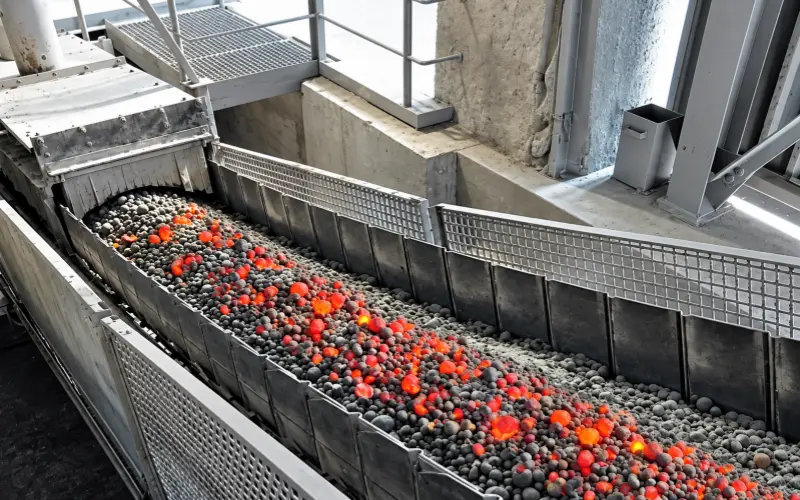
No. A burn-resistant conveyor belt is designed for red-hot solid materials, such as hot sinter and solid slag. It is not designed to transport molten metal or molten slag.
8.5 Do the top and bottom covers need the same thickness?
No. Using the same rubber compound does not mean that both covers require the same thickness. The top cover is normally thicker because it directly contacts red-hot materials and withstands scorching and impact.