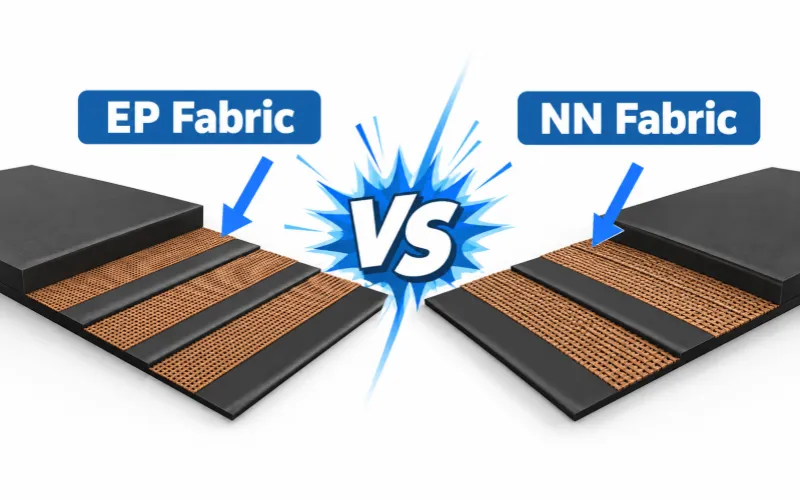
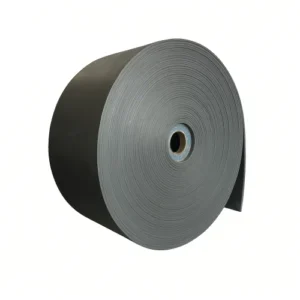
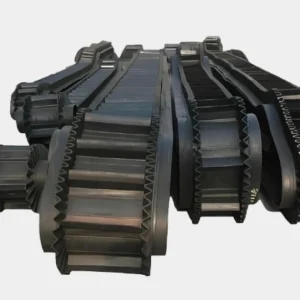
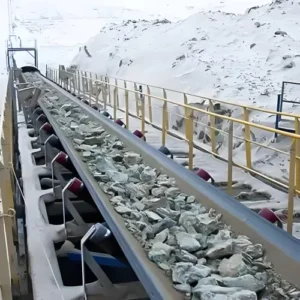
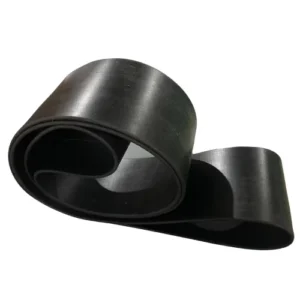
EP and NN conveyor belts may look identical on a quotation, yet they behave differently in service. The difference starts with the warp yarn: polyester in EP, nylon in NN. This EP vs NN conveyor belt guide explains how elongation, take-up travel, impact, and replacement compatibility decide the answer.
1. Quick Answer: EP vs NN Conveyor Belt
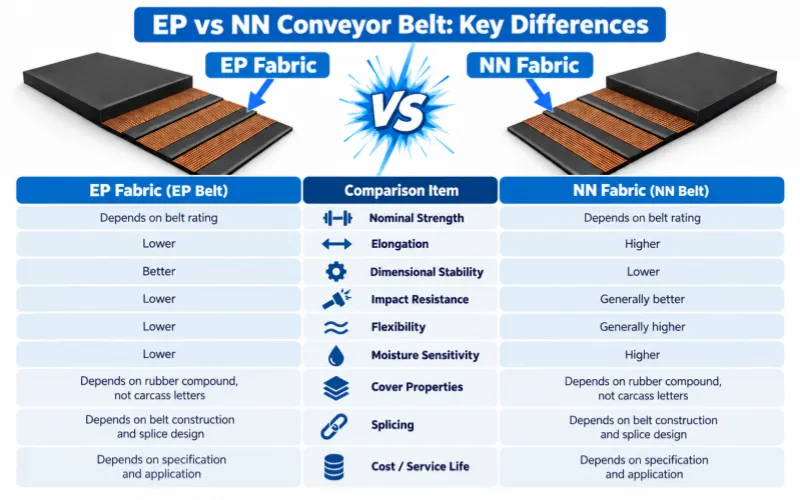
A quick comparison helps you filter options before you dig into details. The table below shows how EP and NN conveyor belts usually differ.
Comparison Point | EP Conveyor Belt | NN Conveyor Belt |
Carcass structure | Polyester warp, nylon weft | Nylon warp, nylon weft |
Nominal tensile strength | Available in different N/mm grades | Available in different N/mm grades |
Longitudinal elongation | Typically lower | Typically higher |
Dimensional stability | Typically better | More prone to length change |
Take-up travel needed | Typically lower | Typically higher |
Elasticity | Relatively lower | Typically higher |
Dynamic impact response | Good, depends on the full construction | Often an advantage |
Troughability | Depends on the finished belt | Usually more flexible, but still verify |
Moisture absorption | Lower, because the warp is polyester | Higher, because the warp is nylon |
Abrasion, heat, oil, and flame resistance | Set mainly by the cover rubber | Set mainly by the cover rubber |
Typical selection tendency | Long distance, limited take-up space, stable running | High impact, repeated flexing, ample take-up travel |
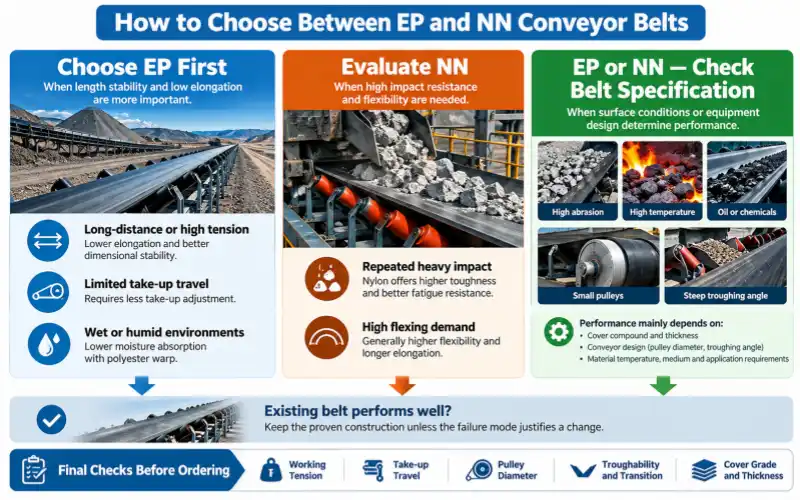
Read the table as a screening tool, not a specification. It describes common tendencies for polyester and nylon carcasses, and your specific belt may sit outside them. If you need one line: choose EP when length stability and limited take-up travel matter most. Evaluate NN when repeated impact and flexing dominate and your take-up can absorb more stretch.
Limited take-up travel and a long center distance usually point toward EP. Frequent large-lump impact with generous take-up space is the classic case for evaluating NN. Neither row decides the purchase on its own.
Abrasion, heat, oil, chemical, and flame performance come mainly from the cover rubber and the full belt design. The carcass type alone does not set them. Confirm those requirements separately before you compare EP with NN.
Two belts can share the same nominal strength and ply count. They can still differ in elongation, thickness, troughability, and pulley requirements. Compare the finished belt data, not just the EP or NN name.
This table covers general tendencies only. Section 5 converts them into a working-condition decision matrix and lists the checks you must complete before ordering.
2. How Are EP and NN Conveyor Belt Carcasses Built?
Both EP and NN belts are built from woven fabric plies embedded in rubber. The letters in the name describe the yarns, not the rubber: which fiber runs lengthwise and which runs across the belt. That single letter difference explains most of the performance gap you see later.
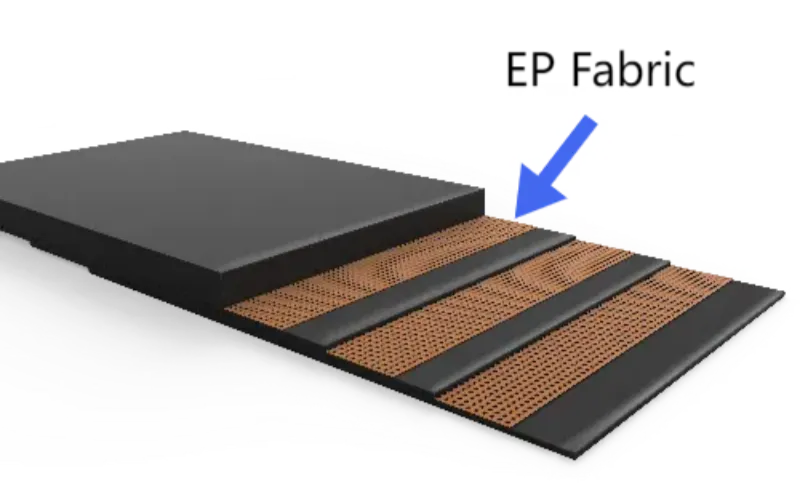
2.1 EP Carcass: Polyester Warp and Nylon Weft
Warp yarns run lengthwise and carry the running tension of the belt. Weft yarns run across the width and set how the belt flexes sideways. In an EP carcass, the warp is polyester. The weft is polyamide, which most people call nylon.
Because the warp runs lengthwise, it dominates how much the belt stretches under load. The weft shapes transverse stiffness instead. Polyester keeps longitudinal stretch low and holds belt length steady over time, which reduces how often you retension the belt.
The nylon weft adds transverse flexibility, improves impact response, and helps the belt seat into troughing idlers. EP is therefore a mixed construction, not a pure polyester belt. The term EE refers to polyester in both directions, which is a different product.
2.2 NN Carcass: Nylon Warp and Nylon Weft
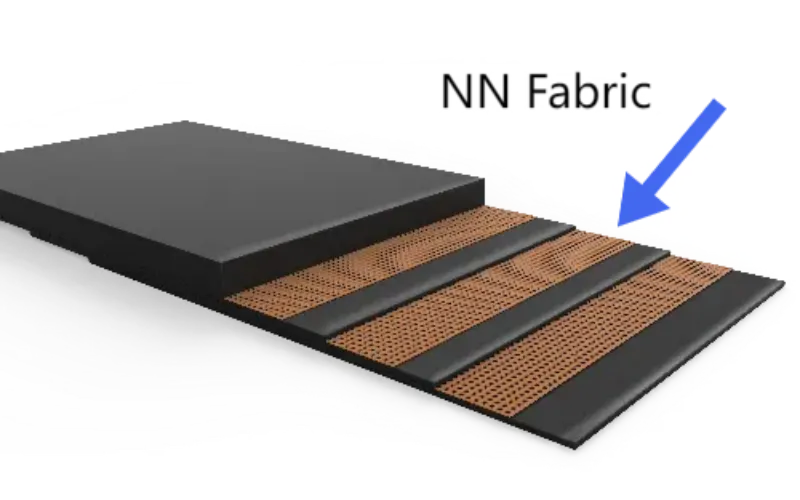
In an NN carcass, both the warp and the weft are nylon. Nylon stretches more under the same load. The belt therefore reaches a longer working length and responds more elastically to changing tension.
The nylon warp gives higher longitudinal elasticity and usually a larger working elongation. The nylon weft supports transverse flexibility, repeated bending, and fatigue and impact adaptation.
Nylon also absorbs shock and repeated flexing at the yarn level. It often suits loading points with heavy lumps, provided the rest of the belt is designed for that duty.
Higher elongation is not a defect. Whether it becomes a problem depends on several factors. Check the belt length, the take-up type, the available travel, the working tension, and the operating conditions.
2.3 What Does the Carcass Control?
The carcass and the cover rubber do different jobs. Buyers who mix them up often end up specifying the wrong belt.
The carcass carries the load and sets the belt’s mechanical behavior:
– Tensile strength
– Working elongation and permanent elongation
– Elastic modulus and dimensional stability
– Troughing and bending performance
– Impact and fatigue response
– Splice design
The cover rubber protects the carcass and sets most surface performance:
– Abrasion resistance
– Cut and gouge resistance
– Heat resistance
– Oil and chemical resistance
– Flame resistance
– Weathering and aging behavior
That split has a practical consequence for purchasing. A quotation should state the carcass type, the ply count, and the cover grade as separate items. When you compare two offers, compare all three, because strength alone will not tell you how the belt behaves.
One rule keeps the two apart: EP and NN describe the carcass type. They do not replace the cover grade or the complete belt specification.
3. EP vs NN Conveyor Belt: Key Performance Differences
This section turns that carcass difference into the numbers and behaviors you can compare in a quotation.
3.1 Tensile Strength: Is EP or NN Stronger?
Neither letter tells you which belt is stronger. EP and NN carcasses can both be manufactured in a wide range of strength grades. The grade usually matters more than the fiber family.
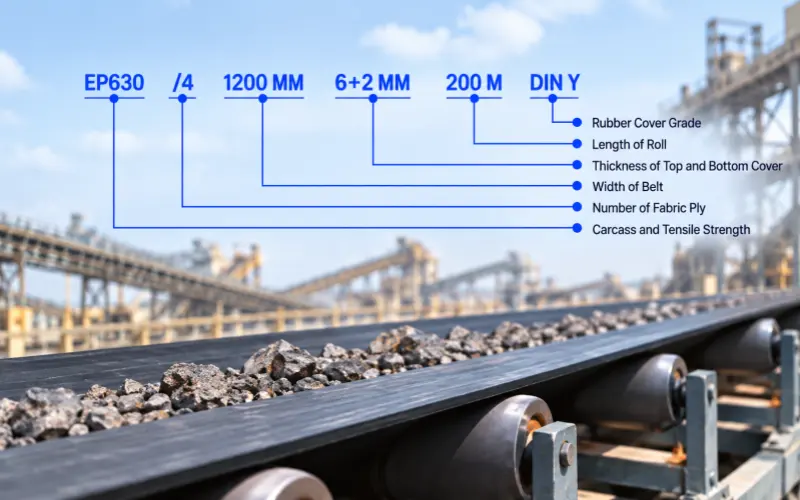
Take two designations from a data sheet: EP 500/4 and NN 500/4. Both describe 500 N/mm nominal strength across four plies. The shared number does not make them interchangeable. Elongation, modulus, thickness, and take-up demand can still differ.
Three quantities get mixed up in this discussion. Keep them separate:
- Ply strength: one fabric ply
- Finished-belt tensile strength: full-thickness breaking strength of the cured belt
- Allowable working tension: the tension allowed in normal service
Nominal N/mm strength comes from a laboratory test that pulls a specimen to break. It is a failure property, not the tension your belt runs at every day.
Allowed working tension starts from that value and applies a safety factor and splice efficiency. Your conveyor designer then checks it against running, starting, braking, and transient tensions.
Supplier labels add one more trap. Some quote total finished-belt strength; others quote strength per ply. Confirm which figure appears on the offer before you compare two belts.
The carcass material sets the performance characteristics. The strength grade sets the nominal tensile capability. Do not treat them as the same variable.
3.2 Elongation: More Than One Test Value
Elongation is not a single number, and quotations rarely say which one they mean. Five values matter when you compare EP and NN belts.
- Elongation at break:the stretch of a specimen when it fails. This is a failure property, not normal running elongation.
- Elongation at reference force:the stretch measured at a defined force, which compares finished belts on a common basis.
- Elastic elongation:the part that recovers after the load is removed, tracking how the belt responds to changing tension.
- Permanent elongation:the part that does not recover, and keeps consuming take-up travel through the belt’s life.
- Elastic modulus:the relationship between load and elongation, which describes stiffness under tension.
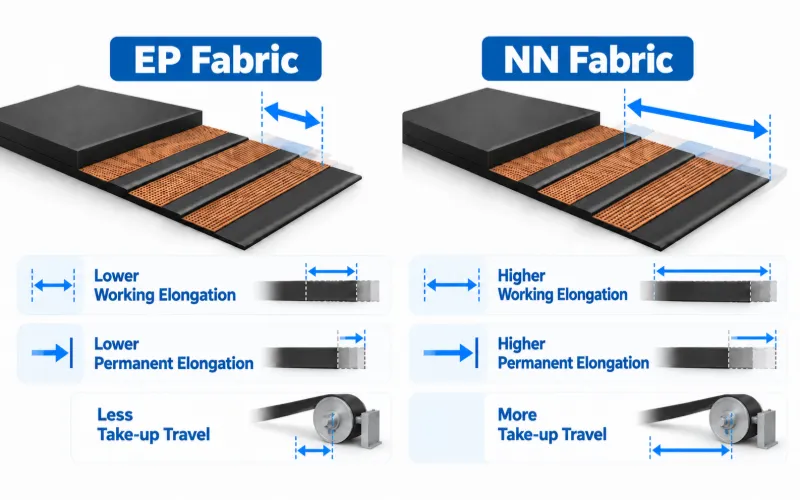
EP carcasses typically show lower longitudinal working elongation and lower permanent elongation than comparable NN carcasses. NN carcasses typically show higher elasticity and higher longitudinal elongation.
Avoid two shortcuts. Do not apply one fixed percentage to every EP or NN belt. Do not compare fabric data sheets and expect them to predict finished belt behavior. Rubber, ply count, and belt thickness all change the result.
3.3 Dimensional Stability and Take-Up Travel
Elongation only becomes a problem through your take-up system. The belt must stay tight enough to drive the load without slipping, and every millimeter of stretch must come from available travel.
EP usually reduces that demand. It needs less take-up movement, retensioning less often, and its length stays more stable over time. That is why long conveyors and conveyors with limited take-up space often start from EP.
NN puts more load on the take-up. Before you fit an NN belt, check elastic elongation, permanent elongation, and total take-up travel. Also check the travel still remaining and the initial stretch you expect after installation.
If travel runs out, expect slip at the drive pulley, more sag between idlers, unstable starts, mistracking, and spillage. The fix is often to shorten the belt or remake the splice, which costs production time.
Do not multiply conveyor center distance by a generic elongation percentage to size take-up travel. The real figure also depends on:
- The loaded belt loop length
- The take-up design and its total travel
- Installation tension
- Elastic elongation and permanent elongation
- Splice allowance
- Temperature changes
3.4 Impact Resistance and Flex-Fatigue Performance
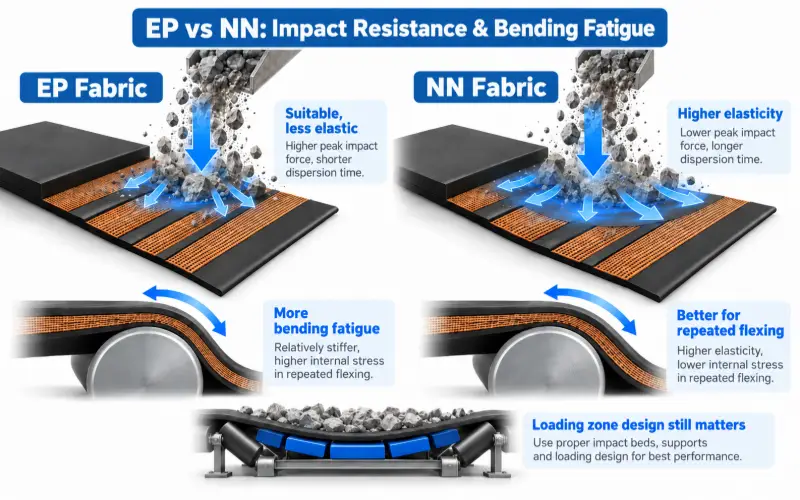
Nylon stretches further before it breaks. An NN carcass therefore spreads a lump impact over a longer time and lowers the peak force the fabric sees. That is a real advantage. It is rarely the first thing you should change.
Impact energy rises with lump mass and with drop height. Double the drop, and the belt has to absorb roughly twice the energy. How much of that energy reaches the fabric depends on how quickly the material is stopped. A belt with soft support under the loading zone decelerates the lump over a longer distance. That lowers the peak force the fabric sees.
That gives you a working order:
- Reduce the drop, or guide the material in the chute so it lands closer to belt speed.
- Support the belt through the impact zone with an impact bed or closely spaced impact idlers.
- Increase top cover thickness and grade for the cut and gouge load.
- Only then consider NN or a breaker ply if the carcass is still the limiting item.
The trade-off matters for procurement. Fixing the loading zone costs money once and consumes no take-up travel. Selecting NN to survive an impact consumes take-up travel for the whole life of the belt. If your take-up is already short, the loading-zone route is usually cheaper.
Flex fatigue follows a different mechanism. Every pass over a pulley bends the plies. The strain in each bend rises as the pulley gets smaller or the belt gets thicker. At high belt speed, the cycles accumulate quickly. Fatigue cracking therefore depends on pulley diameter, belt thickness, and running hours, not only on the fiber.
The damage pattern tells you which problem you have. Cuts, gouges, and cover loss at the loading point indicate a loading problem. Ply separation, cracks along the belt away from the loading point, or splice failures indicate flexing and fatigue. Diagnose the cause before you change the carcass type.
3.5 Troughability, Flexibility, and Pulley Diameter
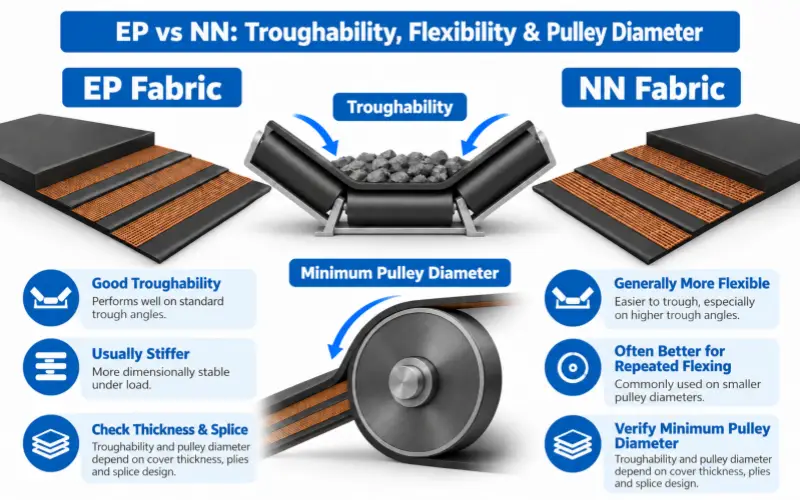
Troughability is whether the finished belt bends into the trough shape without being forced into it. A 45-degree troughing set bends the belt deeper than a 30-degree set. The same belt can seat correctly on one conveyor and stay nearly flat on another. When the belt loses contact with the center idler, the load rides on the outer rollers. The belt then sags between them.
Which belt troughs well is set by the construction, not the fiber family. Belt width, total thickness, ply count, and cover thickness all push against bending. Two belts with the same carcass type can trough very differently once covers and thickness change. NN is usually the more flexible option, but a heavy NN belt troughs worse than a light EP belt.
Ask for the number, not the label. A supplier can state troughability for the exact construction on offer, at your trough angle. A general claim that NN is more flexible does not show whether a specific belt will contact the center idler.
Pulley diameter follows the same logic. Bending strain in the plies rises as pulley diameter falls and as belt thickness rises. Minimum pulley diameter therefore depends on the belt construction, meaning ply count, thickness, and splice type, not on the carcass fiber. Drive, tail, bend, and take-up pulleys can each have their own limit. A mechanical fastener usually needs a larger diameter than a vulcanized splice.
The transition from troughed to flat at each pulley belongs to the same check. A transition that is too short forces the edges to bend at a radius they were not designed for. Repeated forced bending at the wrong radius is a common route to ply fatigue and splice failure.
So before you accept that NN works on small pulleys, get the minimum pulley diameters for that specific belt. Confirm your trough angle and transition length, and confirm the splice type you will actually run.
3.6 Moisture Absorption and Wet Conditions
Polyester takes up far less moisture than nylon. With a polyester warp, belt length changes less when the belt gets wet.
The mechanism is simple. Moisture swells the yarns. In an NN belt, the swelling acts on the warp, which runs lengthwise. The belt grows longer, and the take-up has to absorb that growth. The symptom shows up as a belt that was correctly tensioned when dry needing repeated retensioning after a wet period.
How much this matters depends on your system. In dry service the effect is small, and it stays manageable wherever the take-up has spare travel. It matters on length-critical conveyors, such as long center distances or screw take-ups near the end of their travel. It also matters where belt length affects tracking or tension. The most exposed cases are belts that run wet by design: wash-down areas, slurry, and dewatering duties. Belts stored or installed outdoors in humid conditions are also exposed.
The cover does most of the protecting. Cover rubber, edge rubber, ply-to-ply adhesion, and the splice are what keep water out of the carcass. Wet-service reliability therefore comes down to condition rather than fiber:
- Are the belt edges cut or worn enough to expose fabric?
- Do cover cuts let water reach the plies?
- Is the splice still sealed?
If a belt starts growing in service after a wet season, inspect the edges and the splice before blaming the fiber. A damaged edge lets water into the carcass, and switching from EP to NN will not repair that.
3.7 Abrasion, Heat, Oil, Chemical, and Flame Resistance
The carcass letters say nothing about surface performance. An NN carcass does not make a belt abrasion resistant, and an EP carcass does not make it heat resistant. Neither letter tells you how the belt behaves in oil, chemicals, or flame.
So set the order: cover first, carcass second. The material and the environment decide the cover compound. Only after that do tension, elongation, impact, and equipment decide the carcass.
Duty | What decides the outcome | What to specify |
Abrasive ore and aggregate | Cover abrasion grade and thickness, cut and gouge resistance | Cover class and top cover thickness |
Hot material | Material temperature, exposure time, cover heat resistance | Heat-resistant cover grade |
Oily material | Oil type, concentration, temperature | Oil-resistant cover grade |
Underground or regulated service | Flame and antistatic requirements | Flame-retardant belt meeting the applicable requirement |
Chemicals | Medium, concentration, temperature | Cover confirmed against that specific medium |
Note what the table leaves out: the carcass. A stronger or more elastic carcass will not rescue a belt whose cover cannot survive the duty.
3.8 Splicing Requirements
EP and NN belts can both be spliced by hot vulcanization, cold bonding, or mechanical fasteners. Which method you use depends on the construction, the belt tension, and the equipment available on site. It does not follow from the fiber name.
Changing the carcass type invalidates your existing splice plan. A vulcanized splice carries load through stepped plies, so step length, total splice length, and step count follow the ply count and the belt tension. The same nominal strength with a different ply count can require a different splice design. If the new splice is longer, check that the press and the free space at the splice point can still fit it.
Before you approve a carcass change, confirm the ply count, splice structure, splice compound, vulcanizing pressure, and vulcanizing temperature and time. Then ask for the expected splice efficiency of the finished joint.
Splice efficiency sets the working tension you can actually rely on. A belt with enough carcass strength on paper can still fail at the joint if the splice was designed for a different carcass or ply count.
3.9 Price, Belt Weight, Energy Use, and Service Life
Price follows the specification, not the carcass family. NN is not automatically cheaper, and EP is not automatically more expensive. Neither is automatically lighter, and neither automatically lasts longer.
What drives price and weight: belt width, total strength, ply count, fabric specification, top and bottom cover thickness, compound grade, special reinforcements, order quantity, and production and transport conditions.
Energy use is a system result, not a label. Belt weight matters because the belt is accelerated and supported on every pass. Cover rolling resistance, idler condition, alignment, running tension, and conveyor slope matter too. Switching from EP to NN will not fix energy use caused by worn or seized idlers.
Compare total cost, not the invoice line. Include purchase price, installation and splicing cost, how many tension adjustments the take-up requires, planned and unplanned downtime, whether spares stay compatible with your other belts, and the service life you actually get.
4. How Do EP and NN Affect Conveyor Operation?
Length and tension decide how much the carcass difference matters. On a short, lightly loaded conveyor, elongation is a small number and either carcass may work. On a long, heavily loaded one, the same percentage turns into meters of belt that the take-up has to absorb.
4.1 Long-Distance or High-Tension Conveyors
Two effects grow with conveyor length. Elongation is a percentage of belt length, so the absolute stretch the take-up must absorb rises with the center distance. The tension needed to move the same tonnage also rises with length and lift.
EP typically keeps both under control. Lower longitudinal elongation means less belt length change and less take-up travel consumed. It also means fewer retensioning jobs over the life of the belt. On a long conveyor, that difference decides whether the take-up still has usable travel later in the belt’s life.
Length alone does not settle the decision. High lift, high tonnage, a single drive, hard starting, and a short take-up all push in the same direction. A long conveyor with light loading and a generous take-up may run an NN belt without difficulty.
There is no distance limit that forces EP. The decision depends on tension and take-up travel, not on a fixed number of meters.
4.2 Short Conveyors With Severe Impact
A short conveyor is where NN can look attractive. If the belt is short, the absolute elongation stays small even when the percentage is higher. The take-up therefore has an easier job. That is why short-center, high-impact duties often end up on NN.
Verify the loading point before you order. Check the maximum lump size and weight, the drop height, and the loading direction. Then check the top cover, the chute, the impact support, the pulley diameters, and the splice you plan to run. Impact damage usually starts as a loading-zone problem, not a carcass problem.
Short distance and severe impact do not settle the carcass on their own. A short conveyor can still carry high tension or run small pulleys. It can also have a short take-up or a deep trough. Each of those works against NN for its own reason.
4.3 Conveyors With Limited Take-Up Travel
A short-travel screw take-up is the case where carcass choice bites hardest. The unit can only move a limited distance. Every millimeter it moves is consumed by installation stretch, elastic elongation, and permanent elongation combined.
You can replace an EP belt with NN on this kind of conveyor. It may run correctly at first. The problem appears later, as permanent elongation accumulates and the take-up runs out of travel. By then the symptom looks like slipping, sag, or spillage rather than a belt specification problem.
Before you substitute one carcass for the other, confirm the total take-up travel. Then check how much of it is still available and where the take-up sits in its range. Ask for the finished-belt permanent elongation, not a fabric data sheet. Keep some travel margin for later adjustments.
4.4 Long Conveyors With High-Impact Loading Zones
Some conveyors need both properties at once. They run long, and their chutes drop large lumps onto the belt. That is where the EP-versus-NN framing breaks down.
You do not have to choose between the two advantages. A long conveyor with a punishing loading point is usually solved as a package:
- A low-elongation carcass for the long run
- A top cover thickness and grade matched to the abrasion and cut load
- A breaker ply where the carcass needs protection at the loading point
- A chute that controls material velocity and lands the load gently
- An impact bed or impact idlers that support the belt through the impact zone
- Loading and support arrangements that keep the belt centered
If you do select NN for its impact behavior, treat the take-up as a design condition. Confirm that its travel can absorb the elastic and permanent elongation of that specific belt over the full service interval.
5. Which Conveyor Belt Should You Choose?
Use this table to set a direction, then confirm it against your own figures. Read the first column as your operating condition, the second as the carcass to evaluate first, and the last as the checks that can overturn that first choice.
Operating Condition | Preliminary Direction | Main Reason | Final Checks |
Long distance or high tension | Usually start from EP | Lower elongation, stable length | Tension, splice, take-up travel |
Limited take-up travel | Usually lean to EP | Lower take-up demand | Elastic and permanent elongation |
Repeated severe impact | NN is worth evaluating | Elasticity and fatigue response | Drop, lump size, take-up margin |
Long distance with heavy impact | EP plus a strengthened loading zone | Balances elongation and local impact | Breaker, chute, impact bed |
Wet environment | Usually lean to EP | Lower moisture pick-up from the polyester warp | Edge rubber, covers, splice |
Highly abrasive material | EP or NN | Set mainly by the cover | Abrasion grade, thickness, material shape |
Heat, oil, or chemicals | EP or NN | Specialized cover comes first | Temperature, medium, applicable requirement |
Small pulleys or steep trough | No fixed answer | Depends on the complete finished belt | Pulley diameter and troughability |
Existing belt performing well | Keep the proven construction | Reduces replacement uncertainty | Full identification and any change in conditions |
The rows differ in how firm they are, and that matters when you read them. The limited-take-up and wet-environment rows point to EP because the mechanism is tied to the fiber and behaves predictably. The abrasion, heat, oil, and chemical rows point to neither, because the mechanism sits in the cover. The small-pulley row cannot be answered from a label at all.
The last row deserves attention. If the belt in service reached its expected life and the conveyor has not changed, replacing like with like is the lowest-risk option. You already have field evidence for that construction. Change the carcass only when you have identified a failure mode the new carcass will actually fix.
A preliminary direction is not a specification. Whichever way the table points, the purchase still depends on five confirmations: working tension against required strength and splice efficiency, take-up travel against elastic and permanent elongation, minimum pulley diameter for that belt, trough angle and transition, and cover grade and thickness for the duty.
Two conditions can overturn the direction quickly. If your take-up already sits near the end of its travel, treat any higher-elongation carcass as a system change rather than a belt swap. If your loading point is destroying belts, fix the loading zone before you change the carcass, because the failure will follow you onto the new belt.
6. Can EP and NN Conveyor Belts Replace Each Other?
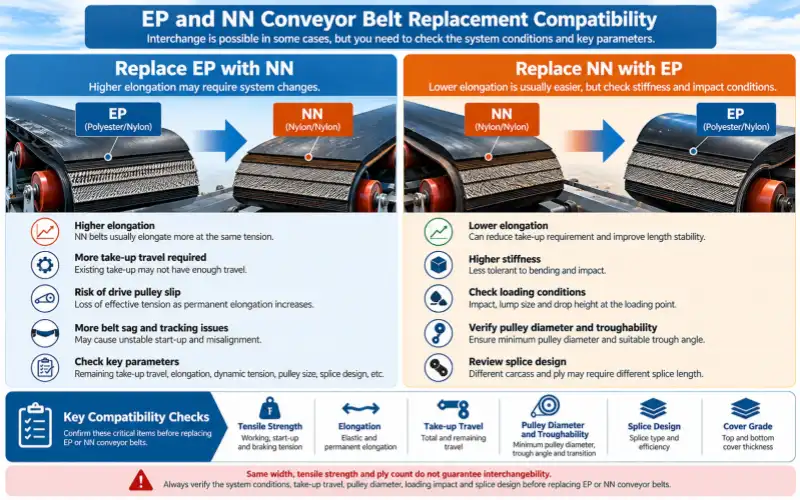
Sometimes. The direction of the swap decides how much work it takes. Going from EP to NN adds elongation to a system that may not be built for it. Going from NN to EP removes elongation and adds stiffness. The two swaps fail in different ways.
6.1 Replacing an EP Belt With an NN Belt
The main risk is elongation, not strength. NN usually stretches more under the same tension, and that stretch has to be absorbed somewhere. If the conveyor was laid out for an EP belt, the take-up may not have the travel to absorb it.
The failure is slow, which is what makes it dangerous. The belt runs acceptably at installation and for a period afterward. Then permanent elongation accumulates, the take-up reaches its limit, and the belt loses effective tension. From that point you see the symptoms rather than the cause: slip at the drive pulley, growing sag between idlers, unstable starting, mistracking, and spillage.
Verify these items before you commit:
- Total take-up travel and how much is still available
- Installation tension and the position of the take-up now
- Elongation at reference force for the offered belt
- Elastic elongation and permanent elongation
- Running, starting, and braking tensions
- Slip risk at the drive pulley
- Belt sag and the effect on loading
- Pulley diameters at every position
- Transition length from troughed to flat
- Splice design and expected efficiency
Same width, same nominal strength, and same ply count do not make the swap safe. If the conveyor was designed around EP elongation, an NN belt can exceed the take-up capacity the design assumed. Treat that as a system change, with the calculations to match.
6.2 Replacing an NN Belt With an EP Belt
This direction looks easier, and in one respect it is. Lower elongation reduces take-up demand, cuts belt length change, and improves dimensional stability. On a conveyor that keeps running out of take-up travel, that can be the fix.
The new risk is stiffness. An EP belt is less forgiving in bending and impact, so check the other side of the system:
- Loading-point impact, lump size, and drop height
- How often the belt bends, and over which pulley diameters
- Finished-belt flexibility and troughability at your trough angle
- Minimum pulley diameter for that exact construction
- Transition length from troughed to flat
- Splice design and expected splice efficiency
- Dynamic tension response during starting
Two mistakes are common here. The first is assuming EP is better everywhere because its elongation is lower. Low elongation does not compensate for a pulley that is too small, a trough the belt cannot form, or a loading point that destroys the cover. The second is reusing the old splice plan. A different carcass and ply count can need a different step length, and a longer splice may not fit the press or the space you have.
6.3 Replacement Compatibility Checklist
Work through the list in this order. The early items can stop the project before the later ones matter.
- Belt width
- Total installed length
- Length per roll
- Finished-belt tensile strength
- Whether strength is quoted per ply or as a total
- Ply count
- Carcass fabric
- Elongation at reference force
- Elastic elongation
- Permanent elongation
- Take-up type
- Total and remaining take-up travel
- Diameters of every pulley position
- Idler trough angle
- Transition length
- Running, starting, braking, and transient tensions
- Splice structure and expected splice efficiency
- Top and bottom cover grade and thickness
- Loading-point impact conditions
- Applicable safety and regulatory requirements
Two outcomes are useful at the end of this list. Either the new carcass fits the conveyor as it stands, or you now know exactly what has to change. What you want to avoid is discovering the difference after the belt is spliced in place.
7. Common EP vs NN Selection Mistakes
Most poor carcass decisions start as a short sentence that sounds reasonable. Each statement below contains a piece of truth. The problem is the part it leaves out.
7.1 “NN Is Stronger Than EP”
The fiber does not set the strength. EP and NN carcasses are both built in a wide range of grades, and a higher-grade EP belt will outperform a lower-grade NN belt. Compare the nominal N/mm value, the full construction, and the test data. Then check the allowable working tension that remains after the safety factor and splice efficiency are applied.
7.2 “EP Is Heavy Duty and NN Is Light Duty”
Both carcasses are used in heavy-duty service. The real difference is how they behave, not how much they can carry. EP resists length change. NN absorbs impact and repeated bending. A conveyor that selects NN for impact tolerance is not selecting a lighter belt.
7.3 “NN Is More Wear-Resistant”
Your material touches rubber, not nylon. Abrasion resistance follows the cover grade, the cover thickness, and the shape and hardness of the material being carried. The carcass sits behind the cover. It only becomes a wear question after the cover is already gone.
7.4 “EP Is Naturally Heat-Resistant”
EP describes the carcass, not a temperature rating. Hot material needs a heat-resistant cover compound, sized for the material temperature and the exposure time. A standard EP belt with a standard cover does not become heat resistant because the warp is polyester.
7.5 “A Screw Take-Up Can Work With Either Belt”
The take-up type does not decide this. The available travel does. A screw take-up has a fixed range, and installation stretch, elastic elongation, and permanent elongation all draw on it. Ask whether the travel left after installation can cover the elongation of the belt you are buying.
7.6 “Short Conveyors Should Use NN”
Short is not the same as easy. Short conveyors still run at high tension, small pulleys, deep troughs, limited take-up travel, hot material, and awkward splices. Any of those can outweigh the impact tolerance that short belts seem to offer.
7.7 “The Same Strength and Ply Count Mean Direct Replacement”
Strength and ply count are two lines on a data sheet. A replacement decision also needs elongation, ply structure, total thickness, troughability, pulley compatibility, cover grade, and splice design. Two belts can match on the first two items and differ on the other seven.
7.8 “One Carcass Is Always Cheaper”
Price follows the full specification and the purchasing conditions, not the letters in the name. Compare offers that meet the same technical requirement. Then compare the cost of running them, including installation, splicing, tension adjustments, downtime, and service life.
8. What Information Should You Include in an RFQ?
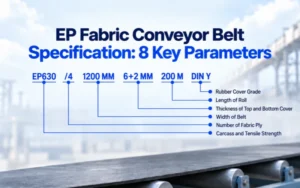
An RFQ does not have to be long. Eight items are enough for a supplier to quote a fabric-carcass conveyor belt. Each of them appears on the offer, and each one changes the construction behind the price.
RFQ Item | Typical Unit or Form | What It Fixes |
Belt width | mm | Carrying capacity, troughing behavior, roll width, and splice layout |
Belt thickness | mm | Total finished thickness, checked against pulley diameters and trough angle |
Top cover thickness | mm | The surface that meets the material, so it sets abrasion, cutting, and impact life |
Bottom cover thickness | mm | The surface that runs against the idlers |
Tensile strength | N/mm | Nominal strength of the finished belt, which fixes the ply grade |
Rubber strength | MPa value or grade designation, such as DIN-X or DIN-Y | Separates a standard cover from a high-abrasion or special-duty cover at the same thickness |
Total length | m | Length to be supplied, including the allowance for the splice |
Number of fabric plies | Count | Together with the tensile strength, it fixes the ply construction |
Four of the eight items are thicknesses, and they are easy to confuse. Top cover, carcass, and bottom cover add up to the total belt thickness. If you give only the total, a supplier will usually quote equal top and bottom covers, because nothing in the RFQ says otherwise. For an accurate product and an accurate price, state the top and bottom cover thickness separately.
The last two items work as a pair. Tensile strength alone does not fix the construction, because the same N/mm can be built with different ply counts. Ply count alone does not fix it either, because the plies themselves can be made in different grades. Give both.
Rubber strength is the item buyers most often leave out. It describes the cover compound itself, separately from the belt’s tensile strength. Two belts with the same top cover thickness can behave very differently in abrasion service when the compound grade differs.
You do not have to state it as a number. Rubber strength can be given as a measured value in MPa or as a recognized cover grade, such as DIN-X or DIN-Y. A grade designation is often the faster route, because it points to a defined set of cover requirements instead of a single figure, and it is what most suppliers quote against.
If you use a grade designation, name the standard it comes from. If you use a measured value, say which test method produced it, because different methods do not return the same number. In both cases, state which face the compound applies to: top, bottom, or both, since the two covers can be different grades.
If you cannot confirm one of the eight items, mark it as unconfirmed rather than leaving the field empty. A supplier who knows which figure is missing can quote with a stated assumption instead of guessing silently.
9. What Technical Evidence Should a Supplier Provide?
A supplier can quote an EP belt and an NN belt with the same width, the same 500 N/mm strength, the same four plies, and the same 6 mm top cover. On paper the two offers look identical, and the letters are easy to treat as the only difference. In service, the figures behind those shared numbers decide whether the belt lasts on your conveyor, and the data sheet is the only place to check them before you buy.
Technical data sheets mix three kinds of numbers, and the three do not carry the same weight. A guaranteed minimum is a commitment the supplier can be held to. A typical value is an average from routine production, and an individual belt can sit above or below it. A batch test result describes one sample on one day. Only the first kind belongs in a specification.
When a sheet does not label its figures, ask which kind each one is. The carcass difference sits in exactly the numbers that suppliers most often publish as ranges, so an unlabeled figure is usually where a comparison between two offers stops being reliable.
Read the five groups below with one question in mind: does this figure separate EP from NN, or does it protect both belts equally?
Evidence Group | What to Compare Between Two Offers | Which Way the Carcass Pushes |
Elastic and permanent elongation | The actual values, not the fiber names | NN usually higher, and permanent elongation keeps consuming take-up travel |
Elastic modulus | The stiffness figure, against your starting-tension and transition calculation | EP usually stiffer, NN usually softer |
Elongation at break | Read as a property of the carcass, not as take-up demand | NN usually higher, and that alone does not resize your take-up |
Troughability at your trough angle | The value for each offered construction | NN usually more flexible, though thickness and covers can reverse that |
Minimum pulley diameter per position | Each offer against the smallest pulley on the conveyor | NN is often claimed to allow smaller pulleys, so verify per construction |
Ply-to-ply and cover-to-carcass adhesion | Both figures at the condition of use | Not set by the fiber, and a load path for either belt |
Splice structure and expected efficiency | The splice design each offer assumes | A carcass change changes the step design and the achievable efficiency |
Length change between wet and dry | How the length behaves in wet duty | The polyester warp takes up less moisture, so EP length stays more stable |
Top and bottom cover grade and thickness | The cover separately from the carcass | The carcass does not set abrasion, heat, oil, or flame performance |
Six of these nine rows move with the carcass. Three of them decide the choice: elastic and permanent elongation, elastic modulus, and the wet-versus-dry length behavior. Troughability and pulley diameter move with the carcass as well, but the finished construction usually outweighs the fiber, so the number still has to be quoted for your belt. Elongation at break moves with the carcass and still tells you nothing about how much take-up travel you need.
The other three rows protect both belts and are compared side by side. Adhesion, cover grade, and cover thickness come from the compound and the build. If two offers differ there, the difference belongs to the cover, not to the warp.
Read the evidence in the order you would read the design. First, does the document describe the construction you were quoted, EP or NN? Second, do the mechanical figures support the tension and take-up calculation for your conveyor? Third, does the belt fit the pulleys and the trough you already have? Fourth, will it hold together at the splice and at the loading point? Fifth, can the delivered roll be traced back to the test records and the certification it claims?
9.1 Mechanical Data
- Full-thickness longitudinal tensile strength of the finished belt, tested on the belt as supplied
- Elongation at break
- Elongation at the reference force
- Elastic elongation
- Permanent elongation
- Elastic modulus
This group is where EP and NN are actually compared, so ask for all six figures against each of the two offers.
Tensile strength is the design figure. It tells you whether the carcass can carry the running tension, and it is the value your conveyor calculation uses. It is also the figure most often quoted as a range across a product family, so confirm it against the ply count and the ply grade in the offer. Two offers may both show 500 N/mm, which is why the remaining five figures decide the comparison.
Elongation at break looks impressive and is the least useful of the three elongation figures for sizing equipment. It describes how far the carcass stretches before it fails, which is a property of the material rather than a working condition. An NN offer usually shows the higher number. Treat it as a material property, not as a travel requirement.
Elongation at the reference force is the head-to-head figure. The test applies a reference force related to the nominal belt strength and records the stretch that results, which stays close to what the belt does under normal load. Compare the two offers at the same reference force, then use the result to check take-up travel, transition distance, and starting tension.
Elastic and permanent elongation split that stretch into two parts, and this pair carries most of the EP vs NN decision. Elastic elongation returns when the load is removed. Permanent elongation stays, and it accumulates over the life of the belt, so it consumes take-up travel slowly and permanently. When two offers differ here, the difference runs through the whole service life rather than the first month.
Elastic modulus converts the same test data into a stiffness figure, and EP carcasses usually return the higher one. Stiffness is what your calculation uses for starting tension and transition behavior, so a higher figure is not automatically better. It has to match the conveyor you have.
Two cautions apply to every figure in this group. A yarn or fabric specification does not settle how the cured belt will behave, so compare only values measured on the finished belt. When you compare an EP offer with an NN offer, also check that both sheets report the same kind of value, since finished-belt strength and per-ply strength are not interchangeable.
9.2 Running and Geometry Data
- Troughability of the finished belt
- Minimum recommended pulley diameter for each pulley position
- Belt dimensions and tolerances
This group tests the claims that people make about the carcass. Both items are measured on the finished belt, so a value quoted for a different construction does not transfer to the belt on your offer.
Troughability describes how readily the belt forms the trough at your idler arrangement, and it depends on the carcass, the cover, and the total thickness together. NN is usually the more flexible carcass, and that is the claim a supplier is likely to make. The claim is worth checking one belt at a time, because the trough is formed by the whole construction rather than by the warp alone. A belt that troughs poorly is harder to center, spills at the loading point, and works its edges against the idlers.
Minimum pulley diameter comes with a position attached, and it is the second claim the carcass debate attracts. The drive pulley, the tail pulley, bend pulleys, and the smallest take-up or snub pulley carry different requirements, and the governing one is usually the smallest pulley in the system. NN is often offered as the answer for small pulleys, but the figure follows the construction and the splice type. Ask for it per position on both offers, and compare the numbers rather than the fiber names.
Dimensions and tolerances cover width, length, and thickness. Length tolerance deserves attention on long conveyors, because a belt supplied slightly short can start its service with too little take-up travel left. If the belt runs wet, add one more question: how much does the length change between dry and saturated service? Put that question to both offers, because this growth often appears only after the belt has been running for a while.
9.3 Bonding and Cover Data
- Ply-to-ply adhesion
- Cover-to-carcass adhesion
- Actual top cover thickness and bottom cover thickness, with tolerances
- Cover compound physical properties
This is the group where the EP vs NN question usually does not apply, and stating that plainly is part of the comparison. Adhesion and cover performance come from the construction and the compound, not from the warp fiber.
Adhesion holds the belt together against the forces that try to separate it: flexing over pulleys, impact at the loading point, and the edge stresses of a belt that mistracks. Ply-to-ply and cover-to-carcass are separate tests with separate limits, and a belt can pass one while failing the other.
The two failure patterns look different on a damaged belt, so each figure points at a different risk. Ply-to-ply separation appears as internal delamination near a pulley or after a jam, and it spreads along the belt. Cover-to-carcass separation shows as the cover lifting at an edge, at a splice, or in a strip where the material is discharged. Ask for both figures at the condition closest to your duty: normal, wet, or elevated temperature. Adhesion values are not the same across those conditions.
Cover thickness should be quoted as an actual value with its tolerance, not as a nominal figure alone. On a thin cover, the tolerance is a large share of the wearing material: a nominal 3 mm cover with a tolerance of plus or minus 0.3 mm is a ten percent swing in the rubber available to wear. For wear life, the guaranteed minimum thickness is the number that matters.
Cover compound properties are the measured version of the rubber strength figure you listed in the RFQ: tensile strength, elongation at break, abrasion loss, and hardness of the compound itself. Two covers of the same nominal grade can test differently, and this is the sheet that shows it. Heat, oil, and flame results belong here as well, next to the cover grade and the standard it is measured against.
One more sentence keeps the comparison honest. If two offers differ in this group, changing the carcass will not close the gap. A buyer who switches from NN to EP to solve an abrasion or cover problem has spent money on the wrong variable.
9.4 Splicing and Quality Documents
- Splice description and splice structure
- Expected splice efficiency
- Product construction drawing
- Batch inspection records
- Traceability documents
- Applicable certification
A carcass change is also a splice change, so this group is where an EP vs NN comparison turns into a project. Two belts of the same nominal strength can still need different splice designs, which means the documents you accept here decide how the joint is built later. Fix the splice design on paper before the order is placed, rather than resolving it on site.
The splice description should state the method, whether hot, cold, or mechanical, the step count and step length, and the direction rule that keeps the warp running along the belt. Direction is not a small detail: a step splice laid out against the warp does not develop the strength of a correctly oriented joint.
Expected splice efficiency is the figure to compare between two offers, because it sets the working tension you can rely on rather than the strength on the label. Ask for it as a percentage of belt strength and ask which splice type it belongs to. An efficiency figure quoted without a splice type cannot be checked, and the step design that achieves it may not match the equipment and the skills at your site.
The product construction drawing is the one document that shows warp and weft direction, ply count, ply grade, cover thickness, and total thickness together. For an EP vs NN decision it is also the document that shows where the two designs actually part company. It is the reference you check the delivered belt against, so ask for the drawing of the quoted construction rather than a general arrangement for the product family.
Batch inspection records tie the test figures to the batch your belt was produced in. Ask for the report with the batch number, the date, and the individual results, because a summary line without the batch reference cannot be connected to your roll. Traceability documents complete the chain from the delivered roll back to the batch and the incoming material.
Certification should be read for scope and market. A certificate issued for a different belt type, a different cover grade, or a market you do not ship into does not cover your order. Check what the certificate lists, not only that it exists.
9.5 The Standards Behind These Figures
The five standards below are also what makes an EP sheet and an NN sheet comparable at all. Each one defines the same test on the same finished belt, so the resulting figures mean the same thing whoever produced them. Without a named method, one supplier’s elongation and another supplier’s elongation need not be the same measurement, and the comparison falls apart.
- ISO 283:full-thickness tensile strength, elongation at break, and elongation at the reference force
- ISO 9856:elastic elongation, permanent elongation, and elastic modulus
- ISO 703:troughability of the finished belt
- ISO 3684:calculation of minimum pulley diameters
- ISO 14890:general requirements for rubber- or plastics-covered conveyor belts of textile construction
The first two standards produce almost the whole EP vs NN comparison. ISO 283 and ISO 9856 are the methods behind the elongation and modulus figures that decide take-up travel. ISO 703 and ISO 3684 are the methods behind the two carcass claims that buyers most often accept without checking.
Add adhesion, tear, cover, or safety tests where the duty calls for them. That extra list is not the same for every belt, so match it to the application instead of copying one standard set onto every order.
Standards set minimum requirements, not targets for your conveyor. A belt that meets every minimum can still be the wrong belt for a long overland incline or for a loading point that receives large lumps. Use the standard to confirm that a figure was produced by a defined method, then use your own calculation to decide whether the figure is good enough.
Three checks turn a data sheet into usable evidence. Confirm that the figures describe the belt on offer rather than a catalogue range. Separate the guaranteed minimum from the typical value and from the single batch result, because only the first one is a commitment. Read the wording closely: “tested according to ISO 283” is not the same statement as “certified to ISO 283,” and a certificate should be checked for what it covers and which market it applies to.
Decide which figures you need as guaranteed values, because every guarantee adds an inspection or a test to the order and suppliers price that work. On a short conveyor with generous take-up travel, permanent elongation is often safe to take as a typical value, and on a long incline it is not.
The same reasoning applies to troughability and to splice efficiency. Ask for guarantees where a wrong figure would stop the conveyor, and accept typical values where the consequence is only a smaller correction.
When two offers sit close together, the guarantee is worth more than the number. A guaranteed elongation figure you can hold a supplier to is a stronger basis for a decision than a slightly better typical value you cannot.
If a supplier cannot provide these items for the belt on offer, treat the gap as a risk. The figures you cannot obtain before the order are usually the same figures that decide the argument after it.
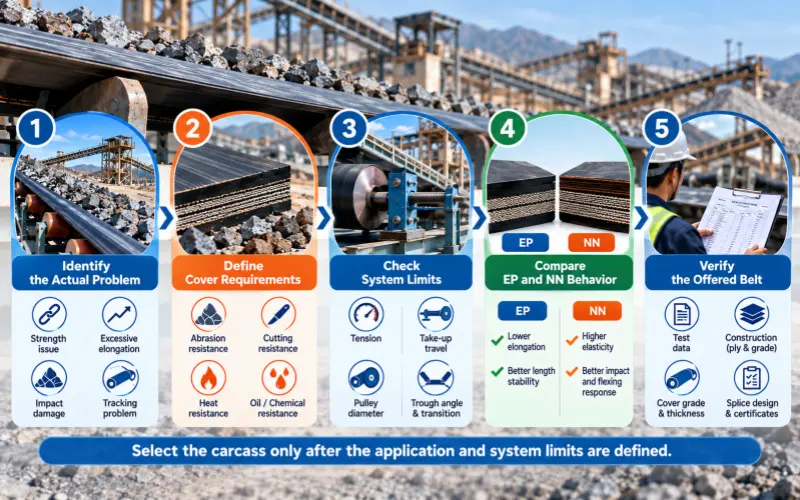
10. A Five-Step EP vs NN Selection Process
The five steps below run in a fixed order. Each one answers a question that the next one depends on, and two of the five have nothing to do with the carcass. Moving straight to the fiber comparison is how an installation ends up with a new carcass carrying the same old failure.
Step | Question It Answers | What Skipping It Costs You |
10.1 Define the actual problem | What is failing, where, and when | You change the carcass to fix a cover or loading problem |
10.2 Select the required cover performance | What the material and the environment demand of the rubber | You compare EP and NN on a belt that was going to fail either way |
10.3 Determine strength and system limits | What the conveyor can physically accept | You approve a belt the take-up or the pulleys cannot absorb |
10.4 Compare EP and NN behavior | Which carcass suits the demand you have established | You buy elasticity with no travel to absorb it, or stiffness with no room for it |
10.5 Validate the exact offered belt | Whether the belt in the offer meets the requirement | You accept a catalogue range as if it were a commitment |
10.1 Define the Actual Problem
Start by writing down the failure you are reacting to, in physical terms. “The belt keeps failing” is not a problem statement. “The belt has taken up 400 mm of a 600 mm take-up in six months, and the joint has opened twice” is one, and it already narrows the answer.
The conditions that bring a belt to replacement usually fall into eight groups:
- Insufficient strength, where the belt runs above its allowable working tension
- Excessive elongation during normal running
- Take-up travel exhausted
- Impact damage at the loading point
- Cover abrasion, cutting, or gouging
- Splice failure
- Mistracking
- Selection for a new conveyor, where no belt has failed yet
Location and timing separate these groups. Damage concentrated at the loading point points to the material and the chute rather than to the carcass. Damage along the belt or at a pulley, away from the loading point, points to flexing and fatigue. A length problem shows up as a take-up running out, not as a break.
Only three of the eight groups involve the carcass directly: elongation, take-up travel, and the strength question. Cover damage, splice failure, and mistracking belong to the cover, the splice, and the alignment of the structure, and a carcass change repairs none of them.
Treat a carcass change as a project rather than a swap. It reopens the splice design, the take-up calculation, and the pulley requirements, which makes it the most disruptive change available on a running installation. Confirm the problem first, then decide whether the carcass is part of it.
10.2 Select the Required Cover Performance
The cover answers to the material being carried and to the environment around the belt, not to the fiber in the carcass. Settle it before the carcass comparison, because a cover failure is regularly mistaken for evidence about EP or NN.
Work through the demands your duty places on the rubber:
- Abrasion resistance for hard, sharp, or high-silica material
- Cut and gouge resistance for large lumps and sharp edges
- Heat resistance for hot clinker, sinter, coke, or cement
- Oil resistance for oily or solvent-bearing material
- Chemical resistance for acidic, alkaline, or otherwise aggressive media
- Flame resistance where a fire or explosion risk applies
- Top cover thickness, for the surface that meets the material
- Bottom cover thickness, for the surface that runs on the idlers
Read these as mechanisms rather than as labels. Abrasion loss rises with the hardness and angularity of the material and with the pressure between material and belt. Cutting follows sharp edges and drop height. Heat ages the compound and hardens it, which changes how the surface behaves against the load.
The two covers are separate decisions. The top cover sees the material, so it carries the abrasion and cutting duty. The bottom cover sees the idlers, so wear there points to slipping, seized idlers, or build-up under the belt rather than to the material being carried. State both thicknesses separately, since a supplier who receives only a total will quote equal covers.
Resolve this step before comparing carcass types. Two offers can differ in abrasion grade and top cover thickness while sharing the same strength and ply count, and that difference has nothing to do with EP versus NN. Heat, oil, chemical, and flame performance belong to the cover and the full belt design in the same way.
10.3 Determine Strength and System Limits
This step turns your conveyor into numbers that a belt either meets or does not. It is also the step that usually settles the EP vs NN question before any discussion of price or service life begins.
- Required total finished-belt strength
- Allowable working tension
- Safety factor
- Splice efficiency
- Available take-up travel
- Minimum pulley diameter at each position
- Troughing requirement for your trough angle
- Transition length from troughed to flat
Work the numbers in this order:
- Start from the required strength, stated on the finished belt rather than per ply, and confirm it against the ply count and ply grade you are offered.
- Convert it into allowable working tension by applying the safety factor and the splice efficiency. This is the tension the belt actually has to carry, and it sits well below the nominal value.
- Compare elastic and permanent elongation of each offered belt against the take-up travel you have. Include the initial stretch after installation, and include the wet-to-dry length change if the belt runs wet.
- Check the minimum pulley diameter for every position against the smallest pulley in the system, then check the transition length.
- Check the troughing requirement against the troughability quoted for your trough angle.
Step three is where EP and NN separate. An EP belt usually demands less travel and holds its length better. An NN belt usually demands more, and permanent elongation keeps consuming travel after commissioning. If your take-up has no margin left, the NN option is eliminated here, on arithmetic, before anyone discusses its genuine advantages in impact and flexing.
Clear the earlier steps before spending time on the later ones. A belt that cannot carry the working tension is out regardless of its fiber, and a belt whose pulley requirements exceed your smallest pulley is out regardless of its elongation. This order prevents a careful comparison between two options that were never available.
10.4 Compare EP and NN Behavior
With the problem, the cover, and the system limits established, the carcass comparison becomes short:
- Where low elongation, stable length, and limited take-up travel dominate, start from EP.
- Where elasticity, repeated flexing, and dynamic impact dominate, evaluate NN.
- Where both sets of demands exist, design the complete belt and the loading system instead of choosing between two fiber names.
The third case is the one that gets misread. A long conveyor with a severe loading zone needs two decisions rather than one: a loading zone that reduces the impact reaching the belt, and a carcass that carries the tension without consuming take-up travel. Selecting NN usually addresses the second decision only, and it charges the take-up for the entire life of the belt.
Keep the two advantages separate. The elasticity of NN is real, and it acts at the moment of impact. The fatigue advantage depends on bending strain, which follows pulley diameter, belt thickness, and running hours. Where fatigue is the failure mode, the pulley and transition geometry deserve attention alongside the fiber choice.
Each carcass also carries a cost that appears in a different place. NN buys its impact behavior with take-up travel, which has to be available for years. EP buys its length stability with stiffness, which shows up at small pulleys and short transitions. Compare those two costs against your installation rather than comparing the two names.
When both options clear every earlier step, the tie-breaker is field evidence. A construction that has run well on that conveyor, with no change in duty, is a lower-risk choice than a technically stronger option that has never run there. Change the carcass when you have identified a failure mode that the new carcass will actually fix.
10.5 Validate the Exact Offered Belt
Approving a carcass type is not the same as approving the belt you will receive. This step checks one specific construction against the requirements established in 10.2 and 10.3.
- Actual test data for the offered belt
- Belt dimensions and tolerances
- Ply structure, including ply count and ply grade
- Cover grade, and actual top and bottom cover thickness
- Pulley requirements
- Troughability
- Splice plan
- Inspection and certification documents
The first group of items confirms the calculation. Test data settles strength, elastic elongation, permanent elongation, and modulus. Dimensions and tolerances confirm the belt fits and that the length allowance suits the take-up rather than consuming it. Ply structure confirms the strength you are paying for, and it sets the splice design that follows from it.
The second group confirms the duty. Cover grade and actual cover thickness answer the requirements set in 10.2, with thickness tolerance carrying as much weight as the nominal figure. Pulley requirements confirm the belt suits every position, not only the largest pulley. Troughability confirms the belt forms your trough at your trough angle.
The third group covers the joint and the paper trail. The splice plan fixes the step design, the press capacity, and the skill needed on site. Inspection and certification documents confirm that the test figures can be traced to your batch, and that any certificate covers the belt type and the market you operate in.
A step is complete when the document exists. A verbal answer that NN is fine on small pulleys is not validation, and neither is a catalogue page. Compare the two offers on the same items, in the same units, and with the same guarantee status, so that a guaranteed minimum on one sheet is not weighed against a typical value on the other.
Where a supplier cannot produce these items for the belt in the offer, that gap is the difference between the two offers.
11.EP vs NN Conveyor Belt: What Separates the Two Carcasses
EP and NN conveyor belts separate on elongation, not on strength grade. Both are built across a wide range of tensile strength grades, and a higher-grade belt of either family will outcarry a lower-grade belt of the other, so the N/mm figure and the ply construction belong in the comparison before the fiber name does.
The difference shows up in how each carcass behaves under load. EP holds its length: lower longitudinal elongation, better dimensional stability, and less demand on the take-up, which is why long conveyors and conveyors with limited take-up travel often run it. NN gives more: higher elasticity, greater flexibility, and a stronger response to dynamic impact, which suits repeated flexing and heavy loading where the travel exists to absorb the stretch.
Neither carcass decides performance that belongs to the cover. Abrasion, heat, oil, chemical, and flame resistance come from the compound and the full belt design, so they cannot be read from EP or NN.
That leaves the practical rule. Where a construction already runs well on the conveyor, keep it. Where a belt fails early, establish the cause first, because a carcass change cannot repair a cover, splice, chute, or take-up problem.
12. Frequently Asked Questions
12.1 Are EP 500/4 and NN 500/4 Directly Equivalent?
Not automatically. The shared 500 N/mm and four plies describe nominal strength and ply count, and both carcasses are built to that designation, so the numbers match on the label. What sits behind them can still differ: elongation at the reference force, elastic and permanent elongation, elastic modulus, finished thickness, troughability, minimum pulley diameter, and the splice design that follows from the ply structure. Treat the two as candidates in the same strength class rather than as interchangeable belts, and compare the finished-belt figures for the constructions actually offered before you accept a substitution.
12.2 Can an NN Belt Be Used on a Long Conveyor?
Yes, provided the conveyor can absorb the stretch. Distance alone does not disqualify an NN carcass. What matters is whether the working tension stays within the allowable figure, and whether the take-up can cover the belt’s elastic and permanent elongation, including the initial stretch after installation and the length change if it runs wet. Ask for those figures for the construction on offer and compare them with the travel you have. Where the take-up has little margin left, the answer usually turns negative for reasons of arithmetic rather than of fiber.
12.3 Does an NN Belt Always Need More Take-Up Travel?
Compared with an EP belt of similar strength and construction, an NN belt usually demands more. The figure comes from the finished belt, so a percentage borrowed from another project does not transfer. Calculate the requirement from the elastic elongation, the permanent elongation, the loaded belt loop, the take-up design, the installation tension, the splice allowance, and the temperature range, then compare it with the travel available. A heavy NN belt and a light EP belt can end up closer than the fiber names suggest, which is why the calculation decides rather than the label.
12.4 Which Belt Is Better for Small Pulleys?
Neither name answers this one. Bending strain at a pulley depends on the belt construction and the pulley diameter, so the governing figure is the minimum pulley diameter quoted for the belt you are buying, at each position, checked against the smallest pulley on the conveyor. Add the splice type, since a fastened joint generally calls for a bigger diameter than a vulcanized one, and confirm the transition length at the same time. Where two offers differ here, compare their per-position diameter figures rather than their carcass descriptions.
12.5 Can an EP Belt Handle High-Impact Materials?
It can, and the carcass is only one of the items that decide whether it does. Impact energy climbs with lump mass and drop height, so the loading zone carries much of the answer: chute geometry, an impact bed or closely spaced idlers, and the top cover grade and thickness that meet the material. Carcass strength and ply structure matter next, and a breaker ply is an option where the fabric is still the limiting item. NN absorbs impact through elasticity, but it spends take-up travel for the life of the belt.
12.6 How Can You Identify an Existing EP or NN Belt?
Start with the belt itself: edge marking and the bottom cover often carry the manufacturer, the designation, and sometimes the ply count. Then check the purchase documents, the test report, and the splice records, which are more dependable than a printed mark. Confirm whether a quoted N/mm figure refers to the finished belt or to a single ply, since the two are not interchangeable. Where the marking is missing or worn, appearance alone will not settle the question, and a sample test or a check with the original manufacturer is the safer route.