1. Rubber Conveyor Belt Market Size and Growth Forecast
1.1 Growth Prospects for Rubber Conveyor Belts
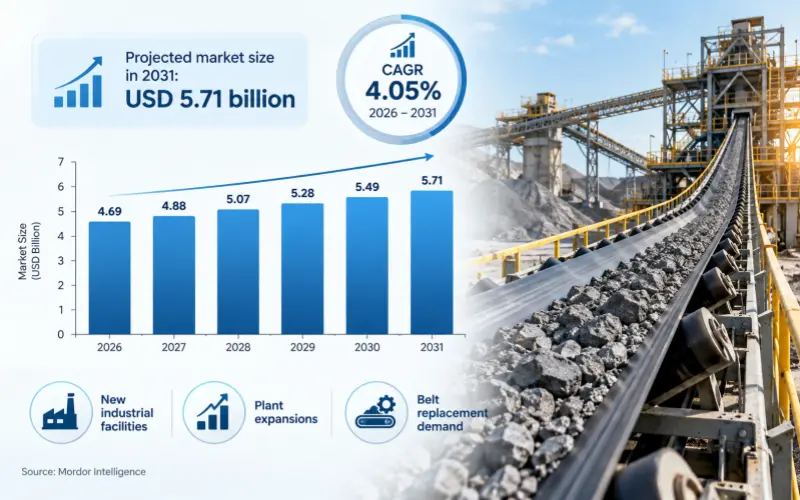
From 2027 to 2031, demand for rubber conveyor belts will be supported by new industrial facilities, plant expansions, and replacement of belts in service. Mining, cement, steel, quarrying, and bulk terminals will remain important sources of heavy-duty demand.
CEMA’s bulk-materials handling guidance provides useful service-life benchmarks: about five years for belts handling hard rock, up to 15 years in non-abrasive service, and roughly three years for the top cover on long conveyors carrying abrasive iron ore.
These figures illustrate how operating conditions shape replacement demand. Abrasive materials can wear the top cover quickly, while less abrasive applications may allow longer intervals between replacements.
On long-distance overland conveyors, extending the route adds running resistance, while increasing lift raises the tension required to move the load. If peak tension exceeds the existing belt’s design rating, a higher tensile class is required. The splice must also withstand the revised operating tension and repeated load cycles.
Research by Leibniz University Hannover on more than 1,000 conveyor belt splices identifies splice fatigue strength as a key factor in belt reliability. Splice design, bonding materials, and construction quality affect fatigue performance under dynamic loading.
An extension requiring additional belt rolls may also introduce more field splices. Project specifications should therefore address belt tensile rating, splice design, and fatigue requirements together, with installation and vulcanizing quality controlled throughout construction.
1.2 Market Size References and Forecast Boundaries
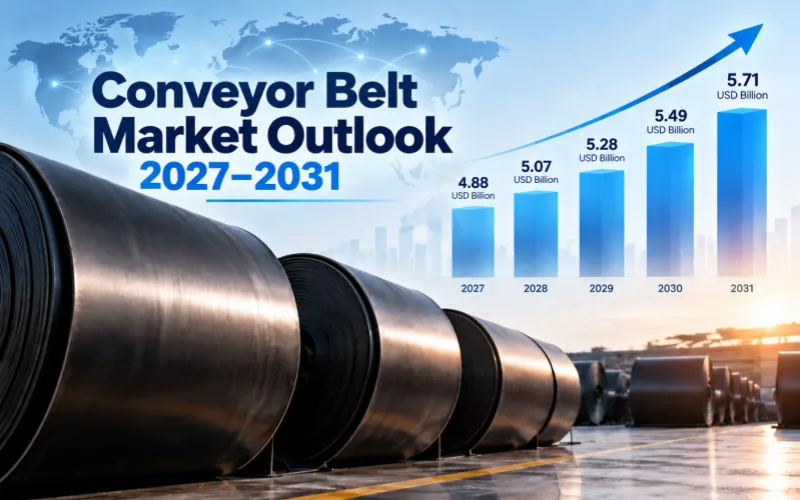
According to Mordor Intelligence’s rubber conveyor belt market report, the global market is projected to reach USD 5.71 billion by 2031, with a 4.05% compound annual growth rate from 2026 to 2031.
This article focuses on 2027–2031, while the published growth rate covers 2026–2031. The original forecast period should remain attached to the figure when cited.
The estimate covers rubber conveyor belts across industrial applications. For mining customers, it provides a broader market reference, while demand in individual markets will depend on mine investment, production activity, conveyor expansions, and replacement requirements.
2. Industrial Demand for Rubber Conveyor Belts
Across heavy industry, rubber conveyor belts move bulk materials from extraction and processing to stockpiling and shipment. New facilities create installation demand; operating plants order replacements after wear, damage, and planned maintenance. Material type and conveyor duty shape the specification.
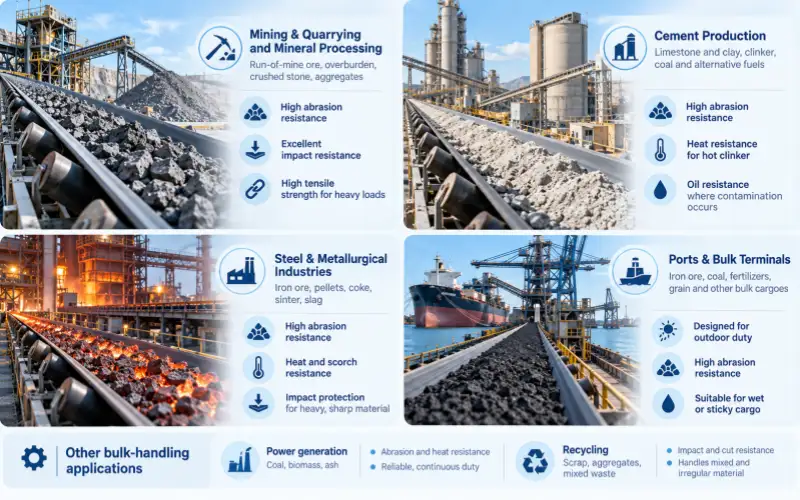
2.1 Mining, Quarrying and Mineral Processing
Mines and quarries use belts to move run-of-mine ore, overburden, crushed stone, and aggregates. Conveyors connect extraction points with crushers, screens, stockpiles, and loading systems. New mines and plant expansions create demand across several conveyor stages, with orders phased alongside construction and commissioning.
Material conditions drive belt specifications. Sharp rock and large lumps raise impact and tear risks at loading points. Abrasive ore accelerates top-cover wear. High-tension overland routes often use steel-cord belts, while textile belts serve many shorter or lower-tension conveyors.
Existing mines order replacement belts when covers wear, carcasses suffer damage, or inspections identify deterioration. Ore type, conveying distance, throughput, and maintenance schedules shape replacement timing across mining and quarrying operations.
2.2 Cement Production
Cement plants use rubber conveyor belts for limestone and clay, coal and alternative fuels, clinker, and finished bulk materials. A new kiln line, quarry extension, or material-handling upgrade can require belts from the raw-material yard through production and dispatch.
Limestone and clay handling call for abrasion and impact resistance. For clinker, the cover compound must tolerate actual contact temperature and exposure time. Fuel-handling sections may need oil resistance where contamination occurs.
Plant maintenance creates recurring replacement orders. Procurement specifications should reflect each conveyor section’s duty. Clinker temperature, abrasive loading, and fuel contamination determine the required cover compound.
2.3 Steel and Metallurgical Industries
In 2025, global crude steel production reached approximately 1.849 billion tonnes, according to the World Steel Association’s 2026 figures. Steelworks move iron ore, pellets, coke, limestone, sinter, and slag through stockyards, sintering plants, and furnace-feed systems.
Ore, coke, and sinter demand abrasion resistance and impact protection. For sinter, coke, or slag containing glowing or smoldering particles, choose a heat-and-scorch-resistant conveyor belt. Select the cover grade based on material temperature and exposure.
New raw-material handling lines and capacity upgrades generate installation demand. Continuous production also creates replacement demand during planned maintenance and urgent repairs. Heavily loaded conveyors exposed to severe material impact typically need closer maintenance and earlier replacement.
2.4 Ports and Bulk Terminals
Ports and bulk terminals move iron ore, coal, fertilizers, grain, and other cargo between ships, stockyards, hoppers, and inland transport. New berths, stockyard extensions, and conveyor upgrades create installation demand. Intensive terminal operation also generates replacement orders.
Ore and coal conveyors need abrasion resistance and impact protection. Outdoor systems face rain, sunlight, temperature changes, and long operating hours. Wet or sticky cargo can increase carryback and spillage, making belt surface selection and cleaning arrangements important to daily operation.
Other bulk-handling applications include:
Application | Typical Materials | Main Belt Requirements |
Power generation | Coal, biomass, ash | Abrasion and impact resistance; heat resistance when conveying hot ash |
Recycling | Scrap, aggregates, mixed waste | Tear resistance, impact protection, and tolerance of irregular loading |
3. Rubber Prices, Energy Costs and Supply Chain Outlook
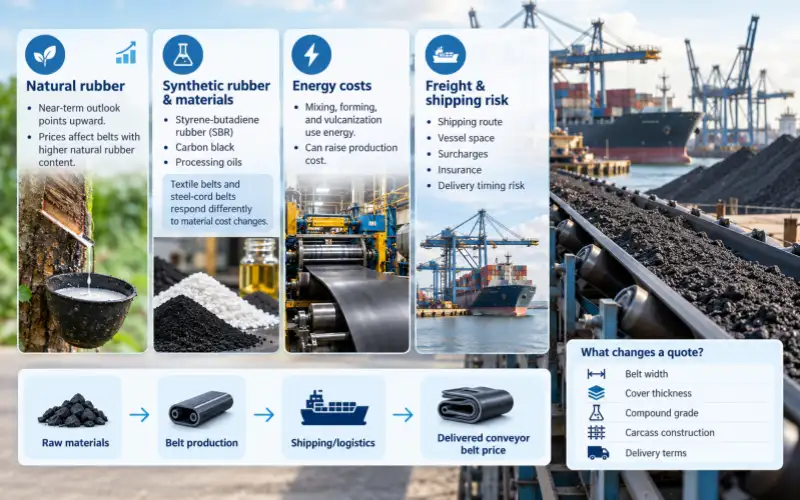
A replacement belt’s delivered price can change while its specification stays the same. Rubber ingredients, reinforcement, factory energy and freight enter the cost at different stages. For purchases planned through 2031, the useful question is which of these costs affects the belt you need and its route to your site.
3.1 Natural Rubber Supply and Price Drivers
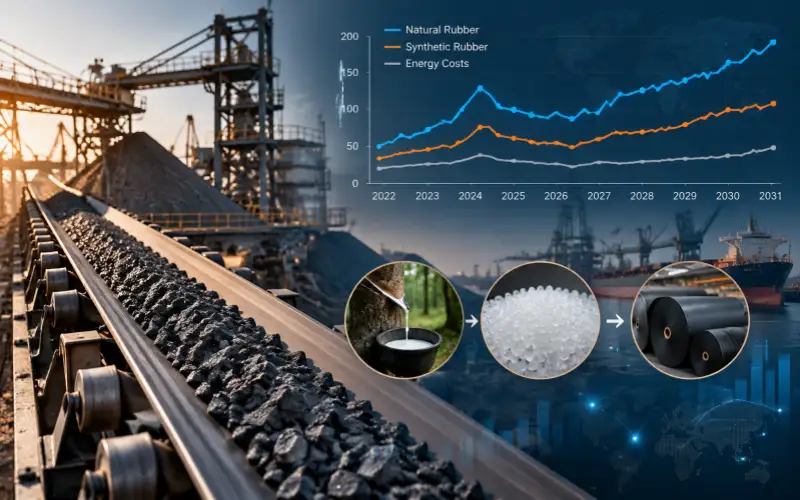
A belt with a substantial natural rubber content is more exposed to changes in natural rubber prices. Belt width and cover thickness also matter: they determine how much compound is needed for each meter. This makes material price changes more significant for large orders with thick covers.
The World Bank’s May 2026 outlook expects natural rubber prices to rise further in 2027. Buyers can use that forecast when preparing near-term replacement budgets. For later orders, the budget will need to reflect prices available when specifications and purchase dates are confirmed.
New planting cannot add latex to the market immediately. The FAO’s rubber tree reference places the start of tapping several years after planting. This delay makes existing plantations important when tire manufacturers and industrial buyers seek more natural rubber at the same time.
3.2 Synthetic Rubber and Other Material Costs
Styrene and butadiene are the inputs used to make emulsion styrene-butadiene rubber, according to ARLANXEO’s material description. Their prices affect a belt compound according to the amount of this rubber in its formulation. Carbon black and processing oils contribute further material costs.
The carcass creates a separate source of price movement. Textile belts depend on polyester or nylon fabric; steel-cord belts depend on steel wire and cord processing. Two orders of the same length can therefore respond differently to a change in raw material costs.
Mixing, forming and vulcanization also use energy. Higher electricity or fuel costs can raise production costs when a new order is made. The effect on a quotation depends on the factory’s energy arrangements and the production period covered by the offer.
3.3 Middle East Conflict and Shipping Risks
The IEA’s October 2026 oil report describes attacks affecting Gulf energy infrastructure and tanker traffic, alongside exceptionally high freight costs. For a conveyor belt order, the immediate questions are its shipping route, available vessel space and charges included in the freight offer.
A longer voyage delays the belt’s arrival at the site. Replacement orders tied to a planned shutdown have less room for changes in sailing dates, customs clearance or inland delivery. Those dates should be checked against the installation window before the order schedule is finalized.
Carrier surcharges and insurance costs depend on the journey and agreed delivery terms. They may appear in the supplier’s delivered price or in the buyer’s separate freight bill. Comparing total delivered costs makes their effect on a replacement order visible.
3.4 How Cost Changes Reach Conveyor Belt Quotations
Width, cover thickness and compound grade determine much of an order’s rubber requirement. Carcass construction determines its fabric or steel requirement. When a new quote changes, checking these specifications first shows whether the price still covers the same belt.
The timing of material purchases can also affect an offer. Materials already in stock may have been bought at one price; materials purchased for a later production slot may cost more. A quotation’s validity period matters when approval and production are weeks apart.
For repeat purchases, keep the belt specification and delivery terms consistent when comparing prices. This gives buyers a clearer view of the cost they will pay to put the replacement belt on site.
4. Rubber Conveyor Belt Demand by Carcass Type
The product outlook differs by carcass type: textile belts have a large established market, and steel-cord belts have a higher projected growth rate. For buyers, this distinction provides context for comparing supplier product ranges and the technical approval required for an order.
4.1 Textile-Reinforced Rubber Conveyor Belts
Mordor Intelligence estimates that textile reinforcement accounted for 51.55% of the global rubber conveyor belt market in 2025. This gives fabric-reinforced products a substantial starting position for the 2027–2031 outlook.
Heavy-industry purchasing spans multiple fabric strengths, ply counts, belt widths and cover grades within this category. Distributors and operators buying several specifications therefore need suppliers that can cover the required combinations and reproduce agreed constructions consistently across production batches.
For your purchasing program, the practical value lies in access to the specifications your conveyors use. A supplier’s available fabric grades, manufacturing dimensions and repeat-order consistency help determine how much of that program it can support.
4.2 Steel-Cord Rubber Conveyor Belts
The same report forecasts 6.05% compound annual growth for steel-cord belts during 2026–2031, exceeding its 4.05% overall market forecast. Within that projection, steel cord would account for a growing share of rubber conveyor belt spending through 2031.
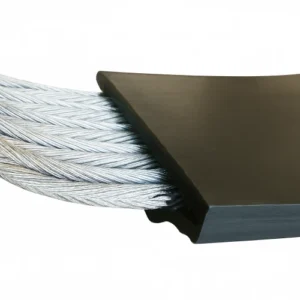
Steel-cord sourcing often involves approval of a specific construction. An order may define cord diameter, spacing and arrangement alongside the finished belt’s tensile rating. Buyers comparing suppliers need the proposed construction to align with their approved technical requirements.
Construction drawings, inspection documentation and identification of supplied rolls support that evaluation. For a buyer qualifying an additional source, these records help establish whether the supplier can consistently deliver the construction specified in the purchase agreement.
5. Regional Outlook for Rubber Conveyor Belt Demand
Regional demand through 2031 will reflect where bulk-material investment becomes operating capacity. Belt buyers also face different delivery conditions: factory access, local stock, inland transport and installation support all vary by location.
5.1 Asia-Pacific
India’s steel policy targets 300 million tonnes of annual crude steel capacity by fiscal 2030–31. Expansion at that scale would require more handling of iron ore, coal and other inputs. Australia’s mineral-export operations add an established purchasing base for large conveyor systems.
China’s belt manufacturing base gives the region access to factory supply. Buyers importing elsewhere in Asia also need delivery and installation arrangements suited to their location.
5.2 South America
Chile’s official 2025–2034 mining investment portfolio totals USD 104.549 billion. Proposed concentrator developments could support additional bulk-handling equipment. Brazil’s iron-ore and port operations and Peru’s copper mines provide further industrial demand across the region.
For imported belts, the port-to-mine journey and availability of a local splicing crew can be as important as vessel arrival.
5.3 Middle East and Africa
Saudi phosphate investment provides a project-led demand driver. In Africa, Zambia targets 3 million tonnes of annual copper output by 2031. Meeting that goal would require additional mining and processing capacity, supporting the outlook for bulk-material conveying.
Supplying a Gulf industrial site differs from serving an inland African mine, where border clearance, road access and local installation resources can shape the schedule.
5.4 North America
USGS estimates that U.S. crushed stone production grew 6.4% in the first half of 2026. That activity supports quarry belt purchasing. Coordinating factory supply or distributor stock with maintenance dates remains important alongside new mining and aggregate-processing investment.
Canada’s mining operations and Mexico’s cement and aggregates industries broaden the regional demand base. Cross-border purchases add customs clearance and inland delivery steps to the supply schedule.
5.5 Europe
Europe combines established industrial operations with selected raw-material investments. The EU’s 2030 benchmarks include meeting 10% of strategic raw-material consumption through EU extraction and 40% through EU processing. These goals encourage investment that can include ore and solid-material handling facilities.
For buyers, the following comparison summarizes the purchasing implications of these industrial signals.
Region | Demand Base | Growth Conditions | Supply Consideration | Main Uncertainty |
Asia-Pacific | Mineral exports; steel-making | Capacity entering operation | Factory supply; cross-border delivery | Plant utilization |
South America | Copper; iron ore | Mine and concentrator development | Port-to-site transport; splicing | Permits; financing |
Middle East and Africa | Phosphate; mineral extraction | Mining and processing expansion | Inland delivery; service access | Funding; energy availability |
North America | Quarries; mineral processing | Construction activity; investment | Regional stock; factory lead times | Project timing |
Europe | Established heavy industry | Strategic-material capacity development | Delivery continuity; technical support | Permits; industrial spending |
6. Replacement Demand and New Installation Demand
During 2027–2031, the rubber conveyor belt market will reflect two demand cycles: continued use of operating equipment and installation of additional conveying capacity.
6.1 Replacement Demand from Existing Equipment
Worn covers, damaged carcasses, and a change in duty can trigger replacement orders at operating plants. These orders may cover a damaged section or the complete belt, depending on condition.
Running hours, conveyed materials, and loading conditions affect how quickly replacement requirements develop. Planned shutdowns can group several change-outs into one maintenance period. Unexpected damage can create a separate, urgent requirement.
6.2 Demand from New and Expanded Projects
Project investment generates belt orders as conveyor packages are designed and contracted. Engineering establishes the required belt lengths and specifications. Orders become committed when the relevant supply contracts are placed, and delivery follows the construction sequence.
Expansion can add conveyors and extend existing routes, producing new belt requirements within an established site. Supply can be divided into stages as different parts of the project become ready for installation. Once commissioned, the additional conveyors also enlarge the future replacement market.
Comparison Point | Replacement Demand | New Installation Demand |
Order trigger | Belt condition or changed duty | Contracted new or expanded conveyor scope |
Technical focus | Fit with retained conveyor equipment | Design requirements for additional capacity |
Timing | Planned shutdown or urgent changeout | Staged construction and installation |

7. Technology Trends in Rubber Conveyor Belts
Material durability, energy efficiency, and belt condition monitoring offer three practical directions for technology development during 2027–2031.
7.1 Compound and Structural Development
Material development targets wear resistance and retention of flexibility after heat aging. Structural refinements address impact damage and tear propagation through changes to reinforcement and bonding. Abrasion, aging, adhesion, and flexing tests help evaluate how the complete construction holds up in service.
7.2 Energy Efficiency
Low rolling resistance bottom covers reduce energy lost as rubber compresses and recovers over idlers. Their effect on conveyor power depends on loading, temperature, belt speed, and the system’s other resistances.
A 2021 study calculated approximately 15.3% lower annual average drive power for a Belchatow mine conveyor using a selected energy-saving belt. The calculation combined belt resistance tests with the conveyor’s operating parameters and local monthly temperatures.
7.3 Belt Condition Monitoring
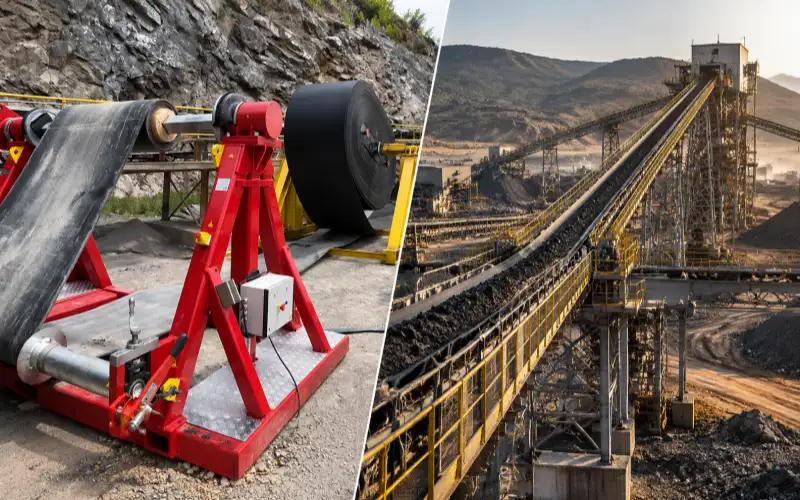
Monitoring development connects surface inspection with information about internal damage and splice condition. Cameras identify visible defects; magnetic inspection detects changes associated with steel-cord damage. Repeated scans can show defect growth and its position along the belt, supporting targeted inspection of affected sections.
Embedded detection elements can form part of the belt specification. The rubber belt is one product; external scanners, software, and diagnostic services constitute additional offerings with their own costs.
8. Competition in the Rubber Conveyor Belt Market
In the heavy-duty rubber conveyor belt market, competition involves both the factory making the belt and the network supporting its sale. During 2027–2031, manufacturers will compete through product credibility, access to customers, and the terms attached to each contract.
8.1 Manufacturers and Supply Channels
Manufacturers sell directly to industrial users and EPC contractors, or supply through distributors and conveyor service companies. A single factory can use several channels, with different partners representing its products across markets.
Distributor representation connects a factory with established local accounts. Service partners contribute installation resources and familiarity with site requirements. The resulting supply package combines manufacturing capability with a local relationship that can influence access to inquiries and tenders.
8.2 Factors Shaping Competition
Technical approval establishes whether a belt offer meets the project’s requirements. Price, payment terms, and delivery commitments shape its commercial position.
Contract scope affects the price comparison: supplying belt rolls and accepting responsibility for installation represent different commercial commitments. Responsibility for product defects, installation problems, and warranty claims adds another basis for comparing suppliers.
An established supplier brings a record of belt performance in the customer’s application. That history can support repeat orders. Early deliveries and their subsequent service performance help an alternative manufacturer build its own record with that customer.
9. Supply Implications for 2027–2031
Growth in the rubber conveyor belt market will translate into demand for particular constructions, widths, and cover grades. Available supply will depend on how that order mix matches factories’ equipment and production schedules.
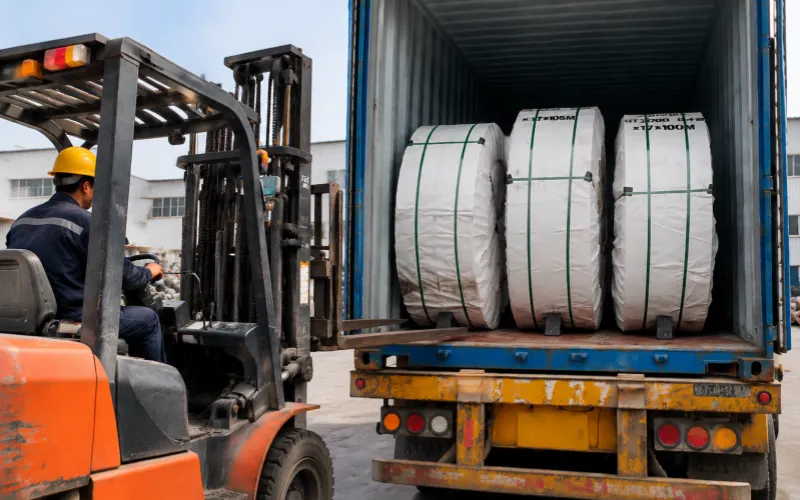
Steel cord belt production requires equipment for cord preparation and belt assembly. Vulcanizing press dimensions govern the maximum belt width and the length cured in each cycle. These requirements link supply expansion to the types of belts attracting new orders.
Where expansion requires new equipment or product qualification, additional supply follows the necessary installation, commissioning, and approval work.
10. Continued Demand Through 2031
The analysis supports a positive outlook for the heavy-duty rubber conveyor belt market during 2027–2031. Existing industrial facilities create recurring demand, and new conveying systems add orders as funded projects enter equipment procurement.
The pace of growth will depend on project execution, production activity, and investment conditions in each market. Changes in rubber costs and demand for different belt constructions will also influence the value and timing of orders.
Operating performance will remain central to the value of belt supply. Durability, energy efficiency, and documented service results give substance to product claims. These factors will help shape which suppliers turn the market’s demand potential into lasting customer relationships.
11. Conveyor Belt Market FAQs
11.1 When Can a Surge in Belt Orders Overstate Long-Term Demand?
When conveyor lines enter service together under similar conditions, their belts may reach replacement at similar times. The resulting order peak can reflect concentrated replacement needs. For multiyear planning, examine commissioning dates and replacement histories. A concentrated cycle may justify temporary capacity reservations. Higher recurring purchase commitments require evidence that annual requirements will remain elevated after that cycle passes.
11.2 How Much Supply Resilience Does a Second Qualified Belt Supplier Provide?
The benefit depends on production independence and readiness to deliver an approved alternative. Two vendors may share a manufacturing plant or critical reinforcement sources, leaving their delivery risks linked. Assess whether the second supplier can deliver an approved replacement within the required recovery window. This requires checking available capacity, upstream dependencies, and the splice procedure qualified for that application.
11.3 How Should Buyers Value Longer Belt Life When Future Duty Is Uncertain?
Evaluate the premium over the period when the conveyor is expected to retain a compatible duty. Closure, route changes, or different materials can shorten that period. The improvement must also address the failure mechanism governing replacement. Extra abrasion resistance offers limited benefit where ripping or splice failure ends service first. Compare the premium with usable service gained and changeouts avoided under plausible operating scenarios.
11.4 How Can Supplier Consolidation Affect Previously Approved Belt Products?
An acquisition can lead to plant transfers, reinforcement substitutions, or changes to the splice system. Buyers should establish whether the original qualification evidence still represents the supplied belt. Continuity depends on traceable product revisions and an agreed process for reviewing material changes. That review should identify which existing evidence remains applicable and where additional testing is needed to support continued acceptance.
11.5 How Should Long-Term Belt Agreements Balance Flexible Volumes and Reserved Capacity?
Link forecast quantities, firm order releases, and reserved production windows to the required belt constructions. Define when capacity is allocated, what volume the buyer commits, and how quantities or delivery dates can change. Near-term deliveries can be fixed while later quantities vary within agreed limits. Compare unused reservation costs with the consequences of unavailable capacity, including a missed shutdown replacement window.