1. What We Test to Verify Conveyor Belt Quality
Conveyor belt testing should verify load-bearing strength, cover rubber properties, bonding integrity, and actual construction. The required tests depend on the belt carcass, product grade, application, and purchase specification.
Before comparing results, confirm the specimen location and dimensions, pre-test storage time, laboratory temperature and humidity, machine speed, applied load, calculation method, and acceptance value. These details may vary between test methods, so the following sections explain the physical procedure without assigning one universal numerical setting.
1.1 Belt Strength and Elongation
1.1.1 Full-Thickness Tensile Strength
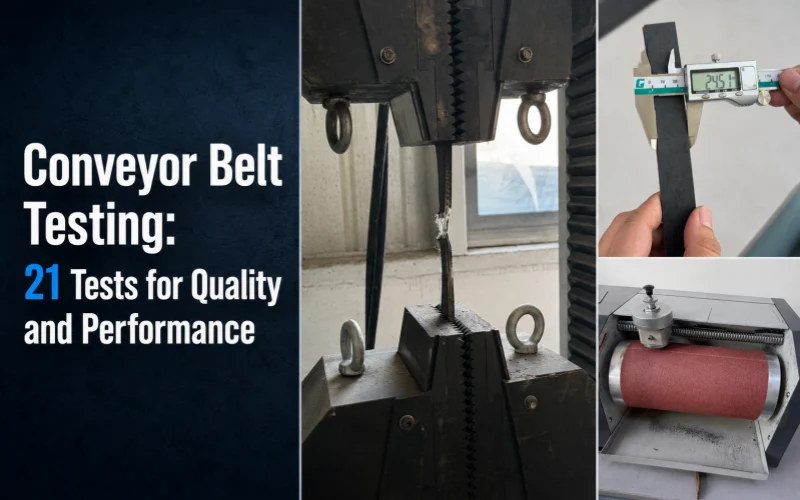
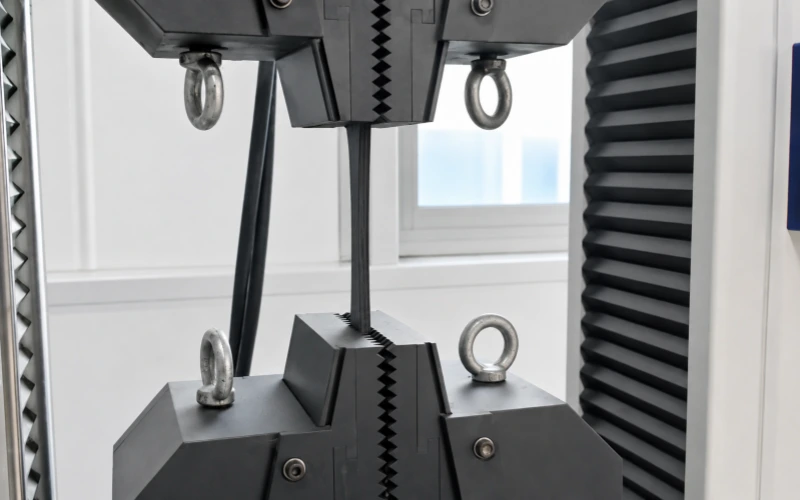
For a fabric conveyor belt, a longitudinal specimen is cut through the complete belt thickness. The laboratory measures its original width, marks the gauge length, and clamps both ends in the tensile machine. The specimen must remain aligned with the pulling direction so it does not twist or slip from the grips.
The machine pulls the specimen at the speed required by the selected method until it reaches maximum force or ruptures. The maximum force is recorded and converted into full-thickness tensile strength using the required calculation, commonly based on force per unit specimen width.
This test verifies whether the complete fabric carcass reaches the ordered strength grade. Acceptable cover thickness, hardness, and abrasion resistance cannot compensate for insufficient carcass strength.
1.1.2 Elongation at Break
Elongation at break is obtained during the same tensile test. Marks or an extensometer track the change in gauge length as the pulling force increases. The laboratory records the extension when the specimen reaches the breaking point defined by the selected method.
The result describes the final deformation capacity of the complete fabric belt specimen. A smaller value does not automatically indicate better quality. It must be assessed against the carcass material, ply construction, belt strength, and purchased specification.
1.1.3 Elongation at Reference Load
During the tensile test, the laboratory also records the gauge-length increase when the force reaches the defined reference load. That load should be calculated or selected according to the method stated in your purchase requirement.
This result shows how the carcass elongates before reaching its breaking condition. It can support evaluations of tension behavior, take-up demand, and belt stability. However, it cannot directly predict the exact elongation of an installed belt because operating tension, splice behavior, running time, and take-up arrangement also affect field elongation.
Full-thickness tensile strength evaluates the fabric carcass and complete belt specimen. Cover-rubber tensile strength evaluates the rubber compound. They verify different parts of the conveyor belt.
1.2 Cover Rubber Physical Properties
The cover directly contacts the conveyed material, absorbs deformation, and protects the carcass. Conveyor belt testing must therefore evaluate the rubber compound separately from the strength of the complete belt.
1.2.1 Rubber Tensile Strength
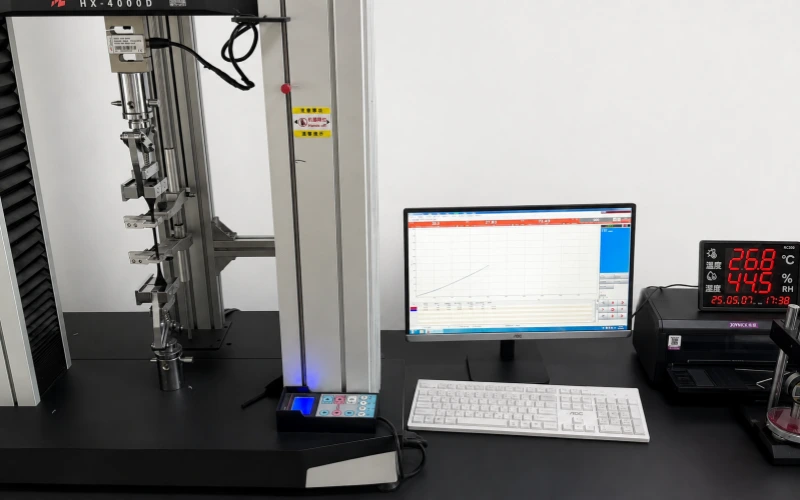
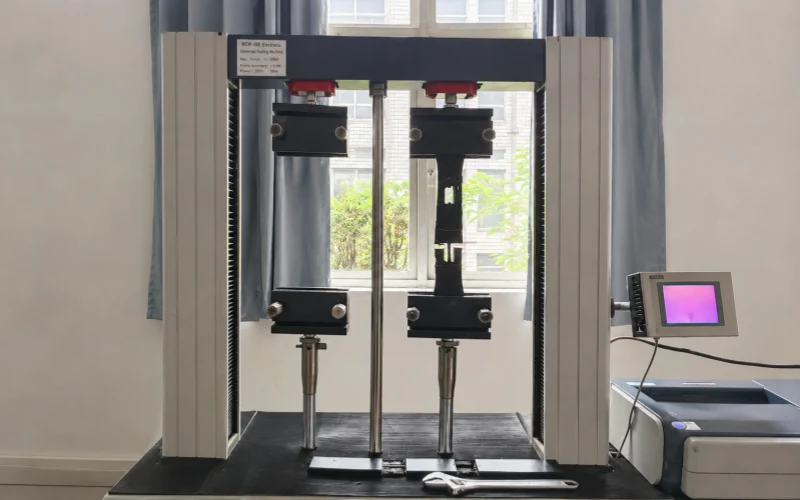
A dumbbell-shaped or strip-shaped specimen is cut from the cover rubber or a corresponding compound test sheet. Its working width and thickness are measured before both ends are clamped in a tensile machine.
The machine pulls the specimen at a fixed speed until it ruptures. The maximum force and original cross-sectional area are used to calculate rubber tensile strength.
This result evaluates the compound’s ability to resist tensile damage. An insufficient value may increase cracking, cutting damage, crack propagation, and premature deterioration of the cover.
1.2.2 Rubber Elongation at Break
Rubber elongation at break is normally recorded during the same test used for rubber tensile strength. The laboratory measures the original gauge length and its increase when the rubber specimen ruptures, then expresses the change as a percentage.
Higher elongation does not automatically mean the compound will last longer. The result must be balanced with tensile strength, hardness, abrasion resistance, aging performance, and the actual material being conveyed.
1.2.3 Rubber Hardness
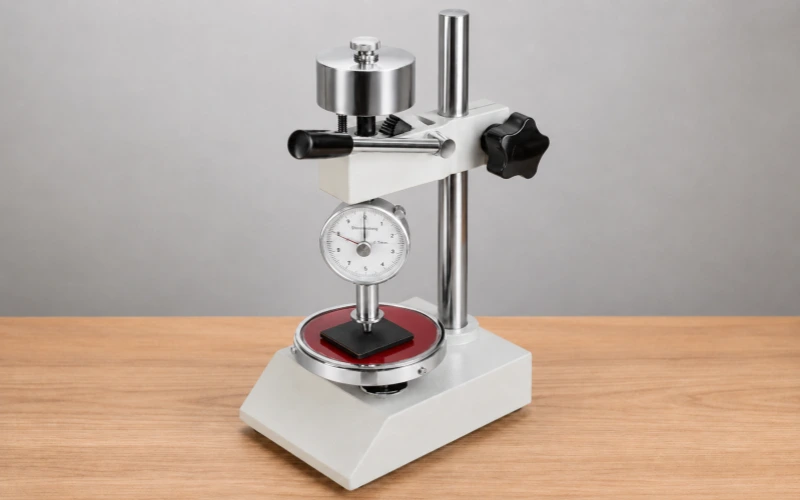
For hardness testing, the rubber specimen is placed on a flat, rigid support. It must have sufficient thickness to prevent the support surface from affecting the reading.
The selected indenter is pressed vertically against the rubber. The reading is taken after the required contact time. Several measurements should be taken at separate positions, away from the specimen edge and previous indentation points. The report should state the hardness scale used.
Hardness influences indentation, flexibility, deformation, cutting response, and impact behavior. A harder compound may resist indentation more strongly, but excessive hardness can reduce flexibility. The required value should match the intended compound and application.
1.2.4 Rubber Density
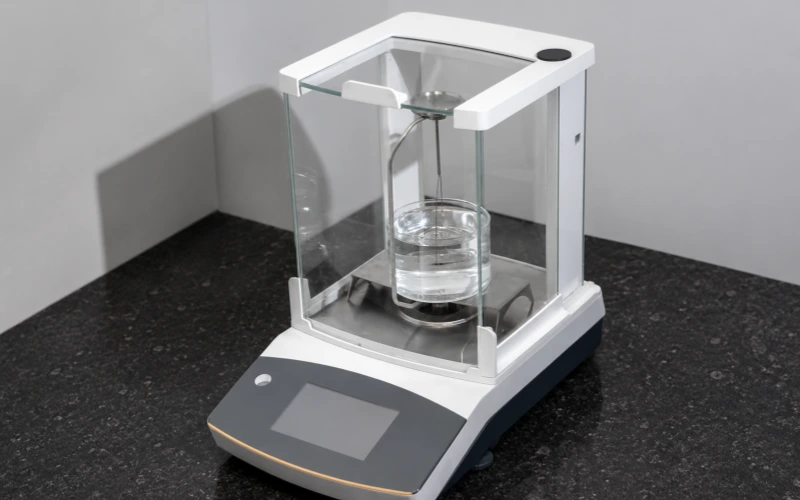
One common density-testing method weighs a clean rubber specimen in air and then weighs it while immersed in a liquid of known density. The density is calculated from the difference between the two measurements.
The liquid temperature should remain stable, and air bubbles must be removed from the specimen surface because both factors can change the result.
Density is mainly useful for checking whether repeated batches remain consistent with an approved compound. An unexpected change may indicate differences in filler proportion, mixing, formulation, or raw materials. A higher density alone does not prove better rubber quality.
Rubber tensile strength, elongation, hardness, density, and abrasion resistance should be reviewed together. One favorable value may hide an unsuitable balance across the complete compound.
1.3 Abrasion Resistance
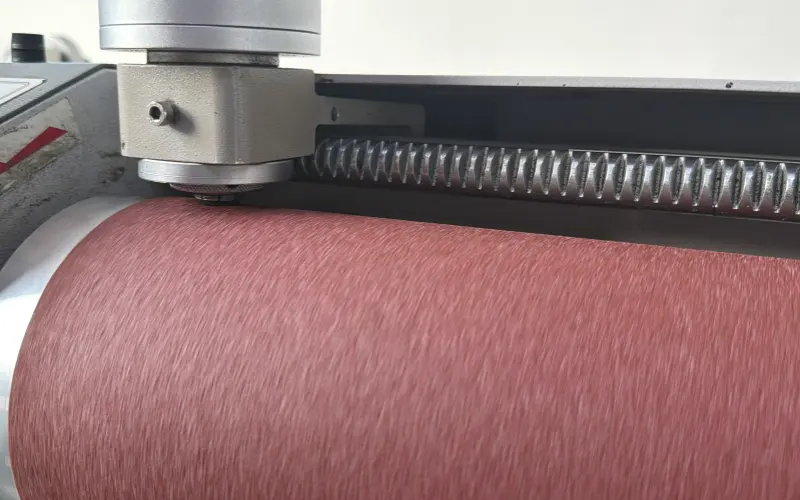
Before abrasion testing, the laboratory measures the specimen dimensions, mass, and density required by the selected calculation. The specimen is then pressed against the designated abrasive surface with a fixed force and moved through the required distance or number of cycles.
After testing, loose debris is removed and the specimen is measured or weighed again. The material loss may be reported as mass loss, volume loss, relative wear, or an abrasion resistance index.
The report should identify:
- Abrasion equipment and abrasive surface
- Force applied to the specimen
- Travel distance or cycle count
- Whether the specimen rotates
- Calculation and result format
Results produced by different abrasion procedures should not be compared directly. Laboratory abrasion testing is especially relevant for ore, stone, aggregate, sand, clinker, coal, and other abrasive bulk materials.
The result helps verify the selected cover compound, but it cannot independently predict conveyor belt service life. Particle shape, lump size, loading height, impact, belt speed, chute design, cleaner pressure, and material moisture also influence actual wear.
1.4 Fabric Belt Adhesion
Fabric conveyor belts combine multiple textile and rubber layers. Adhesion testing determines whether these layers can resist separation after vulcanization.
1.4.1 Ply-to-Ply Adhesion
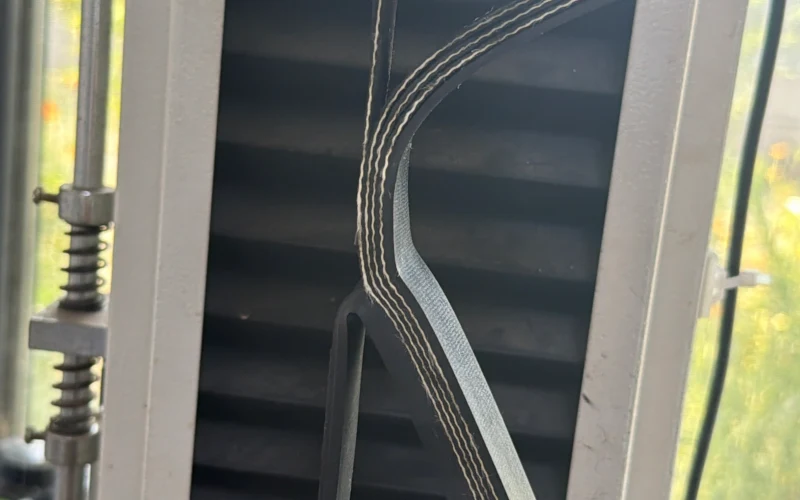
A longitudinal strip is cut from the belt, and two adjacent fabric plies are manually separated at one end to create clamping sections. One ply is secured in each tensile-machine grip.
The grips move apart at a fixed speed while the machine records the force required to continue peeling the plies over the required distance. Depending on the selected method, the report may contain average adhesion, minimum adhesion, or both.
Insufficient ply-to-ply adhesion increases the risk of internal delamination, local ply separation, and progressive structural damage.
1.4.2 Cover-to-Carcass Adhesion
The preparation is similar, but the rubber cover is separated from the first fabric layer. The cover and carcass are clamped separately and peeled apart while the machine records the force throughout the required peel length.
This result verifies whether the cover rubber remains securely bonded to the textile carcass. A low value may increase cover peeling, cover separation, and premature carcass exposure.
Tensile testing verifies the strength of the reinforcement or rubber. Adhesion testing verifies whether separate structural components remain bonded. Both properties are required to evaluate a fabric conveyor belt.
1.5 Steel Cord Strength and Bonding
Steel cord conveyor belt testing must separately evaluate the tensile capacity of the steel cords and their bond with the surrounding rubber. Cord diameter and spacing only confirm physical construction.
1.5.1 Steel Cord Breaking Strength
In a commonly used belt-specimen method, a longitudinal sample containing several cords is cut from the conveyor belt. The surrounding cords are cut or relieved in the test section so the selected central cord carries the tensile load.
Both ends of the specimen are clamped, and the machine pulls at the required speed until the test cord breaks. The laboratory records the breaking force from each valid specimen. The average force, cord quantity, and nominal belt width may then be used to calculate longitudinal belt strength when required by the selected method.
This test answers whether the steel reinforcement itself reaches the ordered strength. Correct cord diameter, pitch, and arrangement cannot prove breaking strength without a tensile result.
1.5.2 Steel Cord Pull-Out Strength
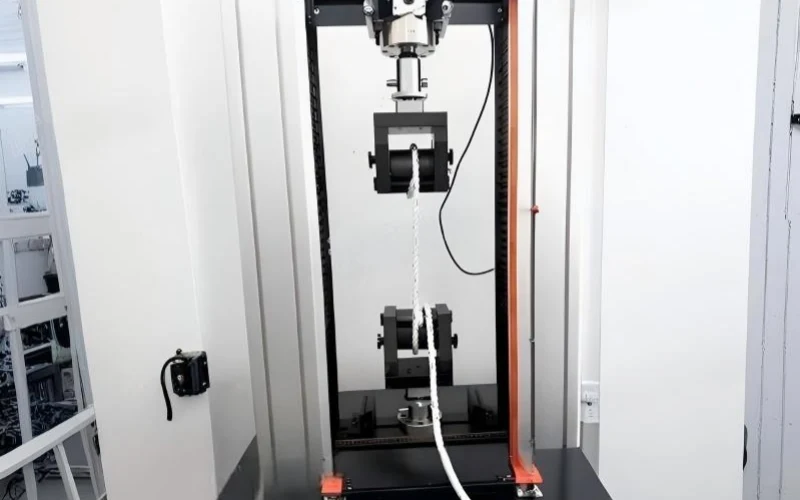
For the pull-out test, a belt specimen is prepared with a defined length of steel cord still embedded in the surrounding rubber. The free end of the cord is exposed so it can be gripped separately from the rubber section.
The machine pulls the cord from the rubb er at the required speed and records the highest force reached during extraction. Some methods report the pull-out force directly, while others calculate bond strength using the embedded cord length.
The test may use an original specimen or a specimen subjected to a defined heating process when the purchase specification requires both conditions. This result evaluates cord-rubber bonding and internal load transfer.
A cord may achieve sufficient breaking strength while having weak adhesion to the rubber. Strong adhesion also cannot compensate for a cord that fails to reach the specified breaking force. The two tests answer separate quality questions.
1.6 Belt Dimensions and Construction
Dimensions and construction checks confirm whether the delivered conveyor belt physically matches the ordered design. These inspections should be completed separately from mechanical and rubber-property testing.
1.6.1 Fabric Conveyor Belt
Belt width is measured across the belt at several longitudinal positions. Total thickness is checked at multiple points across the width while avoiding visibly damaged or distorted areas.
Top and bottom cover thickness can be checked from a prepared cross-section or belt-end sample. The same section can be used to count fabric plies and examine the carcass arrangement. Fabric type should also be verified against the production specification and material records.
An incorrect cover thickness changes the available wear reserve. An incorrect ply count or fabric type changes the strength and elongation characteristics of the delivered belt.
1.6.2 Steel Cord Conveyor Belt
Width and total thickness are measured at several positions. Cover thickness can be checked from a prepared section using the measurement method required for the order.
A cross-sectional sample allows the laboratory to examine cord diameter, cord spacing, cord quantity, alignment, and top and bottom cover thickness. Where the project requires a non-destructive check, the inspection method and detectable defects should be defined before production.
Correct dimensions cannot prove cord breaking strength or cord-rubber bonding. They confirm that the physical construction matches the ordered specification.
1.7 Impact Resistance
For impact testing, the belt specimen is placed on the support arrangement defined in the test plan. A known mass with a defined striker shape is dropped from a fixed height, or an impact machine applies a known amount of energy.
The report should record:
- Impact mass and striker shape
- Drop height or applied energy
- Specimen support arrangement
- Impact location
- Number of impacts
- Damage evaluation method
After impact, the specimen is examined for cover cuts, indentation, penetration, fabric damage, steel cord damage, and permanent deformation. If several specimens are compared, all of the listed settings must remain the same.
Impact resistance testing is more relevant for large lumps, high loading drops, crusher discharge points, mining operations, and quarry conveyors. It is different from abrasion testing: abrasion measures gradual material loss, while impact testing evaluates damage caused by a short, high-energy load.
If impact performance is important, provide the expected lump size, maximum lump mass, loading height, and loading-zone arrangement. These details allow the test setup to reflect the damage risk in your conveyor.
Together, these tests verify belt strength, rubber properties, adhesion, construction, and resistance to physical damage. Conveyor belt testing becomes useful when the procedure, recorded result, and acceptance value match the specification agreed for your order.
2. Special Performance Tests for Conveyor Belts
A belt may meet the required strength, adhesion, hardness, and dimensions, yet still fail early in a demanding application. Hot clinker, oil-contaminated material, winter startup, and chemical slurry damage rubber through different mechanisms. Special conveyor belt testing addresses these application-specific risks.
Each special grade requires a corresponding test. Heat resistance is evaluated through thermal aging, while cold resistance focuses more on flexibility and cracking. Oil and chemical tests examine how the rubber changes after contact with a defined medium. The selected procedure determines the specimen, exposure settings, measured properties, and result calculation.
2.1 Heat Resistance Testing
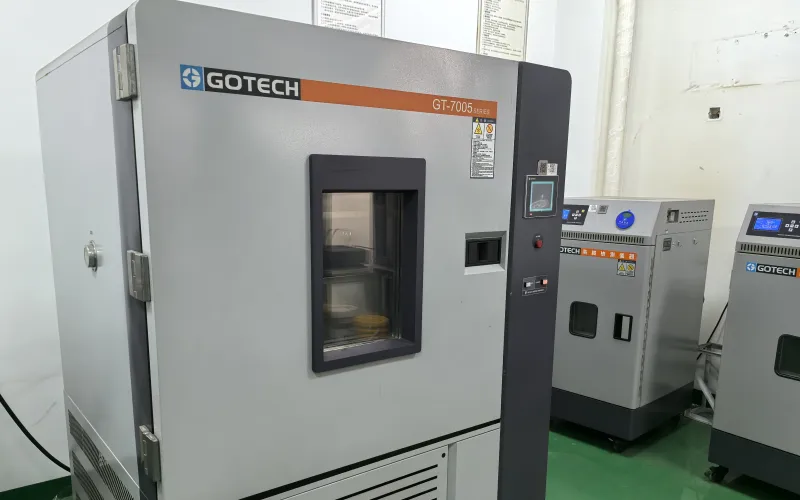
Heat resistance is usually evaluated by comparing rubber properties before and after thermal aging. Tensile strength, elongation, and hardness are measured from the original cover rubber. Another group of specimens is heated for the temperature and duration required by the selected procedure.
After heating, the specimens are removed and allowed to cool for the stated recovery period. The same physical properties are then measured again. Results may be expressed as retained tensile strength, retained elongation, or hardness change. Some purchase specifications also require checks for adhesion loss, cracking, hardening, blistering, or separation.
An oven test provides a repeatable way to compare the aging resistance of different compounds. It does not reproduce every temperature change occurring on an operating conveyor.
For a relevant test arrangement, provide the normal and peak material temperatures, contact time, loading frequency, particle size, and available cooling time. The conveyed material temperature should not be used directly as the oven temperature. Belt speed, material depth, loading interval, and return-side cooling all affect the actual temperature reached by the belt.
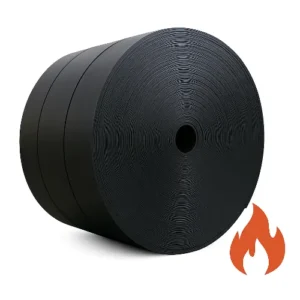
2.2 Flame Resistance Testing
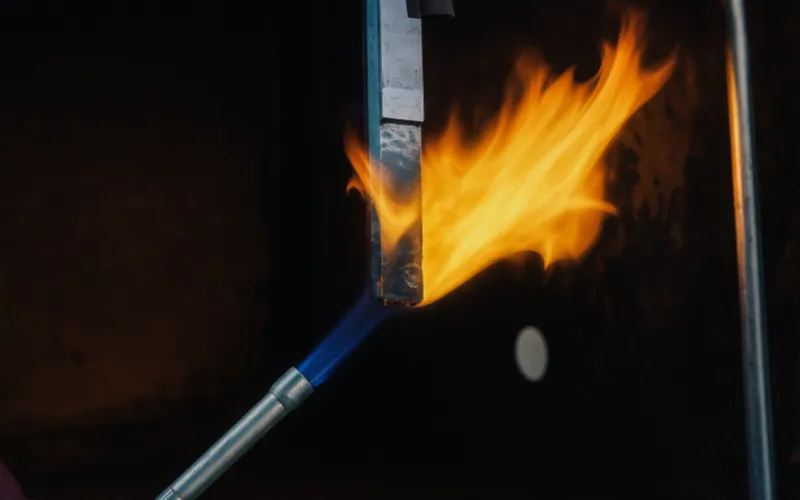
Flame tests examine how a belt specimen behaves during ignition and after the flame is removed. Specimens are prepared in the required direction, with their covers retained or removed according to the selected procedure.
After the ignition source is removed, the laboratory records the after-flame and afterglow times. Some procedures also include airflow or re-ignition checks. The report may show the result for each specimen, the total time, and the highest individual value.
The specimen construction must be stated in the report. A result obtained from a stripped specimen cannot be treated as the result for a complete belt specimen. Conveyor fire safety also depends on material buildup, seized rollers, frictional heat, electrical faults, and ventilation.
2.3 Electrical Resistance Testing
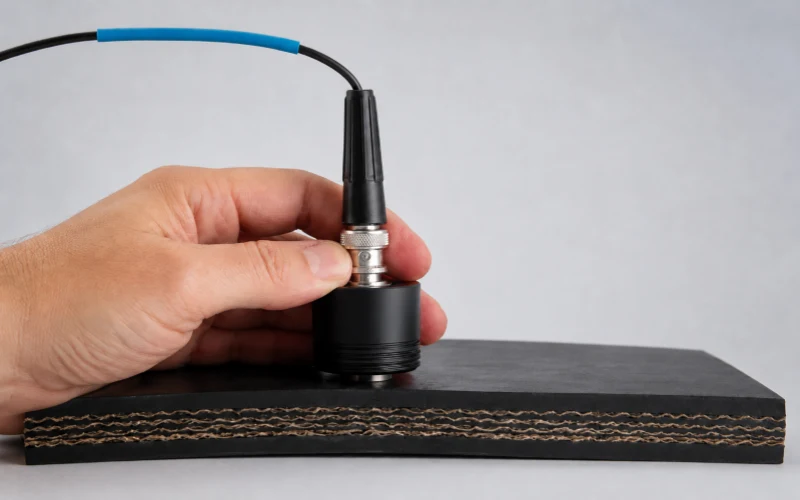
Electrical resistance testing begins with a clean specimen that has been stored for the required time at the specified temperature and humidity. Moisture, dust, oil, and surface contamination can noticeably change the measured resistance.
Electrodes are placed on the belt surface using the required spacing, contact pressure, and contact material. The laboratory applies the specified voltage and records the reading after the required time. Several measurements may be taken at different positions to identify uneven results.
When the carrying and pulley covers use different compounds, each surface may need a separate test. Electrical resistance and flame resistance must also be reported separately. A flame test result does not confirm antistatic performance.
2.4 Oil Resistance Testing
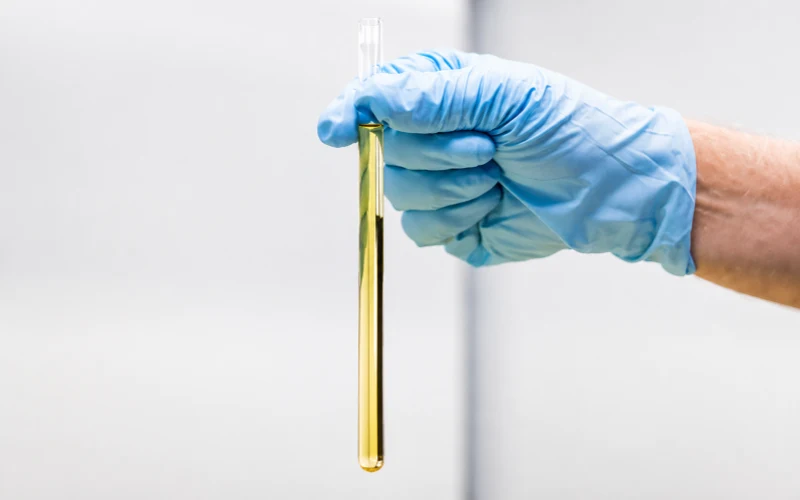
Before conducting the oil immersion test, the laboratory records the specimen’s mass, dimensions, and other required physical properties, such as tensile strength, elongation, hardness, and volume change rate. The specimen is then immersed in a specified oil and held at a specified temperature for a specified time.
After immersion, excess oil is removed using a pre-defined procedure. The specimen may require a recovery period before measurement can be performed again. The report may include mass, volume, hardness, tensile strength, elongation, surface condition, and degree of deformation.
The type of oil, temperature, and time must be clearly specified. For example, Chinese standard GB/T 1690 classifies oils into ASTM No. 1, IRM 902, and IRM 903.
2.5 Cold Resistance Testing
Cold resistance cannot be represented by one general measurement. The suitable test depends on what the belt must do at low temperature.
- Brittleness or impact testingexamines whether the rubber cracks under sudden deformation or impact.
- Cold bending or flexingchecks whether the belt remains flexible enough to pass around pulleys.
- Low-temperature tensile testingmeasures how strength and elongation change while the rubber is cold.
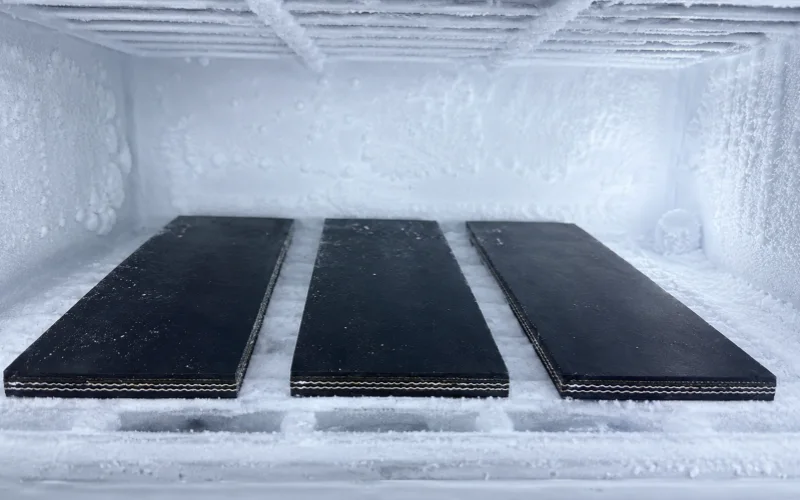
Rubber or full-thickness belt specimens are cooled until the required temperature has reached the complete test section. The next operation should be performed while the specimen remains cold. A sample that warms during transfer may produce a result that does not represent the selected temperature.
Depending on the procedure, the report should identify the conditioning temperature and time, specimen thickness, mandrel diameter, bending angle, impact energy, or tensile speed. These details explain what type of low-temperature behavior was evaluated.
For belt selection, provide the lowest operating temperature, the expected temperature after a long shutdown, the smallest pulley diameter, and whether the conveyor starts under load. A stationary belt and a loaded belt bending around a drive pulley experience different stresses during a cold startup.
2.6 Chemical Resistance Testing
A chemical resistance test has practical value only when the exposure medium is clearly defined. “Acid resistant,” “alkali resistant,” or “chemical resistant” alone does not describe the substance attacking the belt.
The laboratory first records the specimen’s mass, volume, hardness, tensile properties, or other agreed baseline values. The specimen is then exposed to the identified chemical at the required concentration, temperature, and duration. After exposure, it is rinsed or wiped according to the procedure, dried or allowed to recover, and measured again.
The final evaluation may include:
- Mass or volume change
- Tensile strength and elongation retention
- Hardness change
- Swelling, blistering, cracking, or surface softening
- Tackiness, discoloration, or visible separation
You should provide the chemical name, concentration, operating temperature, contact duration, and exposure frequency. It also helps to identify whether the material is a liquid, wet solid, or slurry. Mixed chemicals and process cleaning agents should be included when they regularly contact the belt.
Chemical exposure testing evaluates deterioration caused by the selected medium. When a slurry also contains sharp or abrasive solids, separate abrasion or mechanical tests are still required.
Special tests should correspond to the performance stated in the purchase specification. The test report should identify the specimen, exposure conditions, measured property, calculation method, and agreed acceptance value.