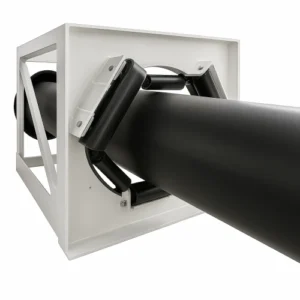
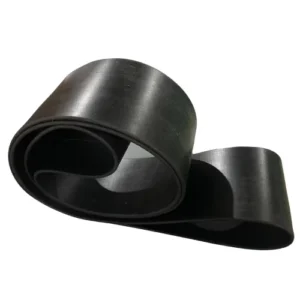
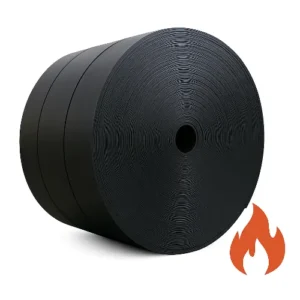
- Zhejiang Double Arrow (China)
- Qingdao Rubber Six (China)
- Tiantie Industrial (China)
- Yokohama Rubber (Japan)
- Bando Chemical (Japan)
- Oriental Rubber (India)
- Qingdao Global Belting
- Kale Conveyor (Turkey)
- WCCO Belting (United States)
- Fenner Dunlop Americas (United States / Americas)
1.How This Top 10 List Helps You Screen Manufacturers
If you are screening Rubber conveyor belt manufacturers, the first step is not to look at brand names, but to clearly define what “manufacturer” means.
In this article, Rubber conveyor belt manufacturers specifically refer to companies with full production control over rubber conveyor belts — including rubber compounding, calendaring, forming, and vulcanization — rather than simply a Rubber Conveyor belt supplier, a platform-based trading company, or a factory that only handles one or two production steps.
The reality is that many companies in the market describe themselves as “factories,” yet they do not control core formulations or key production processes. For procurement managers in mining, cement plants, power plants, or EPC project procurement, this translates into risks that are difficult to quantify and responsibilities that are hard to trace.
This article serves three purposes:
- Provide a structured Top 10 Factory-Level Rubber Conveyor Belt Manufacturers reference list based on manufacturing capability definitions
- Establish a selection logic that links “procurement objectives → manufacturer type”
- Help you quickly create a shortlist through comparative evaluation criteria
This is not an industry ranking, but a procurement decision-making tool built on a clear definition of what constitutes a true manufacturer.
2.Scope of Definition for Rubber Conveyor Belt Manufacturers in This Article
In the previous section, we clarified that this article focuses on Rubber conveyor belt manufacturers with full manufacturing control capabilities.
What this section adds is not “what it is,” but “why it is defined this way.”
In real-world procurement scenarios, many Rubber Conveyor belt suppliers both sell their own brands and distribute products from other manufacturers, sometimes even mixing shipments. This may not pose an issue for short-term orders. However, in long-term supply agreements, quality traceability, or liability allocation scenarios, such a structure amplifies uncertainty.
Therefore, the selection logic of this list is based on one core criterion:
Whether the company can complete key production processes within the same manufacturing system and assume full quality responsibility.
This means:
- Companies that own a brand but do not control production are outside the scope of this article.
- Companies that only handle channel distribution or platform-based sales are outside the scope of this article.
- Companies that both manufacture and outsource products are included only with respect to their manufacturing operations.
Exclusion from this list does not imply unreliability; it simply means the company’s business structure differs from the “manufacturer definition” applied in this article.
3.Top 10 Rubber Conveyor Belt Manufacturers in the World
#1Tiantie Industrial (China)
Company Overview
Country: China
Background: One of Export-oriented Rubber Conveyor belt Factories
Primary Markets: Mining, cement, power generation, and international distribution networks
Tiantie Industrial is a typical integrated Rubber conveyor belt manufacturer, with a complete manufacturing system covering compounding, calendaring, multi-ply lamination, and vulcanization. A significant portion of its output is exported.
Procurement Strengths
- Flexible response to multi-specification customized orders
- Suitable for mid-sized projects and long-term distributor cooperation
- Production capability for both steel cord belts and fabric-reinforced belts
- Extensive experience in international markets
Procurement Considerations
- Pricing fluctuations are closely linked to raw material changes
- Production scheduling for large-scale engineering orders requires advance coordination
- Documentation support capability should be confirmed based on project grade
Structural Characteristics and Limitations
- Relatively flat organizational structure with efficient communication
- Strong export orientation and high adaptability to overseas markets
- Brand positioning does not primarily rely on global brand influence
Best-Matched Procurement Types
- Distributor framework cooperation
- Balanced cost and flexibility
- Medium to large-scale projects
#2 Qingdao Rubber Six (China)
Company Overview
Country: China
Background: Long-established engineering-oriented manufacturing enterprise
Primary Markets: State-owned or large-scale projects in power generation, metallurgy, and coal sectors
Qingdao Rubber Six is a typical engineering-driven Rubber conveyor belt manufacturer, with strong manufacturing and documentation system capabilities in heavy-duty conveyor belts and engineering support projects.
Procurement Strengths
- Extensive experience in engineering-based projects
- Mature documentation and standards system suitable for tender participation
- High-tension belt production capability
- Well-structured internal quality control procedures
Procurement Considerations
- Business processes are relatively formalized
- Limited rapid-response flexibility for small-batch orders
- Project-based orders are prioritized over regular distribution orders
Structural Characteristics and Limitations
- Conservative decision-making structure with complete internal approval processes
- Strong emphasis on compliance and engineering alignment
- Non-standard structure adjustments require thorough technical communication
Best-Matched Procurement Types
- Tender-based procurement
- Brand endorsement priority
- State-owned or large-scale project environments
#3 Zhejiang Double Arrow (China)
Company Overview
Country: China
Background: Focused on industrial-grade Rubber Conveyor belt manufacturing for over 30 years
Primary Markets: Heavy-duty conveying sectors such as mining, ports, power generation, and cement
As one of China’s large-scale export-oriented Rubber conveyor belt manufacturers, Zhejiang Double Arrow is recognized for heavy-duty and long-distance conveyor belts. Its production system covers key processes including compounding, calendaring, forming, and vulcanization.
Procurement Strengths
- Stable mass production capability for steel cord belts
- Suitable for large-scale mining and port projects
- Well-established documentation system supporting ISO / DIN and other international standards
- Sustainable high-volume supply capacity
Procurement Considerations
- Relatively limited flexibility for small-batch, multi-specification orders
- Project-based orders are prioritized in scheduling; delivery timelines should be secured in advance
- Technical parameter confirmation procedures are relatively standardized
Structural Characteristics and Limitations
- Mature organizational structure with clearly defined processes
- More aligned with engineering-oriented order management
- Highly standardized pricing structure with relatively limited room for negotiation
Best-Matched Procurement Types
- Large-scale project procurement
- Long-term framework agreements
- Heavy-duty or steel cord belt priority
#4 Yokohama Rubber (Japan)
Company Overview
Country: Japan
Background: Global rubber manufacturing group; conveyor belts represent one segment of its industrial products division
Primary Markets: Mining, ports, heavy industrial projects
Yokohama is among the globally structured Rubber conveyor belt manufacturers with an international manufacturing footprint. Its core rubber formulation systems are led by Japan, while certain mature formulations are produced in the group’s overseas facilities under centralized corporate control.
Procurement Strengths
- Strong material R&D capability
- Extensive experience in high-tension and engineering-grade belts
- Mature international standards and documentation systems
- Suitable for long-term supply to large-scale mining operations
Procurement Considerations
- Relatively high cost structure
- Lead times may be influenced by global capacity coordination
- Limited flexibility for small-scale trial orders
Structural Characteristics and Limitations
- Group-based management structure with standardized processes
- Strong brand influence, but stable pricing structure
- Comprehensive decision-making and technical validation procedures
Best-Matched Procurement Types
- Brand endorsement priority
- Risk control priority
- Long-term cooperation for large-scale mining projects
#5 Bando Chemical (Japan)
Company Overview
Country: Japan
Background: Materials engineering-oriented rubber manufacturer
Primary Markets: Industrial equipment and light-to-medium conveying applications
Bando is a materials-engineering-driven Rubber conveyor belt manufacturer. Core rubber compounding is controlled in Japan, while overseas production is completed within the group’s manufacturing system.
Procurement Strengths
- Strong rubber formulation R&D capability
- Suitable for applications with high material performance requirements
- Consistent quality stability
Procurement Considerations
- Higher price range
- Production scale is relatively smaller compared to heavy-duty-focused manufacturers
- Heavy-duty steel cord belts are not its primary focus
Structural Characteristics and Limitations
- Emphasis on materials engineering and quality control
- Market positioning leans toward industrial equipment support
- Limited support capability for large-scale engineering projects
Best-Matched Procurement Types
- Material performance priority
- Small-to-medium industrial applications
- Brand trust priority

#6 Oriental Rubber (India)
Company Overview
Country: India
Background: Indian exporter specializing in heavy-duty conveyor belts
Primary Markets: Mining, cement, international engineering projects
Oriental Rubber is an integrated export-oriented Rubber conveyor belt manufacturer, with a complete production system from compounding to vulcanization. It holds a representative position in India’s heavy-duty belt export sector.
Procurement Strengths
- Strong experience in steel cord and heavy-duty belts
- Competitive cost structure
- Suitable for international engineering project support
Procurement Considerations
- Production scheduling fluctuations during peak seasons should be confirmed in advance
- Documentation system should be evaluated according to project requirements
- Communication pace may be influenced by time zones and project scale
Structural Characteristics and Limitations
- Strong export orientation
- Engineering-driven organizational structure
- Support for small-batch, multi-specification orders requires case-by-case confirmation
Best-Matched Procurement Types
- Balanced cost and heavy-duty requirements
- International engineering support
- Medium-to-large mining projects
#7 Qingdao Global Belting (China)
Company Overview
Country: China
Background: Export-oriented industrial conveyor belt manufacturer
Primary Markets: Mining, cement, aggregate, and international distribution markets
Qingdao Global Belting operates as an integrated Rubber conveyor belt manufacturer, focusing on export markets and industrial bulk material handling. Its production structure includes rubber compounding, belt building, and vulcanization within its own manufacturing facilities.
Procurement Strengths
- Experience in export-oriented order structures
- Production capability for both fabric and steel cord belts
- Suitable for distributor cooperation and mid-scale project supply
- Adaptability to multiple regional standards
Procurement Considerations
- Large engineering orders require advance production planning
- Documentation depth should be aligned with project compliance requirements
- Lead time stability depends on order complexity and specification diversity
Structural Characteristics and Limitations
- Export-driven organizational structure
- Balanced focus between project supply and distributor cooperation
- Brand positioning emphasizes manufacturing capability rather than global brand marketing
Best-Matched Procurement Types
- Distributor cooperation
- Medium-to-large industrial projects
- Cost-performance focused procurement
#8 Kale Conveyor (Turkey)
Company Overview
Country: Turkey
Background: Regional manufacturing enterprise
Primary Markets: Europe, the Middle East, and CIS regions
Kale is a regional Rubber conveyor belt manufacturer with production systems concentrated in Turkey.
Procurement Strengths
- Stable regional supply
- Suitable for European and Middle Eastern markets
- Documentation aligned with European standards
Procurement Considerations
- Limited global brand influence
- Production capacity for ultra-heavy-duty belts should be confirmed
- Regional market fluctuations may affect scheduling
Structural Characteristics and Limitations
- Regional capacity structure
- Medium organizational scale
- Better suited for regional market cooperation
Best-Matched Procurement Types
- Europe / Middle East projects
- Regional distributor cooperation
- Medium-scale projects
#9 WCCO Belting (United States)
Company Overview
Country: United States
Background: North American domestic manufacturer
Primary Markets: Agriculture, industrial, and regional conveying applications
WCCO is among the Rubber conveyor belt manufacturers in North America that continue to maintain complete production capabilities.
Procurement Strengths
- Domestic manufacturing control
- High communication efficiency
- Suitable for long-term regional supply
Procurement Considerations
- Heavy-duty mining steel cord belts are not its primary focus
- Higher price levels compared to Asian manufacturers
- Limited global supply capability
Structural Characteristics and Limitations
- Regional manufacturing structure
- Medium production scale
- Better suited for the North American market
Best-Matched Procurement Types
- North American domestic supply
- Supply stability priority
- Medium-sized projects
#10 Fenner Dunlop Americas (United States )
Company Overview
Country: United States (Americas manufacturing system)
Background: Historically established enterprise in the mining conveyor belt sector
Primary Markets: Mining operations in the Americas
Fenner Dunlop Americas is included in this list solely based on its manufacturing operations in the Americas, rather than its global brand structure.
Procurement Strengths
- Extensive experience in mining belt manufacturing
- Engineering project support capability
- Mature documentation and standards systems
Procurement Considerations
- Higher price range
- Regionally concentrated production system
- Limited flexibility for small-batch orders
Structural Characteristics and Limitations
- Mining-oriented manufacturing structure
- Strong brand system with relatively high cost structure
- More aligned with long-term mining cooperation
Best-Matched Procurement Types
- Mining projects in the Americas
- Brand and engineering experience priority
- Long-term supply relationships

4.Comparative Table — Procurement Differences Among the Top 10
The table below is organized based on procurement decision dimensions.
It serves as a directional reference rather than an absolute evaluation.
Manufacturer | Best-Suited Procurement Objective | Lead Time Stability | MOQ Tendency | Documentation Strength | Customization Flexibility | Communication Efficiency |
Zhejiang Double Arrow | Large-scale projects / Long-term cooperation | High | Medium–High | Strong | Medium | Medium |
Qingdao Rubber Six | Tender / Engineering projects | High | Medium | Strong | Medium | Medium |
Tiantie Industrial | Distributor cooperation / Cost balance | Medium | Medium | Medium | High | High |
Yokohama | Brand endorsement / Risk control | High | High | Strong | Medium | Medium |
Bando | Material performance priority | High | Medium | Strong | Medium | Medium |
Oriental Rubber | Balanced cost and heavy-duty focus | Medium | Medium | Medium | Medium | Medium |
Qingdao Global Belting | Distributor & mid-scale projects | Medium | Medium | Medium | Medium–High | Medium |
Kale Conveyor | Regional cooperation | Medium | Medium | Medium | Medium | Medium |
WCCO | North American domestic supply | High | Medium | Medium | Medium | High |
Fenner Dunlop Americas | Mining projects in the Americas | High | High | Strong | Medium | Medium |
Notes:
- “High / Medium / Low” reflect procurement experience tendencies.
- Actual experience may vary depending on project scale and the completeness of communication preparation.
- The table is intended to narrow down selection options rather than serve as a final decision-making basis.
5.How to Select the Most Suitable 1–3 Manufacturers from the Top 10
Scenario 1: You Are Purchasing Rubber Conveyor Belts for the First Time
Do not start by discussing price. First verify whether the company is truly a Rubber conveyor belt manufacturer.
Step 1: Ask the supplier to explain its production system.
Questions to ask:
- Do you have in-house compounding?
- Do you operate your own laboratory for product and Rubber testing?
- What key production processes are completed internally?
If the responses are vague or avoid technical details, the company is likely a Rubber Conveyor belt supplier rather than a manufacturer.
Step 2: Request a product datasheet.
Not a quotation, but a complete technical datasheet.
Check whether they can provide:
- Cover rubber physical properties
- Tensile strength
- Elongation at break
- Abrasion value
- Applicable standards (DIN / RMA, etc.)
A genuine factory will have standardized datasheets. A trading company typically forwards documents from other sources.
Step 3: Provide operating conditions and request that the warranty period be written into the contract.
Clearly specify:
- Conveyed material
- Working temperature
- Conveying distance
- Idler diameter
Then ask: Under these operating conditions, what warranty period can you commit to? Will it be written into the contract?
Only Rubber conveyor belt manufacturers with laboratory capability and material databases can confidently define and assume a specific warranty period.
Trading companies usually cannot confirm this immediately.
Scenario 2: You Are Preparing for a Tender or Require Brand Endorsement
Do not focus on supply records.
Most companies can only provide redacted bills of lading, which offer limited decision-making value.
More effective evaluation criteria include:
- Whether the company maintains a complete standards system (ISO, DIN, RMA, etc.)
- Whether it can provide inspection report templates aligned with your project requirements
- Whether it has stable engineering-grade product structures
Tender evaluation is fundamentally about compliance capability and documentation completeness, not brand visibility.
Scenario 3: You Are a Distributor Requiring Long-Term Multi-Specification Supply
Do not ask about inventory ratios.
Rubber conveyor belts are customized products; most manufacturers do not maintain standard stock.
Instead, ask:
- What is the production lead time for common specifications?
- What is the maximum monthly production capacity?
- Is parallel scheduling of multiple specifications feasible?
- Do you support annual framework agreements to secure capacity allocation?
For distributors, production scheduling predictability matters more than inventory levels.
Scenario 4: You Prioritize Speed of Advancement
Preconditions:
The inquiry structure is not complex, and there are no special high-temperature or specialty belt requirements.
Under such circumstances, if all parameters are complete, a quotation can typically be provided within 24–48 hours.
Parameters must be provided in full at once:
- Belt type (EP / NN / Steel Cord)
- Tension rating
- Cover rubber grade
- Width
- Length
- Working temperature
- Conveyed material
- Trade terms (FOB / CIF, etc.)
If the project is complex or includes numerous specifications, additional time is required for preparing datasheets, pricing sheets, and calculating different trade terms.
Slow progression does not necessarily indicate limited capability; it is often related to parameter completeness and structural complexity.
6.Conclusion: Reduce Manufacturer Selection to Three Core Judgments
- Have you confirmed that the counterparty is a true Rubber conveyor belt manufacturer rather than merely a Rubber Conveyor belt supplier?
- Have you clearly defined the operating conditions and required the supplier to provide a warranty period they are willing to commit to?
- Do you clearly understand whether your core procurement variable is price, lead time, or risk control?
Manufacturer size is not the decisive factor.
Alignment with your procurement structure is the key variable.
7.FAQ — Key Questions When Selecting Rubber Conveyor Belt Manufacturers
Q1: Why does this Top 10 Rubber Conveyor Belt Manufacturers list not include well-known companies such as Continental?
This is a matter of definition scope, not a judgment of capability.
This list focuses on “factory-level manufacturing control” Rubber conveyor belt manufacturers — meaning companies in which key production processes such as rubber compounding, belt carcass construction, and vulcanization are controlled within the same manufacturing system.
Multinational groups such as Continental typically operate with:
- Diversified industrial product divisions
- Global brand systems
- Regional manufacturing combined with distribution networks
- Parallel production and system integration structures
This ranking applies “manufacturing system control capability” as the selection criterion, rather than brand influence or global recognition.
This means:
- Not included ≠ unreliable
- Not included ≠ lacking technical capability
It simply indicates that the company’s business structure does not fully align with the manufacturer definition adopted in this evaluation.
If your procurement priority is global brand endorsement or system integration capability, such multinational groups can still be evaluated independently.
Q2: If specifications appear identical, why can price differences be significant?
Because specification labels typically represent structural form, not material grade.
For example, even if both belts are labeled EP1000:
- The cover rubber formulation grade may differ
- Abrasion values may vary significantly
- Rubber content ratios may differ
- Vulcanization time and control standards may differ
The true cost driver is material formulation and quality control frequency — not simply thickness.
The evaluation method is straightforward:
Request a complete datasheet and compare physical performance data, rather than comparing unit prices alone.
Q3: Do all Rubber Conveyor Belt Manufacturers produce Steel Cord Belts?
No.
Steel Cord Belts and fabric-reinforced belts (EP / NN) differ significantly in production structure.
Steel Cord Belt manufacturing requires:
- High-precision steel cord alignment control
- Large-tonnage, long-stroke vulcanization equipment
- Higher-grade adhesion strength control capability
- Laboratory testing capability for cord-to-rubber bonding strength
Many small-to-medium Rubber conveyor belt manufacturers only produce fabric belts and do not possess the full equipment and laboratory capacity for Steel Cord Belt production.
A direct verification method includes requesting:
- Steel cord belt adhesion strength test standards
- Minimum pulley diameter data
- Maximum production width and tension rating
If specific numerical data cannot be provided, mature steel cord belt production capability is unlikely.
Q4: What key technical parameters must be prepared before procurement?
Without complete technical parameters, a manufacturer can only provide a reference price and cannot assume contractual responsibility.
A complete inquiry should include at minimum:
- Belt type (EP / NN / Steel Cord)
- Tension rating
- Cover rubber grade (DIN X / Y / RMA, etc.)
- Belt width
- Single-belt length or total required length
- Type of conveyed material
- Working temperature
- Maximum lump size
- Idler diameter
For high-temperature or high-abrasion applications, additional clarification is required:
- Whether an impact zone is involved
- Whether sharp directional changes are present
- Whether special fire-resistance requirements apply
The clearer the technical parameters, the more controllable the quotation and warranty commitment.
Q5: How can risk be reduced in a first-time cooperation?
Do not begin with the largest possible specification order.
A more effective approach is:
- Start with a medium-scale order
- Clearly define warranty clauses within the contract
- Require batch-level inspection reports
Risk is not reduced through trust alone, but through structured contractual design.