CFW Conveyor Belt Built to Resist Tearing and Impact
We manufacture CFW conveyor belts with a reinforced crows foot weave carcass for mining, quarrying, and crushing operations — built for sites where sharp-edged material and heavy drop impacts wear out ordinary fabric belts fast.
- 20+ years in rubber conveyor belt manufacturing
- 60 production lines, 800,000+ meters monthly capacity
- Minimal tensile strength loss under continuous heavy-duty use
- Trusted across 80+ countries in high-abuse applications
On-Time Delivery Rate
Customer Satisfaction Rate
Manufacturing Facility
Monthly Production Capacity
CFW Conveyor Belt Applications
CFW conveyor belts are built for operations where impact and tearing — not gradual wear — are what actually take belts out of service. Below are the site conditions where a reinforced crows foot weave carcass makes the difference.
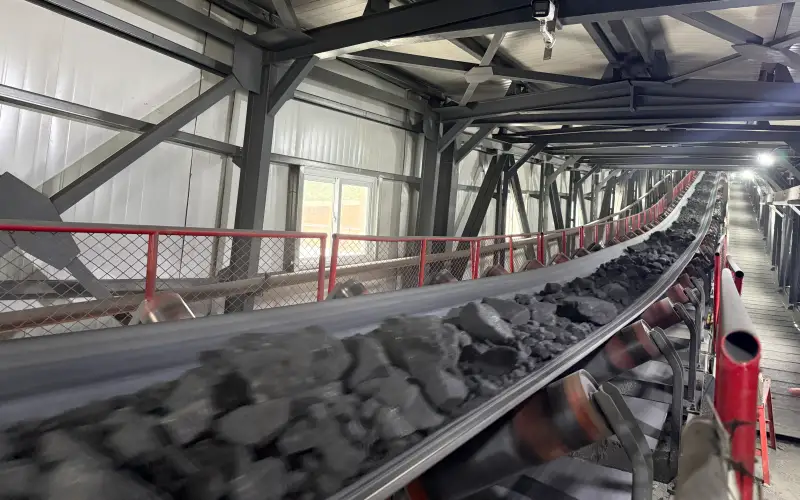
Sharp-Edged Material Cutting
Angular ore, crushed rock, and jagged scrap cut into the belt surface throughout transport, not only at loading points. The reinforced crows foot weave carcass resists cutting and gouging that would open up a standard fabric belt.
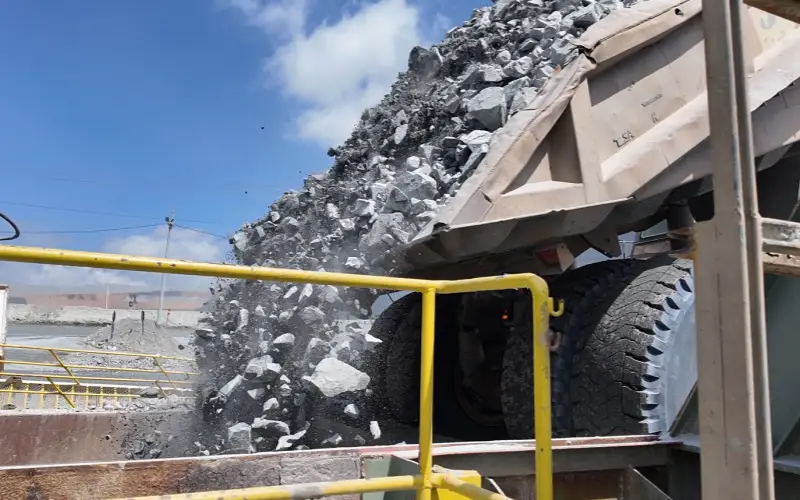
High Drop-Height Impact
Material falling from height onto hoppers, chutes, and transfer stations concentrates heavy impact energy on a small section of belt. The dense weft structure absorbs and spreads that force instead of letting it punch through.
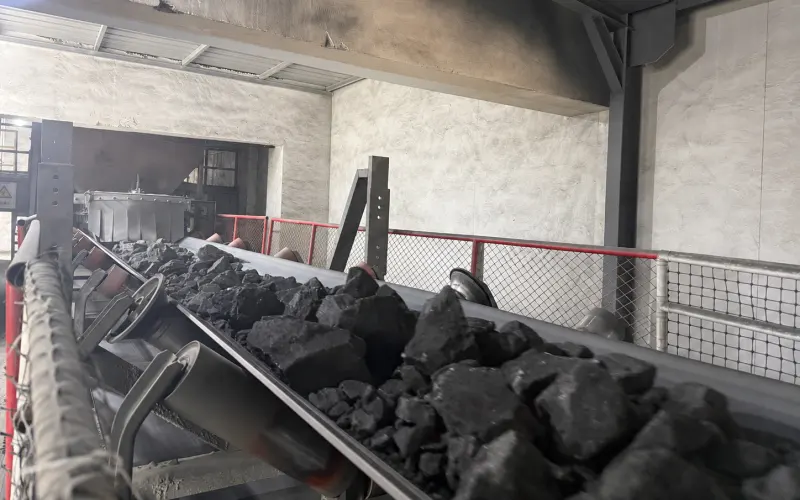
Longitudinal Rip and Tear
A single trapped object or split edge can run a tear down the entire belt length in seconds. CFW's interlocked weave is built to arrest a rip before it propagates, protecting the rest of the belt.
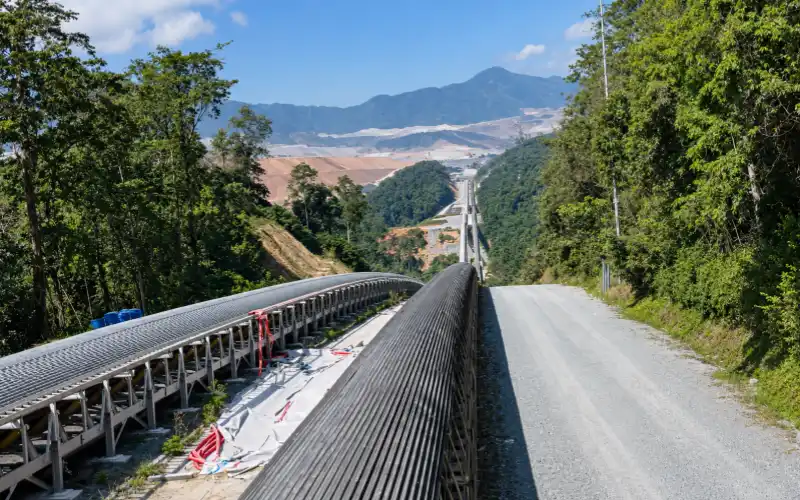
Tension Loss Under Heavy Load
On long, heavily loaded runs, belts stretch and lose tensile strength over time — forcing re-tensioning and early replacement. The polyester warp holds tension with minimal elongation across years of continuous operation.
CFW Conveyor Belt Carcass Structure
The strength of a CFW conveyor belt comes from how its fabric carcass is built — not from adding more plies. This structure explains why CFW belts hold up where standard fabric belts give out.
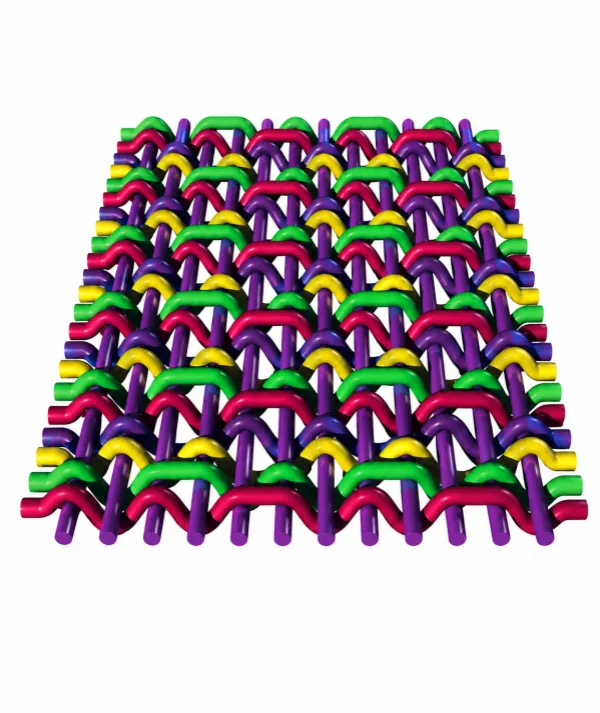
Same Ply Count, Stronger Yarn
From CFW200 to CFW500 the ply count stays fixed. Higher grades come from heavier, thicker yarn — which is why thickness rises from 0.85 mm to 1.55 mm.
Fewer Layers, Fewer Weak Points
Every bond line between plies can delaminate under stress. Building strength into the yarn keeps layer count low, so there are fewer internal interfaces where separation can begin.
Reinforced Weave, Not Just Material
CFW shares the polyester warp and nylon weft family of standard EP — but uses heavier, denser weft, a higher warp count, and a crows foot weave that delivers tear resistance plain EP cannot match.
Reinforced Skim Rubber Bonding
A skim rubber layer locks the carcass together and bonds it to the covers. Strong adhesion keeps fabric layers from separating even after the cover wears down — the real driver of belt service life.
Not Sure Which CFW Grade Fits Your Operation?
From CFW200 to CFW500, the right grade depends on your material, drop height, and belt tension — not just a number on a spec sheet. Tell us your site conditions and we’ll recommend the construction built for your line.
CFW Conveyor Belt Tear and Impact Resistance
In mining and crushing, the cover rubber will eventually get cut or punctured by sharp material — that part is unavoidable. What decides your real cost is what happens next: does the damage stay local, or does it run down the whole belt? This is the exact problem a CFW conveyor belt is engineered to solve.
- Localizes puncture damage
- Spreads heavy impact load
- Supports field repair holding
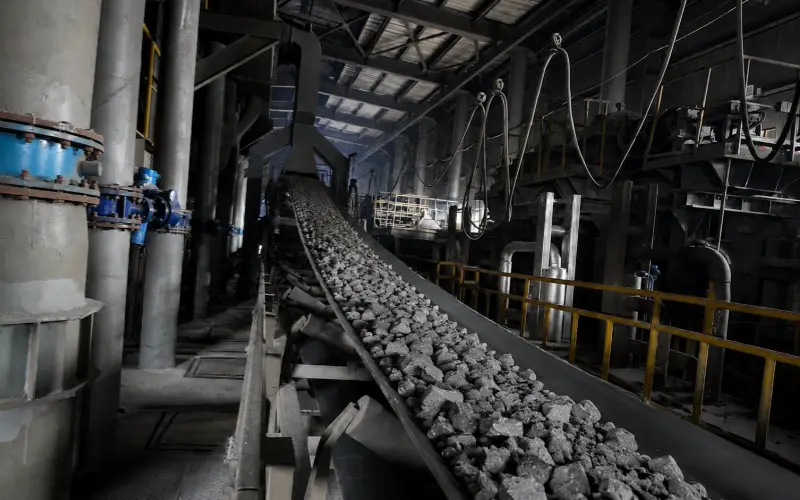
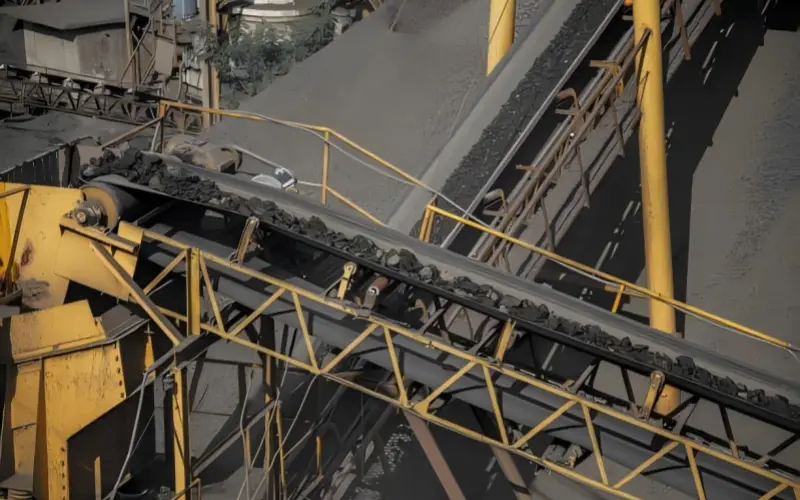
Damage Control Path
Cover Rubber Takes the First Damage
Sharp rock, ore, or crushed material cuts and punctures the rubber surface at loading and transfer points.
CFW Weave Blocks Tear Propagation
The interlocked carcass structure arrests the tear where it starts, instead of allowing it to run along the belt length.
The Failure Becomes Local and Repairable
The damage stays as a controlled repair point, helping avoid complete belt replacement and long unplanned downtime.
Stops a Cut From Becoming a Full-Length Rip
Once a sharp object punches through the cover, stopping the tear is the carcass's job. In a CFW conveyor belt, the interlocked crows foot weave arrests that tear where it starts — so a single puncture stays a small repairable spot, not a full-length rip.
Impact Energy Spread Across the Weave
At high drop-height loading points, impact concentrates on a small section of belt. The cover absorbs the first blow, and the heavier, denser weft structure beneath it distributes the remaining force across more yarns — reducing deep punch-through and gouging.
Layers That Stay Bonded Under Abuse
With an adhesion strength of ≥8 N/mm between the fabric plies and covers, the carcass stays bonded even after repeated impact and wear. The layers do not begin separating the moment the cover is compromised.
Reliable Fastener Holding for Field Repairs
On mobile crushers and temporary lines where hot vulcanizing isn't practical, the dense reinforced carcass holds mechanical fasteners securely. Field splices and emergency repairs stay reliable under real working loads.
Still losing belts to tearing and impact?
Send us your failure details, material type, loading point condition, belt width, and damaged belt photos. We’ll help you check whether CFW construction is the right upgrade for your working site.
CFW Conveyor Belt Technical Specifications
Full technical data across the CFW200 to CFW500 range. Warp and weft values are shown separately, since a CFW conveyor belt is engineered to carry high tension lengthwise while resisting tearing across its width.
| Fabric Type | Direction | Breaking Strength (N/mm) | Elongation at Break (%) | Thickness (mm) | Width (mm) | Adhesion (N/mm) |
|---|---|---|---|---|---|---|
| CFW200 | Warp | >240 | >15 | 0.85 | 400–2400 | ≥8 |
| Weft | >80 | ≤45 | ||||
| CFW250 | Warp | >330 | >15 | 1.1 | ||
| Weft | >90 | ≤45 | ||||
| CFW300 | Warp | >350 | >15 | 1.25 | ||
| Weft | >100 | ≤45 | ||||
| CFW350 | Warp | >400 | >15 | 1.30 | ||
| Weft | >105 | ≤45 | ||||
| CFW400 | Warp | >460 | >15 | 1.40 | ||
| Weft | >110 | ≤45 | ||||
| CFW500 | Warp | >570 | >15 | 1.55 | ||
| Weft | >120 | ≤45 |
Why CFW Starts at 200, Not 100
At the CFW100 level, tension loss isn’t a real concern, so a plain-weave EP100 conveyor belt does the job. At the 200 level, EP200 and CFW200 hold tension comparably and sit close on price, so either works.
From EP300 up, tension loss grows more pronounced as ratings climb. A CFW300 conveyor belt costs more upfront, but holds working tension far better — less re-tensioning, more stable running, and a longer service life that brings the real cost per working meter below EP300. That’s why we recommend the crows foot weave from this level up, though EP300 isn’t wrong — the final call depends on your conditions and budget.
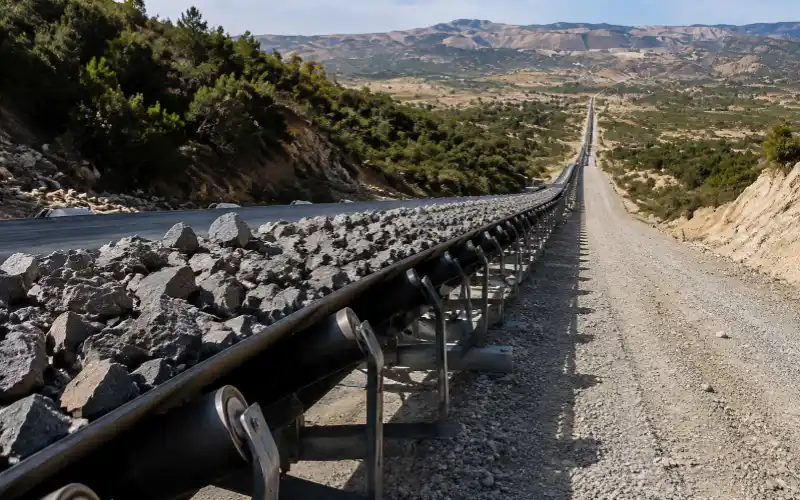
Start Your CFW Conveyor Belt Selection
If you’re still on the fence, that’s okay—just give us the information you have, and we’ll make some recommendations for you.
CFW Conveyor Belt Manufacturing and Quality Control
A reinforced carcass only performs if the materials, bonding, and covers are all controlled. Here’s how we build quality into every CFW conveyor belt from the yarn up.
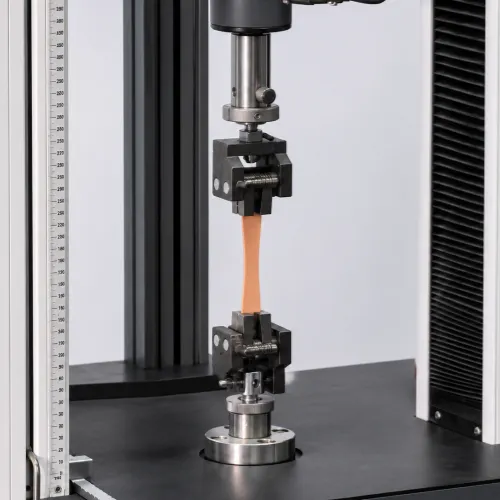
Incoming Yarn Tensile Strength Testing
The strength of a CFW conveyor belt starts with the yarn. When fabric yarn arrives at our factory, we run tensile tests on it before it enters production — confirming it meets the required strength so weakness never gets built into the carcass in the first place
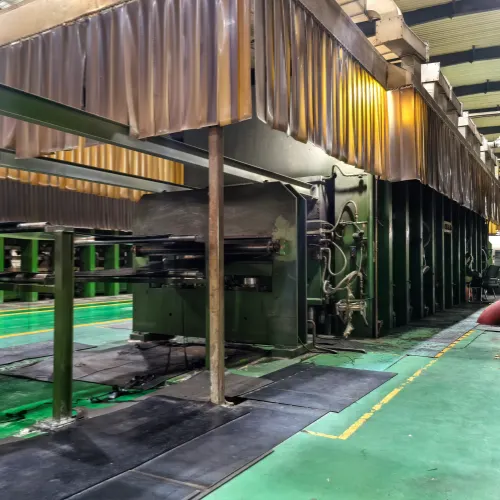
Controlled Vulcanization for Consistent Bonding
Each belt is vulcanized under controlled temperature and pressure to bond the fabric carcass to the covers evenly across the full width. This is what delivers the ≥8 N/mm adhesion that keeps the layers from separating under impact and heavy load.
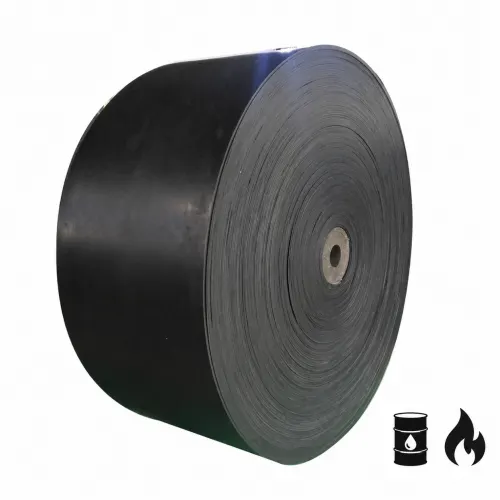
Cover Compounds Matched to Your Conditions
The carcass carries the strength, but the cover determines how the belt survives its environment. We supply CFW belts with abrasion-resistant, cut-resistant, heat-resistant, oil-resistant, and fire-resistant cover grades, selected to match the material and conditions on your line
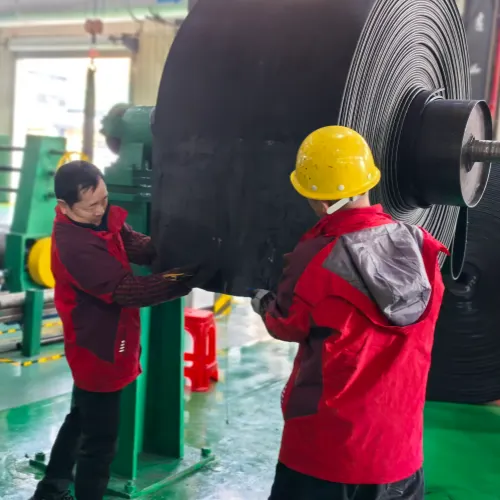
Verified Against Spec Before Shipment
Before dispatch, each CFW conveyor belt is checked against the published specifications for the ordered grade — breaking strength, elongation, thickness, and adhesion — so what you receive performs to the rating you ordered.
Quality Built Into Every Belt We Make
Every CFW conveyor belt is controlled from the yarn up — tensile-tested materials, even vulcanization bonding, matched cover grades, and inspection against spec before shipment — so the belt you receive performs to the rating you ordered.
CFW Conveyor Belt vs Standard EP Conveyor Belt
Standard EP is the mainstream choice for most conveying, and for good reason — it’s proven, versatile, and cost-effective across a wide range of applications. CFW isn’t a replacement for it. It’s a targeted upgrade for the specific conditions where standard EP starts to reach its limits.
| Comparison | Standard EP Conveyor Belt | CFW Conveyor Belt |
|---|---|---|
| Role | The mainstream, all-round choice | A specialized upgrade for severe conditions |
| Weave | Plain weave, one-over-one | Crows foot weave, staggered floats |
| Weft Construction | Standard weft yarn | Heavier, denser weft |
| Tear Resistance | Well-suited to most applications | Reinforced for high tear-risk lines |
| Impact Handling | Handles general loads reliably | Built for high drop-height impact |
| Tension Retention | Stable across typical ratings | Holds working tension better at higher ratings |
| Cost | More economical | Higher, justified in demanding conditions |
| Where It Fits | The majority of conveying systems | Mining, quarrying, crushing, high tear risk |

For most conveying systems, a standard EP conveyor belt is the right and economical choice — it handles the vast majority of applications reliably, which is why it remains the industry standard. CFW exists for the smaller set of operations where sharp material, high drop heights, and constant tearing push a belt beyond what standard EP is built to take.
The question isn’t which belt is better — it’s whether your conditions are demanding enough to need the reinforced weave. If your line sees the kind of tearing and impact that keeps taking EP belts out early, that’s when CFW earns its cost. If it doesn’t, EP is the smarter buy.
Not sure if your line needs CFW, or if standard EP is enough?
CFW Conveyor Belt Customization Options
Beyond standard specifications, we tailor each CFW conveyor belt to your operation — from the cover compound that meets your working conditions to the branding and packaging that suit your business.
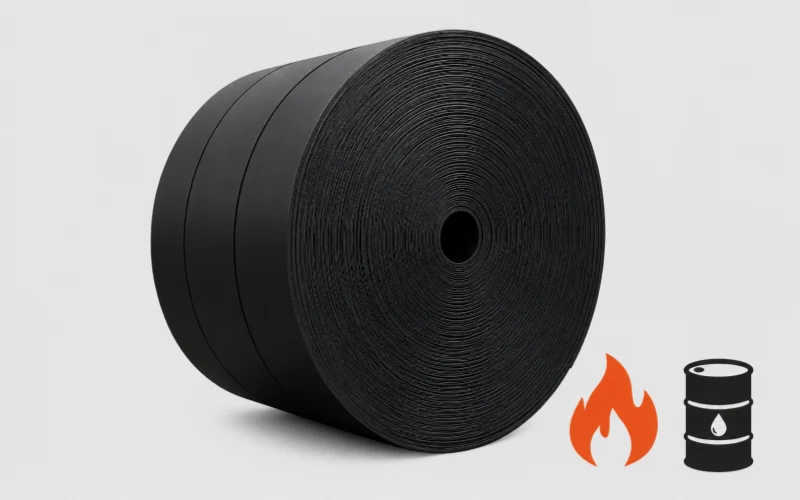
Cover Grade Customization
For mining, quarrying, and crushing conditions, we build the cover for higher impact and abrasion resistance — with heat, oil, or fire resistance combined where the properties are compatible.

Packaging and Reeling Customization
Standard packaging uses durable PP material, with hexagonal frames, octagonal frames, steel pallets, and oval-coil or eye-to-the-sky reeling available — packed in the format that ships and stores most efficiently for you.
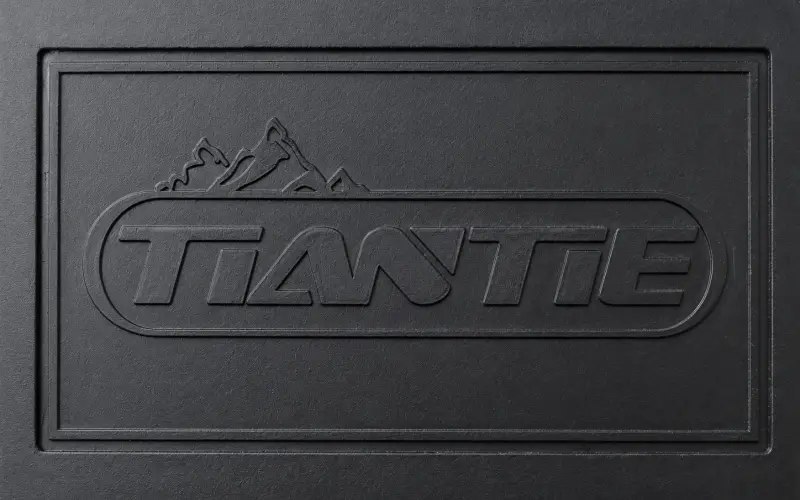
Logo Customization
We apply your branding directly to the belt surface, so every belt you supply carries your identity — a practical fit for distributors and brand owners building their presence in the market.
FAQs
Can a CFW conveyor belt be matched to an existing belt on my line?
Which CFW grade matches a given working tension?
Are samples available before a full order?
Is a CFW belt compatible with standard splicing equipment?
How should a CFW belt be stored before installation?
What information determines an accurate quote?
Not Sure Which CFW Grade Your Operation Needs?
Send us your material, drop heights, and belt tension. We’ll recommend the grade and cover built for your conditions — and give you a quote that matches what your line actually requires.
