Chemical Resistant Conveyor Belt Supplier
TIANTIE INDUSTRIAL supplies chemical resistant conveyor belts for corrosive bulk handling in applications such as fertilizer production and pulp processing. Matched rubber compounds and test data support more reliable product selection.
- Acid and Alkali Resistant Rubber Limits Swelling to Maintain Belt Shape
- Strength Retention After Chemical Exposure Helps Extend Cover Service
- High Elongation Rubber Reduces Cracking During Repeated Flexing
- Defined Immersion Data Supports More Confident Product Approval
How a Chemical Resistant Conveyor Belt Works
A chemical resistant conveyor belt uses specially formulated cover rubber to convey corrosive bulk materials or materials containing acid and alkali residues. The resistant rubber can cover the surfaces exposed to chemicals, helping limit swelling, hardening, cracking and tensile strength loss.
Acid resistant conveyor belts and alkali resistant conveyor belts may require different rubber compounds. Chemical type, concentration, temperature and exposure duration determine compatibility, while property changes after controlled immersion provide measurable evidence for product evaluation.
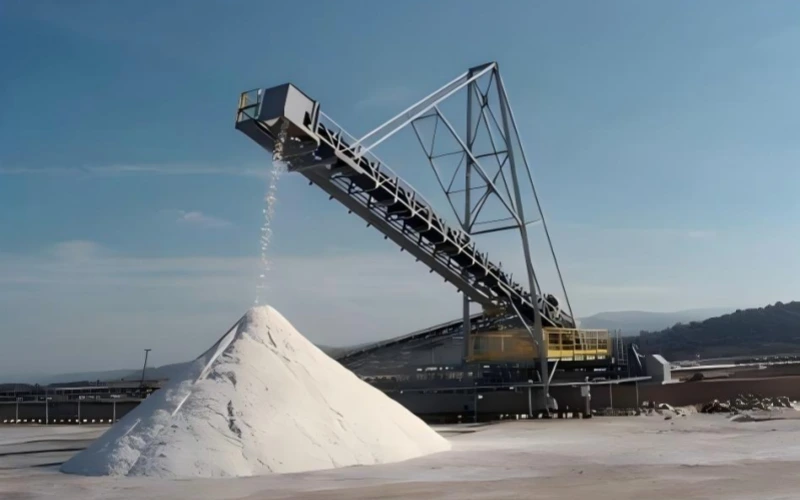
Match Chemical Resistance to Actual Exposure
Chemical compatibility depends on the specific medium and its operating conditions. Test results for one acid or alkali cannot automatically confirm resistance to another chemical, even when both belong to the same category.
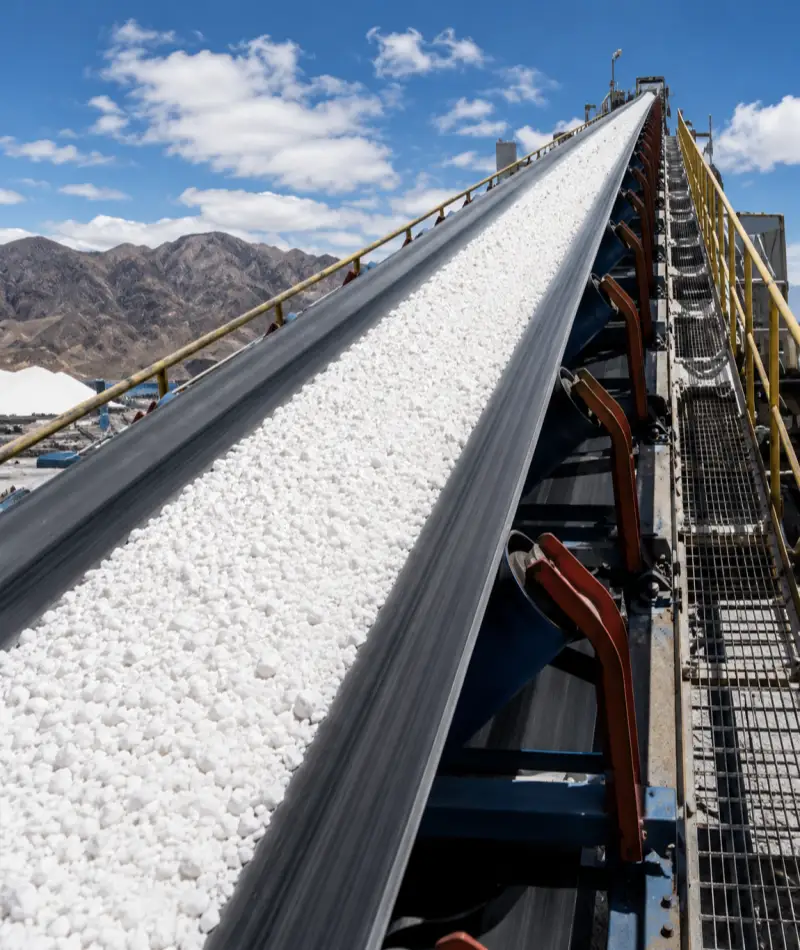
Operating pH Range
For aqueous liquids and wet materials provide the normal pH range together with possible maximum and minimum values. This establishes the required level of acid or alkali resistance.
Chemical Type and Concentration
Identify the chemical name and its actual concentration such as hydrochloric acid sulfuric acid or sodium hydroxide. Chemicals with similar pH values may affect rubber differently.
Exposure Temperature
Provide the normal and maximum exposure temperatures. Higher temperatures can accelerate chemical penetration swelling and changes in rubber properties.
Exposure Type
Confirm whether chemical exposure is continuous intermittent caused by repeated splashing or present as surface residue. Exposure duration and frequency also affect the required cover rubber.
Match Your Chemical Resistant Rubber Conveyor Belt
Description: Share your pH range chemical type concentration exposure temperature and exposure type to receive a suitable cover rubber recommendation.
Acid and Alkali Immersion Test
Cover rubber for an acid and alkali resistant conveyor belt is evaluated after immersion in defined chemical solutions. Volume and tensile strength changes show its resistance under the specified concentration temperature and exposure period.
| Test Reference | Chemical Solution | Concentration | Immersion Condition | Volume Increase | Tensile Strength Loss |
|---|---|---|---|---|---|
| A1 | Hydrochloric Acid HCl | 18% | 50°C × 96 h | ≤10% | ≤10% |
| A2 | Sulfuric Acid H₂SO₄ | 50% | 50°C × 96 h | ≤10% | ≤10% |
| A3 | Sodium Hydroxide NaOH | 48% | 50°C × 96 h | ≤10% | ≤10% |
These results apply to the stated chemical solutions and immersion conditions. Other chemicals pH ranges concentrations or temperatures should be evaluated according to the actual exposure conditions.
Confirm Chemical Resistance
Compare your operating medium with our reference immersion conditions before selecting the cover rubber.
Chemical Resistant Conveyor Belt Applications
Chemical resistant conveyor belts are commonly used in the following plants where conveyed materials contain acids alkalis or corrosive chemical residues.
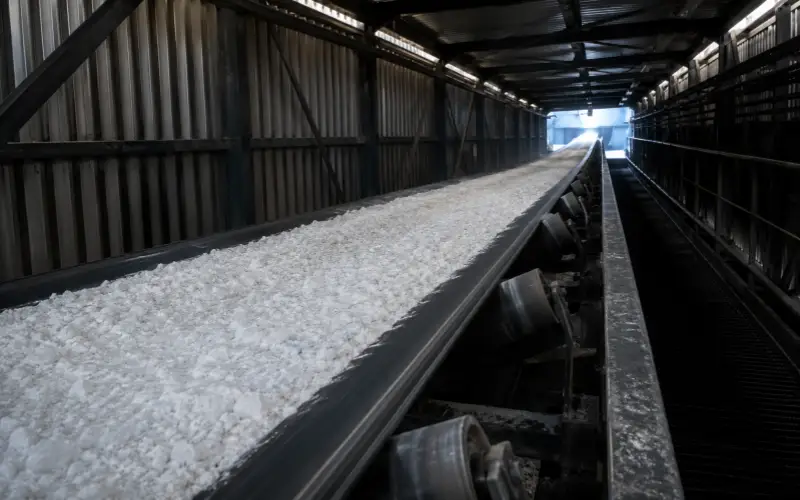
Chemical Plants
For conveying chemical powders granules filter cakes and solid residues containing acids or alkalis.
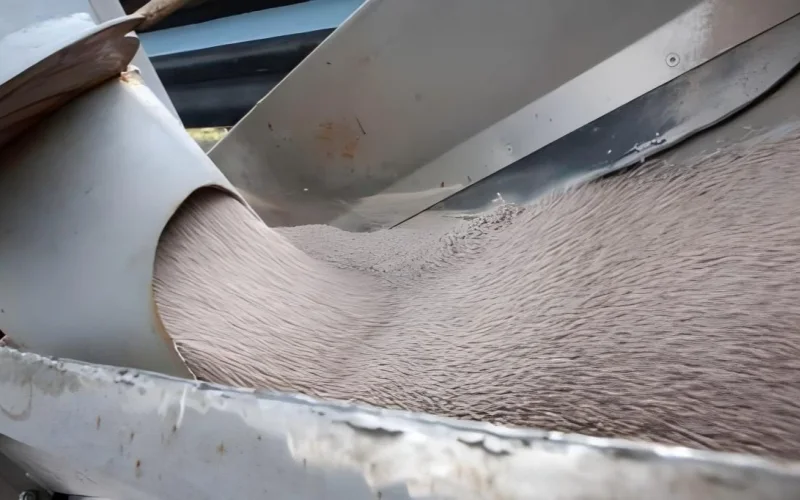
Fertilizer Plants
For conveying fertilizer materials phosphogypsum and production residues carrying corrosive process chemicals.
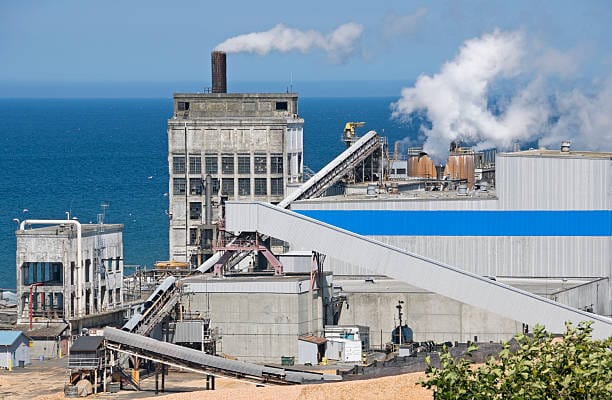
Pulp and Paper Mills
For conveying wet pulp fiber residues lime mud and materials carrying residual pulping chemicals.
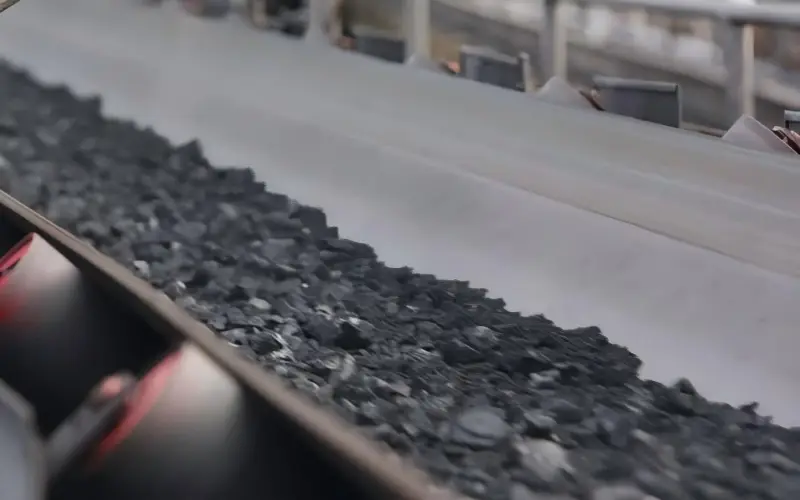
Mineral Processing Plants
For conveying concentrates tailings and filter cakes containing residual acidic or alkaline processing agents.
Chemical Resistant Cover Production
Chemical resistance begins with controlled compound preparation and cover rubber forming. We control the following production stages to reduce weak areas caused by formulation mixing or thickness deviations.
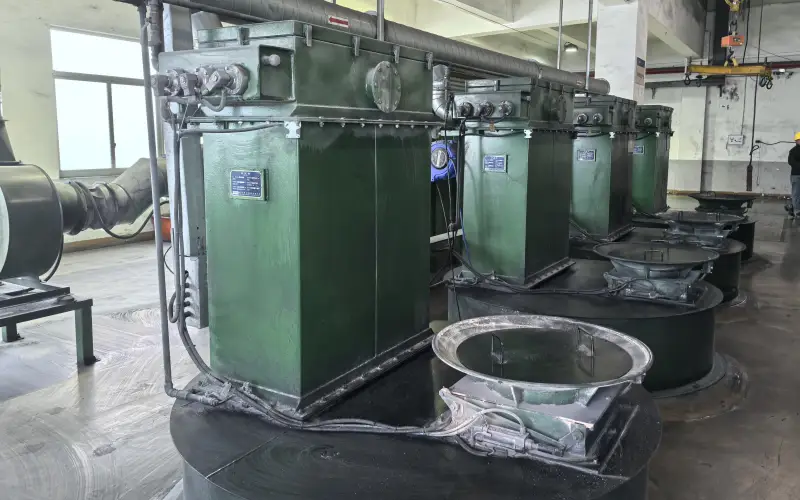
Accurate Formula Metering
Polymers fillers processing additives and curing ingredients are weighed by batch according to the confirmed formula. Accurate proportions maintain the intended acid and alkali resistance of the cover compound.
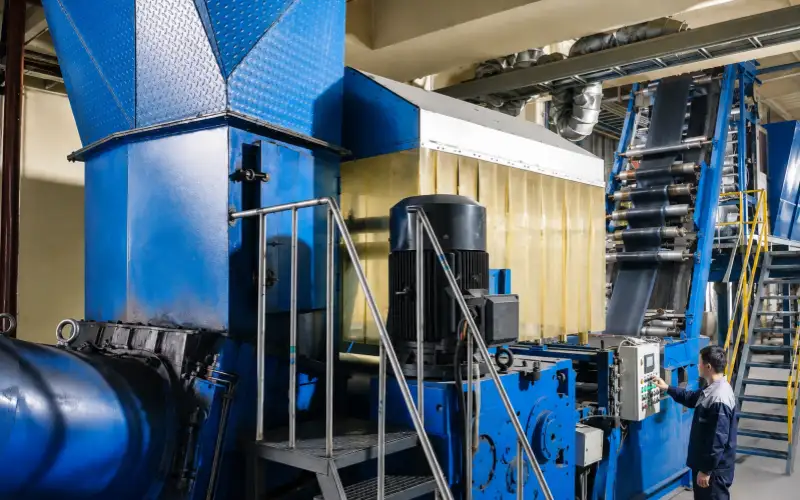
Controlled Mixing Conditions
Ingredients are added in a defined sequence while mixing time and discharge temperature are controlled. Uniform dispersion prevents localized areas from receiving insufficient chemical resistant components.
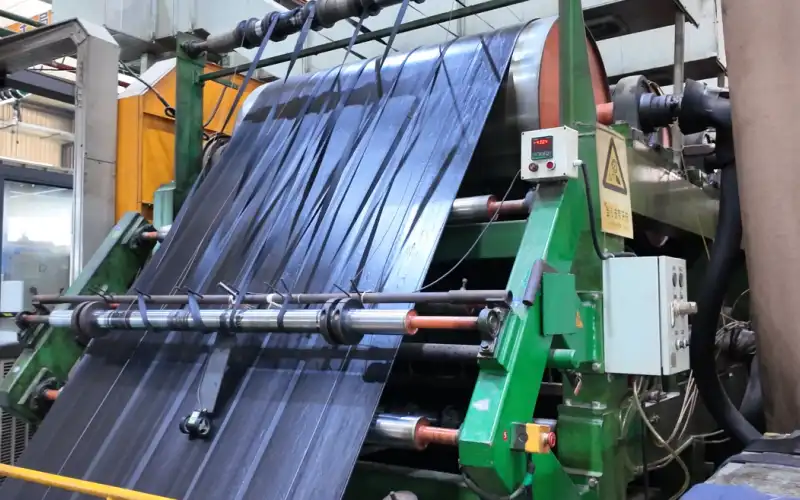
Controlled Cover Thickness
The cover rubber is calendered and measured against the confirmed thickness before belt assembly. This ensures the finished belt meets the specified top and bottom cover dimensions and retains the required rubber allowance for operation.
Finished Belt Quality Verification
After vulcanization we inspect the finished chemical resistant conveyor belt for physical defects that could weaken the protective cover or allow chemical media to reach the belt body.
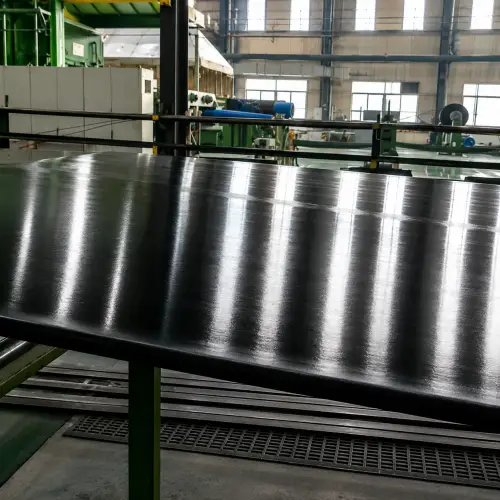
Cover Surface Inspection
We inspect the top cover bottom cover and belt edges for cracks blisters exposed reinforcement surface voids and incomplete rubber coverage.
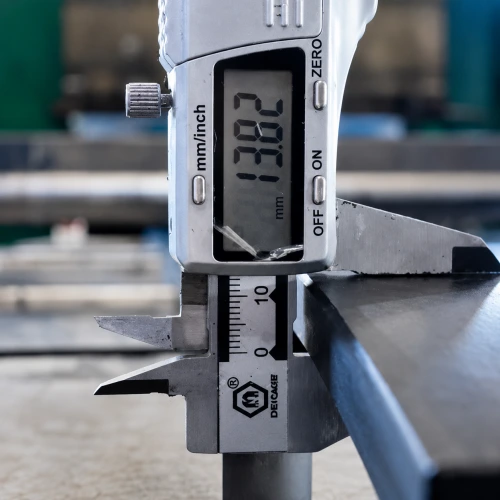
Finished Thickness Measurement
Overall belt thickness and cover thickness are measured after vulcanization to confirm that the finished belt meets the agreed dimensional requirements.
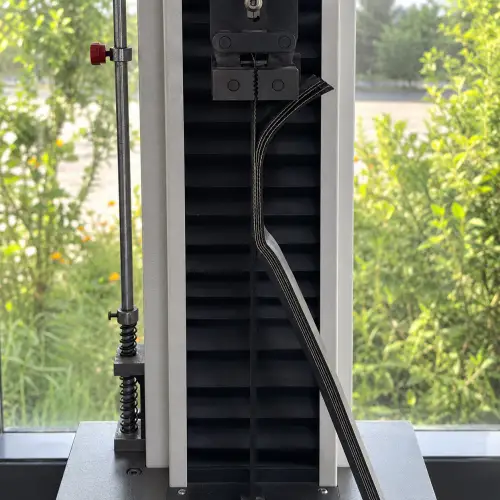
Cover Adhesion Check
Cover-to-carcass adhesion is checked to identify weak bonding that could develop into cover separation during repeated flexing and chemical exposure.
Manufacturing Capacity for Bulk Belt Orders
TIANTIE INDUSTRIAL combines large-scale rubber mixing multiple production lines and continuous vulcanization capacity to support distributor orders replacement requirements and large industrial projects.
120,000 m² Manufacturing Base
Our manufacturing base integrates rubber mixing calendering belt forming vulcanization inspection and finished belt handling within one production system.
60 Production Lines
Sixty production lines operate across different manufacturing stages providing the capacity required to arrange multiple confirmed belt specifications and order quantities.
30,000+ Tons Annual Mixing Capacity
The internal mixing workshop supplies the rubber compounds required for chemical resistant covers and other conveyor belt grades without relying on external compound preparation.
35,000+ Meters Daily Output
Daily conveyor belt output exceeds 35,000 meters with monthly capacity above 800,000 meters supporting regular purchases and higher-volume project requirements.
Confirm Production Availability
Share your confirmed belt specifications total length and required delivery date to check production capacity and lead time.
FAQs
Can the same belt serve as both an acid resistant conveyor belt and an alkali resistant conveyor belt?
Do both the top and bottom covers always require chemical resistance?
Do you recommend mechanical splices for a chemical resistant conveyor belt?
What should be confirmed when corrosive materials also contain oil or organic solvents?
Can chemical resistance be combined with abrasion heat or flame resistance?
How can a replacement belt be specified when the original chemical resistance grade is unknown?
Confirm Your Chemical Resistant Conveyor Belt
Send the chemical medium pH concentration exposure temperature and required belt specifications for technical confirmation and quotation.
