
Cold Resistant Conveyor Belt Manufacturer in China
TIANTIE INDUSTRIAL manufactures cold resistant conveyor belts for bulk conveying in sub-zero environments. C1 and C2 cover grades support operation down to −50°C while helping reduce premature cracking during repeated cold flexing.
- Smoother Belt Movement in Sub Zero Conditions
- Reduced Cracking during Repeated Cold Flexing
- Better Impact Handling for Frozen Bulk Materials
- Longer Usable Cover Life in Severe Winters
Cold Resistance Built into the Cover Compound
General-purpose cover rubber can progressively harden as the temperature falls, leaving less deformation capacity when the belt is bent or subjected to loading impact. A cold resistant conveyor belt uses a specially formulated cover compound to retain the necessary rubber movement at its specified low-temperature grade.
Cold resistance is determined by the cover compound and its verified low-temperature performance—not simply by increasing cover thickness or changing the number of fabric plies. This allows you to confirm the required cold grade separately from the belt strength and dimensions needed for your conveyor.
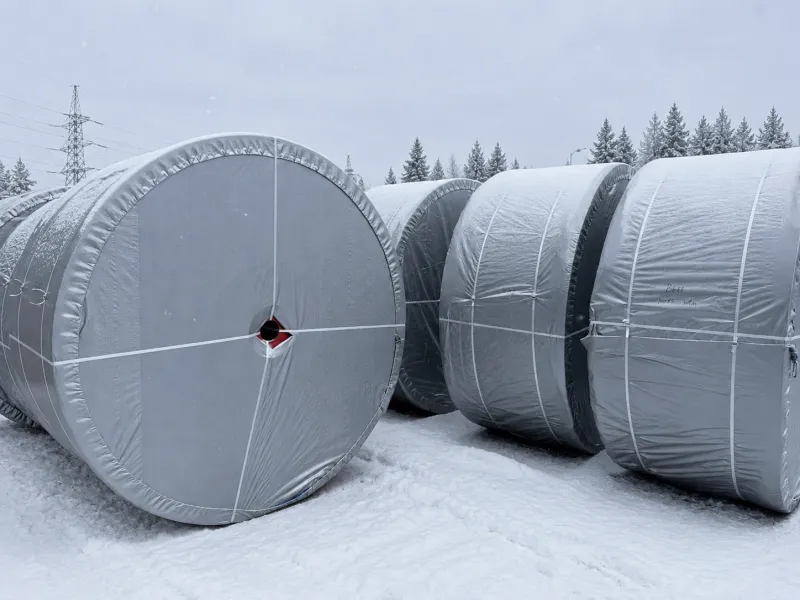
Cold Performance and Cover Grades
Our cold resistant conveyor belts combine a specified low-temperature limit with measurable cover rubber properties. Each value is linked to an internationally recognized ISO test method, giving buyers a clearer basis for technical comparison.
Low Temperature Performance
| Test Item | Specified Value | Test Method | Acceptance Requirement |
|---|---|---|---|
| Minimum specified service temperature | −50°C | Product specification | Cover compound selected for the stated temperature |
| Low-temperature brittleness | Tested at −50°C | ISO 812:2017 Procedure C | No brittle failure at the specified test temperature |
Available Cover Grades
Tensile strength and elongation are measured according to ISO 37:2024. Abrasion loss is measured according to ISO 4649:2024.
| Cover Grade | Tensile Strength | Elongation at Break | Abrasion Loss | Buyer Value |
|---|---|---|---|---|
| H | ≥24 MPa | ≥450% | ≤120 mm³ | Better resistance to impact cuts and sharp bulk materials |
| D | ≥18 MPa | ≥400% | ≤100 mm³ | Lower cover loss when handling abrasive materials |
| L | ≥15 MPa | ≥350% | ≤200 mm³ | Cost-balanced performance for moderate wear conditions |
Get a Cold Resistant Belt Quote
Share your operating temperature belt size and conveyed material to receive a matched specification and quotation.
Popular Cold Resistant Belt Specifications
Our popular cold resistant conveyor belt specifications cover EP NN and ST constructions for common replacement and project requirements. Strength width and cover thickness can be matched to the existing conveyor specification.
| Carcass | Popular Belt Specifications | Popular Widths | Common Cover Thickness |
|---|---|---|---|
| EP Fabric | EP200/3 EP200/4 EP250/4 EP300/4 EP400/4 | 800 1000 1200 1400 1600 mm | 4+2 5+2 6+2 8+3 mm |
| NN Fabric | NN200/3 NN200/4 NN250/4 NN300/4 | 800 1000 1200 1400 1600 mm | 4+2 5+2 6+2 8+3 mm |
| ST Steel Cord | ST800 ST1000 ST1250 ST1600 ST2000 ST2500 | 1000 1200 1400 1600 1800 2000 mm | 5+5 6+6 8+8 mm |
The combinations above represent commonly requested specifications rather than our complete production range. Other belt strengths widths and cover thicknesses can be confirmed before quotation.
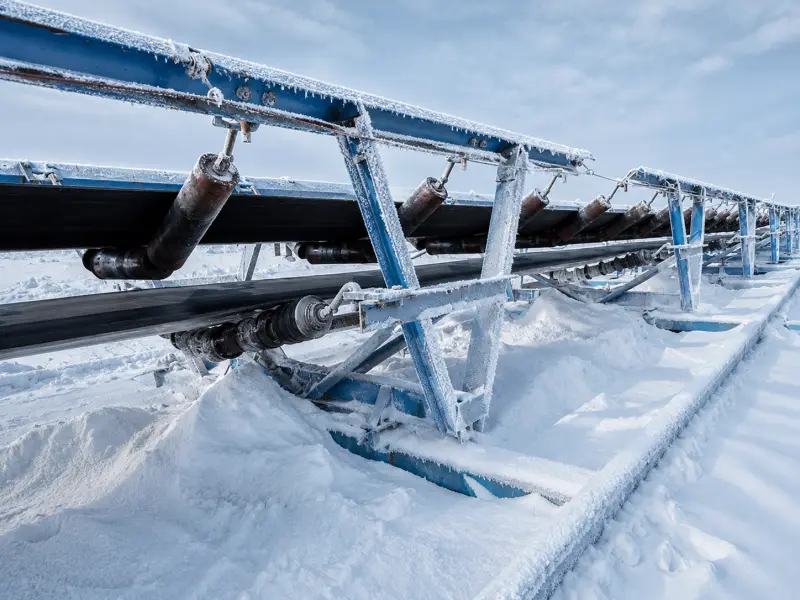
Cold Resistant Conveyor Belt Applications
Cold resistant conveyor belts also operate above 0°C. Below 0°C conventional rubber progressively loses flexibility and resistance to impact abrasion and cracking as temperatures continue to fall.
Because this decline is progressive rather than triggered at one fixed temperature we recommend cold-resistant covers whenever conveying systems regularly operate below 0°C with options available down to −50°C.
Typical applications include:
- Outdoor conveyors operating through cold winters
- Cold-region mines and quarries
- Ports stockyards and coal handling systems exposed to freezing weather
- Unheated bulk material transfer lines affected by outdoor temperatures
Cold Resistant Compound Production Control
Low-temperature performance depends on maintaining the specified compound throughout production. We control material dosing mixing and vulcanization so the finished cover achieves the required flexibility and mechanical properties.
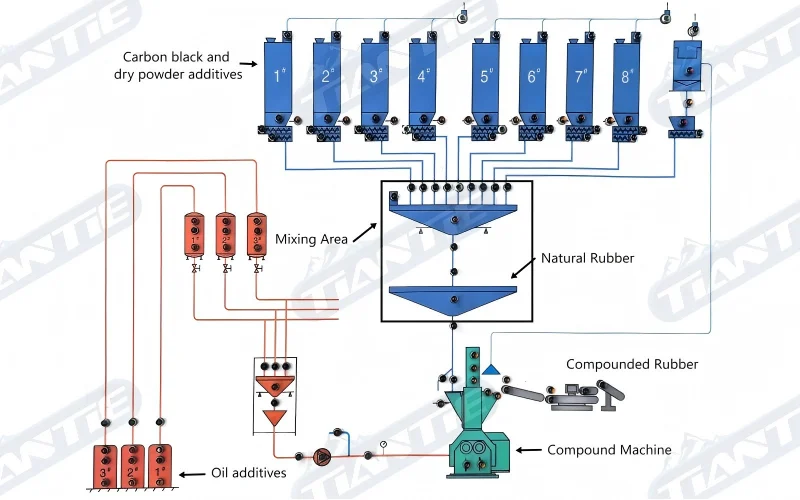
Accurate Compound Dosing
Rubber low-temperature modifiers anti-aging agents and vulcanizing materials are weighed according to the confirmed formula. Accurate proportions help preserve the designed cold resistance of the cover.
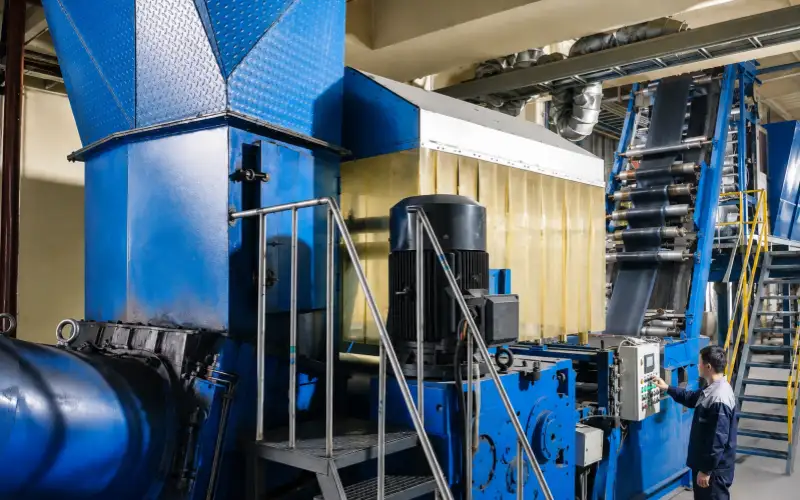
Uniform Compound Mixing
Mixing sequence temperature and time are controlled to distribute modifiers fillers and protective agents evenly. Uniform dispersion reduces local differences in cover hardness and flexibility.
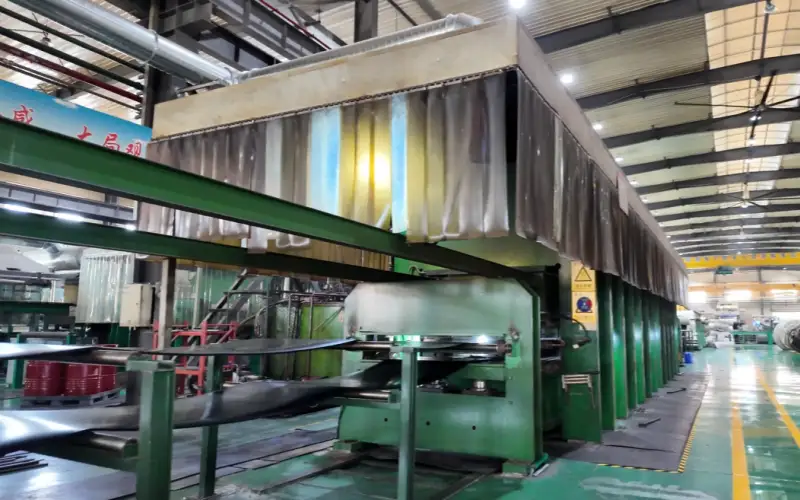
Matched Vulcanization Parameters
Vulcanization temperature pressure and time are matched to the compound characteristics and belt thickness. Proper curing balances cover flexibility mechanical strength and adhesion.
Quality Checks for Cold Resistant Conveyor Belts
Production control establishes the required compound properties while inspection confirms that the cover rubber belt construction and finished dimensions match the approved order requirements before shipment.
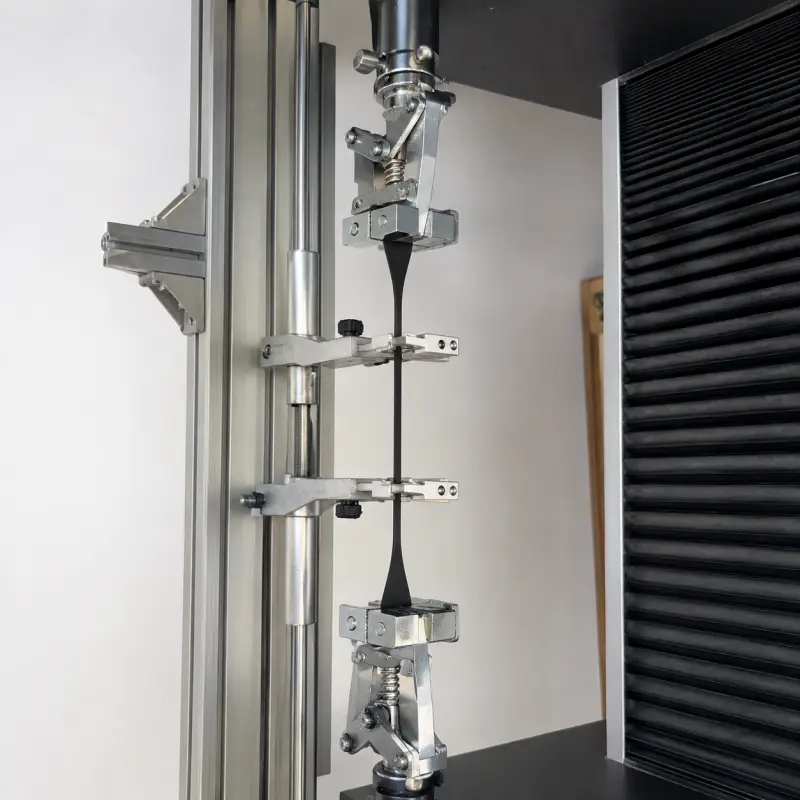
Low Temperature Cover Verification
Cured cover samples are checked against the specified low-temperature requirement together with tensile strength elongation and abrasion results. This confirms that cold resistance is supported by measurable properties.
Adhesion Inspection
Cover-to-carcass and interply adhesion are checked to identify weak bonding before shipment. Reliable adhesion reduces the risk of cover separation during repeated bending and loaded operation.
Finished Belt Measurement
Belt width length total thickness and top and bottom cover thickness are measured against the approved specification. Surface edges and exposed fabric or steel cords are also inspected.
Confirm Your Cold Resistant Belt Specification
Share your operating temperature and belt requirements to receive a matched specification and quality inspection plan.
FAQs
Which temperature should be used when specifying a cold resistant conveyor belt?
Does cold resistance change the required pulley diameter?
Is cold-resistant rubber required only on the top cover?
Can cold resistance be combined with abrasion oil or flame resistance?
Can a cold resistant conveyor belt carry material at 70°C?
Why can a cold-rated conveyor belt still develop cracks?
Get a Cold Resistant Conveyor Belt Quote
Share your minimum operating temperature belt specification and conveyed material to receive a matched solution and quotation.
