China Fire Resistant Conveyor Belt Manufacturer
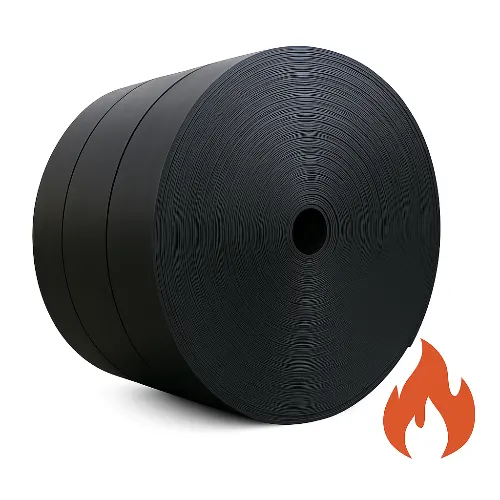
TIANTIE INDUSTRIAL manufactures fire resistant conveyor belts for coal handling, underground conveying, and other installations where ignition, continued burning, and flame spread must be controlled. The flame-retardant compound and belt construction are produced according to the confirmed fire requirement while retaining the strength and dimensions required by your conveying line.
- Low-Ignitability Rubber Reduces Belt Involvement in External Fire Sources
- Self-Extinguishing Compounds Limit Burning after the Flame Source Is Removed
- Low Flame Propagation Restricts Fire Travel along the Conveyor Belt
- Fire-Resistant Cover and Skim Rubber Limit Burning across the Belt Structure
What Is a Fire Resistant Conveyor Belt?
A fire resistant conveyor belt uses flame-retardant rubber in the top and bottom covers and, where required, in the skim rubber around the carcass. The compound combines a suitable rubber base with flame-retardant additives to reduce ignition, continued burning, and flame propagation.
Fire performance is evaluated by requirements such as after-flame time, afterglow, and flame propagation. The product is also commonly called a flame retardant conveyor belt. For hot-material conveying, fire resistance and heat resistance need to be considered separately.
- Chloroprene Rubber or Rubber Blends — flame-resistant compound base
- Chlorinated Paraffin + Antimony Trioxide — suppress the combustion reaction
- Aluminum Hydroxide / Zinc Borate — absorb heat and support flame suppression
- Carbon Black, Antioxidants and Curing Agents — retain mechanical and processing performance

Technical Specifications of Nylon Conveyor Belt
Fire resistance is measured by the time a belt specimen continues burning after the ignition source is removed. Higher safety grades retain this afterflame requirement while adding drum-friction or fire-propagation testing.
| Standard / Grade | Typical Application | Specific Fire Requirement |
|---|---|---|
| ISO 340:2022 | Basic laboratory flame test | Each specimen: ≤15 s afterflame; six specimens total: <45 s; no re-ignition under airflow |
| EN 12882 Category 2A | General aboveground conveying | Tested with covers intact: each specimen ≤15 s; six specimens total <45 s |
| EN 12882 Category 2B | Aboveground coal and combustible-material conveying | Covers intact and covers removed are tested separately; each specimen ≤15 s and each group of six <45 s |
| EN 12882 Category 3A / 3B | Aboveground conveyors requiring drum-friction resistance | Same afterflame limits as 2A/2B, plus a 60-minute drum-friction test with no flame |
| EN 12882 Category 4A–5C | Enclosed or higher fire-risk aboveground conveyors | Each specimen ≤15 s and each six-piece group <45 s; additional fire-propagation testing. Category 5 drum-friction tests continue for up to 150 minutes |
| EN 14973 Class A, B1, B2 and C2 | Underground conveyor belt installations | Tested with covers intact and removed: each specimen ≤15 s; each group of six <45 s |
| EN 14973 Class C1 | Underground conveying with combustible dust or material | Covers intact: individual ≤10 s, group total ≤18 s; covers removed: individual ≤15 s, group total ≤30 s |
| MSHA Part 14 | U.S. underground coal mine conveyor belts | Each specimen receives 5–5.1 minutes of flame exposure and must retain an undamaged section across its full width |
Need a Fire Resistant Conveyor Belt for Your Project?
Send us the required standard, belt strength, width, and cover thickness. We will prepare the corresponding specification and quotation.
Fire Resistant Conveyor Belt Options for Different Operating Conditions
The flame-retardant rubber system can be combined with additional cover properties according to the conveyed material and operating temperature. Fire performance remains the primary requirement, while the cover compound provides the additional resistance required by the conveyor line.

Flame Resistant and Abrasion Resistant
For coal, coke and other coarse materials, the cover compound combines flame resistance with controlled abrasion loss. It helps the belt retain its cover thickness during continuous loading and repeated transfer-point impact.

Flame Resistant and Heat Resistant
Where the conveyed material remains at an elevated temperature, heat-resistant polymers and stabilizers are incorporated into the flame-retardant compound. The continuous and peak material temperatures are confirmed separately from the required fire grade.

Flame Resistant and Oil Resistant
For biomass, recycling materials or bulk products containing oil, an oil-resistant rubber system limits cover swelling and softening while maintaining the confirmed flame-retardant requirement.
Electrical Surface Resistance Required
When an underground conveyor belt specification also includes electrical surface resistance, conductive ingredients and resistance testing are handled as an additional requirement. The fire grade continues to be determined by the applicable flame test.
Typical Applications for Fire Resistant Conveyor Belts
These applications combine combustible materials with confined or continuously connected conveyor routes. Short afterflame time and limited flame propagation therefore become central requirements for the conveyor belt.

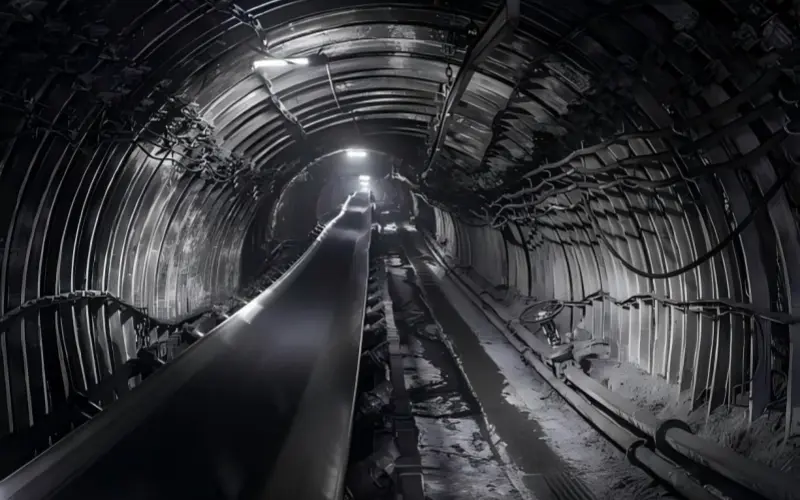
Underground Coal Mines
Underground conveyors run through confined roadways where a burning belt can carry flame far from the original ignition point. A fire resistant underground conveyor belt self-extinguishes after the flame source is removed and limits fire propagation along long coal-haulage routes.
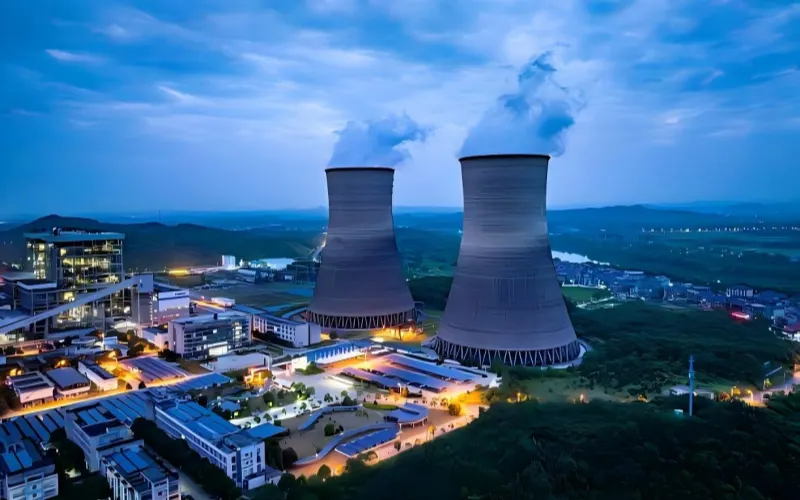
Coal Handling in Thermal Power Plants
Coal handling lines pass through transfer towers, enclosed galleries and boiler-feed areas. Coal dust, hot particles or frictional heating may expose the belt to ignition, while a fire resistant belt limits continued burning and the distance active flame can travel with the moving belt.

Coal Preparation and Screening Plants
Crushers, screens, bins and frequent transfer points form a continuously connected coal-handling system. Fire-resistant cover and skim rubber limit burning across the belt structure, while an abrasion-resistant cover supports repeated loading of coarse raw coal.
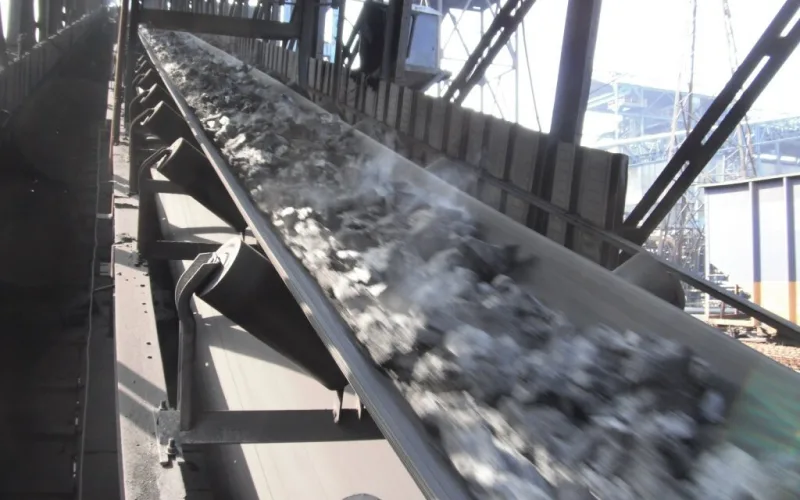
Coke Handling in Coking and Steel Plants
Coke may retain heat or isolated glowing particles after quenching and cooling. A fire resistant conveyor belt limits ignition and flame spread during screening, storage and furnace feeding; where the coke temperature remains elevated, it can be combined with a heat-resistant cover compound.
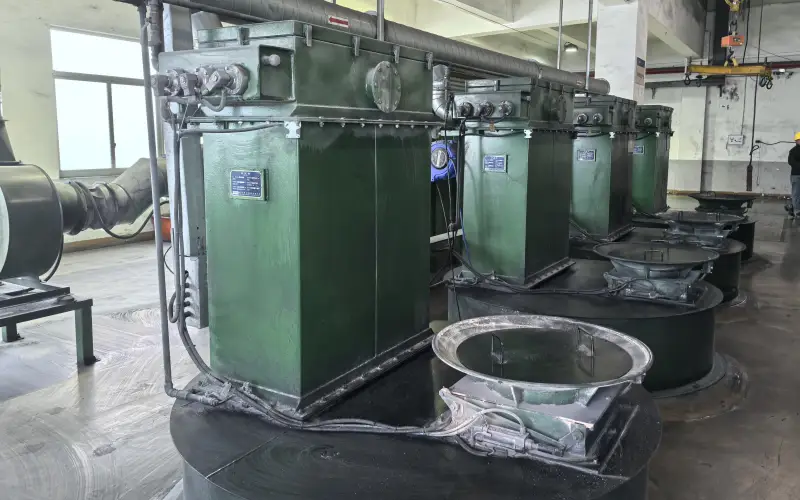
How We Keep Fire Resistance Consistent in Production
We directly control three points that have a real influence on fire-resistant rubber: flame-retardant ingredient dosing, mixing temperature, and the bonding of skim rubber to the carcass.

Digital Dosing of Flame-Retardant Ingredients
Our automatic batching system doses flame retardants, synergists and other compound ingredients according to the confirmed formulation. Digital weighing replaces manual proportioning, keeping the quantity of key flame-retardant ingredients consistent from one rubber batch to the next.

±0.5°C Rubber Mixing Temperature Control
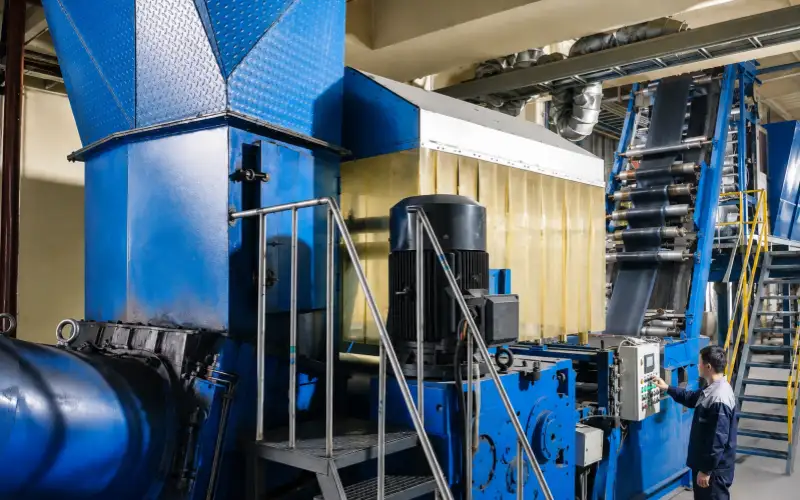
Our fully enclosed internal mixers are connected to the rubber-mixing control center, allowing mixing temperature to be monitored and adjusted with an accuracy of ±0.5°C. This keeps the flame-retardant compound within the confirmed mixing temperature range and stabilizes compound dispersion between batches.

Hot Lamination for Skim Rubber Bonding
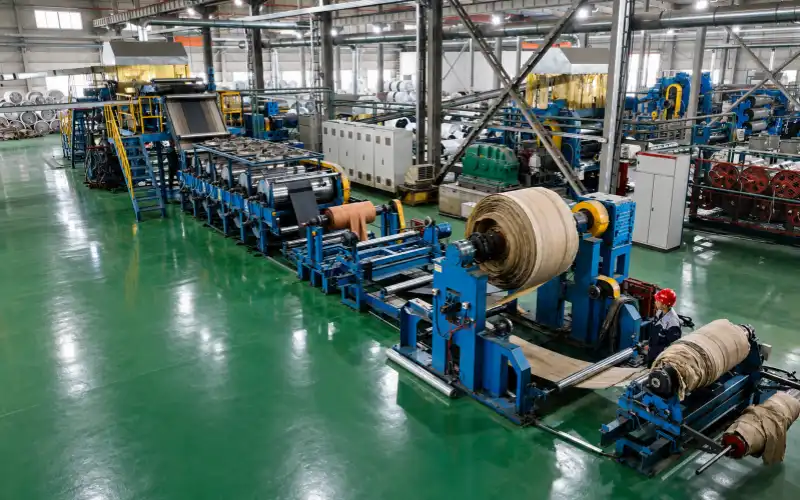
We use hot-lamination technology to bond the skim rubber closely to the carcass before final vulcanization. Temperature and pressure improve contact between the rubber and reinforcement, reducing local gaps and keeping the internal rubber layer continuously bonded across the belt.
Testing the Finished Fire Resistant Conveyor Belt
We test samples taken from the finished fire resistant conveyor belt, so the results reflect the actual belt delivered to your project.

Afterflame Test on Finished-Belt Samples
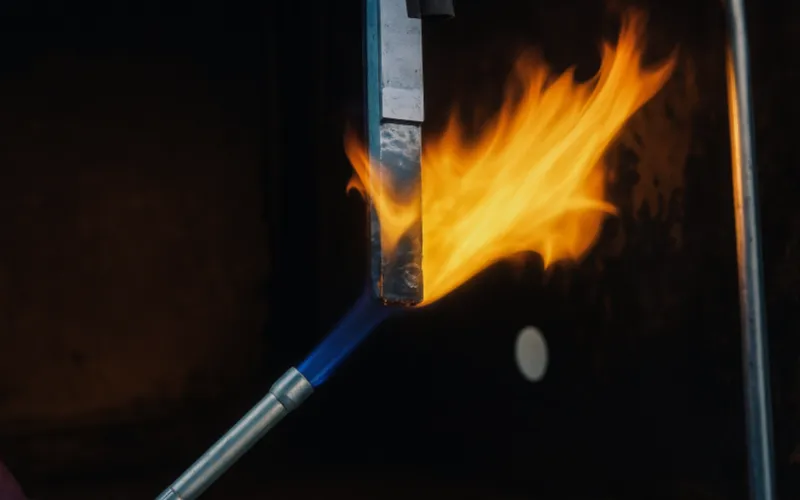
We expose finished-belt samples to the specified flame and measure how long each specimen continues burning after the ignition source is removed. According to the required test method, we also check the total afterflame time and re-ignition under airflow where applicable.
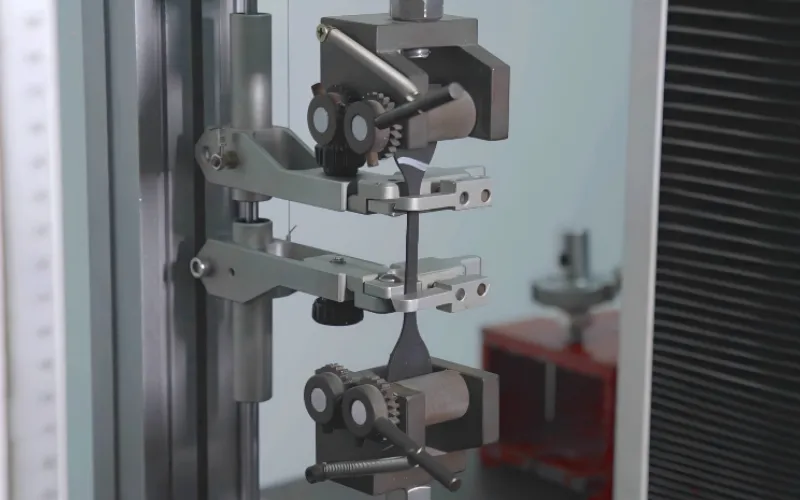
Mechanical Properties Verified on the Finished Belt
Fire resistance must not come at the expense of normal conveying performance. We also check tensile strength, elongation, abrasion resistance and layer adhesion against the confirmed belt specification before delivery.
FAQs
Does a thicker rubber cover provide better fire resistance?
Is every fire resistant conveyor belt suitable for underground coal mines?
Can a fire resistant conveyor belt also operate in low-temperature environments?
Can fire-resistant rubber be identified by its color, hardness or appearance?
Does the splice need to match the fire-resistant properties of the belt?
Does fire resistance also protect the belt against tearing from sharp materials?
Get a Fire Resistant Conveyor Belt Quote
Whether you are replacing an existing belt or sourcing for a new project, send us your belt specification, drawing, or project requirements. We will match the fire-resistant rubber compound, belt construction and required performance to your application and prepare a clear production proposal.