
Abrasion Resistant Conveyor Belt Manufacturer in China
TIANTIE INDUSTRIAL manufactures abrasion resistant conveyor belts for continuous handling of ore, aggregates, cement, and other abrasive bulk materials. Our abrasion resistant fabric conveyor belts combine controlled rubber mixing with measurable cover performance to reduce surface wear and support dependable operation in demanding conveying systems.
- 30 mm³ Abrasion Loss for Slower Cover Wear
- In-House Rubber Mixing for Stable Cover Performance
- Standard Abrasion Testing for Verifiable Performance
- Existing-Specification Production for Lower Replacement Risk
What Is Abrasion Resistant Fabric Conveyor Belt
An abrasion resistant fabric conveyor belt is a rubber conveyor belt built with a textile carcass and wear-resistant covers. It is designed for continuous handling of abrasive bulk materials while the fabric layers provide tensile strength and the covers resist progressive surface loss.
Abrasion resistance is commonly expressed by the volume of rubber removed during a standardized wear test. Under identical test conditions, a lower abrasion-loss value indicates less material loss, while actual belt life also depends on cover thickness, loading conditions, speed, and maintenance.

Abrasion Resistant Conveyor Belt Cover Grades
Cover grades use defined tensile strength, elongation, and abrasion-loss limits to describe rubber performance under standardized laboratory conditions. Grade codes and requirements vary between standards, so each order follows the specific standard edition and cover performance stated in the confirmed technical specification.
ISO 10247:1990
| Service Classification | Grade | Tensile Strength | Elongation at Break | Maximum Abrasion Loss | Hardness |
|---|---|---|---|---|---|
| Severe Cut and Gouge | H | ≥24.0 MPa | ≥450% | ≤120 mm³ | 60 ± 5 Shore A |
| Severe Abrasion | D | ≥18.0 MPa | ≥400% | ≤100 mm³ | 60 ± 5 Shore A |
| Moderate Abrasion | L | ≥15.0 MPa | ≥350% | ≤200 mm³ | 65 ± 5 Shore A |
GOST 20-85
| Grade | Tensile Strength | Elongation at Break | Maximum Abrasion Loss | Hardness |
|---|---|---|---|---|
| A | ≥24.5 MPa | ≥450% | ≤160 mm³ | 40–60 Shore A |
| B | ≥19.6 MPa | ≥400% | ≤160 mm³ | 50–70 Shore A |
| N | ≥15.0 MPa | ≥400% | ≤100 mm³ | 55–75 Shore A |
| C | ≥10.0 MPa | ≥150% | ≤200 mm³ | 50–70 Shore A |
| M | ≥14.7 MPa | ≥350% | ≤150 mm³ | 45–65 Shore A |
JIS K 6322:1999
| Grade | Tensile Strength | Elongation at Break | Maximum Abrasion Loss |
|---|---|---|---|
| P | ≥8.0 MPa | ≥300% | ≤400 mm³ |
| G | ≥14.0 MPa | ≥400% | ≤250 mm³ |
| S | ≥18.0 MPa | ≥450% | ≤200 mm³ |
| A | ≥14.0 MPa | ≥400% | ≤150 mm³ |
BS 490-1:1990
| Grade | Tensile Strength | Elongation at Break | Maximum Abrasion Loss | Hardness |
|---|---|---|---|---|
| M24 | ≥24.0 MPa | ≥450% | ≤150 mm³ | — |
| N17 | ≥17.0 MPa | ≥400% | ≤150 mm³ | — |
| B | ≥15.0 MPa | ≥350% | ≤150 mm³ | 60 ± 5 Shore A |
American Cover Grades
| Grade | Tensile Strength | Elongation at Break | Maximum Abrasion Loss | Hardness |
|---|---|---|---|---|
| RMA 1 | ≥17.0 MPa | ≥450% | ≤150 mm³ | 60 ± 5 Shore A |
| RMA 2 | ≥14.0 MPa | ≥400% | ≤175 mm³ | 65 ± 5 Shore A |
DIN 22102 / DIN 22131
| Grade | Tensile Strength | Elongation at Break | Maximum Abrasion Loss | Hardness |
|---|---|---|---|---|
| W | ≥18.0 MPa | ≥400% | ≤90 mm³ | 60 ± 5 Shore A |
| X | ≥25.0 MPa | ≥450% | ≤120 mm³ | 60 ± 5 Shore A |
| Y | ≥20.0 MPa | ≥400% | ≤150 mm³ | 60 ± 5 Shore A |
| Z | ≥15.0 MPa | ≥350% | ≤250 mm³ | 60 ± 5 Shore A |
AS 1333:1994
| Grade | Tensile Strength | Elongation at Break | Maximum Abrasion Loss | Hardness |
|---|---|---|---|---|
| A | ≥17.0 MPa | ≥400% | ≤70 mm³ | 60 ± 5 Shore A |
| M | ≥24.0 MPa | ≥450% | ≤125 mm³ | 60 ± 5 Shore A |
| TDOZ | ≥23.0 MPa | ≥550% | ≤125 mm³ | 64 ± 5 Shore A |
| N | ≥17.0 MPa | ≥400% | ≤200 mm³ | 60 ± 5 Shore A |
Rubber Mixing Technology for Abrasion-Resistant Covers
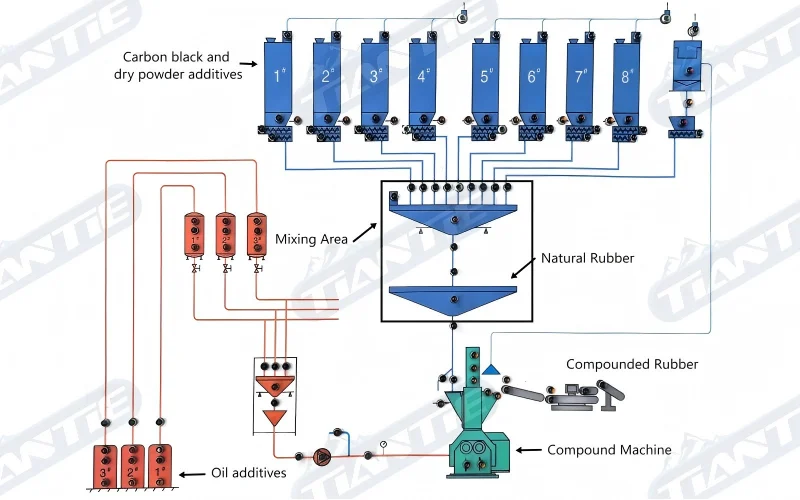
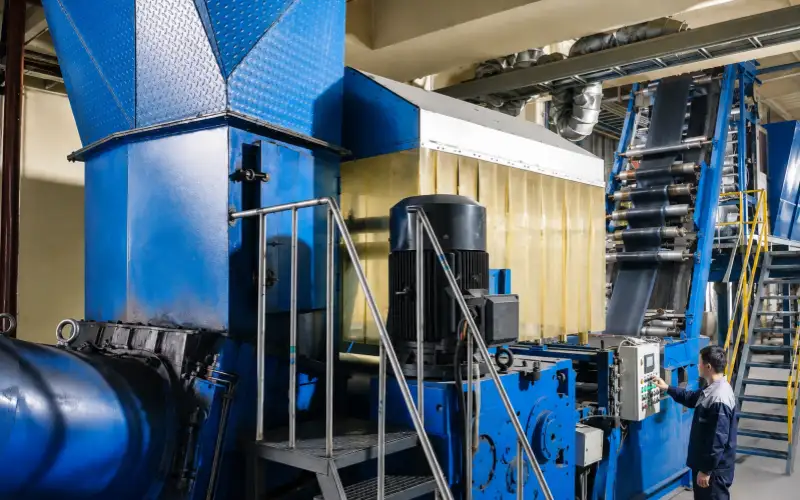
Abrasion-resistant cover rubber is produced through an established internal compound system and a centralized rubber mixing control center. Digital batch preparation, controlled mixing temperature, proportioned additive dosing, uniform dispersion, and managed storage help preserve the required processing state and physical properties before the compound enters belt production.
Digital Batch Preparation Reduces Material Deviation
The rubber mixing control center digitally manages the material requirements and total weight for each production batch. This centralized preparation method reduces variation caused by manual operation and provides a more accurate material basis for the subsequent mixing process.
Precise Process Control Stabilizes Rubber Properties
The control center monitors and adjusts the rubber temperature throughout the mixing cycle. Curing agents, accelerators, and other additives are incorporated according to controlled internal proportions, reducing deviations that could affect compound hardness, processing behavior, and abrasion-related physical properties.
Uniform Dispersion Reduces Localized Weakness
Controlled internal mixing distributes the compound components throughout the rubber mass. More uniform dispersion reduces localized differences in hardness and mechanical properties, helping the finished cover rubber maintain consistent performance across the conveyor belt surface.
Managed Storage Preserves the Compound Before Use
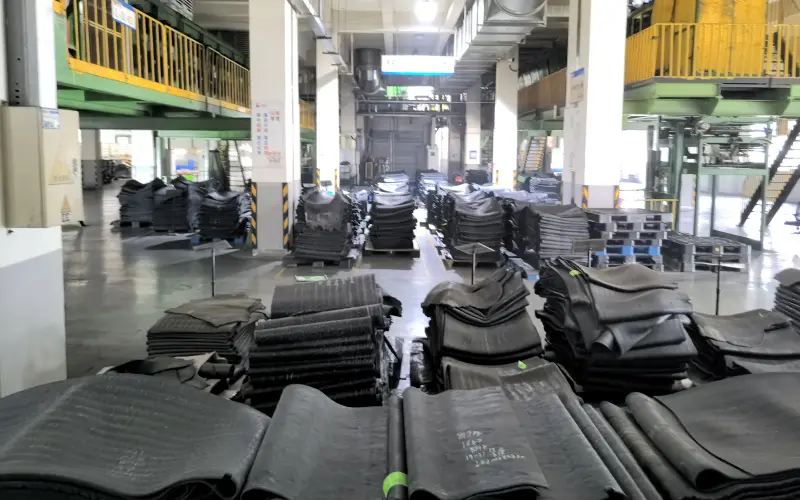
After mixing, sheeting, and cooling, the prepared rubber compound is identified by batch and transferred to the warehouse for storage rather than entering calendering immediately. It is released according to the production schedule, helping protect its processing condition before the next manufacturing stage.
Belt Construction Related to Abrasion Performance
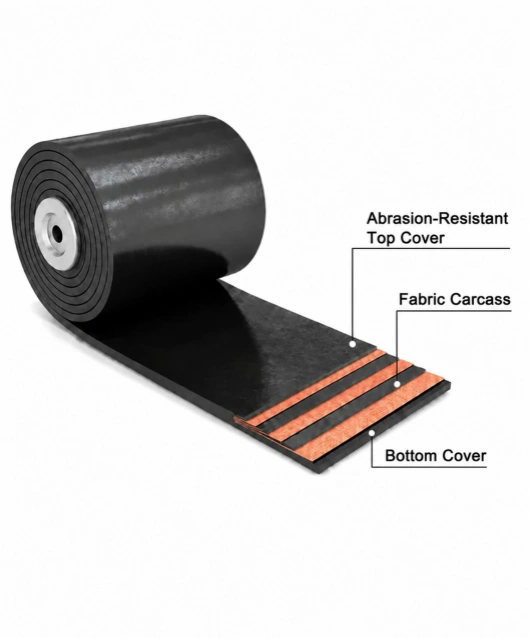
The top cover is the main part of the belt exposed to material abrasion. Its rubber performance and thickness determine the available wear layer, while the fabric carcass and bottom cover maintain the strength and integrity of the complete belt.
Abrasion-Resistant Top Cover
The top cover directly contacts the conveyed material. Its abrasion-loss requirement defines the wear performance of the rubber under the specified test method, while the confirmed cover thickness determines how much rubber remains available before the fabric carcass is exposed.
Fabric Carcass
The fabric carcass provides the tensile strength and load-bearing capacity required by the conveyor belt. It supports the abrasion-resistant cover during operation but does not directly determine the tested abrasion performance of the material-contact surface.
Bottom Cover
The bottom cover protects the pulley-side fabric carcass and completes the rubber-covered belt structure. Its thickness and rubber requirements follow the confirmed belt specification, but it is not the primary layer used to evaluate material-side abrasion resistance.
Abrasion Loss Testing for Conveyor Belt Cover Rubber
The abrasion test compares the sample mass before and after controlled wear. The recorded mass difference is converted according to the applicable test method, producing an abrasion-loss result expressed in cubic millimetres.
Prepare the Rubber Sample
A cylindrical specimen is taken from the cover rubber according to the applicable sampling requirements. The specimen diameter is controlled at 16 ± 0.2 mm, and its thickness is not less than 6 mm.
Record the Initial Weight
The prepared specimen is placed on the measuring balance, and its weight before abrasion is recorded. The sample identification and other data required by the selected test method are recorded at the same time.
Run the Abrasion Test
The specimen is installed in the abrasion tester and subjected to the abrasive surface, applied load, travel distance, and operating conditions specified by the applicable test method.
Record the Final Weight
After the abrasion cycle is completed, the specimen is removed from the tester and weighed again under the same measurement conditions. The recorded value is used as the sample weight after abrasion.
Calculate the Abrasion Loss
The difference between the initial and final sample weights is calculated according to the formula specified by the applicable test method. The resulting rubber volume loss is reported in mm³.
Send Us Your Abrasion Requirement
Share your applicable standard, cover grade, or required abrasion-loss value for quotation and production confirmation.
Common Applications of Abrasion Resistant Conveyor Belts
Abrasion resistant conveyor belts are used for continuous handling of coarse, sharp, and heavy bulk materials at loading, transfer, and conveying sections.

Mining and Ore Handling
Used for conveying iron ore, copper ore, gold ore, and other mined materials between crushers, screens, stockpiles, and processing equipment.
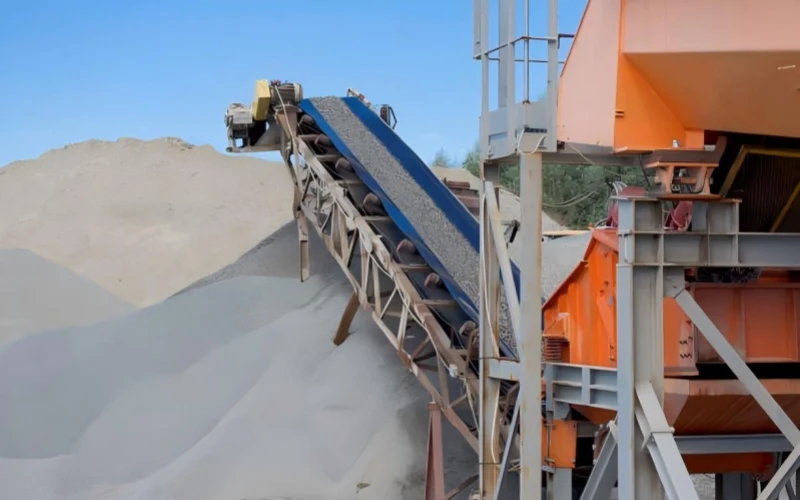
Quarry and Aggregate Plants
Suitable for transporting crushed stone, granite, limestone, gravel, and aggregates through crushing, screening, feeding, and storage systems.
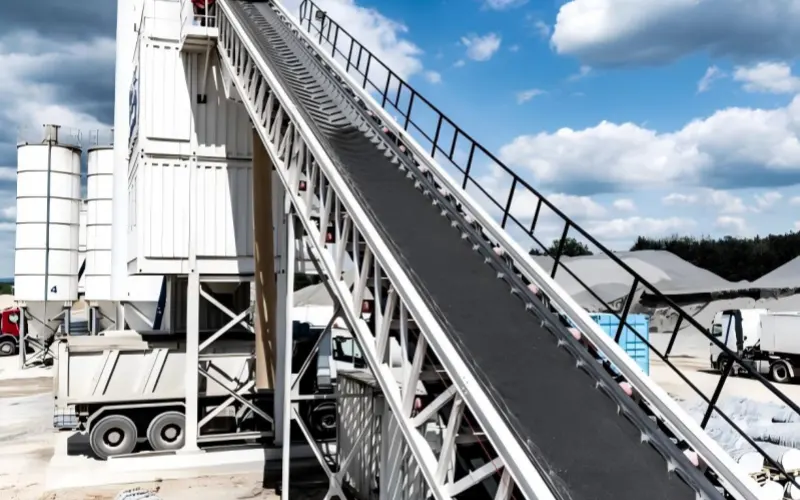
Cement Material Conveying
Applied to limestone, clay, gypsum, clinker, and other abrasive materials in cement raw-material preparation and conveying systems.
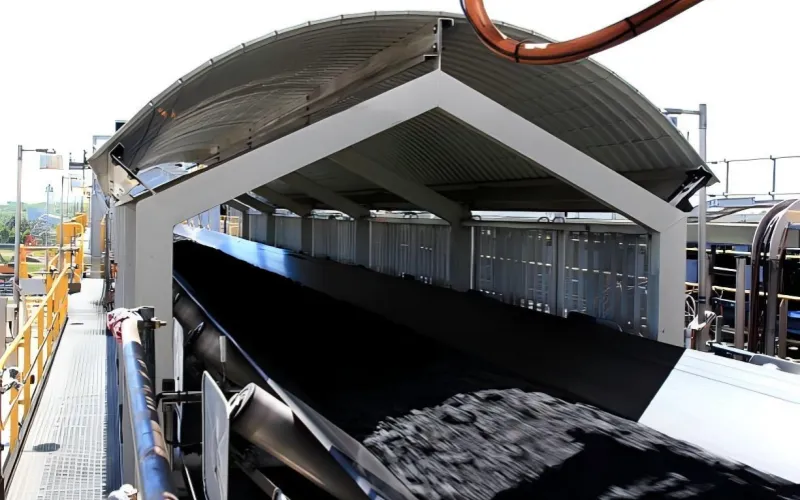
Coal and Coke Handling
Used in coal mines, preparation plants, power stations, and coking facilities for conveying coal, coke, and related bulk materials.
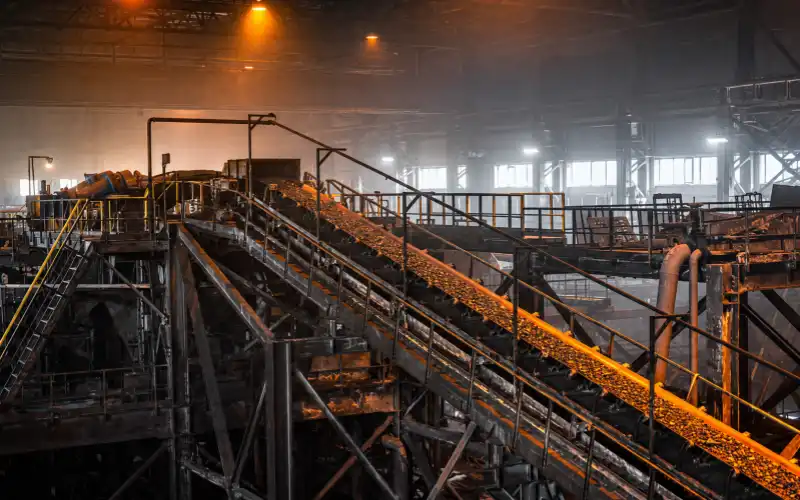
Steel Plants and Bulk Material Terminals
Suitable for conveying ore, sinter, pellets, coke, and mineral materials in steel plants, stockyards, ports, and loading terminals.

Slag and Foundry Material Conveying
Used for conveying slag, foundry sand, metal residues, and other abrasive bulk materials generated during metal processing.
FAQs
Can you produce the belt according to our existing specification?
Is cover thickness the same as abrasion resistance?
Can the top and bottom cover thicknesses be different?
Does a lower abrasion-loss value always mean a more suitable belt?
Can abrasion resistant conveyor belts handle hot materials?
Can the same abrasion-resistant cover be used with different carcass strengths?
Need an Abrasion Resistant Conveyor Belt for Your Application?
Send us your existing belt specification, technical datasheet, drawing, or project requirements. TIANTIE INDUSTRIAL will review the details and provide a corresponding production proposal and quotation.
