China Rough Top Conveyor Belt Supplier

We manufacture rough top rubber conveyor belts with integrated hot-vulcanized surfaces and application-specific cover compounds for industrial inclined conveying.

How a Rough Top Conveyor Belt Improves Material Control

A rough top conveyor belt combines surface friction, controlled rubber deformation, and cushioning to stabilize industrial materials during loading and inclined conveying.

rough top conveyor belt

More Stable Surface Contact

The molded rubber profile follows minor irregularities on material bottoms, helping reduce backward movement and position changes during conveying.

Cushioning During Loading

The elastic surface absorbs part of the loading impact, reducing bouncing and sudden displacement when materials enter the conveyor.

Natural Discharge Without High Cleats

The low-profile surface improves grip while allowing bags, cartons, and boards to leave the belt naturally at the discharge point.

Improve Grip Without Adding High Cleats

Share your conveyed material, incline angle, and existing belt details. We will help confirm whether a rough top conveyor belt is suitable for your application.

Rough Top Conveyor Belt Applications

Rough top rubber conveyor belts are mainly used for heavier industrial materials where the belt must provide additional grip, cushioning, and durability under demanding conveying conditions.

Heavy Bag Loading and Inclined Conveying

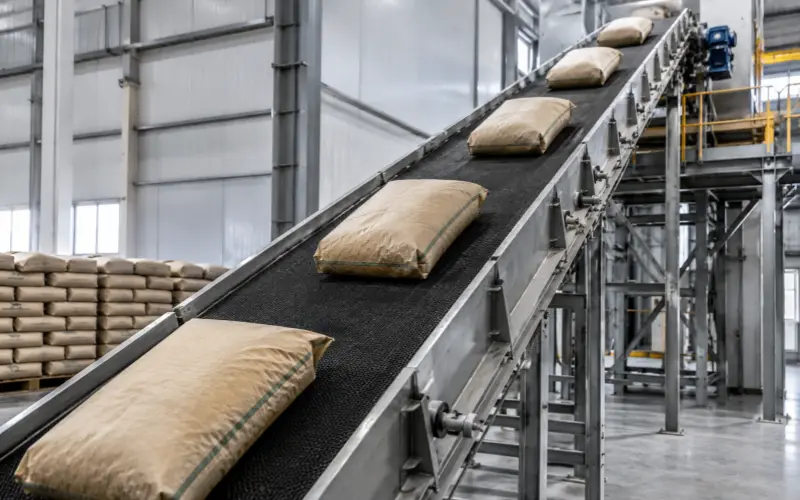
Rough top conveyor belts are widely used for cement bags, fertilizer bags, feed sacks, grain sacks, and other heavy bagged materials. The rubber surface provides additional grip during loading, unloading, and inclined conveying, especially where dust, impact, and repeated heavy loads are present.
Timber, Plywood, and Wood Panels

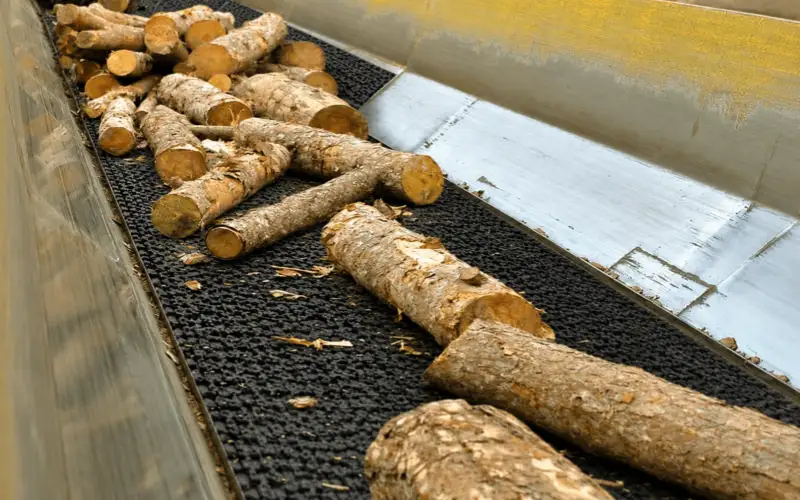
The rough rubber surface helps control timber, plywood, furniture boards, and other large panel materials during inclined conveying. Compared with lighter belt constructions, the fabric-reinforced rubber belt is better suited to wider conveyors, heavier boards, and demanding industrial operating conditions.
Baled and Bundled Industrial Materials

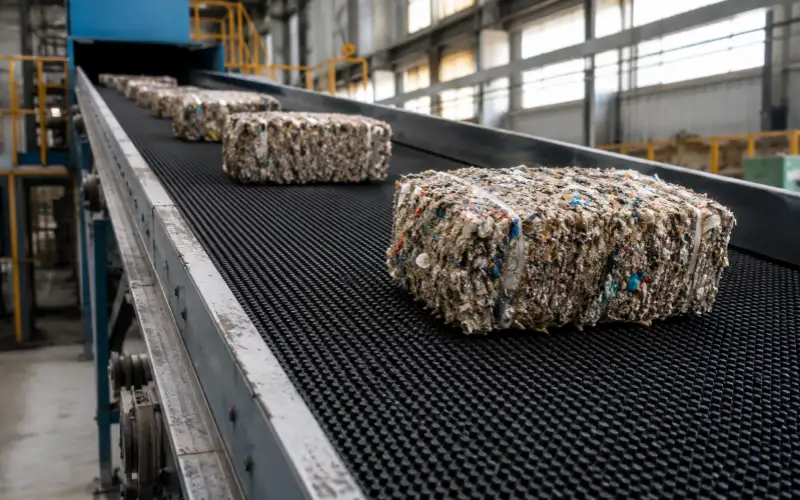
Rough top belts can also be used for compressed bales, bundled materials, and other heavy unit loads with surfaces that may slide on a smooth rubber belt. The elastic surface improves contact while cushioning the material during loading and transfer.
Factors That Determine Rough Top Belt Performance

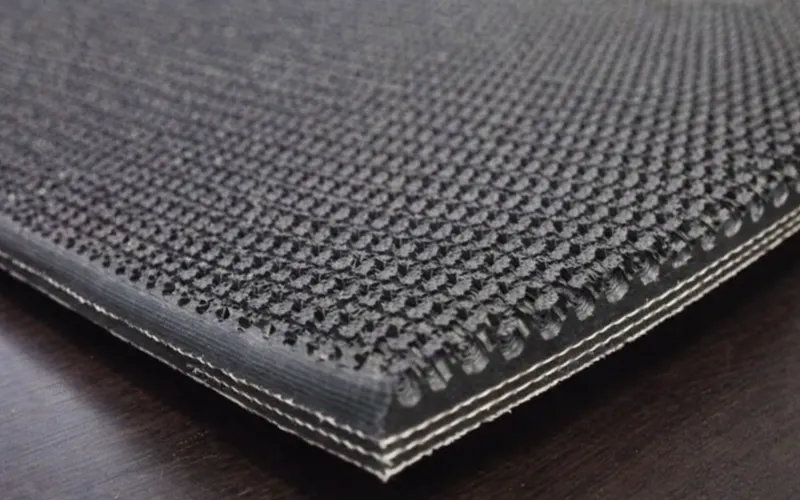
The performance of a rough top conveyor belt depends on the combined design of the molded profile, cover hardness, and rubber abrasion grade—not the pattern appearance alone.

Molded Profile Geometry

The profile shape determines how the belt contacts bags, timber, bales, and other heavy unit loads. A suitable pattern should provide sufficient grip while avoiding excessive surface pressure or deep marks on the conveyed material.
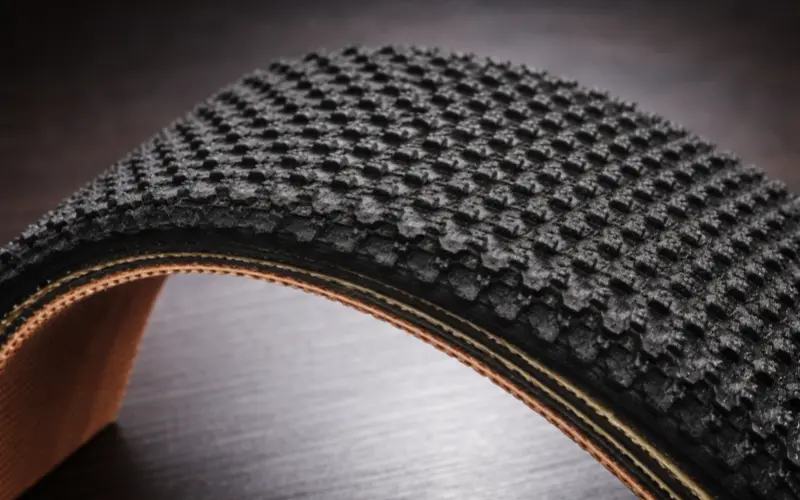
Cover Hardness Options

Softer covers provide greater surface conformity and cushioning, while harder covers resist deformation under heavier loads. The appropriate hardness is selected according to the conveyed material, load, incline, and operating conditions.
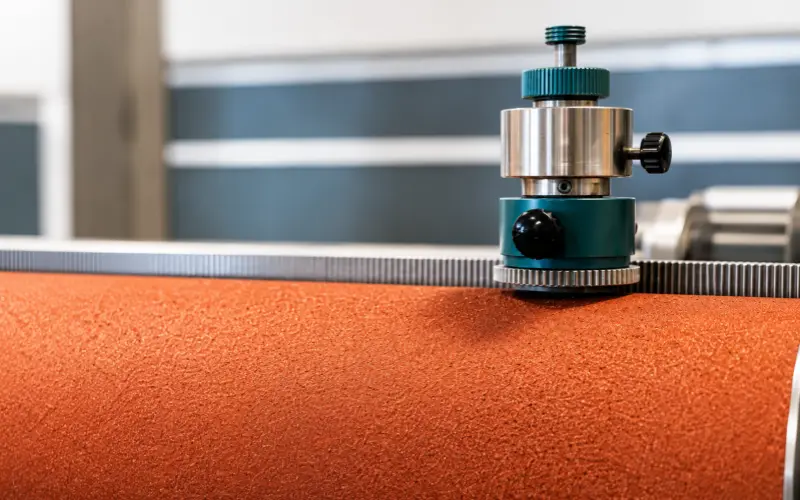
Different Abrasion Grades

Different Abrasion Grades

We provide different cover abrasion grades for applications with varying levels of sliding, loading impact, dust, and repeated contact. This helps balance surface grip with the expected service life of the rough top profile.
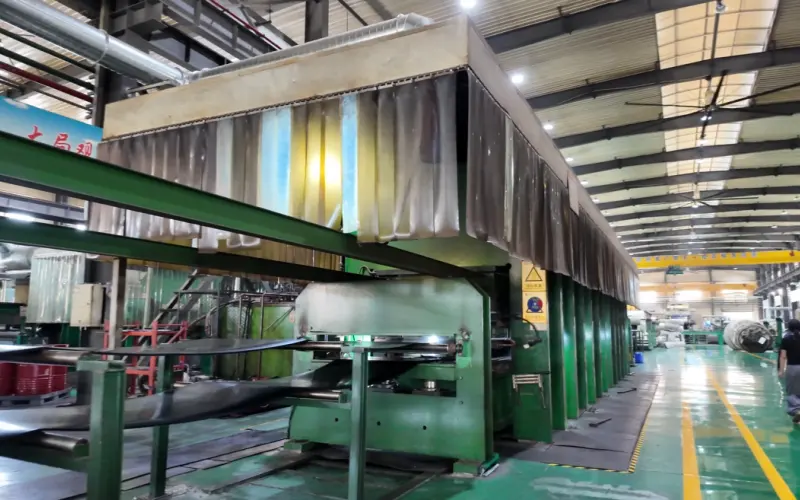
vulcanization machine

Integrated Hot Forming

The rough top pattern and upper cover are formed together in a single hot-forming process. This integrated construction eliminates secondary bonding and keeps the textured surface firmly connected to the belt body during repeated flexing and continuous operation.
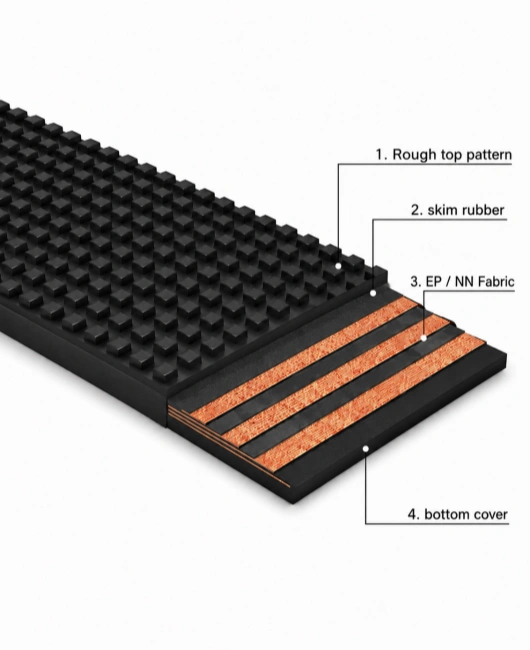
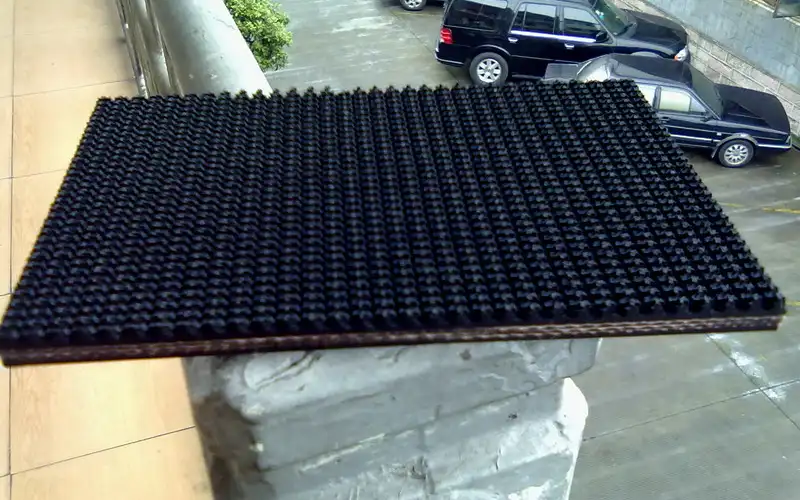
Rough Top Rubber Conveyor Belt Construction

A rough top conveyor belt uses a fabric-reinforced rubber structure. The rough top profile is formed on the upper cover, while the internal carcass provides the strength and flexibility required for repeated conveyor operation.

rough top conveyor belt construction

Rough Top Pattern

The molded profile creates the contact surface that increases grip and cushions conveyed materials. Its shape, depth, and rubber properties directly affect friction, deformation, and wear.

Skim Rubber

Skim rubber bonds the fabric plies together and transfers stress between layers. Stable adhesion helps prevent internal separation during bending, tensioning, and continuous operation.

EP or NN Fabric Carcass

The fabric carcass carries the operating tension and controls belt elongation. EP fabric offers good dimensional stability, while NN fabric provides higher flexibility for specific conveyor conditions.

Optional Bottom Rubber Cover

A bottom rubber cover can be added to protect the carcass and provide a rubber contact surface against pulleys and rollers. It can also be omitted when an exposed fabric bottom better matches the conveyor structure and operating requirements.

Ready to Receive a Quotation?

Send us your existing rough top conveyor belt specifications. We will review the information and prepare a quotation.

Rough Top Rubber Conveyor Belt Construction

A rough top conveyor belt uses a fabric-reinforced rubber structure. The rough top profile is formed on the upper cover, while the internal carcass provides the strength and flexibility required for repeated conveyor operation.

Belt TypeSurface StructureSuitable MaterialsMain Function
Smooth Conveyor BeltFlat rubber surfaceMaterials that remain stable during conveyingGeneral horizontal conveying
Rough Top Conveyor BeltMolded textured rubber surfaceHeavy bags, timber, panels, and bundled materialsIncrease grip and absorb loading impact
Chevron Conveyor BeltContinuous raised profilesLoose bulk and granular materialsPrevent bulk material from sliding on inclines
Cleated Conveyor BeltRaised transverse cleatsMaterials that require fixed spacing or supportPhysically hold materials during incline conveying
Sidewall Conveyor BeltCleats with corrugated sidewallsBulk materials requiring side containmentPrevent material loss during steep conveying

A rough top conveyor belt is selected when the material needs more surface friction but does not require raised cleats for mechanical support. The final choice should also consider load weight, incline angle, belt speed, moisture, dust, and material surface conditions.

Customize Your Rough Top Conveyor Belt

We manufacture rough top conveyor belts according to your existing specifications or operating requirements. The main options include the rough top rubber layer, carcass strength, belt thickness, width, and bottom structure.

Rough Top Rubber Compound

Different abrasion grades and hardness levels are available according to the conveyed material, loading impact, surface contact, and expected service life.
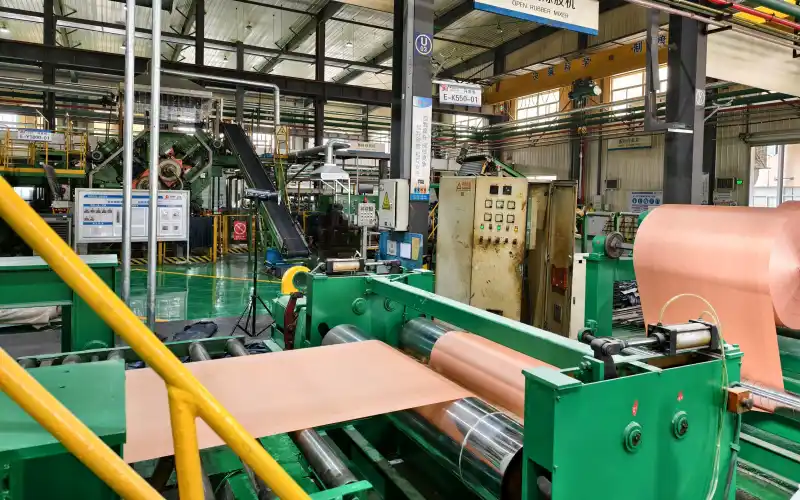
2. polyester conveyor belt carcass ep Calendering Line

EP or NN Fabric Carcass

The carcass can be produced with EP or NN fabric. A 2-ply rough top conveyor belt is commonly used for lighter industrial loads, while additional plies can be selected for higher tension or heavier conveying conditions.
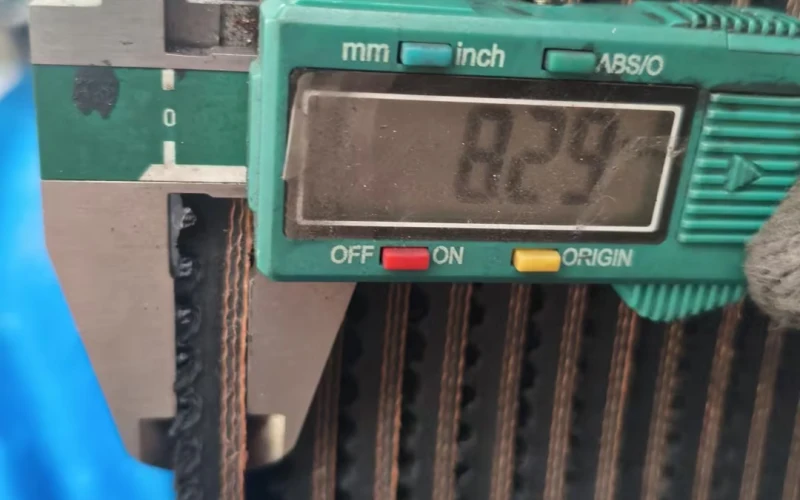
rough top conveyor belt thickness

Rough Top Conveyor Belt Thickness

The total thickness and rough top rubber thickness can be adjusted according to the load, pulley diameter, and required cushioning performance.
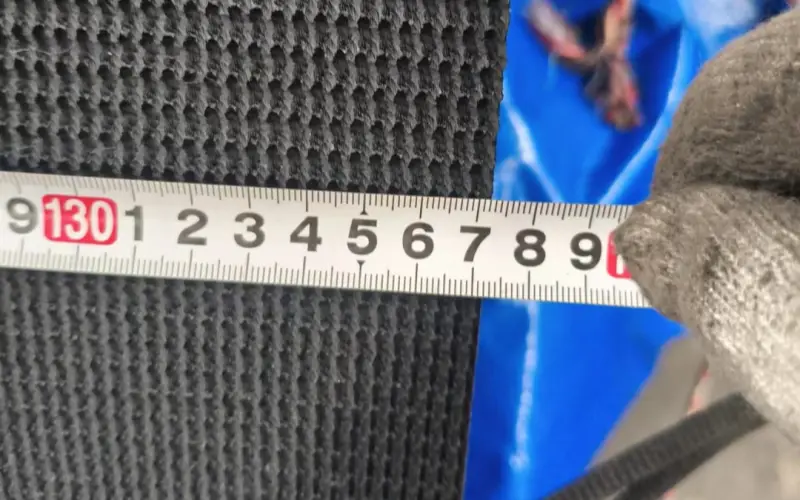
rough top conveyor belt width

Belt Width and Length

The belt is produced according to the confirmed conveyor width and open length, with dimensional tolerances checked before shipment.
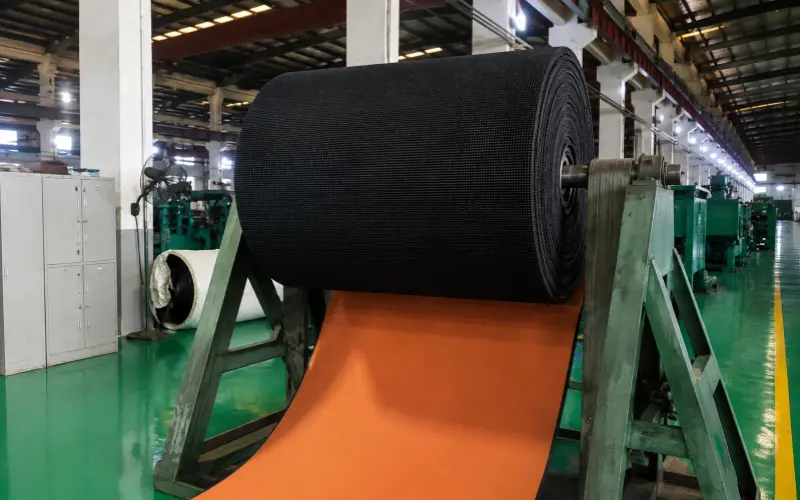
rough top conveyor belt bottom structure

Bottom Structure

A rubber bottom cover can be added when additional carcass protection is required. An exposed fabric bottom is also available for suitable conveyor structures.

Quality Control for Rough Top Conveyor Belts

Our quality control focuses on the rough top surface, rubber consistency, and internal bonding. Each production batch is checked against the confirmed product standard before release.

Production Standard Confirmation

Before production begins, we confirm the approved rough top pattern, carcass construction, rubber grade, hardness, width, and thickness. The same confirmed standard is followed during forming, vulcanization, and finished-product inspection.

Rough Top Pattern Inspection

The surface is checked for incomplete molding, missing rubber, trapped air, collapsed profiles, unclear edges, local deformation, and uneven pattern formation. Multiple areas across the belt width and length are inspected after vulcanization.

Surface Rubber Consistency Check

The rough top rubber is checked for hardness, cure condition, elasticity, surface cracking, tackiness, and abnormal deformation. Rubber sampled from the same production batch is also verified against the confirmed abrasion and hardness requirements.

Cover and Ply Adhesion Testing

Samples are taken to verify the bond between the rough top rubber layer and the fabric carcass, as well as the adhesion between fabric plies. This helps reduce the risk of surface separation or internal delamination during repeated bending and operation.

FAQs

Does a Deeper Rough Top Pattern Always Provide Better Grip?

Not necessarily. Grip depends on the pattern shape, rubber hardness, contact area, conveyed material, and operating conditions. An excessively deep pattern may reduce the effective contact area instead of increasing it. The suitable profile should balance surface friction, rubber deformation, cushioning, and wear resistance rather than relying only on greater pattern depth.

Why Can a New Rough Top Belt Perform Differently from the Previous Belt?

Even when the dimensions and pattern appear similar, differences in rubber hardness, abrasion grade, pattern geometry, carcass flexibility, and bottom structure can affect performance. The replacement belt should therefore be confirmed against the original specification and current conveyor conditions rather than selected from appearance alone.

How Does Rubber Hardness Affect Rough Top Belt Performance?

Softer rubber conforms more closely to irregular material surfaces and generally provides greater cushioning. Harder rubber resists deformation and may perform better under heavier loads or repeated impact. The appropriate hardness depends on the conveyed material, operating load, abrasion level, and required balance between grip and service life.

Why Can Similar Rough Top Patterns Have Different Service Lives?

Similar-looking belts may use different rubber compounds, abrasion grades, hardness levels, and carcass structures. Service life is also affected by material sliding, loading impact, belt tension, pulley diameter, and operating frequency. The visible pattern alone does not determine durability; the rubber properties and internal bonding are equally important.

Why Can Grip Decrease Before the Rough Pattern Is Worn Flat?

The pattern may remain visible while the rubber surface gradually hardens, becomes polished, or collects compacted contamination. Changes in load weight, incline angle, belt speed, and material surface can also reduce conveying stability. When grip decreases, both the belt condition and the current operating conditions should be reviewed.

How Do Dust, Moisture, and Oil Affect Rough Top Grip?

Dust can accumulate inside the recessed pattern and reduce effective contact with the conveyed material. Moisture may create a temporary film, while oil can significantly change the friction between the rubber surface and the load. These operating conditions should be confirmed before selecting the cover compound, hardness, and abrasion grade.

Get a Quote for Your Rough Top Conveyor Belt

Send us your existing belt specifications, photos, or purchase records. We will review the available information, confirm any missing details, and prepare a quotation for your required rough top conveyor belt.

GET FREE QUOTE

Download Catalog!

In order to ensure the smooth delivery of Catalog, please be sure to fill in the real email address.If it’s not in your inbox, please check your junk mailbox. 

Download Catalog!

Download our catalog to see all products and data sheets, the catalog will be sent to your email address.

Download Catalog!

In order to ensure the smooth delivery of Catalog, please be sure to fill in the real email address.If it’s not in your inbox, please check your junk mailbox. 

Welcome