China Pipe Conveyor Belt Manufacturer
Tiantie Industrial manufactures fabric and steel cord pipe conveyor belts for enclosed bulk material transport, helping industrial conveying systems control spillage, dust and material exposure across curved or space-limited routes.
- 20+ Years of Conveyor Belt Experience
- Manufactured to DIN / ISO / EN / GB Standards
- Application-Specific Cover Compounds
- Low Elongation Under High Tension
What Is a Pipe Conveyor Belt?
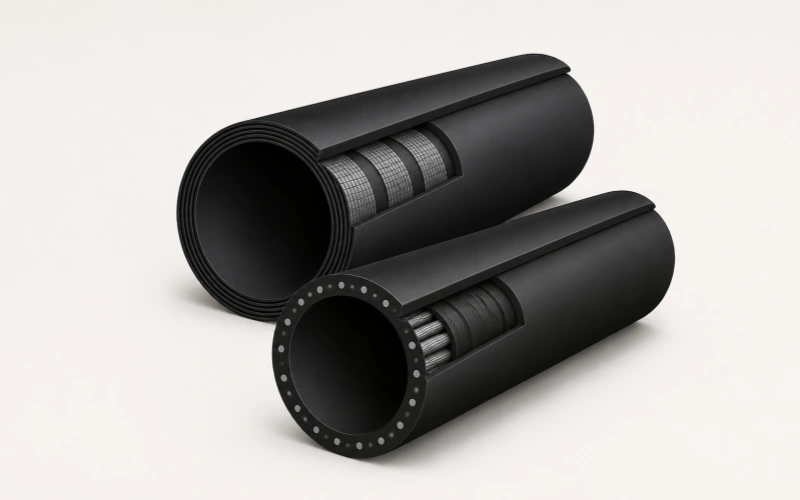
A pipe conveyor belt transports bulk materials in an enclosed tubular form. It remains flat at the loading point, gradually closes into a pipe after loading, and opens again before discharge. The overlapping belt edges keep the material contained during transportation, making the belt suitable for powders, granules, minerals, and other bulk materials.
Compared with a conventional conveyor belt, a pipe conveyor belt can follow horizontal and vertical curves while requiring fewer transfer points. This helps simplify complex conveyor layouts and makes better use of limited installation space. Belt width, pipe diameter, tensile strength, and belt construction should be selected according to the conveyed material, route design, capacity, and operating conditions.
Pipe Conveyor Belt Types and Technical Specifications
Tiantie Industrial supplies textile and steel cord pipe conveyor belts for different conveyor lengths, tension levels, pipe diameters, and operating conditions. Available specifications cover multiple belt widths, strength grades, cover rubber classes, steel cord diameters, and cover thicknesses for new conveyor projects and replacement requirements.
Textile pipe conveyor belts use a flexible fabric carcass that repeatedly opens and forms into a tubular profile during operation. The available range covers pipe diameters from 100 mm to 600 mm, with belt widths selected according to the required pipe size and conveyor design.
Belt Width and Pipe Diameter
| Belt Width (mm) | 360 | 600 | 800 | 1000 | 1100 | 1300 | 1600 | 1850 | 2250 |
|---|---|---|---|---|---|---|---|---|---|
| Pipe Diameter (mm) | 100 | 120 | 200 | 250 | 300 | 350 | 400 | 500 | 600 |
Cover Rubber Performance Classes
Different cover rubber classes are available according to abrasion, tearing, temperature, ozone exposure, and service conditions. The final cover grade should be selected according to the conveyed material and operating environment.
| Cover Class | Tensile Strength ≥ MPa | Elongation at Break ≥ % | Abrasion ≤ mm³ | Property Change After Aging |
|---|---|---|---|---|
| T1 / T2 | 10.0 | 350 | 200 | -45% to +45% |
| D | 18.0 | 400 | 90 | -25% to +25% |
| L | 20.0 | 400 | 150 | -25% to +25% |
| H | 25.0 | 450 | 120 | -25% to +25% |
Cover Class Definitions
| Class | Catalog Application |
|---|---|
| D | High-abrasion applications |
| H | Anti-tear applications |
| L | Moderate-abrasion applications |
| T1 | Heat-resistant applications below 100°C |
| T2 | Heat-resistant applications below 125°C |
Aging and Ozone Test Conditions
| Test | Catalog Condition |
|---|---|
| Ozone resistance | Concentration 50 ± 5 × 10⁻⁸, temperature 40 ± 2°C, elongation 20 ± 2%, test time 96 hours |
| D and H hot-air aging | 70°C for 168 hours |
| T1 hot-air aging | 100°C for 168 hours |
| T2 hot-air aging | 125°C for 168 hours |
Adhesion Requirements
Strong adhesion between the covers and carcass helps maintain belt integrity during repeated opening, closing, and flexing. The following catalog values define the required adhesion performance between individual belt layers.
| Requirement | Ply to Ply | Top Cover to Ply | Bottom Cover to Ply, Cover ≤ 1.5 mm | Bottom Cover to Ply, Cover > 1.5 mm |
|---|---|---|---|---|
| Maximum value of all samples | 20 | 20 | 20 | 20 |
| Average value of all samples ≥ | 8.0 | 8.0 | 5.0 | 6.0 |
| Minimum value of all samples ≥ | 7.4 | 7.4 | 4.4 | 5.4 |
A steel cord pipe conveyor belt is available for projects requiring higher longitudinal strength and controlled elongation. Tiantie Industrial offers strength grades from ST630 to ST5400, with belt widths up to 2450 mm and nominal pipe diameters up to 700 mm.
Pipe Diameter and Belt Width
| Nominal Pipe Diameter (mm) | Φ200 | Φ250 | Φ300 | Φ350 | Φ400 | Φ500 | Φ600 | Φ700 |
|---|---|---|---|---|---|---|---|---|
| Outer Diameter (mm) | 218 | 282 | 308 | 361 | 457 | 543 | 640 | 728 |
| Belt Width (mm) | 800 | 1000 | 1100 | 1300 | 1600 | 1850 | 2250 | 2450 |
Steel Cord Strength Grades
| Grade | Tensile Strength (N/mm) | Maximum Cord Diameter (mm) | Cord Pitch (mm) | Top Cover (mm) | Bottom Cover (mm) |
|---|---|---|---|---|---|
| ST630 | 630 | 3.0 | 10 ± 1.5 | 6 | 6 |
| ST800 | 800 | 3.5 | 10 ± 1.5 | 6 | 6 |
| ST1000 | 1000 | 4.0 | 12 ± 1.5 | 6 | 6 |
| ST1250 | 1250 | 4.5 | 12 ± 1.5 | 6 | 6 |
| ST1600 | 1600 | 5.0 | 12 ± 1.5 | 8 | 8 |
| ST2000 | 2000 | 6.0 | 12 ± 1.5 | 8 | 8 |
| ST2500 | 2500 | 7.2 | 15 ± 1.5 | 8 | 8 |
| ST2800 | 2800 | 7.6 | 15 ± 1.5 | 8 | 8 |
| ST3150 | 3150 | 8.1 | 15 ± 1.5 | 10 | 10 |
| ST3500 | 3500 | 8.6 | 15 ± 1.5 | 10 | 10 |
| ST4000 | 4000 | 8.9 | 15 ± 1.5 | 10 | 10 |
| ST4500 | 4500 | 9.7 | 16 ± 1.5 | 10 | 10 |
| ST5000 | 5000 | 10.9 | 17 ± 1.5 | 10 | 10 |
| ST5400 | 5400 | 11.3 | 17 ± 1.5 | 10 | 10 |
Number of Steel Cords by Belt Width
| Grade | 800 | 1000 | 1100 | 1300 | 1600 | 1850 | 2250 | 2450 |
|---|---|---|---|---|---|---|---|---|
| ST630 | 75 | 95 | 105 | 124 | 151 | 177 | — | — |
| ST800 | 75 | 95 | 105 | 124 | 151 | 177 | — | — |
| ST1000 | 63 | 79 | 87 | 103 | 126 | 147 | 181 | 197 |
| ST1250 | 63 | 79 | 87 | 103 | 126 | 147 | 181 | 197 |
| ST1600 | 63 | 79 | 87 | 103 | 126 | 147 | 181 | 197 |
| ST2000 | 63 | 79 | 87 | 103 | 126 | 147 | 181 | 197 |
| ST2500 | 50 | 64 | 69 | 83 | 101 | 119 | 145 | 158 |
| ST2800 | 50 | 64 | 69 | 83 | 101 | 119 | 145 | 158 |
| ST3150 | 50 | 64 | 69 | 83 | 101 | 119 | 145 | 158 |
| ST3500 | 50 | 64 | 69 | 83 | 104 | 119 | 145 | 158 |
| ST4000 | — | 64 | 69 | 83 | 104 | 119 | 145 | 158 |
| ST4500 | — | 59 | 61 | 77 | 96 | 111 | 137 | 148 |
| ST5000 | — | 55 | 61 | 72 | 90 | 104 | 125 | 139 |
| ST5400 | — | 55 | 61 | 72 | 90 | 104 | 125 | 139 |
Need to Confirm the Correct Belt Specification?
Send the required belt width, pipe diameter, strength grade, cover thickness, and operating conditions to Tiantie Industrial. Existing belt specifications or conveyor drawings can also be submitted for technical review.
Key Advantages of Pipe Conveyor Belts
Pipe conveyor belts support enclosed material transport, flexible route planning, and different conveyor pipe sizes. These advantages make them suitable for projects where space, material containment, and equipment compatibility are important considerations.
Flexible Conveyor Belt Routing
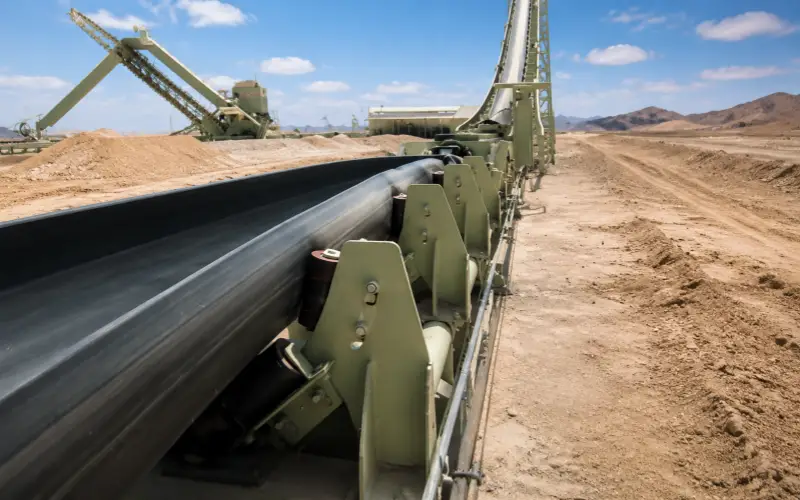
The pipe belt can follow horizontal and vertical curves, allowing the conveyor route to adapt to terrain, buildings, and restricted installation areas. This can reduce the need for additional transfer points in complex conveying layouts.
Improved Material Containment
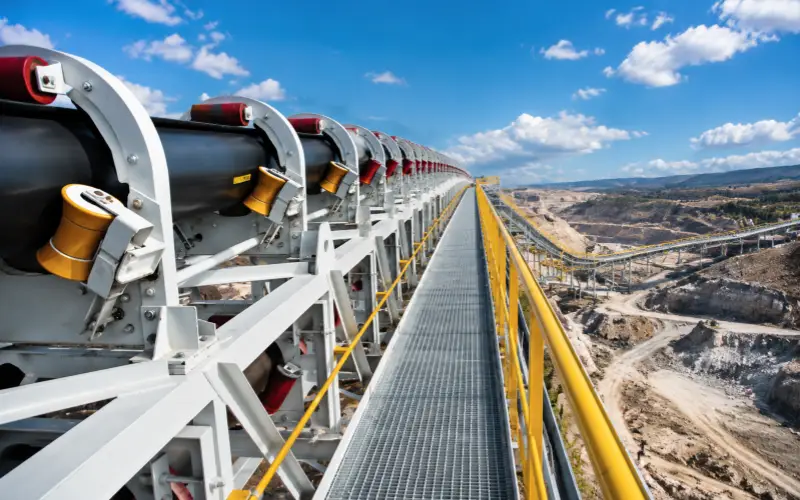
After the belt forms into a pipe, the overlapping edges keep the conveyed material enclosed through the main transport section. This helps limit material spillage, dust exposure, and direct contact with wind or rain.
Multiple Pipe Diameter Options
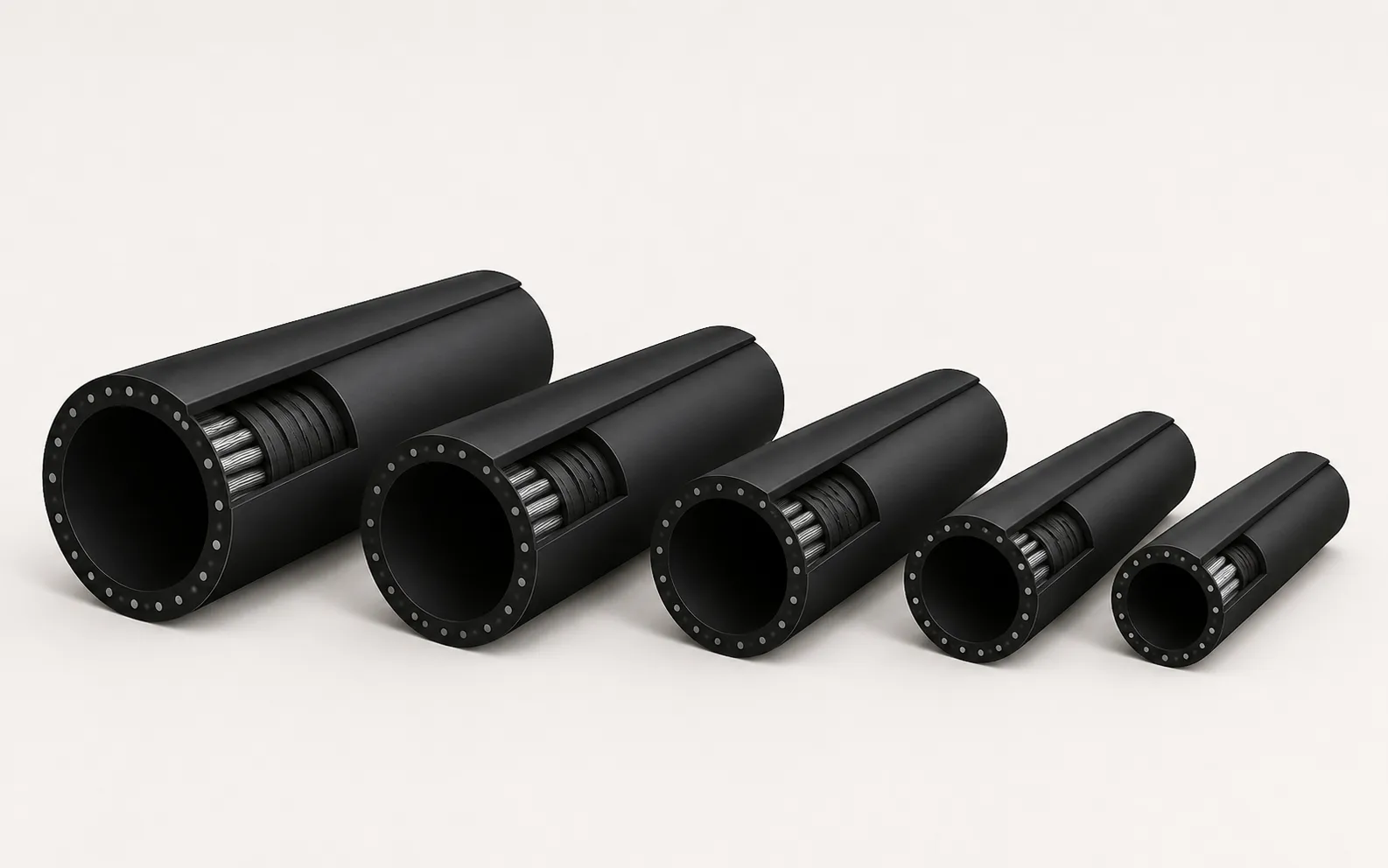
Textile pipe conveyor belts cover pipe diameters from 100 to 600 mm, while steel cord options cover nominal diameters from 200 to 700 mm. Available belt widths can be matched with different conveyor specifications.
Quality Checks for pipe Conveyor Belt
Quality control for pipe Conveyor Belt focuses on whether the finished product matches the confirmed order specification. Key checks cover belt construction, dimensions, rubber performance, bonding quality, and final product condition. Inspection results should be linked to the relevant production batch for clear delivery verification.
Specification Verification
The production specification is checked against the confirmed belt grade, width, thickness, ply construction or steel cord grade, cover rubber requirement, and ordered length. This helps prevent differences between the approved order details and the finished pipe Conveyor Belt.
Dimensional Inspection
Belt width, overall thickness, cover thickness, and finished length are measured according to the confirmed specification. Edge condition and dimensional consistency should also be checked to identify visible deviations before the pipe Conveyor Belt is prepared for shipment.
Rubber and Bonding Performance
Cover rubber properties and adhesion between the cover and belt carcass should be verified according to the applicable product specification. For textile construction, ply-to-ply bonding is particularly important, while steel cord construction requires consistent bonding around the cord structure.
Final Product Inspection
The finished pipe Conveyor Belt should be inspected for surface defects, edge damage, uneven thickness, exposed reinforcement, and other visible production issues. Product markings, roll identification, and packaging information should also match the confirmed order and production batch.
Manufacturing Capacity for pipe Conveyor Belt Orders
Tiantie Industrial operates a 120,000 m² production base with 60 production lines and more than 300 production employees. This integrated manufacturing system supports stable scheduling for pipe Conveyor Belt orders across rubber mixing, calendering, forming, vulcanization, and finished belt processing.
High-Volume Rubber Mixing
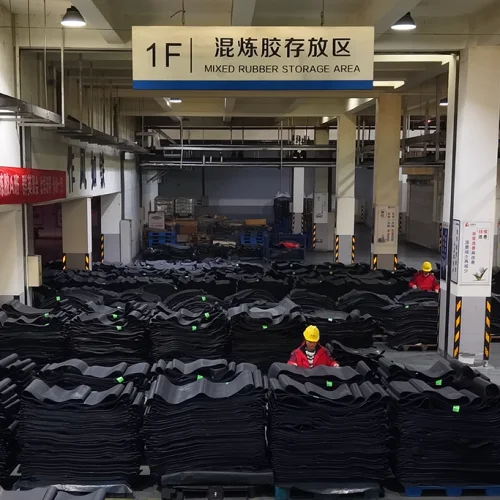
With an annual rubber mixing capacity exceeding 30,000 tons, Tiantie Industrial can maintain continuous material preparation for large and multi-batch conveyor belt orders. Automated batching and fully enclosed mixing equipment help control formulation accuracy and maintain consistent rubber properties between production batches.
Stable Production Output
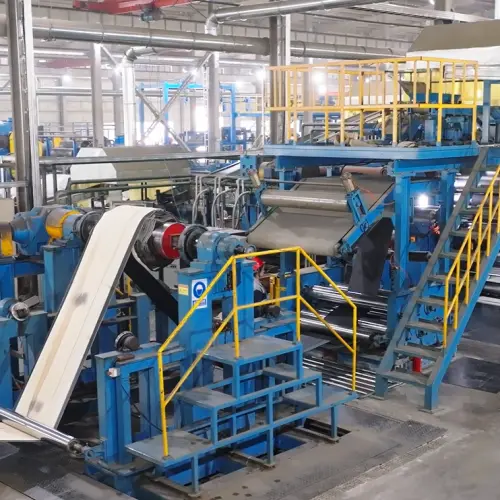
Daily conveyor belt output exceeds 35,000 meters, with monthly production capacity above 800,000 meters. This manufacturing scale provides greater scheduling flexibility for long-length belts, multi-roll orders, planned replacements, and projects requiring delivery in separate batches.
Controlled Calendering Process
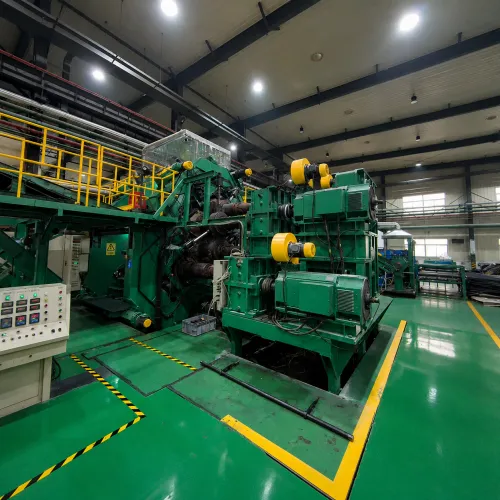
After mixing and extrusion, the rubber compound passes through a multi-roll calendering system. Mixing temperature is controlled within ±0.5°C, while calendered sheet thickness is maintained to the 0.1 mm level, supporting uniform rubber layers and consistent belt construction throughout production.
Quality Built Through Process Control
From rubber formulation to hot lamination, vulcanization, and final inspection, each production step is designed to improve structural bonding, reduce internal defects, and support stable performance in real conveying systems.
Global Projects Experience for Pipe Conveyor Belt
Tiantie Industrial has supplied conveyor belt products to more than 5,000 projects across Asia, Europe, the Americas, and Africa. This international project experience supports pipe Conveyor Belt buyers that require export-ready production, coordinated delivery, and product documentation for different markets.
Experience Across Different Markets
Tiantie Industrial products have been supplied to industrial projects across four major global regions. This market coverage reflects experience in coordinating specifications, packaging, shipping, and documentation for customers operating under different purchasing and delivery requirements.
Support for Project-Based Orders
Project orders may involve multiple belt rolls, different delivery batches, or replacement schedules. Tiantie Industrial’s project experience supports organized production and shipment planning according to confirmed specifications, quantities, roll lengths, and delivery arrangements.
Traceable Project References
Where commercial confidentiality allows, Tiantie Industrial can present representative project photos, product applications, shipment records, or customer-approved references. These materials provide stronger purchasing evidence than general claims about international experience.
FAQs
Is a pipe Conveyor Belt Completely Airtight?
Can a pipe Conveyor Belt Convey Wet or Sticky Materials?
What Determines the Maximum Material Lump Size?
How Is the Belt Overlap Position Determined?
Can a pipe Conveyor Belt Operate on Steep Inclines?
Can a pipe Conveyor Belt Run in Both Directions?
Request a Quote for pipe Conveyor Belt
Send your belt specifications or upload an existing data sheet. Tiantie Industrial will prepare a quotation based on your requirements.
